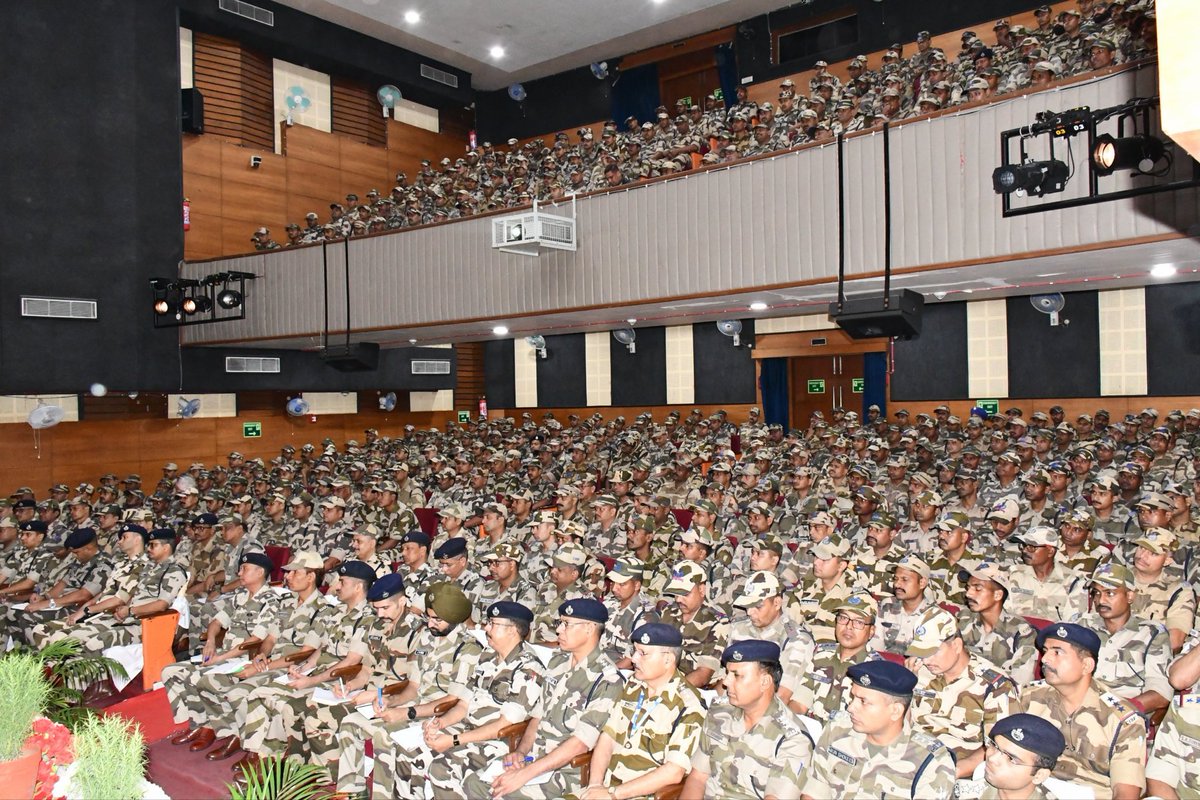
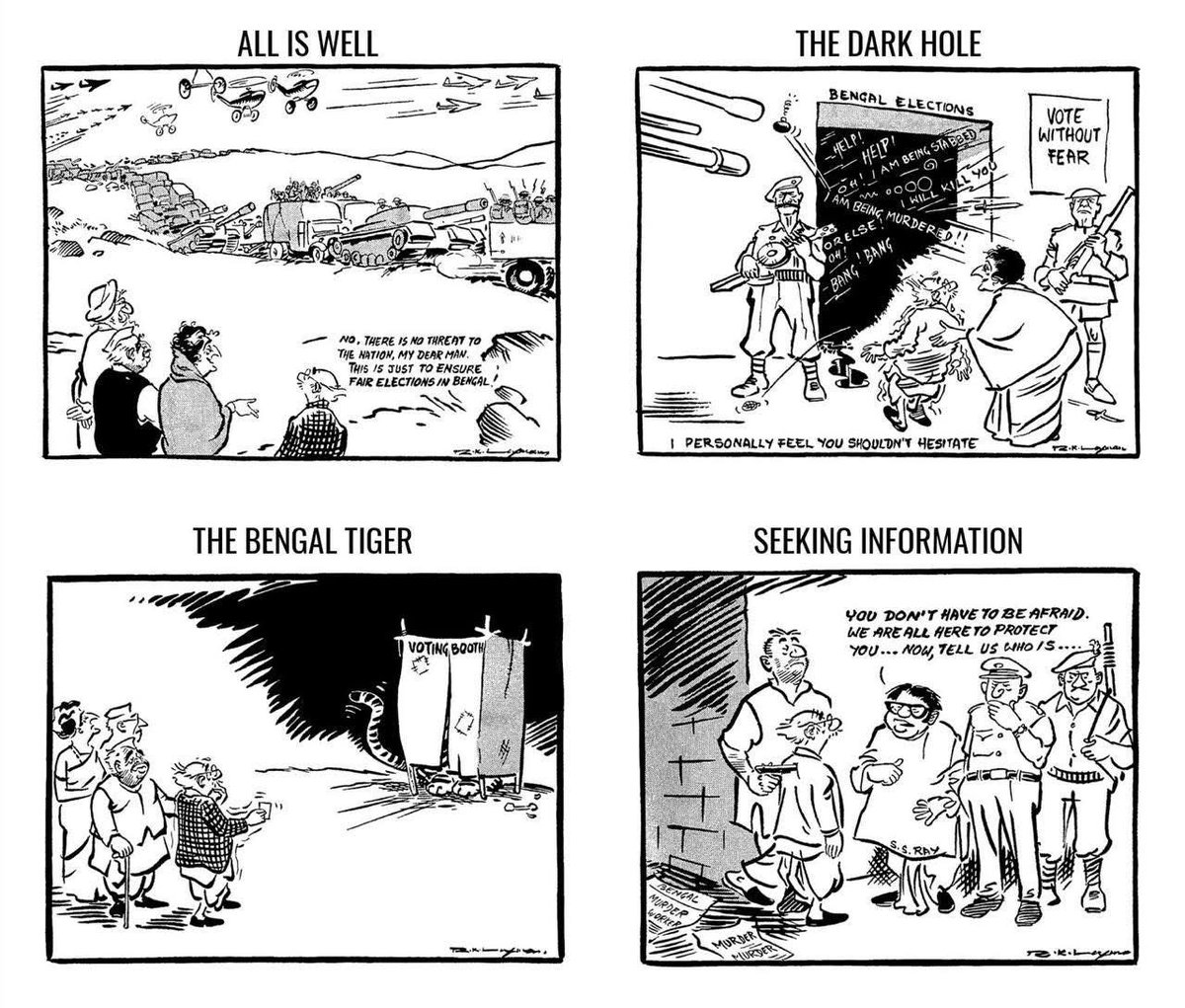
A military conference to deliberate as how to hold “free and fair” elections in #Bengal
Unbelievable - Chiefs of BSF, CRPF, SSB, ITBP & CISF - all came together in #Kolkata to discuss one state ‘election’?
Is this #BengalElection2026 or Operation Sindoor? Or operation Bengal?
We used programs to synthesize the best models. Now we will use models to synthesize the best programs.
(I.e., not just generate program code but mutate, regenerate, score and optimize the best variant.)
This has huge implications for regulated industries with systematic billing errors, underpaid royalties, and wrong classifications. The ground truth is sitting in public regulatory records. These problems require joins, hierarchies, and counterfactuals. That's not a model synthesis problem. It's a program synthesis problem.
These industries will now see the best audit programs that can detect every incorrect application of their regulations.
Everyone's afraid of AI that lies. The real threat? AI that agrees.
AI sycophancy will cost knowledge workers more than AI hallucinations ever will.
(Devs shipping fatal bugs they "confirmed" with AI. Sales sending pricing proposals "locked in" by AI.)
Elon Musk predicts that AI will bypass coding entirely by the end of 2026 - just creates the binary directly
AI can create a much more efficient binary than can be done by any compiler
So just say, "Create optimized binary for this particular outcome," and you actually bypass even traditional coding
Current: Code → Compiler → Binary → Execute
Future: Prompt → AI-generated Binary → Execute
Grok Code is going to be state-of-the-art in 2–3 months
Software development is about to fundamentally change
Contextual Expertise maybe closer to what’s being described.
1. It’s raw business hints: “if you are checking vendor certificates during onboarding note that civil contractors must submit both health and environmental certificates”.
2. Not sure if it is necessary to structure this data (into graphs!)
But,
3. There is value in capturing this expertise from real enterprise users.
4. There are elegant ways to condense and retrieve this expertise in the right context for AI actions.
@DimitrisPapail Very good Continual Learning can be achieved with input aware context engineering that incorporates user feedback. This will reach production scale in 2026.
Functional frameworks are more amenable to intent encapsulation and rich compile time verification. For AI, that's transformative because code becomes a verifiable intermediate step for generating anything.
For example, to generate a contract or music track from multi-page instructions, you have a few options:
Direct generation — tuned foundational model outputs the artifact (uncontrollable & unreliable)
Agentic steering — orchestration layer guides the model (too manual & restrictive)
Intermediate code — model generates high level code that renders the output (more controllable, still unreliable)
Intermediate functional code — model generates code in a functional framework with compile-time verification (controllable & provably reliable)
AI also enables a new type of specification that's very non-programmer friendly. Call this new specification language "formalish" i.e., english with optional formalisms that itself is composable and reusable. PMs and users can write and review formalish specs with AI support with a very shallow learning curve.
Investors: AGI!
CEO: User talks, AI executes.
CTO: User talks, AI auto builds an agentic workflow and then executes it.
VP: User talks, AI auto builds an agentic workflow with human-in-the-loop and then executes it.
Product: User talks, AI presents a visual editor to co build an agentic workflow with a human developer.
<Developer sees one visual node connector with nested JSON schema fields to be carefully updated manually>
Engineering: Here are a few carefully engineered, tuned and secured agentic workflows with human-in-the-loop with select customer configurable parameters.
Investors: Vertical AI!