If you only ever read one of my posts, make it this one👇
Only two questions really matter in life:
How do you define success?
Are your actions aligned with that definition?
Surprisingly, many people never take the time to clearly define what success means for *them*, so they default to society’s definition (and we all know what that looks like).
Others have a clear vision for success but their actions don’t align with it. You’ll never reach a destination if you’re moving the opposite direction.
I get a lot of DM’s asking for advice. The circumstances are all different but my advice is always the same:
Start by answering those two questions with a simple but powerful exercise I call…
✅The Ideal End State
Simply bullet out what your ideal life looks like:
WHO you’d be around
WHAT you’d do with your time
WHERE you’d be
HOW things would look & feel
The more descriptive the better. I’ve included my Ideal End State below as an example.
This exercise is eye-opening in a couple of ways:
🔦Defining the end state tends to shed light on the path right in front of you, clarifying the actions you need to take TODAY. When people do this exercise they usually don’t need my advice any more because the answer becomes obvious.
💸After completing the exercise most people are surprised to find that their Ideal End State doesn’t require fabulous riches. Some people realize that things they’re currently putting time and money into aren’t even on their list. For example, if “drive a fancy car” isn’t on your list why would you have a $1200/month car payment that is preventing you from achieving things that ARE on your list?
FINAL NOTE:
Remember, you’re defining an END state—it’s aspirational and it may take decades to check off all the items on your list. In fact if it doesn’t you’re probably not dreaming big enough! You’ll see that I’ve checked off most of my list... after 30 years of work.
Your end state may change over time as you grow and mature and that’s fine. What’s important is to have a clear picture at any given time of what you’re building toward.
Give it a try and let me know what you think!
Toll plazas in India charge double the moment a FASTag is missing.
But when they violate the 3-minute rule, there’s no timer, no refund. If you ask, a group of toll goons will surround you and aggressively harass you.
This is a prime example of a system that enforces the rulebook on the common man but refuses to apply it to itself.
@nitin_gadkari ji, accountability isn’t a one-way lane.
I'm 42. My brother is 24.
He asked me something I’ll never forget:
"If you were going to die tomorrow,
what would you regret not teaching me?"
This was my answer.
If you're in your 20s, read this,
don’t learn it the hard way. 🧵
The curse of intelligence is restlessness, the curse of lacking intelligence is envy. The curse of courage is isolation, the curse of lacking courage is regret.
Closure is a myth. Grief doesn't evaporate—it waxes and wanes.
The purpose of grief is not to cause pain. It's to keep memories of loved ones alive and remind us to make the most of our time.
Moving forward after loss is not about erasing sorrow. It's about gaining perspective.
My friend was fired.
He was a good product manager. But he did not know how to manage up.
I thought that product management consisted only of building products and talking to customers.
I was wrong.
Managing up could make or break a career.
After a decade in this industry, I learned 7 key lessons to manage up
Lesson 1 – Understand your manager
Understanding your users is the building stone for a great product, and understanding your manager is the building stone for a great relationship.
Early in my career, I worked on a feature that I was passionate about, but it didn’t align with my manager’s priorities. This caused a lot of friction between us.
I wanted to grow the product. so I prioritized our features based on the majority of our users.
My manager wanted to increase revenue. so he wanted me to focus on our power users because they bring in more revenue.
After a challenging review meeting, I asked about his KPIs and objectives, then I realized something. He was under the microscope from upper management. He was given an ultimatum either to bring in more revenue or reduce headcount.
He was trying to protect me.
After that meeting, I became more empathetic toward my manager, and I was able to orient the product bring in more money, and grow at the same time.
Lesson 2 -Effective Communication
Brevity is key.
I once sent a detailed report to a senior leader and got a one-line reply: ‘Too long, didn’t read.’ It was demotivating.
I discussed this with my friend who is Mackenzie’s consultant and he told me that giving presentations to senior managers is tricky, because they are constantly bombarded with crucial decisions that demand their attention
Then he mentioned an industry secret, which is called the pyramid principle.
I began structuring the information with my recommendation or conclusion in the beginning then followed by arguments.
This goes against what my middle school teacher taught me. She always stressed that I should show my work first and then bury my conclusion at the bottom of the page.
She used to give most of the grade on the work, not the answer.
but It is different in the real world where it is more results-oriented.
The pyramid principle transformed my communication and ensured my updates were read and appreciated.
Lesson 3 – Building Trust
Trust is earned by owning to our mistakes.
Warren Buffett begin his yearly shareholder letters by discussing the mistakes that he made in the previous year. the transparency to openly discuss his mistakes built great trust in Berkshire Hathaway.
In my third year as a product manager, I led a product that hit several roadblocks. By openly acknowledging these challenges and presenting revised timelines, I not only maintained trust but also received support from leadership.
I learned that owning up to and learning from your mistakes is a powerful trust-builder.
Lesson 4 – Being Proactive
My manager used to say ‘If you come to me with a problem and no possible solution, you are part of the problem”
You don’t need to have the right solution, but you need to do your homework. When you discuss the problem with your manager, tell him your proposed solutions and what data you used that led to your decision.
He either says that you are on the right track or he can adjust your course.
Another way to be proactive is to ask for Feedback
Ask about performance and how you can better support your superiors. This not only helps you improve. It also demonstrates your commitment to personal growth and the success of the product.
Lesson 5 – Clear Boundaries and Pushback
Pushback, when done right, can earn you respect.
In a scenario where a senior leader wanted us to pivot in a direction I knew was not viable, I asked him what is the client’s behavior that he wanted to change.
I was not challenging him for the sake of challenging I was legitimately curious, he struggled to come up with a strong answer, and then I presented data-backed arguments explaining why our current path was more beneficial to the company.
This rationale-based approach not only saved our product but also elevated my standing in the eyes of senior management.
Lesson 6 – Expectation Management
Once, I was assigned a product with unrealistic timelines.I raised it immediately, I informed my manager that I was not in a position to succeed and I presented my case.
By outlining clear deliverables and the trade-offs involved, I managed to negotiate a more reasonable timeline.
When I was asked to give a time estimate about something that I was not sure about, I did not jump to answer and over-commit.
My answer was either “It depends”, and I drill for clarifications, I know it is a very typical product manager answer, “or I would say, “I am not sure, let me discuss it with the team and get back to you”
I find that the more senior I get the more comfortable with saying I don’t know.
Always be clear about what’s achievable and what’s not. This transparency is key to managing expectations effectively.”
Lesson 7 – Tailor your communication style
Adapting to communication styles can be tricky but rewarding. I once had a manager who preferred face-to-face updates over emails.
I had another executive where he hated meetings and slides but he preferred to read a well-thought-out Word document.
He was happy to think over the document for a few days and provide feedback, but he never felt comfortable giving feedback on the spot.
Tailoring my communication style helped me gain more visibility and feedback. Observe and adapt to your manager’s style; it can significantly impact your interactions.”
These are my 7 lessons, managing up is a skill that can significantly impact your career trajectory in product management. It’s about understanding, communicating, and aligning with your superiors effectively.
Remember, it’s not just what you do, but how you connect and communicate your work that counts. Good luck out there, and keep building great products!
"The Courage to Be Disliked" was a wake-up call for me
Shreyas Doshi has recommended this book.
I think more PMs and UX people should check it out, especially if they tend to people-please.
Here are 9 Lessons From The Book "The Courage To Be Disliked":
- Thread -
Product Management is not about:
- Asking customers about the requirements
- Writing detailed specifications
- Creating prototypes and wireframes
- Assigning tasks to developers
- Verifying and accepting the work of others
- Obsessing over velocity, deadlines, and roadmaps
- Mastering Scrum to perfection
- Acting like the CEO of the product
Anyone can do that.
It's about:
- Understanding customer's problems, needs, and desires
- Understanding the market and the business in depth
- Collaborating closely with engineers and designers
- Identifying opportunities, ideating solutions, and tackling the risks together
- Marrying customer goals and business goals
- Influencing others to work toward the common goal
- Being humble (it's ok not to be the smartest person in the room)
- Experimenting to validate assumptions
- Leading without authority
- Turning chaos into clarity
Start with these questions:
- Why are we building this thing?
- Why are we building it now?
- For whom are we building it?
- What's the unique value of our product?
- How is it aligned with the company's vision?
- How is it aligned with the business strategy?
- What does success look like? How can we measure it?
- What are the customer needs/jobs (functional, emotional, social)?
- How will it affect our customers and users?
- How will it create value for the business?
- Can we buy it instead of building it?
- How can we make sure that our customers would love it?
- Will our customers know how to use it?
- Can our business support it (e.g., legal, finances)?
- Is it feasible? Can we build it?
- How can we bring it to the market? Do we have the required channels?
- Should we do it at all? Are there any ethical considerations?
- What are the riskiest assumptions? How can we validate them?
- What does the data tell us?
- How can we get maximum validating learning with minimum effort?
Be curious. Learn and experiment. Question solutions and push back on things handled down.
Remember that product management is about creating a "product customers love, yet also works for our business" (Marty Cagan, Inspired), not about pleasing stakeholders.
After 9 years, I'm still learning daily, and I do not know everything, but I can give you my perspective on any questions you have.
Drop them below.
The product death cycle is a terrible trap.
Many PMs forget about the "Why" and become waiters.
To please everyone, a waiter collects and waterfalls all "feature requirements" to the team. But no matter how much the team delivers, it gets only worse. Features shipped in a hurry do not solve anyone's problems and do not drive the expected business results.
The feature factory.
Fortunately, you can prevent or escape that trap. Try this:
1. Respect your vision and strategy
2. Do not let your customers design solutions
3. Experiment to test your ideas
4. Push back on things that are handed down
Now in detail:
1. Respect your vision and strategy
Ask yourself:
- Why are you building this product?
- Where do you want to be in 2-5 years?
- For whom are you building it?
- What's the unique value of your product?
- How is it aligned with the company's vision and strategy?
- What are the key tradeoffs?
- What are the customer jobs (functional, emotional, social)?
- How will it create value for the business?
- How can you get there?
Recommended books:
- Business Model Generation by @AlexOsterwalder
- Playing to Win by @RogerLMartin
-
2. Do not let your customers design solutions
Focus on understanding their problems, needs, and desires in-depth. Interview them regularly, map opportunities, and brainstorm possible solutions. Make sure the designer and engineers are included.
This will let you build a shared understanding and stay open to different perspectives. The best ideas often come from engineers.
Recommended books:
- Continuous Discovery Habits by @ttorres
- The Mom Test by @robfitz
- Escaping the Build Trap by @lissijean
-
3. Experiment to test your ideas
Learning by delivering is expensive. Run small experiments in a front-of-funnel to validate ideas in the cheapest and the fastest possible way before selecting them for implementation.
Key risks you need to tackle:
- Value. Will our customers desire it?
- Usability. Will they be able to use it?
- Viability. Can different parts of our business support it?
- Feasibility. Is it possible?
- Ethic. Should we do it?
Ask yourself:
- What needs to be true for this idea to work?
- How can we test our assumptions?
Recommended books:
- Inspired by @cagan
- The Lean Product Playbook by @danolsen
- Testing Business Ideas by @AlexOsterwalder and @davidjbland
-
4. Push back on things that are handed down
Respect your stakeholders, but don't let their authority influence what is important. Question solutions and push back on things that are handed down to you.
"A person's success in life can usually be measured by the number of uncomfortable conversations he or she is willing to have" - Tim Ferriss
Recommended book:
- Influence Without Authority by Allan Cohen and David Bradford
-
Even though knowledge about what works is easily available, most companies keep falling into that trap.
Any ideas why?
-
The product death cycle credits: @davidjbland
One of the biggest things holding people back is their unwillingness to ask for what they want.
Closed mouths don’t get fed.
If you want something—and you’ve done the work to deserve it—ask for it.
Worst Case: You’re told no and you're in the same spot.
Best Case: It’s yours.
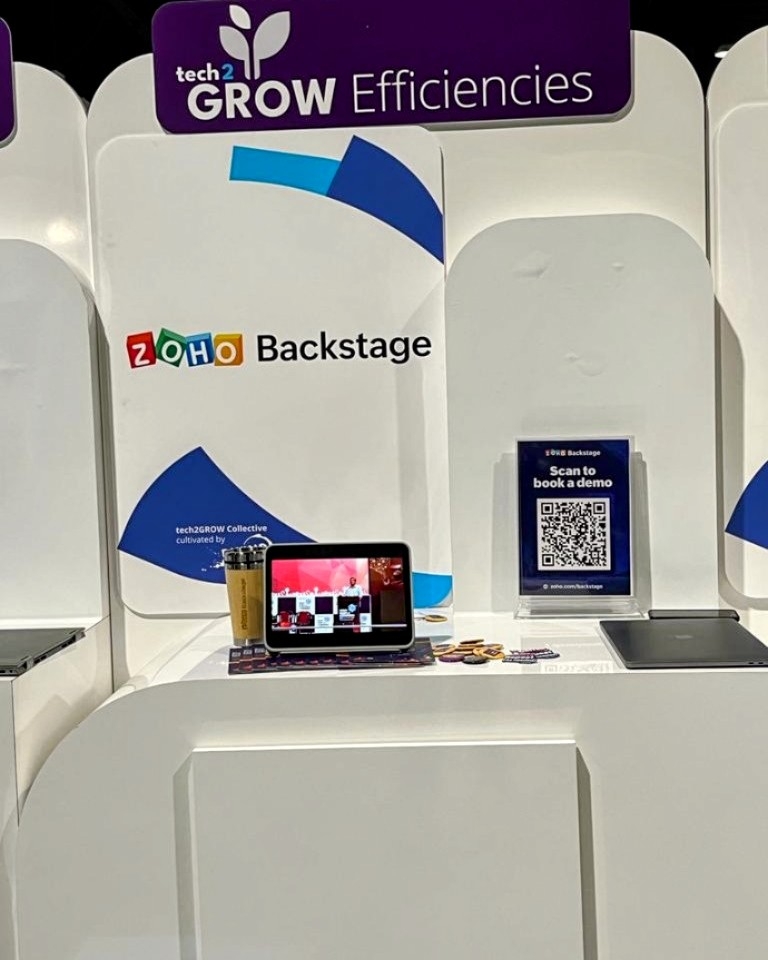
Hey there! Are you going to ETL Vegas? We'd love to meet you and talk about the latest event tech. Come say hi at Stand G9, and let's chat about how Zoho Backstage can elevate your events.
#EventTechLive2023