George Weigel just made one of the strongest cases yet for why the new federal tax credit scholarship program could be a turning point for Catholic education in America.
Writing in @FirstThings, Weigel argues this isn't just a policy win; it's a justice issue. Working and middle-class families have long been priced out of Catholic schools. That changes now.
And he surfaces something the public debate too often ignores: Catholic schools have always served as a public good, especially for low-income families and students with unique needs. The mission never changed. The funding finally might.
Worth reading for anyone who cares about educational opportunity, family choice, and the future of Catholic communities.
🔗 https://t.co/4QJNOG0a2v
@USCCB@Invest_InEd@NCEATALK@CatholicNH@PortlandDiocese
#CatholicEducation #SchoolChoice #ParentalChoice #CatholicSchools #EducationPolicy #EducationReform
One month from today, @SJSBoston will mark the retirement of Msgr. Stephen Salocks after nearly four decades forming future priests.
Most Catholics will never meet the man who formed their priest, but they experience the fruits of that work every Sunday at Mass and in the most important moments of their lives.
I wrote a reflection on his legacy and the lasting impact of seminary formation: https://t.co/HZraHwe5Si
CC: @CatholicTV@BpRobertReed
#SaintJohnsSeminary #Catholic #Priesthood #Vocations #Boston
What It Really Means to Honor Charlie Kirk Might Not Be What You Think - A Catholic Reflection
When someone we admire dies, our first instinct is usually to ask: How can I carry on their legacy? We look to the causes they championed, the battles they fought, the convictions that animated them. And that impulse is good. Yet the Catholic faith reminds us that death is not merely a pause in someone’s story. It is a passage. It is a transformation. Which means that to speak of “carrying on Charlie’s legacy” requires us to ask a deeper question: Who is Charlie now, in light of eternity?
When my own mother passed away, I found comfort in imagining what she would have wanted me to do in her absence. But Catholic teaching stretches us further: the one we remember is no longer the same as they were. Those who die in God’s grace are not frozen in their earthly struggles or desires. They are purified, healed, and - by God’s mercy - made ready for the fullness of His presence (cf. CCC 1030-1032).
This is why the Church teaches us to pray for the dead. It is one of the greatest acts of love we can offer them: asking that their sins be cleansed, that their time of purification be shortened, that they be welcomed into the beatific vision. To honor Charlie, then, is first to commend his soul to God’s mercy, to pray for his repose, and to trust that the Lord is completing in him the good work already begun.
And if, by that mercy, Charlie now stands in the presence of God, then he is not who he was here. He is perfected. His will is no longer bound by earthly limitations but is conformed entirely to God’s will (cf. CCC 1023). To imagine Charlie’s “legacy” as if he were unchanged is to misunderstand the very promise of heaven.
On earth, Charlie labored tirelessly for freedom of speech, the dignity of the human person, and the defense of truth in the public square. These were noble battles, worth fighting. Yet in heaven those desires are not abandoned - they are fulfilled. He no longer struggles for earthly freedom, but rejoices in the glorious freedom of the children of God (Rom 8:21). He no longer contends for truth in debate, but beholds the Truth Himself, who is Christ (Jn 14:6).
So the question before us is not simply, What would Charlie on earth want us to do? The greater question is, What does Charlie, now perfected in God’s presence, desire for us? And the answer is more demanding - and more beautiful. He would want us to live for eternity, not merely for time. He would long for us to seek holiness, not just victories. Above all, he would pray that we too, one day, might join him - God willing - in that place where every true desire is brought to completion in the vision of God.
@MrsErikaKirk@JackPosobiec
#Catholic #CharlieKirk #Purgatory
Did you know Groundhog Day has deep Catholic roots tied to the feast of Candlemas? I recently had the pleasure of discussing this fascinating connection with Dr. Marcus Peter on Ave Maria Radio! From the symbolism of light to the spiritual renewal both traditions inspire, it’s a beautiful reminder of how faith and culture intertwine.
This conversation was inspired by my article from @Church_POP: "10 Catholic Things You Didn’t Know About Groundhog Day & Its Hidden Connection to Candlemas" (link below).
Check out the full interview here: https://t.co/tvmPGDSBXQ
Read the original article here: https://t.co/zVgwErkEao
Let me know what you think—what connections between Groundhog Day and Candlemas stand out to you?
#GroundhogDay #Candlemas #CatholicTraditions #FaithAndCulture #AveMariaRadio #ChurchPOP #Catholic
I recently wrote for ChurchPop about the surprising connection between Groundhog Day and Candlemas, the Catholic feast celebrating Christ as the Light of the World.
My latest article explores how this quirky weather tradition traces back to European Candlemas folklore, the blessing of candles, and even biblical themes of light vs. darkness.
Read more here: 🔗 https://t.co/zVgwErkEao
Let me know what you think! #Catholic #Candlemas #GroundhogDay #CatholicX #CatholicTwitter
In a recent interview with Marcus Peter airing on over 400 radio stations nationwide, I commented on Elon Musk's recent description of "Cultural Christianity," a term that reflects a common but incomplete understanding of Christianity. While admiring Jesus’ moral teachings is laudable, it misses the heart of the faith: the transformative power of grace and the profound relationship with God nurtured through the sacraments. Catholic theology teaches that we need more than ethical knowledge; we need divine help to truly embody the good. This help comes through the grace of the sacraments, which empower us to live virtuously and grow in holiness.
#catholiceducation #catholic #catholicx #catholictwitter
Happy New Year! Here’s my most recent column for @Church_POP, a month-by-month guide to spiritual growth in 2025, rooted in the Church’s rich traditions and saints.
A Catholic’s Guide to the New Year: 12 Spiritual Goals for Every Month in 2025 - https://t.co/Y6nBgNILnC
#CatholicChurch #Catholic #NewYear #CatholicTwitter #CatholicX
I had the privilege of joining the brilliant Marcus Peter on @AveAfternoon to discuss the urgent need for a Catholic renaissance in our fragmented cultural landscape. From ideological polarization to the erosion of shared values, we explored how the Church can lead the way in restoring unity and hope. This thought-provoking interview aired on over 400 EWTN Radio channels across the U.S. Don’t miss our conversation on how faith can inspire a renewed vision for our times.
#Christmas2024 #catholicchurch #catholics #CatholicTwitter #CatholicX
The O Antiphons: Rediscovering Advent’s Poetic Longing
If you find yourself scrolling through carols and Christmas specials, the O Antiphons are likely absent. Yet these prayers, sung at Vespers since at least the 6th century, beginning today, December 17, and continuing through December 23, embody something that modernity often lacks: a poetic sense of expectation rooted in a transcendent purpose.
These antiphons - seven titles for Christ drawn from Scripture - move the soul beyond sentimentality, beyond the noise of December, and into something deeper: a longing that confronts the present chaos and reorients it toward divine order. They are prayers not of retreat but of recognition. To sing them is to admit that the world is broken, that our lives are fractured, and that we need the One who can restore all things.
Today, we begin with O Wisdom: O Wisdom, coming forth from the mouth of the Most High, reaching from one end to the other, mightily and sweetly ordering all things.
The paradox here is striking. Wisdom - so lofty, so cosmic - chooses to descend into the particular, into the disorder of human existence. This ancient plea reminds us that the same divine Logos who holds the universe together has the power to mend what is fractured in us: our divided hearts, our splintered relationships, our fractured public life.
And so, it’s worth asking: where do we need the Wisdom of God today? In our hurried, distracted lives where prudence - clear sight and sound judgment - has given way to impulse and noise? In families where old wounds linger unresolved? In the cultural imagination, where confusion reigns and truth feels increasingly elusive?
The O Antiphons are not passive prayers. They are cries for restoration, for the divine order to invade the disorder we’ve come to normalize. To sing O Wisdom is to say that salvation is not merely a promise for eternity but a work that begins now - if we are willing to align ourselves with it.
In these final days of Advent, the Church invites us to slow down, to listen, and to wait with purpose. The O Antiphons confront us with the truth that we do not save ourselves. We cannot order our chaos alone.
Come, Lord Jesus. Come, O Wisdom, and teach us the way of prudence.
#catholic #catholicx #catholictwitter #catholicism #christmas #advent #romancatholic #popefrancis #jesus
https://t.co/qiwkEWdEPw
In today's The Bangor Daily News, I explored how Christmas lights are symbols of hope and guidance, reminding us to slow down and reflect during the Advent and Christmas seasons. Highlighting how these lights, rooted in the Christmas story and the Catholic faith, inspire us to bring light into the lives of others through small acts of kindness, generosity, and connection, the article shows that even in the darkest times, the light of Jesus can shine through.
#christmas #advent #catholic #catholicx #catholictwitter #maine #newhampshire #jesus #christian
🎙️ New Interview Clip: The Catholic Response to Neuralink
I had the privilege of discussing my recent article on Ave Maria Radio with Marcus Peter, where we explore the ethical and theological implications of advanced technologies like Neuralink. In this short clip, we touch on how these technologies challenge the Catholic understanding of the human person, especially through the lens of St. John Paul II’s Theology of the Body.
We discuss the core belief that we are not simply minds with bodies but integrated beings, and how Neuralink risks reducing us to mere information processors. We also highlight concerns about human dignity, autonomy, and the potential inequalities that may arise as AI and human enhancement technologies continue to evolve.
Interested in how technology intersects with theology and ethics? Take a listen to this brief clip and share your thoughts. Let’s keep the conversation going about preserving human dignity in an increasingly technological world.
#Neuralink #CatholicEthics #TheologyoftheBody #AI #TechnologyandFaith #CatholicTeaching #Ethics #HumanDignity #AIethics #Podcast #CatholicTwitter #CatholicX
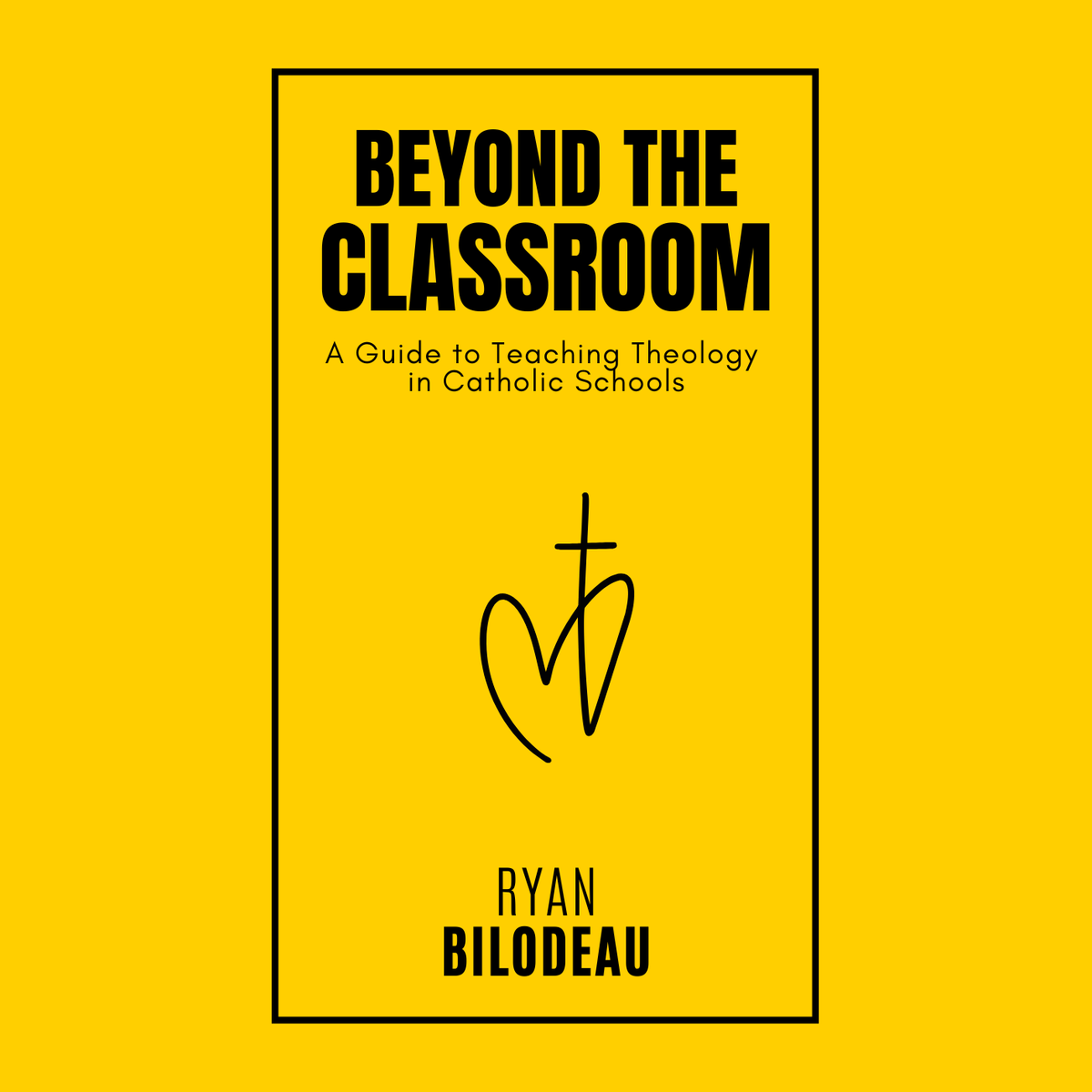
In "Beyond the Classroom: A Guide to Teaching Theology in Catholic Schools," set for release in 2025, theology teacher Ryan Bilodeau explores how Catholic high school education must reach beyond traditional methods. With many students from non-Catholic backgrounds, the book emphasizes engaging them on multiple levels. Built on six key pillars, it serves as a framework to guide educators in today’s diverse educational landscape.
https://t.co/B3lww9V4oU
#catholiceducation #catholicschools #catholictwitter #catholicx #catholic
One year ago today, tragedy struck in Lewiston when Maine was shaken by senseless violence. In reflecting on this painful anniversary, I revisited the article I wrote exploring a Catholic response to such grief and the search for hope amidst suffering.
Read my thoughts on finding faith and compassion in the face of darkness: https://t.co/liP8Ow03Jx
#catholic #catholicx #catholictwitter #lewistonstrong #maine #lewiston
In my latest column for the @PressHerald, I explore the pressing need for civility amidst the heightened tensions of this election season.
"This loss of civility is not just a symptom of our polarized media environment or the rise of social media - though both have played a role. Rather, it reflects a deeper moral problem: we’ve forgotten the dignity of the individual, a core value that should undergird any healthy society. And in treating our opponents as caricatures rather than people, we lose sight of the fact that even those we oppose politically have value beyond their opinions."
#catholic #politics #election2024 #trump #harris #popefrancis #CatholicTwitter #CatholicX
https://t.co/2H0zCAL1V6
I recently had the opportunity to discuss the concept of "cultural Christianity" on EWTN's Ave Maria in the Afternoon. The interview was sparked by my article in @cathexchange where I responded to Elon Musk’s description of himself as a "cultural Christian."
In my conversation with the brilliant Marcus Peter of @AveAfternoon I explored how true Christianity goes beyond moral guidelines to embrace a transformative, grace-filled relationship with God.
You can listen to the interview here: https://t.co/YGFHLgrcCQ
#catholictwitter #catholicx #CatholicChurch #catholic #elonmusk
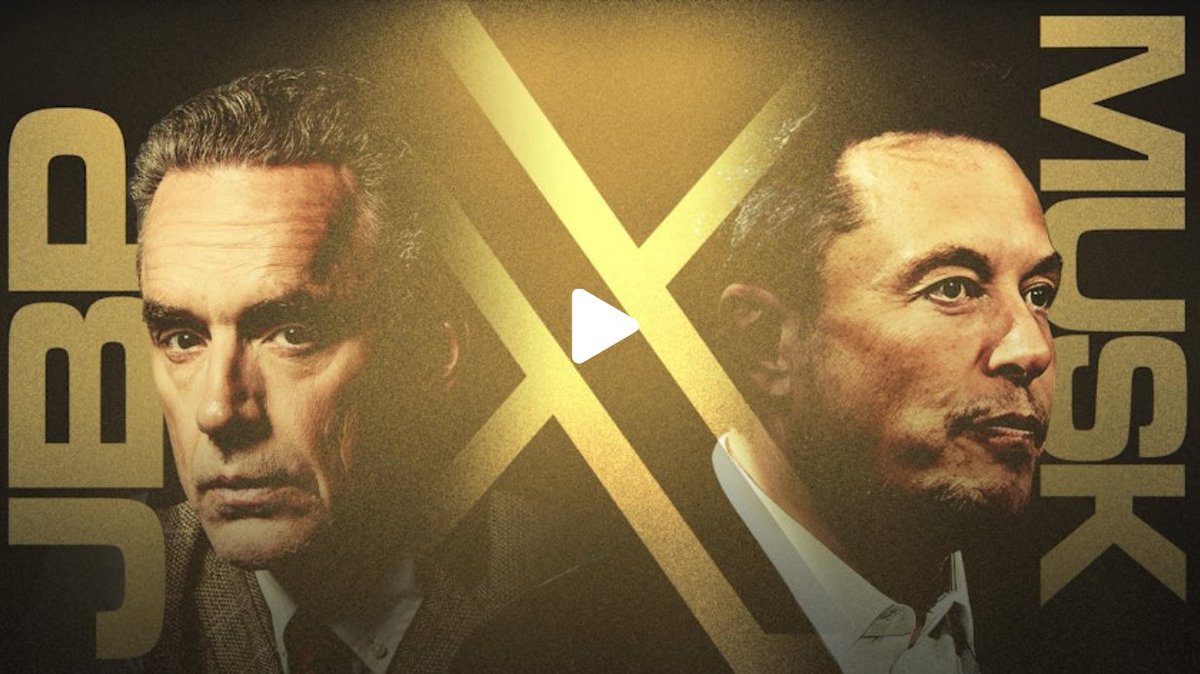
In his recent interview with Dr. Jordan Peterson, @elonmusk described himself as a "cultural Christian," admiring Jesus' teachings while sidestepping religious practice. This reflects a common misunderstanding today: seeing Christianity as just a moral code instead of a transformative relationship with God. Catholic theology is clear: being good isn't just about knowing or believing the right things; it's about receiving God's grace, especially through the sacraments. This grace isn't just a nice add-on but is rater what actually empowers us to live virtuously. While Aristotle taught that knowing the good is essential, Catholicism goes further, teaching that we need divine help to truly embody it. This relationship with God, nurtured through the sacraments, changes us deeply - mind, body, and soul. Musk’s view, like that of many, misses this vital point: Christianity isn't just about ethical actions; it’s about a profound, grace-filled relationship with the divine that goes beyond mere moral behavior.
#catholic #eucharistrevival #catholicchurch #catholicfaith #elonmusk #jordanpeterson #CatholicTwitter #catholicx
"They took branches of palm trees and went forth to meet him, and cried, Hosanna! Blessed is he who comes in the name of the Lord!" - John 12:13
Happy Palm Sunday 🌴