Ken Griffin, founder of Citadel, the most profitable hedge fund in history, on the moment that left him "shocked and depressed" about AI:
"one of our team members built an agentic AI system to recreate academic papers in finance."
"we have a legion of young masters and PhDs doing this work. it takes roughly six to eight weeks to reproduce a paper."
"my colleague built an AI system that would read a paper, reproduce it, verify the results, produce the results on out of sample data — in about two to three hours per paper."
"this is not just a white collar job. this is a master's or PhD-level job. six weeks of work turned into two to three hours."
"and then OpenAI just solved a math problem that no one had solved for eighty years."
"competitive moats are being filled in at lightning speed."
the founder of Citadel watching PhD-level work get compressed from six weeks to two hours. and his response wasn't to cut headcount, it was "i will take every single productivity gain i can get because with the talented people we have, we just have more to go after."
Because the US government relied on neoliberal economists, who (in service of Wall Street) insisted that all of that cheap money should flow to the most profitable sectors, following the dogma of the "free market".
They said the government can't "pick winners", and instead private investors and corporations would "allocate capital more efficiently" (not by investing in fixed assets, but by juicing their stocks).
Infrastructure has notoriously low return on investment dragged out over long periods of time. Venture capitalists and private equity firms wanted high ROI in short-term cycles of a few years at most. So that's where most of the money went during the ZIRP period.
If you want good Infrastructure, you need state planning and state-directed investment of "patient capital", as Chinese officials call it. This is why China's socialist system -- based on public ownership of most banks and investment firms, with enormous state-owned enterprises in the construction industry -- has excelled in infrastructure development, while US infrastructure has deteriorated and 95% of US corporate earnings have gone to share buybacks and dividends.
Wall Street won. Main Street loss.
Madame Celeste Amarilla,
Vous êtes une femme méprisable et indigne de sa fonction.
Vous ne représentez pas le Paraguay, ce pays qui a transpiré la passion et l’honneur tout au long de la compétition. Par votre inconscience et votre racisme décomplexé, le monde entier a déjà oublié le parcours et l’effort historique que vos joueurs ont réalisés durant cette coupe du monde pour laisser place à une dame incompétente donnant la pire image possible de son pays.
Je ne laisserai jamais aux gens comme elle, la liberté de laisser propager leur haine et leur racisme à travers le monde.
Taiwan solved tax evasion in 1951 with a trick so cheap it should embarrass every tax authority on the planet.
The problem was an all-cash economy full of small shops. A merchant pockets the cash, skips the receipt, and the sale never existed. Auditors can't catch what was never recorded, and hiring enough of them to watch every noodle stand costs more than the missing tax.
So finance chief Ren Xianqun flipped the incentive. Print a lottery number on every receipt. Draw winners every two months on live TV. Top prize today: NT$10 million, about $310K.
Suddenly the customer and the shopkeeper want opposite things. The merchant wants the sale off the books. The customer wants the ticket. And there are millions more customers than merchants. Every transaction now carries a built-in witness demanding the paper trail.
Year one, reported tax revenue jumped 75%, from NT$29 million to NT$51 million. Seventy-five years later, roughly 70% of Taiwanese still play. Convenience stores redeem the smallest NT$200 prizes at the register, so even a coffee receipt feels like a scratch card.
The elegant part is what the audit force costs. The prize pool runs about NT$7 billion a year, roughly $20 million. In exchange, the government gets 23 million unpaid auditors working every checkout line in the country, forever. No inspector general on earth delivers that coverage at that price.
Greece, Italy, Portugal, and Slovakia all copied it. The most effective compliance tool ever built looks like a game, and that's exactly why it works.
White people inherently value dogs over Black lives by dehumanize Black people by elevating dogs alongside other racial groups. Dogs have not only been embraced by Whites, but have been given access into white spaces and granted civil liberties for which Blacks have been deny.
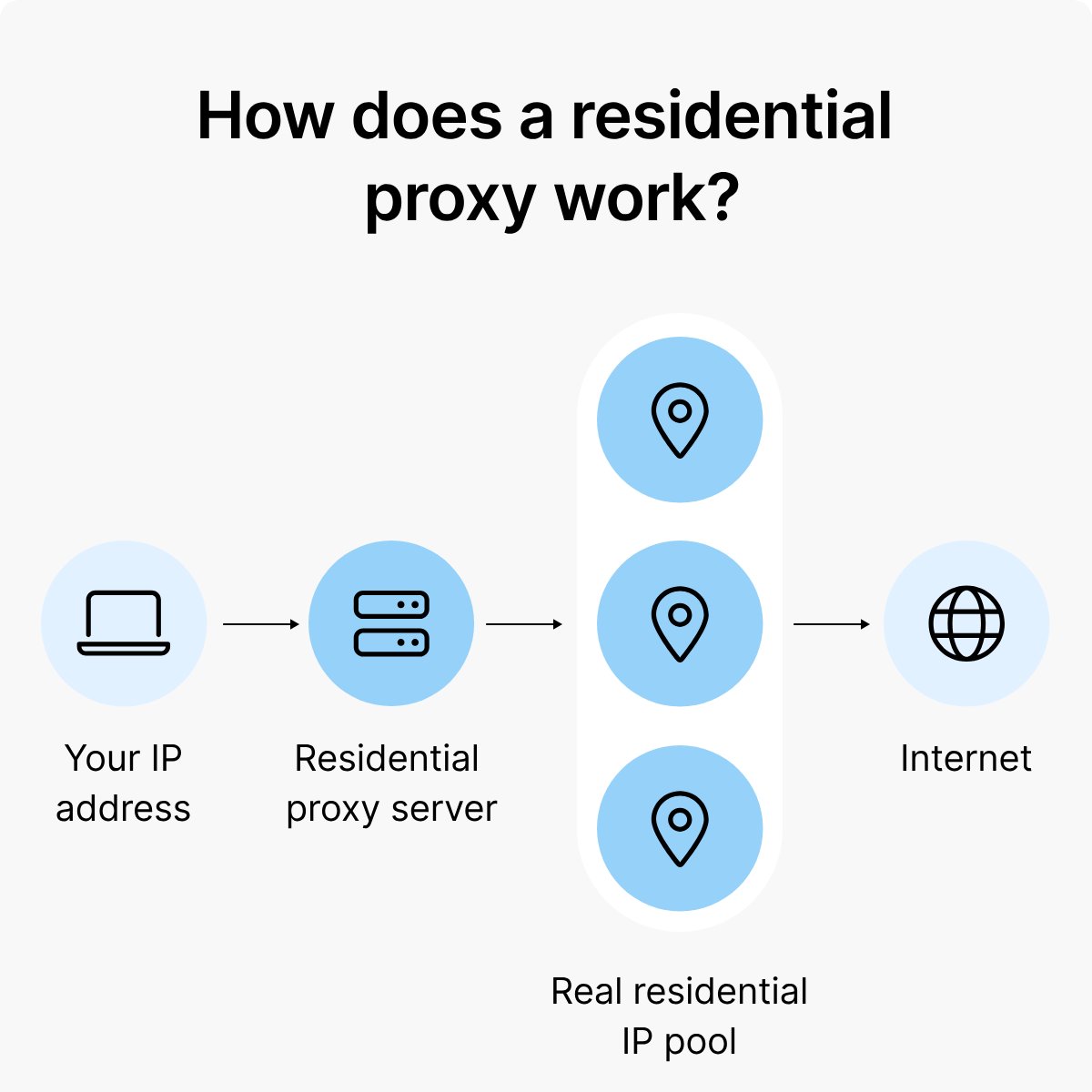
❗️ BREAKING: Over 2 million hijacked consumer devices, including smart TVs and streaming boxes, were quietly acting as residential proxy exit nodes. All of them, per Google, were part of the NetNut residential proxy network.
Google, working with the FBI and Lumen, has moved to dismantle the NetNut network. In a single week, Google tracked 316 distinct threat clusters, including espionage groups, routing attacks and password sprays through suspected NetNut exit nodes.
Stanford researchers proved you are not being rejected by 10 companies. You are being rejected by one algorithm 10 times.
Your score is stored for 330 days. Every company that uses the same vendor sees the same number. They call it the algorithmic blackball.
Researchers at Stanford HAI, Chapman University, and Northeastern University published the largest audit of AI hiring algorithms ever conducted.
The paper is called "Algorithmic Monocultures in Hiring." Published at FAccT 2026, May 26. The data came from Pymetrics, the AI hiring platform used by major Fortune 100 companies.
Here is what they found.
When you apply for a job at a company that uses Pymetrics, you play a series of assessment games. Your scores are stored. For up to 330 days. If another company also uses Pymetrics, your application is evaluated using the same stored scores. You are not getting two separate evaluations. You are getting the same score twice.
If the algorithm rejects you once, it rejects you everywhere.
The researchers call this the "algorithmic blackball." One bad score locks you out of every company that shares the same vendor. You never find out why. You never get a second chance. You just stop hearing back.
They ran a large-scale simulation using real applicant data. The result: over 40,000 job advances were lost because applicants who would have succeeded at one company were screened out by an algorithm calibrated for a different one.
Then they measured who gets hit hardest.
25.87% of Black applicants were routed into algorithmically discriminatory hiring processes. 14.74% of Asian applicants. These are not hypothetical projections. These are rates measured in deployed, real-world hiring systems used by some of the largest employers on earth.
The same algorithm. Applied across companies. Producing the same racial disparities at every one of them.
This is already in the courts. Mobley v. Workday is a federal class-action lawsuit alleging that AI hiring tools systematically discriminate against older, Black, and disabled applicants. The case is ongoing.
In Europe, the EU AI Act classifies hiring algorithms as high-risk AI systems by default. Compliance requirements take effect August 2, 2026. Weeks away.
In the United States, there is no equivalent federal law.
The researchers make four recommendations. Measure adverse impact at the position level. Strengthen cross-employer surveillance. Monitor risks from algorithmic concentration. Create legal pathways for independent researchers to access hiring data.
The last one carries an implicit warning. This study was only possible because Pymetrics voluntarily shared its data. Most vendors would prefer their algorithms remain opaque.
The next time you apply for a job and never hear back, the rejection may not have come from a human. It may have come from a score you received 330 days ago, at a company you have already forgotten, for a role that had nothing to do with the one you just applied to.
A defence contractor has figured out how to track you without ever needing your name, face, or numberplate.
The product, SignalTrace, instead listens to the devices you're carrying, and their sensor clips onto existing cameras your city has likely already got mounted.
1/12
his “AI server” is 4 mac minis stacked next to the toaster
linked by free software into one machine that runs 235B models no single computer could load
regulated clients pay him $3,500/month each to use it
he has 6 of them
that’s $21k/month from a tower of silver boxes in his kitchen
the stack runs exo - open-source, $0, turns four separate minis into one pool of memory. the monitor shows all four nodes firing together, one model spread across the whole cluster
the thing nobody tells you about local AI:
a model either fits in your machine’s memory or it doesn’t run. that’s the wall everyone hits. it’s why people assume serious AI means a $40k server
exo walks straight through that wall. it splits one massive model across every box in the chain. four minis at $599 each suddenly run what a single high-end machine can’t touch
and the people who need this aren’t chasing the newest model
they’re the ones the cloud locked out:
→ a law firm with privileged case files
→ a medical practice under HIPAA
→ an accounting firm holding client financials
they need AI nowhere near a third-party server. a stack they can point to during an audit ends every objection
their models run on his cluster. the data never leaves equipment he controls
the breakdown:
→ 4 mac minis: $2,400 total
→ exo software: $0
→ electricity: ~$25/month
→ what he charges per client: $3,500/month
→ 6 active clients
the kitchen stack paid for itself in the first 3 weeks
month 1: 2 clients, $7k
month 3: 4 clients, $14k
month 6: 6 clients, $21k
he’s not running a startup with an office and a logo
he’s running four silver boxes between the coffee machine and a bowl of fruit, clearing $21k/month from hardware that cost $2,400
clients picture racks and cooling fans
reality is four minis humming next to where he makes breakfast
the cloud companies charge a fortune for compute and access to your own
he charges $3,500 a month for the one thing they can’t sell - a machine that never phones home