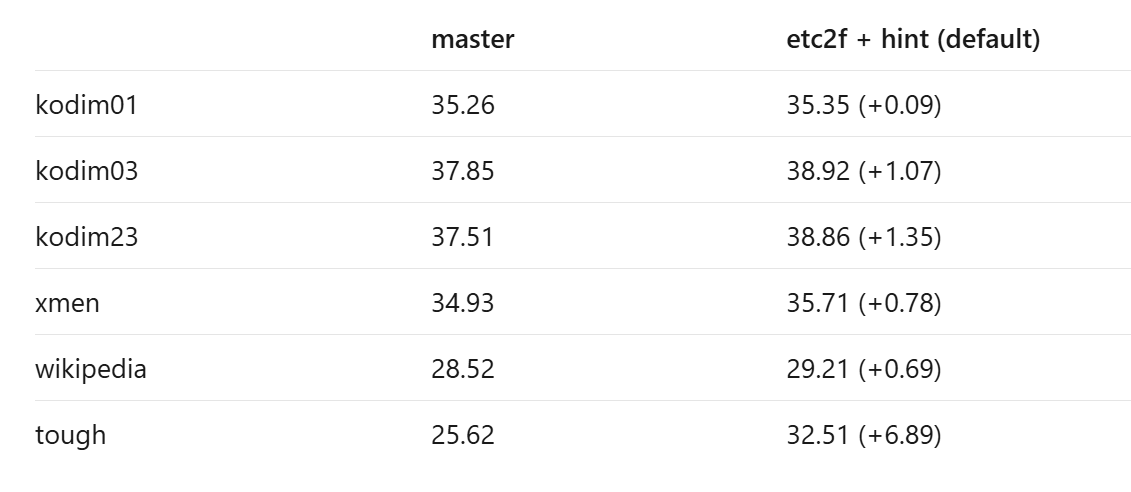
I've begun writing real-time texture encoders using Opus/Fable. ASTC HDR 4x4 was first, now I've got full ETC2. It's faster than etcpak's SIMD encoder, without using any SIMD.
Quality is going up because previously UASTC LDR 4x4->ETC2 transcoding wasn't very strong as it was only exploiting ETC1 modes.
For GPU texture encoding using AI is utterly revolutionary. In hours I can do potentially weeks of experiments and implementation work.
I'm also incredibly grateful to our reviewers, Shannon Woods, Kai Zhang (NVIDIA), and Al Pavlov, for their thoughtful feedback and attention to detail. Their contributions helped us make the book the best it could be.
Excited to announce that my new book, Neural Rendering in Action, is coming next month!
It's the first book dedicated entirely to exploring how neural techniques can be applied across different rendering workflows.
Preorder here -https://t.co/7kJNb7DgZ8
A huge thank you to my co-authors, Mauricio Maurer, Sergey Kosarevsky, and Prashant Shukla, for their knowledge, dedication, and contributions. This book wouldn't have been possible without them!
We also have a dedicated chapter on Diffusion Models, written entirely by Prashant Shukla, covering diffusion-based techniques and working with ControlNet.
The book takes a hands-on approach to implementing and understanding a range of techniques, including Slang, differentiable rendering, texture compression with MLPs, NeRFs, and Gaussian Splatting.
New blog post: Building a Fiber-Based Job System from Scratch.
I walk through how I built the fiber-based job system in my offline renderer, including scheduling, synchronization, and the design choices behind it.
https://t.co/2h5muwLEnx
Claude Code vs Blender is getting f*cking illegal
Two workflows building the same complex 3D rocket assembly, but one costs nearly 19x more in the demo
And the difference reveals something most AI automation demos completely ignore
Claude Code can reason through geometry, generate Python scripts, assemble mechanical components, and automate complex animations
But every unnecessary tool call, failed generation, and repeated rebuild adds overhead that can make the final result ridiculously expensive
Meanwhile, Blender can execute predefined procedural operations without paying for another round of AI reasoning
Here’s where the workflows differ:
Traditional Blender:
MODEL individual rocket components
POSITION mechanical structures and hinges
CONFIGURE materials, lighting, and cameras
ANIMATE deployable panels
REFINE and reuse finished assets
Claude Code + Blender Python:
GENERATE geometry from written instructions
ASSEMBLE mechanical components through scripts
PARAMETERIZE dimensions and deployment angles
AUTOMATE animation and camera movement
REBUILD variations by changing code
The interesting part isn’t which tool wins
It’s knowing when AI reasoning is worth the cost and when a deterministic script can do the job
Want to recreate the experiment?
Open Claude Code with Blender installed and paste:
“Create a procedural Blender Python generator for a detailed rocket assembly with deployable panels, animated hinges, and realistic metallic materials
Separate geometry, materials, animation, and camera setup into reusable functions
Expose all major design parameters, avoid rebuilding unchanged objects, and log execution time and available AI usage costs”
Blender handles the 3D execution
Claude Code makes the workflow programmable
The real advantage isn’t using more AI
It’s getting the same result without paying for unnecessary intelligence
Bookmark this workflow before your next 3D project
@richgel999 Any tips on what should I tell codex/claude, I had it review my past 20 conversation but not much useful it suggested that by default codex wasn't already doing
@Dispatch_Graph@milostosic I suggesting looking at this page to understand bgfx in more details, there is a reason bgfx is so popular even though its shader compiler still can't compile ray tracing shaders
https://t.co/DLEmuWzleB
instead of writing new, why not fork bgfx and make it modern?
A candid note: AI wrote much of this. I reviewed it at a high level and tested it on real GPUs, but not line by line.
The compiler is not open source yet, though I plan to release it.
What would you want to compile, and what would break?
I used AI to help create msl2spirv, a Metal Shading Language → Vulkan SPIR-V compiler.
Basalt is a Vulkan renderer where every shader—including PBR, shadows, reflections, bloom, tone mapping, and ImGui—is written in Metal.
https://t.co/hW39JWSqET
The compiler parses Metal with a Clang fork, lowers it to a typed shader IR, and emits SPIR-V validated for Vulkan 1.3.
It supports the shaders used by Basalt: PBR, shadows, sky, reflections, bloom, tone mapping, and ImGui.