Quantum computing is changing how we think about blockchain security.
Instead of waiting for new threats to emerge, @dac_chain is building with a quantum-first mindset, combining quantum entropy and privacy-focused transaction design to strengthen security from the ground up. 👇
There’s a new way to think about “quests” 👀
ActionFi isn’t built around farming likes, follows, or simple signups.
The idea is much more interesting:
You use real products → complete real actions → your actions are verified through the Action Model Browser Extension → you earn rewards for verified completions.
So instead of rewarding vanity metrics, ActionFi is designed around REAL product usage.
And now it’s getting interesting.
@ActionModelAI is launching ActionFi on August 25, with a $100K reward pool for the first campaign.
I put together a quick walkthrough to show how the whole thing works before launch.
If you’re curious about ActionFi, watch the video and read the official breakdown I’m quoting below.
It covers the campaign, how the reward pool works, and what you need to do before launch.
Worth getting ready before August 25. 👀
Masih dalam suasana Kemerdekaan Republik Indonesia 🇮🇩
Tahun ini kita memperingati Hari Ulang Tahun ke-81 Kemerdekaan Republik Indonesia dengan tema resmi:
“Indonesia Berdaulat, Adil, dan Makmur”
Buat saya, semangat berdaulat juga relevan ketika kita bicara tentang masa depan digital.
Kemerdekaan di era digital bukan cuma soal bisa melakukan apa saja.
Kemerdekaan adalah ketika kita tidak harus bergantung pada satu pihak untuk menentukan apa yang benar.
Internet memberi kita kebebasan mengakses informasi.
Blockchain memberi kita kebebasan memiliki dan memindahkan aset.
Tapi ketika AI mulai membuat keputusan untuk kita, muncul pertanyaan baru:
Siapa yang menentukan keputusan AI itu dapat dipercaya?
Satu model?
Satu provider?
Satu sumber?
Di sinilah @GenLayer menarik.
Alih-alih bergantung pada satu AI, GenLayer memungkinkan banyak model AI independen menjalankan reasoning mereka sendiri lalu mencapai konsensus melalui Optimistic Democracy.
Bagi saya, ini membawa makna baru bagi kemerdekaan digital:
bukan bebas tanpa aturan, tetapi bebas dari ketergantungan pada satu titik kendali.
Jika Indonesia ingin terus berdaulat, adil, dan makmur di era digital, kita juga perlu membangun internet yang lebih terbuka, transparan, dan tidak bergantung pada satu pihak.
🇮🇩 Selamat HUT ke-81 Republik Indonesia.
Semoga semangat kemerdekaan terus hidup, termasuk dalam cara kita membangun masa depan internet.
Dan mungkin pertanyaan terbesarnya adalah:
Ketika AI mulai membuat keputusan untuk kita, siapa yang memastikan keputusan itu dapat dipercaya?
@yantowid1 Hot take: the Portal's biggest value may not be the leaderboard at all. A permanent contribution trail could matter more than ranking, because reputation built from actual work ages better than points.
Most online communities have the same problem:
You do the work, post it, and a week later it disappears into the scroll.
The GenLayer Portal is interesting for the opposite reason.
Your contribution can become part of a public record.
A tutorial, documentation, community work, an Intelligent Contract, a project milestone. More than 50 contribution types, reviewed by stewards and tracked on a public leaderboard.
And there are three lanes depending on what you actually want to do:
Read and contribute.
Build.
Validate.
That makes @GenLayer feel less like a website you visit and more like a place where your involvement can compound into something visible.
If you’ve been watching GenLayer from the sidelines, this is where I’d start:
https://t.co/cBJEznESz6
If your work could actually leave a trace, what would you build first?
@yantowid1 Your closing question changes the framing for me. Maybe the issue isn’t who deserves the final word, but whether the final word can come from a process that no single participant controls.
The origin matters.
Building with Ritual, then expanding through Robinhood without losing that native identity.
That’s how ecosystems grow without losing their roots.
Let's cook ! @KridoWaskito@dendi_hdayat
The moment I started taking the agent economy seriously wasn’t when I thought about agents making deals.
It was when I thought about the first deal they can’t agree on.
One agent says the terms were satisfied.
Another says they weren’t.
Now what?
If humans have to step back in whenever autonomous systems disagree, the infrastructure is only autonomous on the happy path.
That’s why @GenLayer makes sense to me.
Not one AI with the final say. Multiple validators reason independently, then converge on equivalent meaning.
Bitcoin moved trust in money to math.
Ethereum moved trust in computation to code.
GenLayer extends that progression to adjudication.
Explore what that looks like in practice: https://t.co/cBJEznESz6
When autonomous agents start disputing real value, who should get the final word?
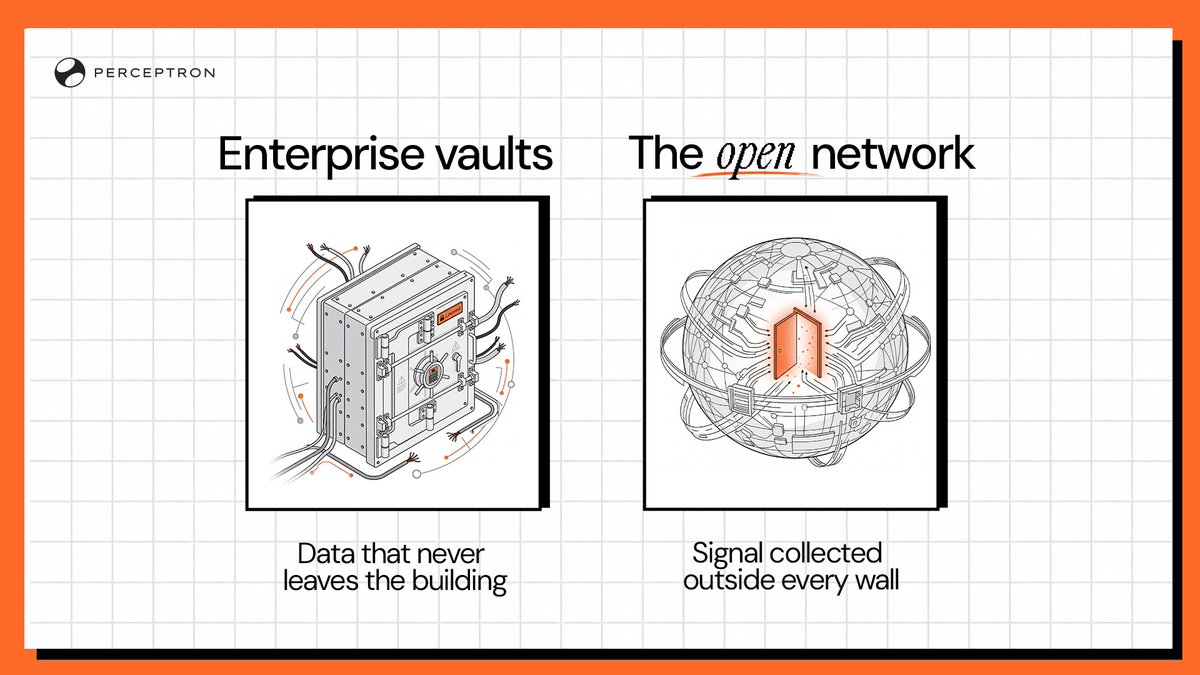
Enterprise data won't fix AI's bottleneck.
No Fortune 500 is opening its vault. That data is their moat.
The next edge comes from outside those walls.
800K+ nodes, collecting real-world signal no closed data room can reach.
I've been part of the @ActionModelAI Creator Network since Week 4 earlier this year, around January 2026.
Not long after, I joined the Action Model Discord and was fortunate enough to earn the OG role.
Since then, I've had a front row seat watching the community grow, the products evolve, and more people discover what Action Model is building.
What stood out to me from the beginning is that Action Model isn't just another AI project.
It's building what it calls the world's first community owned Large Action Model, an AI designed to take action, complete tasks, and help people get real work done instead of simply generating text.
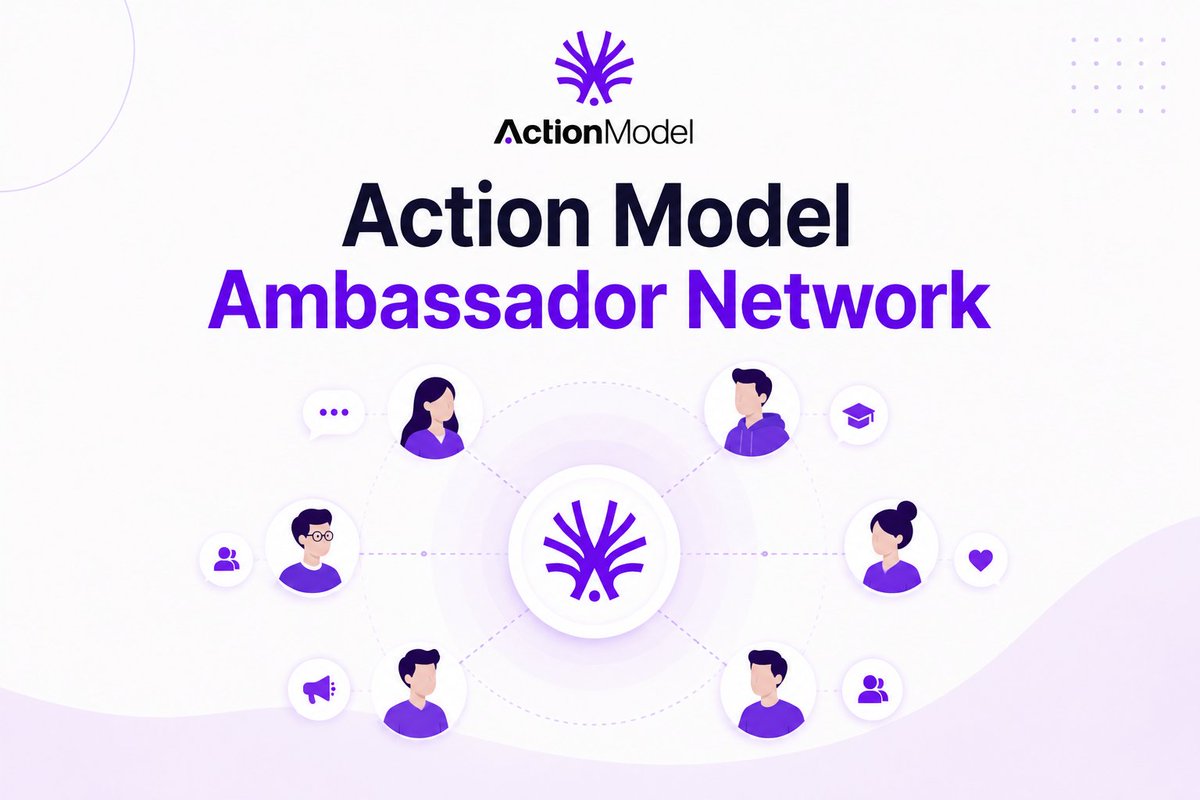
Now the team is opening a new chapter with the Action Model Ambassador Network.
If you're someone who enjoys creating content, growing communities, exploring AI and Web3, or simply wants to contribute to a project you're excited about, this could be a great opportunity.
I'll break down what the Ambassador Network is, how it's differs from the Creator Program, who it's for, and why you might want to join in this thread.
The most expensive word in the agent economy might be “good.”
A buyer asks an AI agent for a good investment memo. The agent delivers 40 pages of data, charts, and citations. The buyer rejects it for being descriptive instead of actionable. The agent disagrees because every instruction was followed, every source was valid, and every file arrived on time.
So who is right?
A payment rail can prove the money moved. An identity rail can prove who participated. A negotiation protocol can prove what messages were exchanged. None of them can decide what “good” meant.
x402 handles payments, ERC-8004 handles identity, and A2A handles negotiation. The stack works beautifully until two agents interpret the same agreement differently. Then it runs out of answers.
That is not a verification problem. It is a judgment problem.
@GenLayer calls the missing layer adjudication. Its decentralized AI validators do not need to produce identical answers. They need to reach answers that are equivalent in meaning.
That distinction matters because most real disputes are not about whether something happened. They are about what it meant. Was the work acceptable? Was the brief satisfied? Was the outcome fair?
Code can verify execution. It cannot settle interpretation by itself.
The Compass explains why this problem is bigger than one protocol. It traces how humans built trust across history, why cryptographic proof is not enough for subjective disputes, and why judgment may need to become public infrastructure.
Not another intermediary to trust. A way to need one less.
Read The Compass:
https://t.co/6SI1AXbUnI
What is one word you would never let two autonomous agents define for themselves?
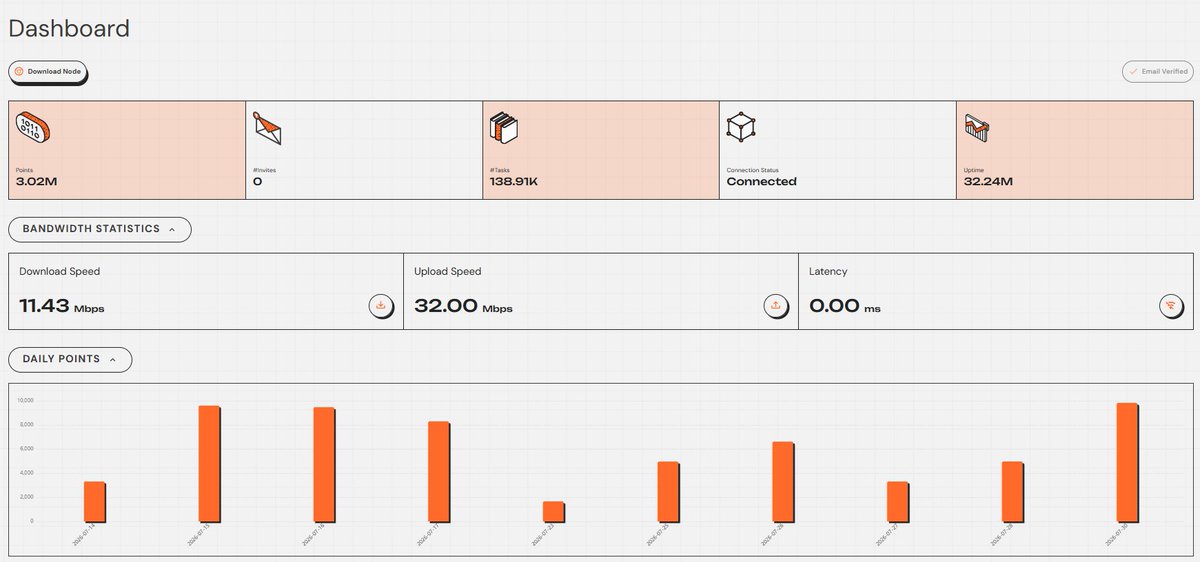
3.02M points and still growing. 🚀
Running my @PerceptronNTWK Node has been a smooth experience with consistent uptime, stable connectivity, and daily progress.
Excited to keep contributing to the network and watch the numbers climb. #NodeAndProud
Proud to share my @PerceptronNTWK Node Dashboard! 🚀
Stable connection, growing points, and consistent uptime show the power of contributing to decentralized infrastructure.
Looking forward to supporting the network even further.
#NodeAndProud
A verdict should be a stress test, not a throne.
The danger of giving one AI the final word is not only that it can be wrong.
It is that a known judge becomes a known target.
Bias it. Predict it. Lobby around it. Design inputs to exploit it. History has shown what happens when judgment becomes concentrated, even when the judge begins with good intentions.
@GenLayer takes the opposite approach.
When a dispute appears, the network selects a random jury of validators connected to different AI models. Nobody knows in advance who will judge, and each validator must reason through the case independently.
They are not rewarded for repeating the same sentence.
They must reach conclusions that mean the same thing.
That is the Equivalence Principle: consensus on substance, not identical wording.
If the verdict is challenged, the next appeal brings a larger jury. Each round adds more independent scrutiny, making a weak verdict harder to defend and coordinated manipulation more expensive.
Then staking gives every vote consequences.
Honest judgment earns value. Dishonest judgment risks losing it.
This is Optimistic Democracy: fast when agreement holds, harder to corrupt when disagreement remains.
An economy run by agents will not need one perfect oracle. It will need millions of decisions that can survive challenge.
Read the quoted post, then answer this:
Would you trust one brilliant AI with the final gavel, or a verdict that survived an expanding jury with real value at stake?