Concerning ecological fragility, desert neighboring areas face water deficiency and utter scarcity in some parts for most of months of the year, and yet ecological fragility became serious, where the averaged annual rainfall values decreased markedly since early 1960s.
Also to clarify not sure global secularisation is a legitimate aim either just what happened in Europe that led to it. It doesn't have to be uniform but more likely turned on and off as necessary 📢 throughout history. But always there.
Leonardo da Vinci's Self Portrait (1510-1512 CE), is drawn in red chalk on paper. It depicts the head of an elderly man in three-quarter view, his face turned towards the viewer. Leonardo da Vinci's thinking about the power of the artist can also furnish the clue to the famous enigmatic self-portrait in red chalk. The subject is distinguished by his long hair and long waving beard which flow over the shoulders and chest. The length of the hair and beard is uncommon in Renaissance portraits and suggests, as now, a person of sagacity. The face has a somewhat aquiline nose and is marked by deep lines on the brow and pouches below the eyes. It appears as if the man has lost his upper front teeth, causing deepening of the grooves from the nostrils. The eyes of the figure do not engage the viewer but gaze ahead, veiled by the long eyebrows. The drawing has been drawn in fine unique lines, shadowed by hatching and executed with the left hand, as was Leonardo's habit. The paper has brownish "fox marks" caused by the accumulation of iron salts due to moisture.
In 1839 CE, Giovanni Volpato, an antiques dealer who may have purchased the drawing in England or France, sold it to Prince Charles Albert of Sardinia with other drawings of great artists such as Raphael and Michelangelo. It is housed in Turin, at the Royal Library, and is not generally viewable by the public due to its fragility and poor condition. Researchers have developed a nondestructive way to gauge the condition of the drawing by describing and quantifying the chromophores affecting the paper. Assumption that drawing is a self-portrait of Leonardo was made in 19th Century CE, based on the similarity of the sitter to the possible portrait of Leonardo as Plato in Raphael's School of Athens and on the high quality of the drawing, consistent with others by Leonardo. It was also decreed to be a self-portrait based on its likeness to the frontispiece portrait of Leonardo in Vasari's second edition of The Lives of the Artists (1568 CE). During WWII, presumed self-portrait was temporarily moved from Turin to Rome to avoid being taken by Nazis, becoming somewhat damaged in the process.
Since mid-to-late 20th Century CE, identification of the drawing as a self-portrait has been questioned. The claim that it represents Leonardo has been criticized by a number of Leonardo scholars and experts, such as Robert Payne, Martin Kemp, Pietro Marani, Carlo Pedretti, Larry J. Feinberg and Martin Clayton. A frequent criticism made in the late 20th Century is that the drawing depicts a man of a greater age than Leonardo himself achieved, as he died at age of 67 and allegedly made the drawing between age of 58-60. It has been suggested that the sitter represents Leonardo's father Piero da Vinci or his uncle Francesco, based on the fact they both had a long life and lived until age of 80.
In early 21st Century, presumed self-portrait of Leonardo was used to help identify the subject of a drawing by Giovanni Ambrogio Figino, believed to depict an elderly Leonardo with his right arm assuaged by cloth. This may correspond with accounts of Leonardo's right hand being paralytic late in life and burial position of his presumed remains, which scientists hope to DNA test to determine if they are Leonardo's. In 2000, Frank Zöllner reflected that "This red chalk drawing has largely determined our idea of Leonardo's appearance for it was long taken to be his only authentic self-portrait."
#archaeohistories
It's true that even naughty Muslims know what right. In my experience. Naughty Catholic people too.
It does help overall. But it's not that those who never knew are automatically bad.
It's a different q. My first reaction was in the end there's politicians who believe in good and those who don't care.
Then I thought perhaps secularism suggests there's a limit to morality.
But it's painted as religion leads to dogma and lack of discourse or change.
Big 1.
عالیقدر:
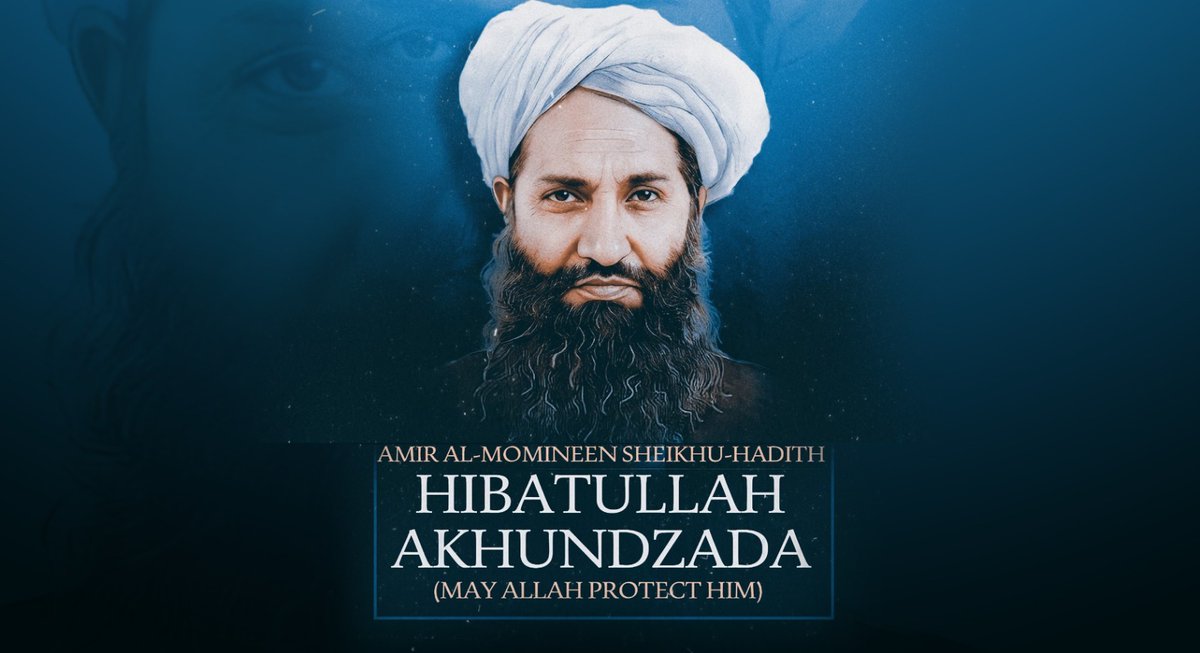
کفري نړۍ دا غواړي چې دین او سیاست سره جلا کړي، په اسلامي هېوادونو کې هم علماء په سیاست کې برخه نه لري او که سیاست ته داخلیږي، نو بیا حتی د مدرسې په صحن کې هم د دین خبره نه شي کولای، سیاست ترې غصب شوی دی، علماء باید سیاست لاسته راوړي ځکه دا د دوی حق دی.
#محبوب_زعیم
Polarisation between atheists or fake religious ideas being used for power reasons is potentially a trap.
Sincere people of all faith's have more in common with good people who don't know about God than the former group. Ie western students are still outside of the mortgage trap
China has rapidly improved their ecological wellbeing from a decade or two ago when their rivers were toxic. I do actually have hope that if we all focused on what's real, we could enjoy the challenge and start from the real world as opposed to dashboard abstracts.