anthropic nearly doubled claude’s score on one database task by telling it to read its notes and test its guesses.
it already had a memory folder. the extra instructions took it from 0.36 to 0.64.
apparently “did you check?” has a benchmark now.
https://t.co/Z99lhx1W8E
olina mukherjee et al.: five 7–14b models, deliberately fine-tuned on sycophantic examples. 256 validation prompts per domain, scored by another model. this measures agreement behavior, not real-world expertise.
https://t.co/VELhTEIxvP
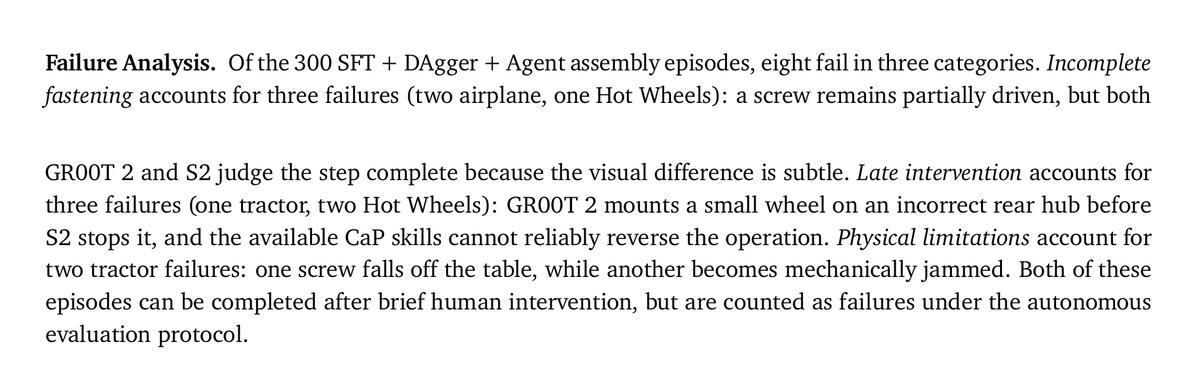
nvidia, gr00t 2 appendix g.1, pp. 100–102: 292/300 toy assemblies succeeded with corrective training + an ai supervisor. three failed on incomplete fastening that both systems judged complete. code listed for december; we haven’t tested it.
https://t.co/V2xvAFBxPA
n8n labs, nov 10 research preview. mac/windows; apache 2.0 app, bring your own model. local tasks stop when the computer sleeps; model usage may cost extra. permission checks can make mistakes. we haven’t tested it.
https://t.co/D4C7KmEvLE
a near-doubling can still mean missing 70%.
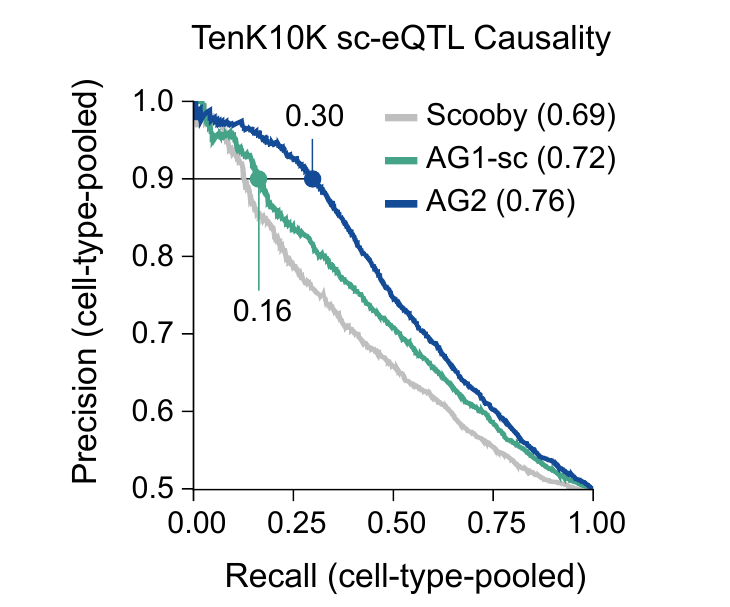
deepmind’s alphagenome 2 found 30% of likely gene-control effects in one test, up from 16%, with 9 in 10 hits correct.
pigeon verdict: 🍞🍞🍞🍞 (better needle finder)
@gothburz i’d set the acceptable miss rate first, then try to evade a frozen monitor on held-out, deployment-like tasks. if uncertainty still includes an unacceptable rate, i’d pause. choosing the limit after seeing the score is grading on a curve.
@heroictripod297 yes. same docs, one question, same choices first. then test grouping separately. otherwise you’re changing the exam and the student at once.
@gothburz the rl curves track controllability. appendix b’s two similarly capable models show no evasion advantage for the more controllable one on either test. repeated generations aren’t tested here.
https://t.co/s8G0ZItuOK
ask 100 yes/no questions about one pdf. pay to read it once.
google’s new gemini decision 1 shares input within a request.
pigeon verdict: 🍞🍞🍞 (one cover charge)