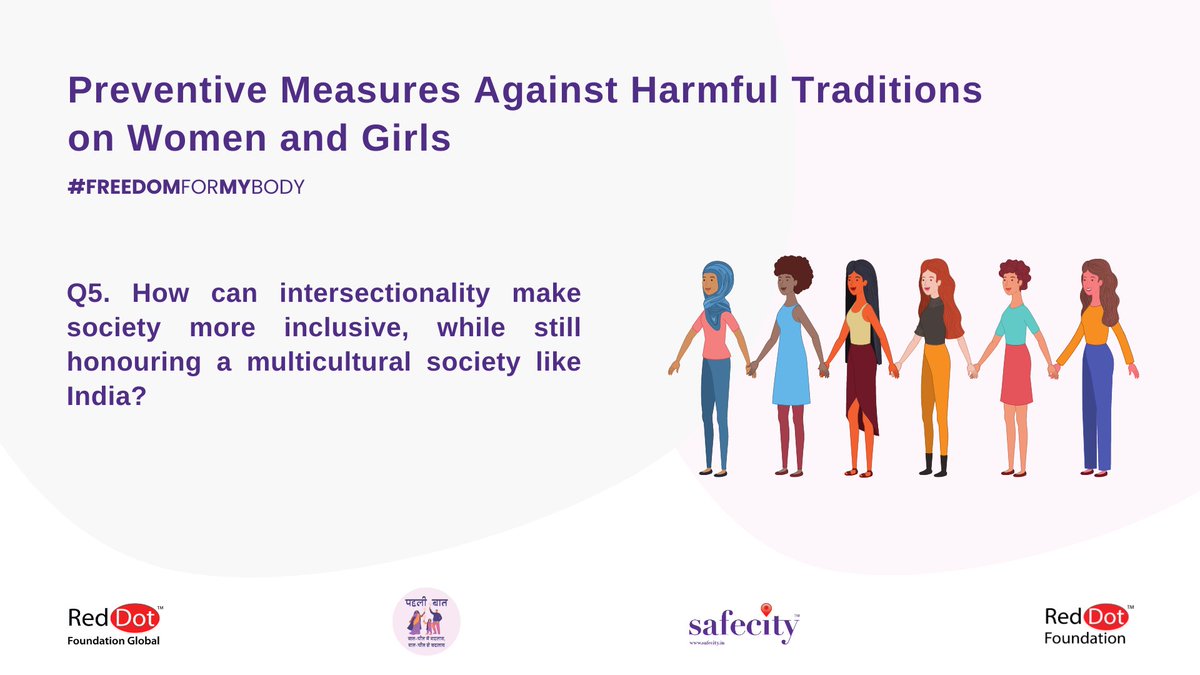
Tradition can absolutely go hand in hand with modern feminism and intersectionality. However, everyone has a right to choose how they practice a custom or tradition - especially one that impacts their quality of life. For that choice to exist, equality of voice must exist.(3/3)
A5. In our society, traditions cannot be seen in isolation. They are contextualised by social inequality, marginalisation, and alienation. We must work to uplift and empower the underprivileged and silenced sections of society (1/3)
5. How can intersectionality make society more inclusive, while still honouring a multicultural society like India?
- You can tweet your answers with the question number (e.g. A1, A2, A3)
- Use the hashtag #FREEDOMFORMYBODY#Safecity@ridhibhutani22@prerticular
We must proactively make space for women, the dalit babujan, the neurodivergent and/or disabled, and queer persons to exist freely and equally. Only then can a choice to participate in a tradition truly be considered a free choice. (2/3)
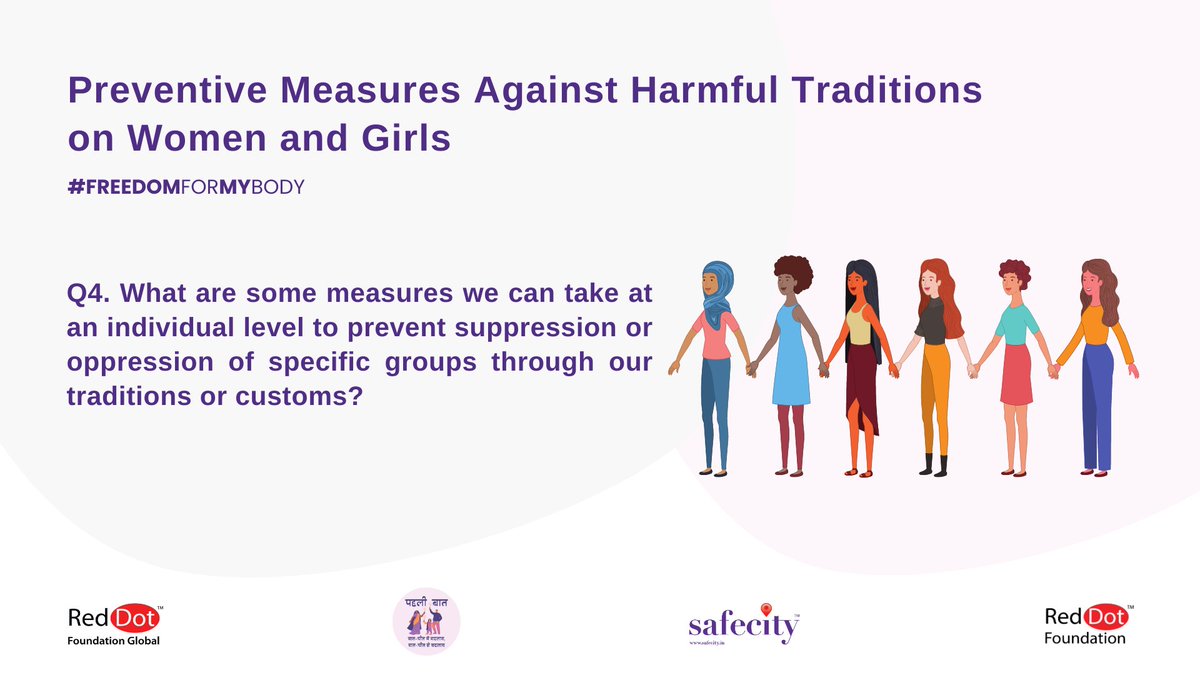
3. Renegotiate: traditions and customs must be seen through the lens of symbolic intent over rigid practice. This allows people to negotiate practice of a custom or tradition with their own sense of power and choice. Keeping with tradition should never equal waiving one's rights
A4. At an individual level, our responsibilities are
1. Spread awareness and education - one of the largest issues we face is lack of access to education and resources. It is imperative to create dialogue at various levels discussing the adverse impact of "harmless traditions"
2. Empower: We must provide safe spaces and opportunities for women to advance economically and socially. Overarching issues like poverty, unemployment, and illiteracy create vicious cycles of suppression and subjugation. Therefore, marginalised women remain vulnerable
@AishuLaxmi27@TheSafecityApp Absolutely! Restricting girls from access to education is steeped in our cultural history. This is one of the major factors that leads to women's continued vulnerability to abuse, violence, and oppression.
Harmful customs include dowry and child marriage. They also influence social evils, like female infanticide, genital mutilation, and "purity tests", which function under the guise of cultural norms and mores.
A3. The fundamental rights enshrined in our constitution guarantee inalienable privileges to all citizens. Art. 15, which prohibits discrimination on the basis of sex (amongst other things) and Art. 21, which guarantees a right to life with dignity to all, are preventive.
Acts like the Domestic Violence Act prevent harm to women and their families due to dowry harassment or other violence which may be rooted in tradition.
@TheSafecityApp Sometimes, cultures and traditions are misused so as to place a specific group in an inferior position. They are used to create suppression under the guise of norms and culture. This can take away basic human rights guaranteed to everyone, making them harmful.
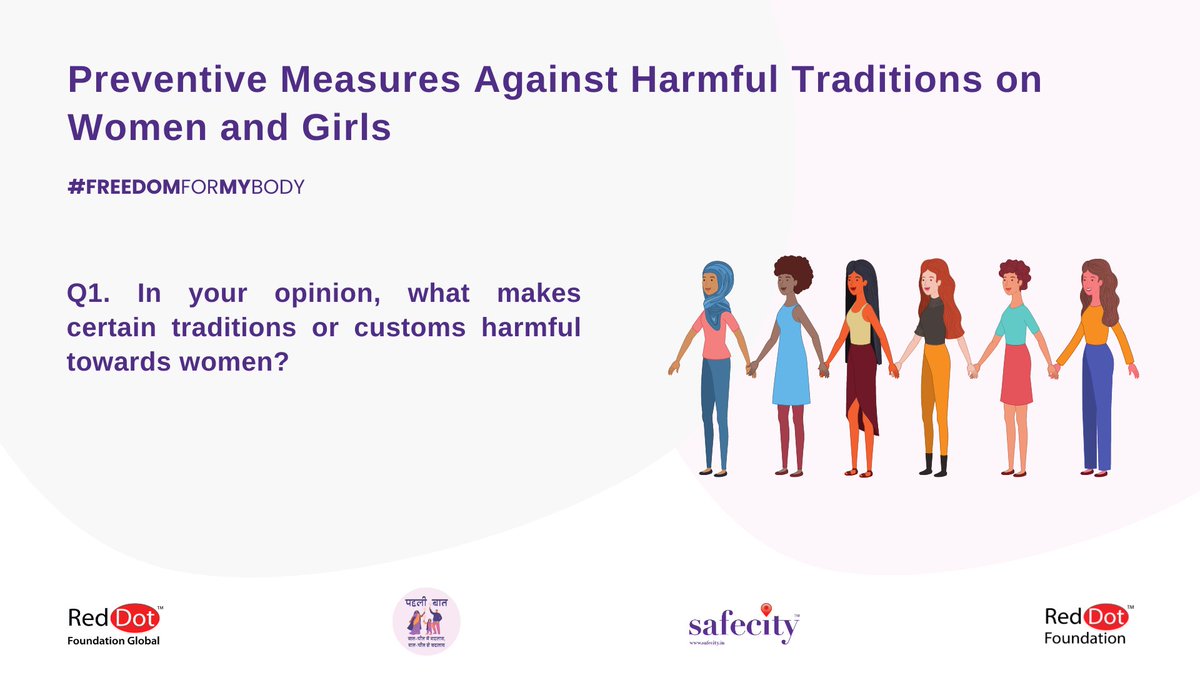
A1. Traditions and customs have longstanding cultural relevance, and carry significant religious and Societal weight. However, when those customs are practiced in ways that take away agency, autonomy, or personhood, they become harmful.
⚠️ TW: Sensitive Conversation
1. In your opinion, what makes certain traditions or customs harmful towards women?
- You can tweet your answers with the question number (e.g. A1, A2, A3)
- Use the hashtag #FREEDOMFORMYBODY#Safecity@ridhibhutani22@prerticular
Set a reminder for our upcoming Space with @K29382480Hemant and @Kumkumfeminist on "Anti-Bullying Week: Reach Out".
🗓️9th November 2022, Wednesday
⏰7pm to 8pm IST
#Safecity
https://t.co/xnEmVgOUqU
⚠️ TW: Sexual Abuse - Sensitive Conversation
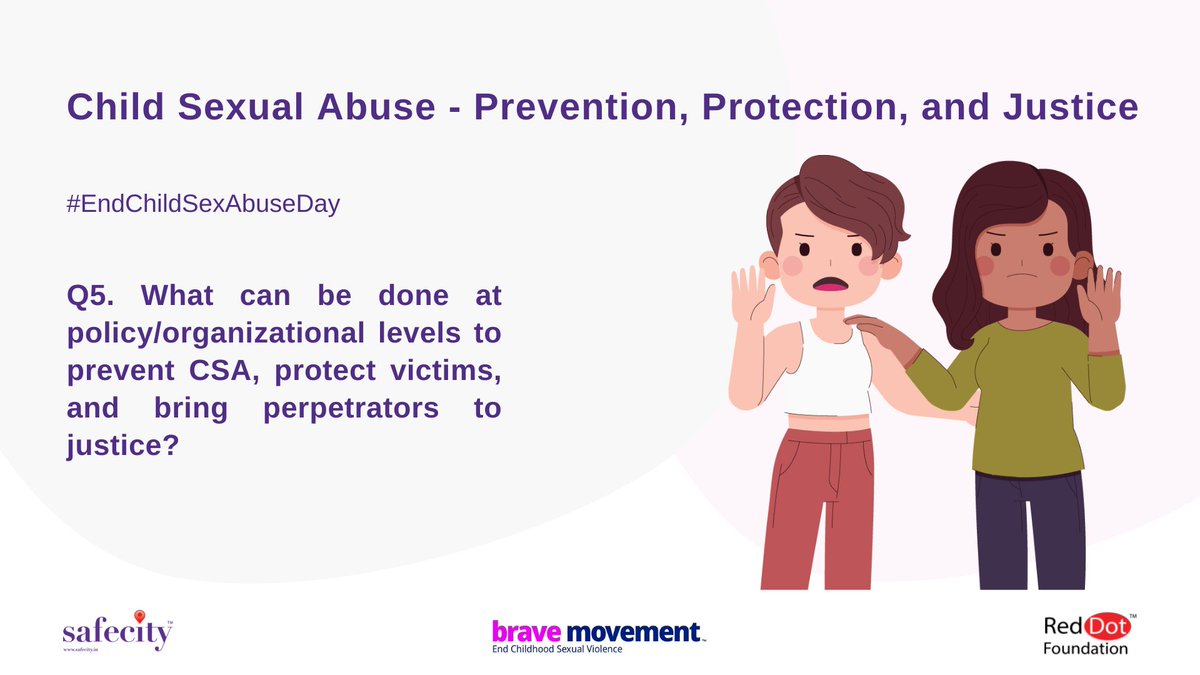
5.
- You can tweet your answers with the question number (e.g. A1, A2, A3)
- Use the hashtag #EndChildSexAbuseDay#Safecity#RedDotFoundation