Cape Town’s iconic DHL Stadium is getting a brighter, greener future. New LED floodlights have cut floodlight electricity demand by up to 50%, while 1 500 programmable lights have transformed the venue into a world-class visual spectacle.
@SimplyMegszcpt The DA has become the main focus of many opposition parties. In CT this wont play out well. If the campaign is successful a cabal of parties driven not by a desire to build a better city for all but rather a desire to unseat the DA will soon be in power. Remorse will follow.
Nació sorda en un palacio. Murió monja en una habitación sin lujos. En el medio, ocultó a una familia judía de los nazis usando su propia sordera como arma.
La princesa Alicia de Battenberg nació en 1885 en el castillo de Windsor, bisnieta de la reina Victoria. La sordera congénita que le diagnosticaron de bebé pudo haberla confinado al silencio y al aislamiento. En cambio, aprendió a leer labios en cuatro idiomas: inglés, alemán, francés y griego.
Se casó con el príncipe Andrés de Grecia, trabajó en hospitales de campaña durante las guerras balcánicas, vio a su familia huir de Grecia en 1922 en un barco británico mientras su hijo Felipe, el futuro duque de Edimburgo, dormía en una caja de naranjas reconvertida en cuna.
En 1930, bajo el peso acumulado de años de exilio, guerras y pérdidas, sufrió una crisis psiquiátrica grave. Fue internada en Suiza contra su voluntad y separada de sus hijos durante años.
Cuando volvió a Atenas era otra persona. Vivía con sencillez, repartía lo que tenía y cuidaba a enfermos y hambrientos. Cuando llegó la ocupación nazi en 1943, Rachel Cohen y su familia necesitaban esconderse. Alicia los acogió en su casa sin dudarlo.
Cuando oficiales alemanes fueron a interrogarla, utilizó su sordera con una precisión quirúrgica: fingió no entender nada, los obligó a repetir, a gesticular, a frustrarse. La dejaron ir. La familia Cohen sobrevivió.
En 1993, Yad Vashem la reconoció como Justa entre las Naciones. Está enterrada en Jerusalén según su último deseo.
Su hijo Felipe, cuando le preguntaban por ella, decía que simplemente hacía lo que había que hacer. Que esa era su naturaleza.
@visionergeo Is this real? So no agreement to release political prisoners, demands to respect freedome of speach or basic human rights or even future free and fair elections under supervision?
🇿🇦 KG MARCHES ON IN PARIS! 🇿🇦
Our wheelchair tennis superstar, Kgothatso Montjane, has kicked off her Roland Garros journey in style! KG booked her spot in the singles quarterfinals with a clinical, straight-sets-style performance on the clay, wrapping up the match in just an hour and a half.
There’s no slowing down for the world No. 7, either. Up next is a quarterfinal battle against France’s Ksenia Chasteau but first she pulls double duty later today as she partners with Luoyao Guo for a massive doubles clash against the tournament's second seeds.
Drop your messages of support for KG 👇
#TeamSA #ForMyCountry
IN 1989, BLACK FARMERS ACCOUNTED FOR 0.5% OF SOUTH AFRICA’S TOTAL WOOL PRODUCTION. TODAY, IN 2026, THEY ACCOUNT FOR A 16% SHARE OF PRODUCTION
I am sitting in the audience at the National Wool Growers Association Congress here in Jeffreys Bay. The rain is pouring outside, and it’s chilly in the big hall we are in at Mentors Country Estate. Even more chilling are the insights we have just received from Professor Johann Kirsten of Stellenbosch University. Prof Kirsten is one of South Africa’s most eminent agricultural economists, and his words should always be taken with necessary reverence. This morning, he took us through 100 years of formal structures in South Africa's wool industry.
I will find time to reflect more on his speech at a later stage, but I do want to raise a few points from his talk. Among other things, he reminded us that wool has always been part of the South African economy. He stated that “Wool has always been part of the agricultural economy of South Africa and the Cape Colony. In 1866, wool production was responsible for 71% of the GDP of the Cape Colony”.
Of course, as other industries grew, this changed, and the South African economy is now more advanced. But it is always important to remember just how important this industry has been over time.
Still, the wool industry remains vital to South Africa’s farming economy. For example, wool has been among the top 10 agricultural products exported by South Africa over the last hundred years.
More fascinating is the story of how the NWGA, with government financial assistance, commercialised Wool production in the communal areas of the Eastern Cape. This deliberate effort to bring black growers into the commercial export value chain is often underappreciated! For example, in 1989, black farmers accounted for 0.5% of South Africa’s total wool production. Today, in 2026, they account for a 16% share of production.
Still, this is an undercount as production volumes of black farmers on freehold land in other parts of the country are not included in this statistic. My guess is that it is probably exceeding 20%! This is encouraging progress, and continuous collaboration between organised agriculture and the government is key. Improving genetics and infrastructure, and addressing stock theft, are among the key interventions.
Improving the genetics and quality of sheep farming and wool production in the Eastern Cape, Free State, and the Northern Cape will help the wool industry increase exports. There is solid demand from China. This would also bring much-needed economic improvement in rural South Africa. Imagine the impact of better quality, better price and bigger volumes on the income of rural families. Instead of around R300 million per annum, these growers can bring a potential R1 billion to rural areas.
In a session that I moderated, we focused on “inclusive and sustainable sheep economy”. In this session, we heard from various new-entrant commercial farmers, government officials, and production advisors, who shared their first-hand experiences and envisioned the future of this industry.
The key point that came out was the need to focus on breeding, address biosecurity breaches, deal with stock theft, and improve land governance. These are some of the constraints the farmers raised in our discussion, amongst other things.
--Wandile Sihlobo is the Presidential Envoy on Agriculture and Land. He is also the chief economist of the Agricultural Business Chamber of South Africa, and a senior research fellow in the Department of Agricultural Economics at Stellenbosch University.
Day 1,699 of Afghan girls being excluded from the classroom.
Every year without education widens inequality and reduces hope. You are not forgotten.
#LetAfghanGirlsLearn
Went to listen to @helenzille speak tonight.
Her grasp of the depth of the crisis, no, crises, besetting Joburg was detailed, nuanced, impressive.
Time to recognise that the choice is:
More of the same… which will collapse the city into the ground
or
A different local govt.
In 1942, in Nazi-occupied Tunisia—the only Arab country to suffer direct German occupation—a drunken officer bragged at dinner about the Jewish woman he planned to seize from a forced brothel.
He named her.
Across the table sat Khaled Abdul-Wahab, a 31-year-old wealthy Muslim Tunisian who had studied art and architecture in New York, spoke fluent German, and was trusted by the Nazis. They invited him to their tables. He smiled, poured the wine, finished the meal… then raced through the night.
He pounded on the door of the woman’s family at midnight. “Pack nothing. Come now.” He gathered 25 terrified Jews—mothers, fathers, children, cousins—and drove them nearly 20 miles to his family farm. For four agonizing months, he hid them in the olive press, stables, and storage sheds.
He fed them as supplies ran desperately low. He kept crying babies silent. When German soldiers came to count Jews, the hidden families pinned on their yellow stars, stood motionless, then tore them off the moment the danger passed.
One terrifying night, a drunk soldier stumbled upon them and threatened to kill everyone. An 11-year-old girl, hiding under a bed, watched in horror—until Khaled appeared like a guardian angel.
He calmly disarmed the soldier and sent him away.
No one on that farm died.
In May 1943, the British liberated Tunisia. The 25 returned home alive. Khaled went back to his quiet life—painting, raising daughters, serving his country—and never spoke of it again. Not to his wife. Not to his children.
He died in 1997 at 86. His secret died with him.
A decade later, his daughter Faiza sat in a Paris café reading a newspaper. An American historian was describing a Tunisian Arab who had hidden 25 Jews. He named her father. She was 45 years old and hearing the story for the first time. “I rediscovered my father,” she said.
Khaled was nominated to be the first Arab recognized as Righteous Among the Nations—Israel’s highest honor for those who saved Jews. The committee declined.
Today, those 25 souls have hundreds of descendants living in Israel, France, America, and Tunisia. The little girl under the bed grew up, built a family in Paris. None of them would exist if Khaled had looked away that night.
He had everything to lose. He acted anyway. Then he carried the silence for the rest of his life.
The world almost forgot him twice.
Now you know his name: Khaled Abdul-Wahab.
A true hero. A Muslim who stood against evil when it mattered most.
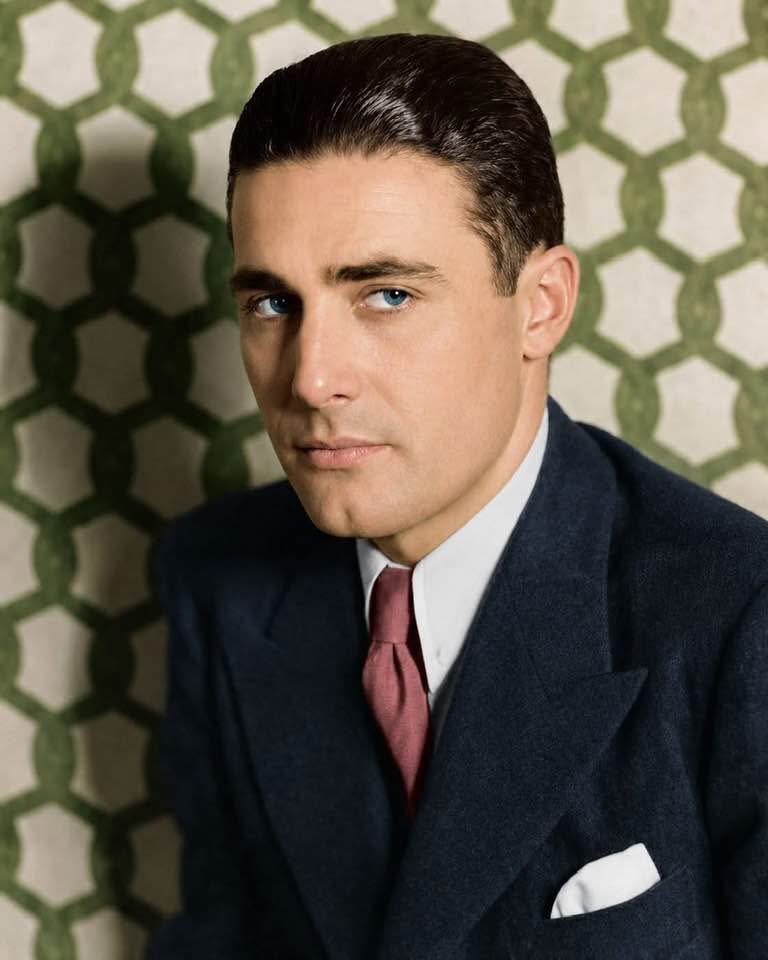
Colorized image of black and white photo poster by Israel the Jewish State.
Celebrating the 50th anniversary of @KingsTrust! 💫
The King and Queen joined King’s Trust ambassadors, alumni, staff, and volunteers at the Royal Albert Hall for a special evening recognising the work of the charity.
Congratulations to all the young people the Trust has supported over the last 50 years on your remarkable achievements.
To every emergency responder, disaster management official, municipal worker and volunteer across the Western Cape - thank you.
Through the worst of this storm, you showed up. You are still showing up. We see you, and we are grateful. 🙏
Its truly beautiful to see a nation celebrating life & light after years darkness. Inspiring the world to open its eyes to the possibilities of overcoming repression and fear mongering against all odds.
🇭🇺🎶 For the first time in Hungarian history, 'The forest is green / Pădure vergyé', the Hungarian Roma community's anthem—which gained that status after a 1993 civil rights protest—was played in parliament, at PM Péter Magyar's suggestion.
Many MPs were in tears, and so was I.
Hungary’s parliament sings “Ode to Joy” — the anthem of Europe — after Péter Magyar is sworn in as prime minister.
Hungary is once again a proud member of the European Union.