@kershaw_alex With planned air support, Japan’s battleships would have prevailed despite Taffy 3’s bravery. But the land-based air units were already decimated.
Poor antisubmarine defenses and flawed intelligence led to repeated miscalculations. The operation epitomized the IJN’s failures.
THE GREATEST NAVAL BATTLE IN HISTORY?
A badass navy at its prime just three years after Pearl Harbor.
82 years ago today, the Battle of Leyte Gulf began.
200,000+ sailors. 370+ warships.
4 days of absolute carnage in the Pacific that shattered the Imperial Japanese Navy forever.
The clash that sealed the fate of WWII in the Pacific?
The super-battleship Musashi sent to the bottom.
The last battleship-vs-battleship duel in history.
The legendary, desperate stand of Taffy 3 against a massive fleet.
The first organized kamikaze attacks.
26 Japanese warships sunk.
#WWII #History #NavalHistory #OnThisDay
#SuperDevDay#ScreenshotSaturday
🇺🇸🇬🇧🇮🇪🇨🇦🇦🇺🇳🇿
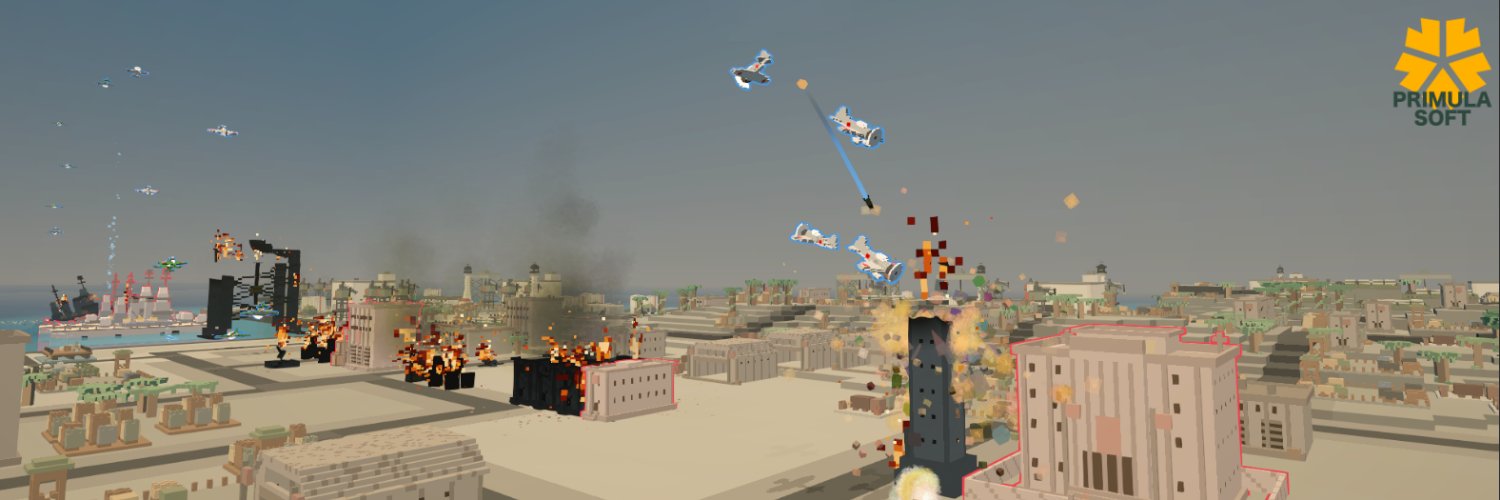
#TWB202X, currently in development, is a 2.5D tactical aerial combat shooter featuring a voxel art style and a World War II setting.
The full release will feature over 160 types of military aircraft from around the world, with more than 120—including fighters, bombers, torpedo bombers, and ground-attack aircraft—available for the player to pilot.
This video showcases the 62 available aircraft created so far, using the English localized version of the game.
The best American airplane of WW2 was the Grumman F6F Hellcat. It's the plane that killed the Zero's legend, and it's one most people forget about.
Everyone thinks of the P-51 Mustang. The Mustang was great. But no American fighter piled up a record like the Hellcat.
Back in 1941, the Navy's main carrier fighter was the F4F Wildcat. Rugged, reliable, and badly outclassed by the Zero. Wildcat pilots survived by teamwork and tactics, not by having the better airplane.
Grumman was already working on a replacement. And after the first months of the war, they did something smart. They talked to the pilots actually fighting the Zero and asked what they needed.
The answer was simple. More power. More speed. More climb. More armor. More ammunition.
So Grumman built the Hellcat around a massive 2,000-horsepower Pratt & Whitney engine. It was big, heavy, and tough. Armor plate protected the pilot. Self-sealing fuel tanks kept it from going up in flames. Six .50-caliber machine guns.
And here's a myth worth busting. You'll often hear that the Hellcat was designed by copying the Akutan Zero captured in Alaska. It wasn't. The Hellcat prototype first flew on June 26, 1942. American forces didn't even find the Akutan Zero until July. The tests on that Zero helped pilots learn how to fight it. The Hellcat was already in the air.
It reached the fleet in 1943 and entered combat that summer. Then Grumman's factory on Long Island started pumping them out at an incredible pace. Over 12,000 Hellcats were built in about two and a half years.
Japan's veteran pilots were dying off. The Hellcat was arriving in waves.
The peak came in June 1944, at the Battle of the Philippine Sea. Japan launched hundreds of planes at the American fleet. Hellcats met them far out from the carriers and shredded them.
One pilot, Alex Vraciu, shot down six Japanese dive bombers in about eight minutes. Commander David McCampbell shot down seven in one day. Pilots coming back to their carriers said it felt like an old-time turkey shoot. The name stuck: "the Great Marianas Turkey Shoot."
Four months later at Leyte Gulf, McCampbell and his wingman took on a formation of around 60 Japanese planes by themselves. McCampbell shot down nine in a single mission, still an American record. He finished the war as the Navy's top ace with 34 kills.
By the end of the war, Hellcats were credited with more than 5,000 enemy aircraft shot down. That's the most of any American fighter. Roughly three out of every four Navy air-to-air kills. Hellcat pilots claimed about 19 enemy planes for every Hellcat lost in aerial combat.
The Navy produced over 300 aces flying Hellcats, more than any other American plane.
It wasn't the fastest fighter in the war. It wasn't the prettiest. Pilots joked that Grumman didn't build planes, it ran an "iron works." But it was tough enough to bring its pilot home, and there were enough of them to fill every carrier deck in the Pacific.
The Zero was built for a short war. The Hellcat was built to win a long one.