Civil Engineer | 🦾 Stablecoin & Software Developer | 🧭 Strategy & operations leads in @defindex_ | This account is a cyborg. I think we are all cyborgs.
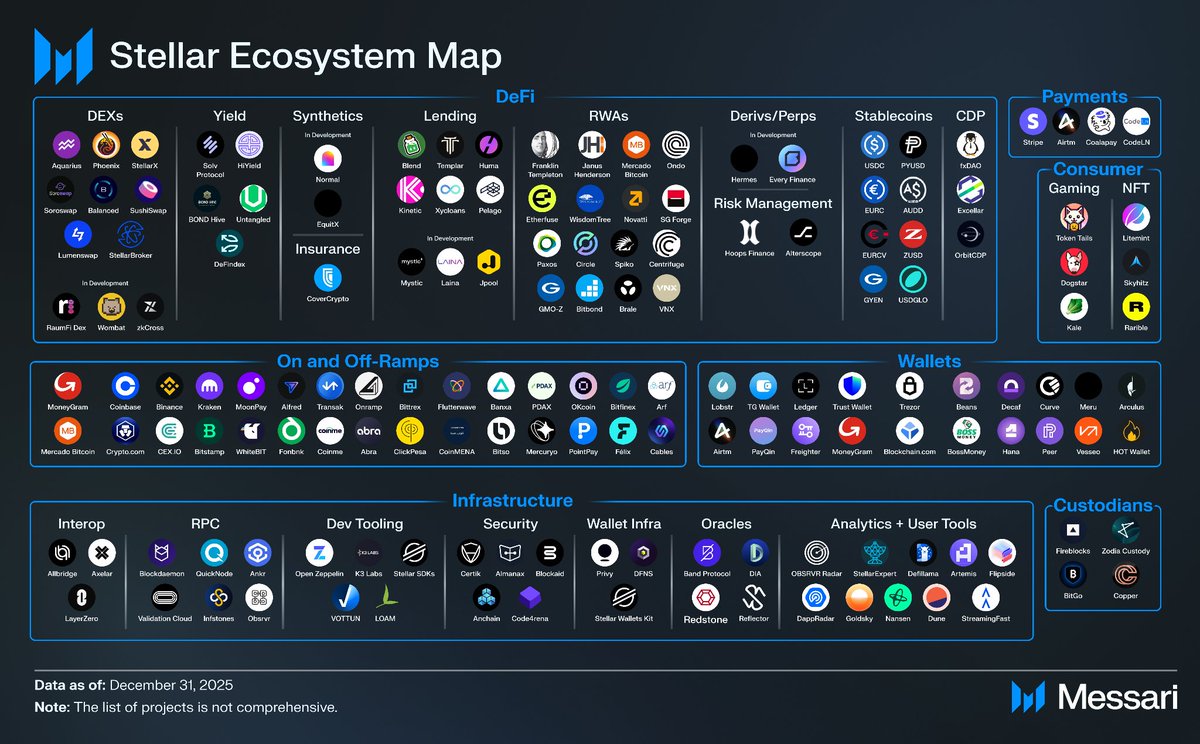
The @StellarOrg ecosystem keeps growing quietly while everyone looks elsewhere.
Every year → more projects
Every month → more TVL in RWAs & stablecoins
Every week → new real-world financial solutions
Every day → more trust
@MoneyGram. @circle. @FTDA_US#DeFi#RWA
I built an app that's in private beta now.
Through feedback, iteration, and debugging, I gained a new level of respect for all the devs out there. Respect. You did all of this before AI.
La Fed se convirtió en el gran factor detrás de los bonos de Chile. El alza de los rendimientos en EE.UU. golpea al peso, eleva las expectativas de inflación y reduce el margen del banco central. https://t.co/DcjMjodL1O
The OpenAI-Hugging Face hack was enabled by weak sandboxing. It is great that Nvidia is releasing open source tools for sandboxing AI agents. OpenWorker, our open-source agent harness supporting cybersecurity workflows, is proud to support this.
A sandbox gives an agent limited permissions. OpenWorker is building on Nvidia OpenShell and will support running each agent's commands inside a sandbox. Only the files relevant to the task go in. Secret API keys, your web browser login credentials, the ability to access arbitrary websites, are inaccessible to the agent by default. These restrictions are implemented in deterministic code rather than by prompting an LLM, which can make mistakes or be susceptible to prompt injections. Further, all actions are logged for monitoring and audit.
I'm grateful for @JensenHuang's leadership making AI agents more secure. OpenWorker (which @rohitcprasad and I are working on) will continue to improve security for agents.
🚨 How to draft an AI policy in late 2026?
Here's my step-by-step guide, including rising concerns, new requirements, and why your company's AI policy is probably outdated:
Until recently, a company’s AI policy was essentially an “acceptable AI use” document, containing items such as “do not paste confidential information or private data into public chatbots,” “check AI-generated outputs before using them,” and “do not use a new tool before asking the legal department.”
It is now September 2026, and that is no longer enough.
The AI ecosystem, along with the AI policy and regulatory environment, has changed.
AI is now an operational layer, fully embedded in the corporate environment and the company’s core business, and companies deploy AI, AI agents, and multi-agent systems on a daily basis.
At the same time, AI regulation has evolved, and companies must comply with new, enforceable legal requirements, as well as an ongoing flow of global standards and frameworks that have become mainstream and a core part of the AI governance stack.
Today, an effective AI policy must achieve at least these three goals:
- Establish the company’s approach to responsible AI adoption and how to implement it
- Create a high-level system of risk governance and compliance controls
- Protect the organization from rapidly evolving AI security threats
An AI policy is a living document that must respond to organizational changes, compliance requirements, and technological developments.
It’s a joint effort between legal, technical, and operational teams and, in my opinion, an excellent AI governance exercise for the whole organization.
(As I have written before, the AI governance career is diverse, which is why in every cohort of my AI Governance Leadership Program there are leaders from various disciplines and industries.)
With that in mind, I prepared a full guide with essential information for companies drafting or updating their AI policy in late 2026, covering the following topics:
- Regulatory concerns
- AI inventory
- Risk tiers and controls
- Human oversight and accountability
- AI incident response
- Logging
- Agentic AI
- Training
- Updating
- Items to be covered
Let's get started: (...)
👉 CONTINUE reading my guide (and join my newsletter's 100,800+ subscribers) using the link below.
$20,503,310.
That's the total value now sitting in @defindex_ vaults.
25,982 user accounts, reached through businesses that plugged into @defindex_ rather than building the infrastructure themselves. One integration, thousands of users.
That is the point.
Built on @StellarOrg.
Dashboards on @Dune.
We can measure what part of the shelf gets customer attention without any additional hardware. Just your normal CCTV cameras and a digital twin made with the phone in your pocket.
@CactusXR will absolutely revolutionize how well stores can do their merchandising.
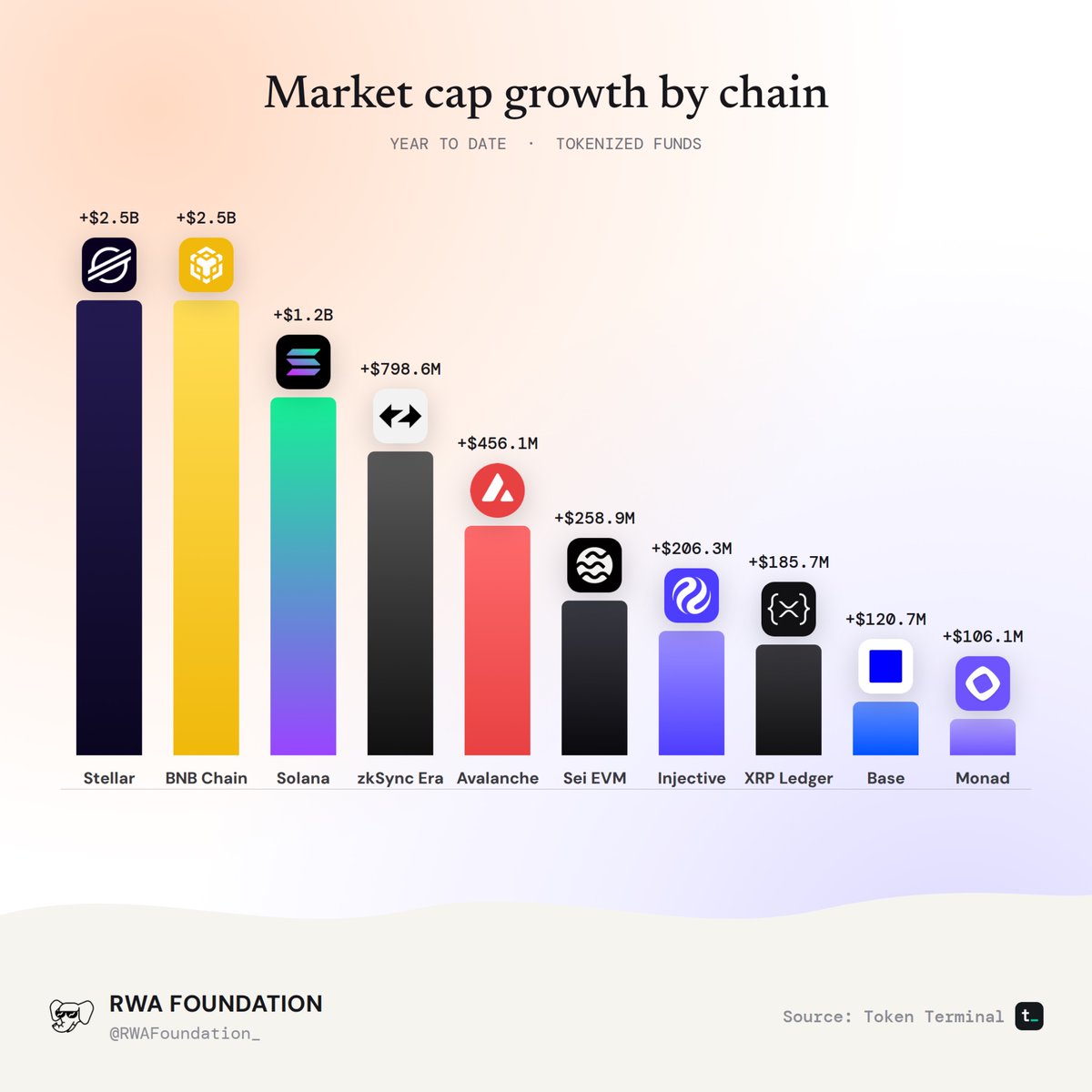
Tokenized funds are spreading fast across chains. @StellarOrg and @BNBChain both added +$2.5B in market cap year to date, with @Solana close behind at +$1.2B.
Via @tokenterminal
With AI Engineering skills, you actively shape the build: You influence what gets built, and drive the build loop. Here're key skills to do this. https://t.co/sysOYdzuZY
Aggregation is one of the most underrated ideas in DeFi.
When you swap a token, the naive path is to send it to a single exchange and accept whatever
price you get.
Aggregation flips that 🪡
NEW: @StellarOrg's RWA market is up 360% this year, reaching $4B, and is now #1 across all blockchains in tokenized non-U.S. government debt.
@DenelleDixon says, "real-world assets do not just belong to the United States."
This week's Brand New Rails with @jennsanasie.
The most important skills for using AI coding agents effectively. Presenting the AI Engineering Skills Map for using coding agents. https://t.co/GrEw7wG5Wz
🚨 $XLM is now part of an official university course in Vietnam.
A whole curriculum!
In March 2026, @riseinweb3 and Stellar Vietnam started teaching Stellar on campus in Da Nang…
🔥🔥 Vietnam – Korea University of Information and Communication Technology (VKU) later made it the first blockchain put into an official university program in the country.
Students learn wallets, issuing assets, payments, and how to ship a project on the network.
That matters because Vietnam is already a large crypto market:
• about 102 million people
• an estimated 17–21 million crypto holders
• 4th globally on Chainalysis’s 2025 adoption index
• roughly $100 billion held, and $220 billion+ in related flows over a recent year
Most of that activity still happens on foreign exchanges. The government only recognized crypto as property in January 2026 and is now piloting licensed local venues.
Stellar Vietnam’s official chapter is only about six months old. In that time they ran campus tours for 500+ students, a Vietnam Demo Day with about 60 pitches, 10 teams into the APAC finale, and $75k to 11 local projects in payments, remittances, and wallets.
The unusual part is the order. They did not start with a token listing. They started with classrooms and builders in a country that already uses crypto for remittances, savings, and gaming.
🤔 When Vietnam gets its own licensed crypto exchanges, what matters more for Stellar? People trading XLM, or people actually using it to send money and build products?
A partnership that just makes sense.
@USDT0_to on Stellar unlocks $180B+ of liquidity on the network and expands regional exposure for builders.
Stellar 🤝 @tether 🤝 @LayerZero_Core
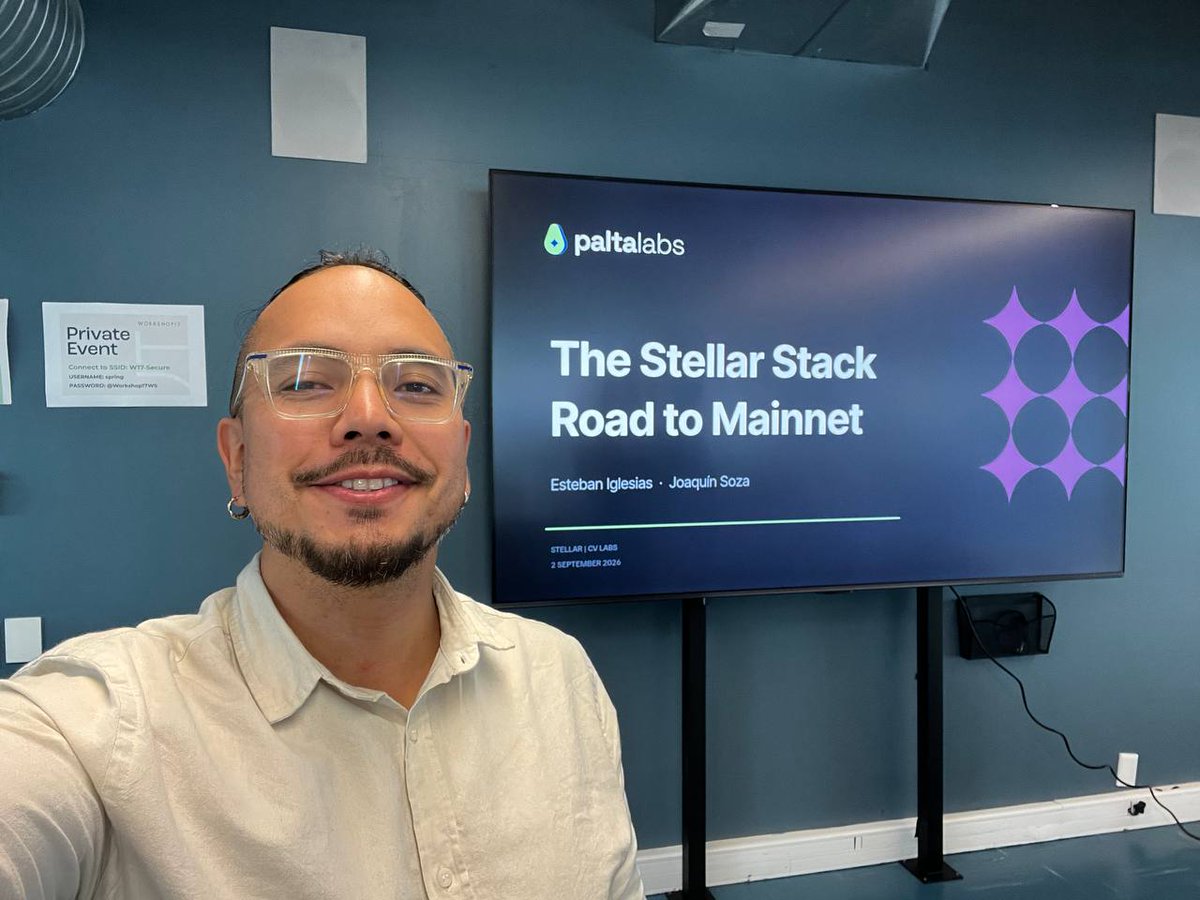
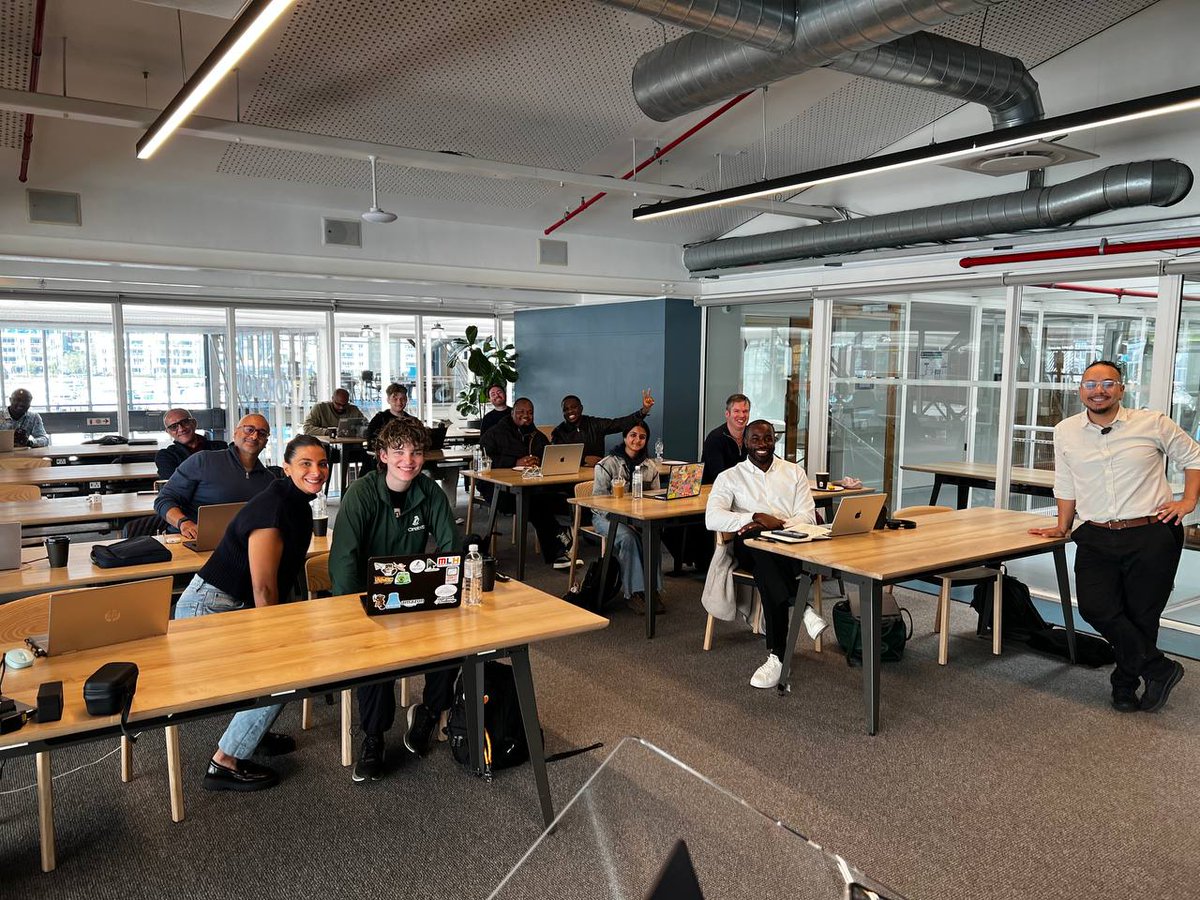
.@esteblock_dev took the stage for @PaltaLabs at the @BuildOnStellar X @CV_Labs Accelerator, and yield was a big part of it.
The message to founders: offering yield does not mean building it yourself.
We are the infrastructure teams can leverage to keep it simple, across DeFi and RWA opportunities on @StellarOrg.
$180B+ USDT liquidity is now accessible to one of the most widely deployed payment networks.
USDT0 is live on @StellarOrg.
Stellar enables 180+ countries to move money in seconds for less than a tenth of a cent, meaning 10,000 txns on Stellar is cheaper than one wire transfer.
At the @BuildOnStellar X @CV_Labs Accelerator program opened with a sharp talk from Kwame Oppong of the @StellarOrg.
His message from years working with banks and regulators across Africa: "break things fast" is done. What matters now is solid infrastructure, bringing regulators in early, and measuring impact, not just profit.
A framing that hits home for us.