We support the study of math and computer science in prisons by building apps, creating math circles, and pairing incarcerated people with math mentors.
To every anonymous donor we cannot thank individually:
Your generosity overflows and ripples outward to meet the needs of those who have been dismissed, forgotten and deemed unworthy of recovery.
Thank you for standing with us! Thank you for spreading kindness and solidarity.
We often view expertise as a solitary climb, but knowledge production only happens in community.
"It is not enough to read and understand... You must be able to do something of your own with it."
For Travis, building that community took a leap of faith.
https://t.co/RILUf3IU2i
"I can't volunteer to help him in his GED prep class... That is a security risk."
Nathan Kimbrell writes about the hurdles of prison education, and the loophole that allows him to trade the chaos of the cell block for the chaplain's office
https://t.co/3xSU2AjmLH
We are exactly $49 away from hitting our $987 Fibonacci Day milestone.
Want to help the Prison Math Project close the gap today?
Your donation will directly support incarcerated participants, keeping them connected with mentors and the math community.
🎉 We hit our first Fibonacci Day goal! Thank you!
Help the Prison Math Project reach our next sequence milestone: $610 (the 15th Fibonacci number!) by Monday, Nov 9.
Pick your number ($13, $21, $34...) to donate & transform lives through math. 🐚♾️
🔗 https://t.co/vfkaewbWmB
This year, PMP chose to honor one of the most well-known math sequences, one surrounded by myth and lore, through its end-of-year Fibonacci Day Fundraiser.
Pick a Fibonacci number, add to the sequence, and help transform a life today.
Find the link in the next tweet! 🐚
In a warm room or behind walls, math has a way of turning chaos into clarity. 📐
From rediscovering algebra in prison education programs to tackling Real Analysis and designing truss bridges, Bryan shares his journey toward becoming a structural engineer.
Follow the link below.
How did the ancient Greeks know the Earth was round without satellites or cell phones? One incarcerated father explains it to his daughter during a family visit, and it turns into an all-nighter math marathon.
Link in reply.
In the cacophony of a prison dayroom, a quiet communion occurs over sines, tangents, and the unit circle. With humor and a keen eye for observing prison dynamics, Nathan recounts a simple interaction over a trigonometry problem.
Follow the link below to read "This is Nuts!"
There is a specific, quiet threshold in every academic career: the moment you move from solving problems to posing them.
For Travis Cunningham, that threshold is a first paper on Schrödinger operators and the distribution of resonances.
https://t.co/zbsQ7EIsQt
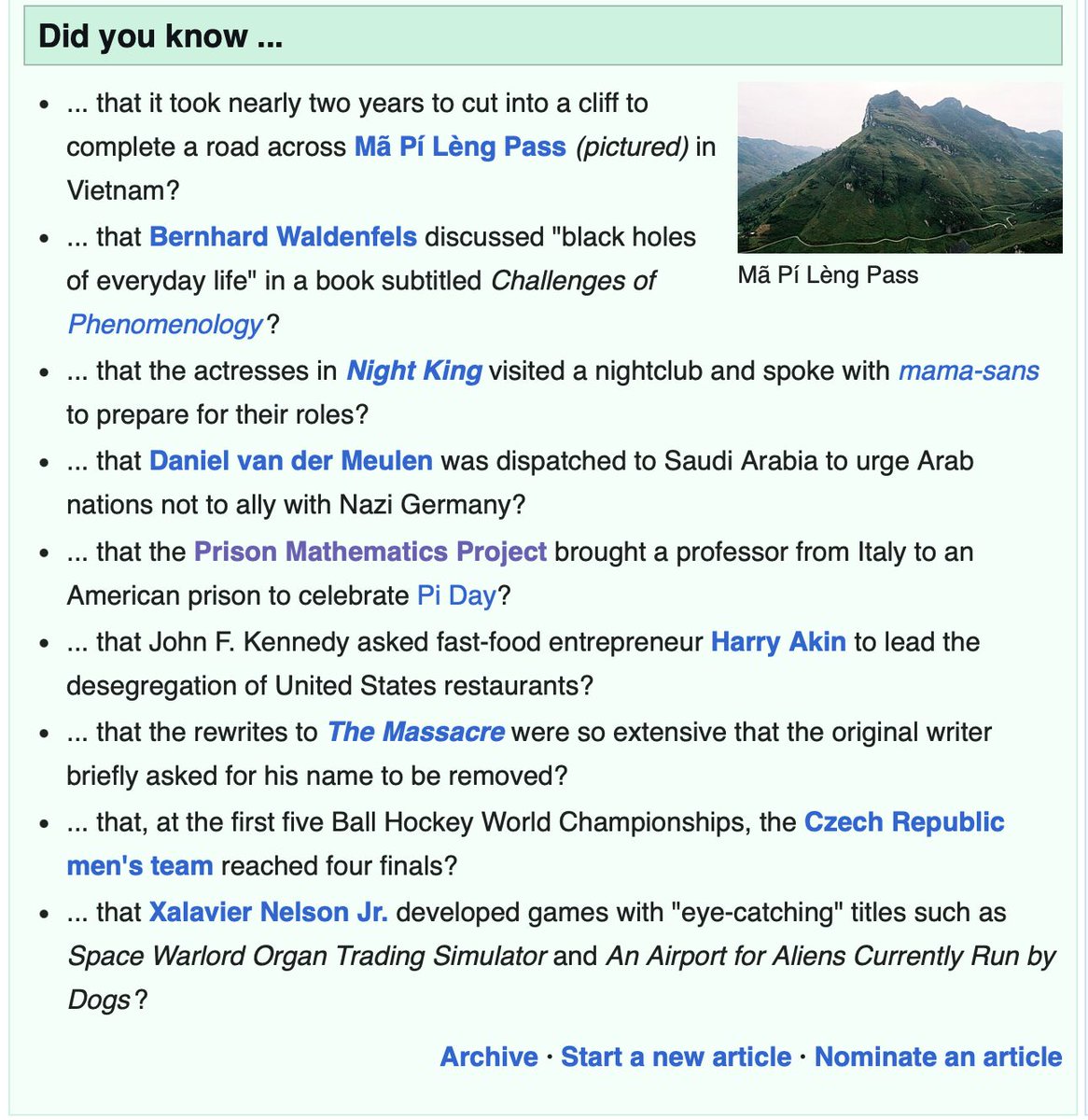
Did you know... PMP made the front page of Wikipedia?
Thank you, @Wikipedia. We're thrilled to be featured in the "Did you know..." section on Pi Day.
Happy Pi Day! 🥧🎉
If you'd like to help PMP reach more incarcerated people this Pi Day, send us a slice of pie!
To celebrate Pi Day, our volunteers will be visiting 10 correctional facilities in the U.S. and Canada this year, bringing lots of coffee and pie and math.
https://t.co/25WmsgYuHN
Today, we send our congratulations to PMP mentee Travis Cunningham, who recently made available his first solo paper through arXiv. Travis is gearing up to apply to graduate schools and has several papers coming up soon. Stay tuned!
Access: https://t.co/GKGpfgqXRw
This is sensational stuff. Very inspiring! Cunningham also wrote a beautiful blogpost regarding his journey. I have no doubts he will crush it in grad school! https://t.co/uRusHrLY9B