Meet Ashoke Sen,
a Bengali-medium schoolboy from Kolkata who applied to only two American PhD programs because those two let him skip the application fee up front.
He took his BSc at Presidency College in 1975, then a master’s at IIT Kanpur. Stony Brook accepted him, then he joined.
On 22 October 2026 he gave the Oskar Klein Memorial Lecture at Stockholm University, “Gravity from strings and strings from gravity.” The Klein medal comes with that lecture, first Indian physicist to receive the Klein Medal. He also won the inaugural 2012 Fundamental Physics Prize, one of nine, and the 2014 Dirac Medal.
During his PhD, almost three years went by with nothing moving but his plan was ordinary. He read lots of books and review articles, went sightseeing with friends, then hoped it would work out. Something began to click near the end.
“90% of the time I am stuck!” ~ Ashoke Sen
Long stretches of nothing moving are normal in hard work.
My first product. Only 100 jars dropping tomorrow. A 2₹ candy that will make you go buzz!! Thank you everyone who gave feedback on the samples and taste in last 6-8 months. 🙏
Imagine booking a weekend slot to learn quantum physics, then anatomy the next week, from passionate professors across the city. No degrees, just curiosity, good conversations, and a little food. Why don’t we have more spaces like this? Such a cool thing 🫶🏻
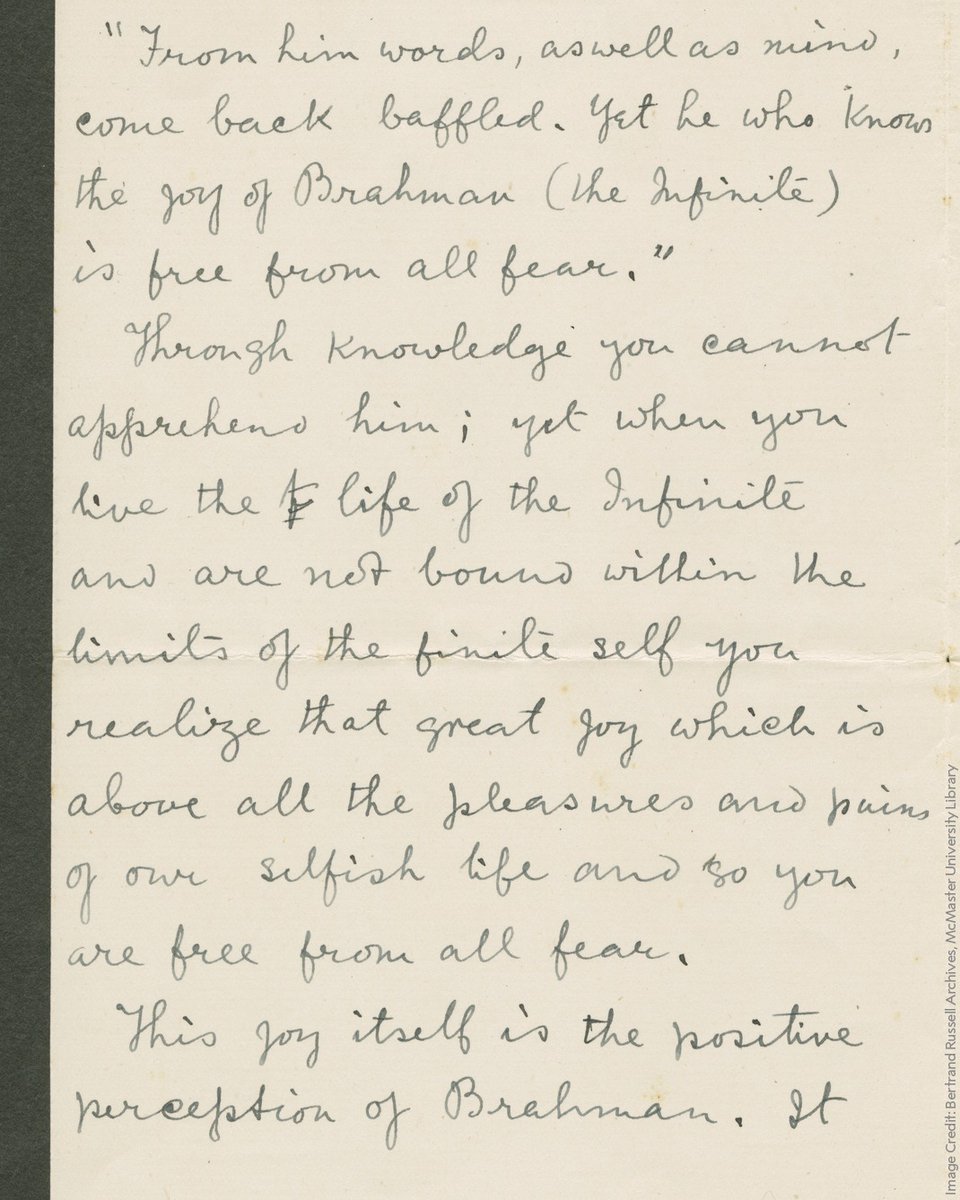
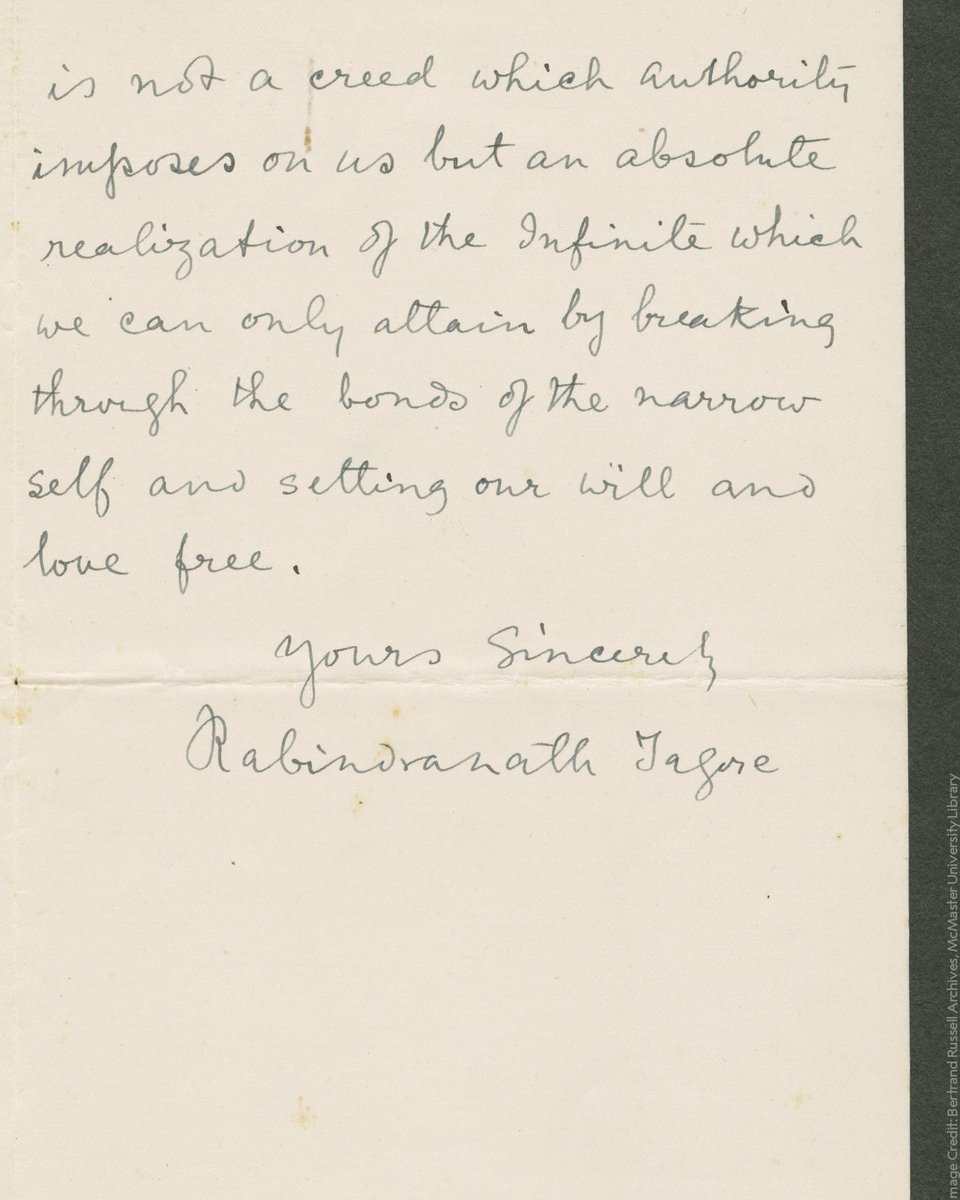
Take a look at this 114-year-old correspondence between literature laureates Bertrand Russell and Rabindranath Tagore.
Almost a year later, Tagore would receive the 1913 literature prize for his poetry. Russell would receive the literature prize 37 years later in 1950.
Images: Bertrand Russell Archives, @mcmasteru Library
And reason is not what you think.
It is bcas India has large land banks which can produce food of all kinds in abundance.
If you think of it. Energy will be solved in the next decade.
Food especially requiring large land banks like rice, wheat are not yet solved for and world has only limited land.
So in my humble opinion food (agriculture )is what will make us a superpower in the coming decade.
P.s: These are just my views, I am wrong plenty of time.
chads of manufacturing
>be Rameshbhai, 71, Rajkot
>same shop for 46 years
>still opens the shutter at 7
>still checks every first-off piece himself
>US defence prime sends a supplier qualification checklist
>40 pages
>grandson spends three nights on it
>ISO certs, calibration records, CMM photos
>sends it to Rameshbhai for a sign-off
>he reads it once over chai
>stops on page 23
>"drawing says H7. checklist says H8."
>grandson checks
>it does
>emails them, half embarrassed
>revised checklist arrives a week later
>addressed to Rameshbhai
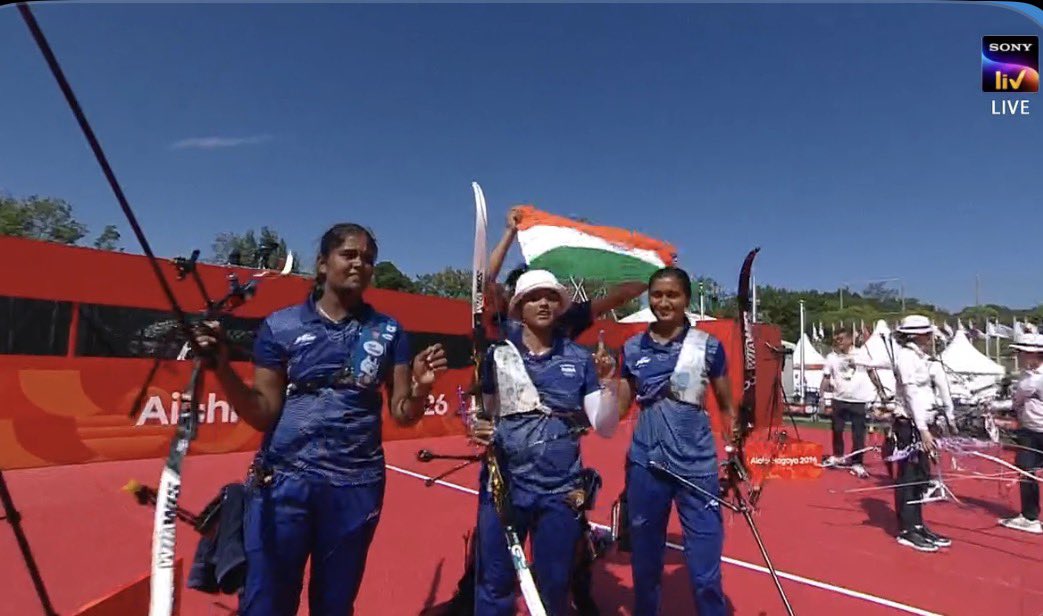
OHHHH MY GOOOOOOOOOOD!!!! 🤯
INDIA HAS WON THE FIRST EVER GOLD IN WOMEN’S TEAM RECURVE ARCHERY! 🏅
Defeated 10 times Olympic Champions Korea
THIS IS BIGGEST RESULT FOLKS! 🔥🔥🔥
One Captain Smit Machchhar can make 1.4 billion Indians hold their heads a little higher. One individual can earn the respect of an entire nation. We often wonder what difference one person can make in a country of 1.4 billion people, especially if he is neither an IAS officer, a minister, nor a corporate leader. But time and again, we have seen ordinary individuals create an extraordinary impact through their actions. Whether it is Captain Smit Machchhar or someone like Bittu Tabahi, a person who chooses to do something meaningful can influence far more people than he may ever realise.
At a time when negativity is everywhere, when social media rewards instant fame, outrage and superficial validation, and when we constantly hear stories of corruption, crime and dishonesty, examples like these remind us that there is another side to our society. There are people who stand for something, and make a difference without waiting for applause. Their actions restore our faith in people and remind us that the character of a nation is not defined only by its most powerful people, but also by the choices of its ordinary citizens.
One of our failures at Marico taught us an important lesson about the Indian consumer.
We had launched baked snacks under Saffola. We believed there was an opportunity for a healthier snack and, given Saffola’s association with health, it seemed like a good fit.
The product did not succeed.
When we went back to understand why, we realised we had focused too much on health because it was under brand ‘Saffola’ as it stands good for health and not enough on taste. In a category like snacking, consumers may appreciate the health proposition, but they will come back only if they enjoy the product.
We remembered this when we entered the oats category.
Oats were considered healthy, but the way they were consumed globally was largely sweet. Our research showed us that Indian consumers preferred savoury breakfasts. We also found that tastes differed considerably across the country. In Tamil Nadu, for example, we developed a Pongal variant. In other markets, consumers wanted something spicier.
That understanding eventually led us to Saffola Masala Oats and multiple flavours designed around Indian tastes. New Category of masala oats with an 80% of market share, our combined strength in both plain and masala oats gives market leadership."
For leaders, the challenge is to give teams the freedom to experiment while maintaining rigour. A well thought through experiment may still fail. Poor execution is a different matter.
Knowing the difference allows an organisation to keep experimenting without becoming careless.
#india #leadership #consumer #strategy #product @MaricoLimited
The Boy Who Learned to Write in Sand, and Opened the Door to Machines That Understand Human Speech....
No Electricity / Paper / Shoes Until His Teens.
He Still Became the 1st Person of Asian Origin to Win the "Nobel Prize of Computing."
Every time we say Hey Siri / Alexa, play something / OK Google, a machine listens to our voice, breaks it into sound, and turns it into meaning.
Those specific products sit on decades of later work, statistical models, deep neural networks, oceans of data, and product engineering at Apple, Amazon, and Google.
But the idea that a computer could be taught to actually understand continuous human speech, not just recognize a handful of preset commands, and the 1st working research systems that proved it, that lineage opens with 1 man: a farmer's son from a small village in Andhra Pradesh.
His name is Dabbala Rajagopal Reddy. The world calls him Raj Reddy. 🙏🙏
As a child in the 1940s, Reddy grew up in rural Katur, in Chittoor district, Andhra Pradesh, a home with no electricity and no running water.
His 1 room schoolhouse had no paper / pencils, so the children learned to write their letters by tracing them into a plot of sand.
On hot nights, he and his 6 siblings would drag their mattresses outside just to sleep under a clear, star-filled sky.
He was the 1st person in his entire family to receive a college education. He has said he went barefoot through much of his childhood, and did not have a proper pair of shoes or sandals until he was around 16.
On the advice of an astrologer, his father, a farmer and landowner in the village, by his own account likely the most well off family among ~500 people there, though still poor by urban standards, sent him to study, with tuition itself paid for by an uncle.
Reddy went on to earn a Bachelor's degree in civil engineering from Guindy College of Engineering in Madras in 1958, then a Master's in Australia, before working briefly for IBM.
None of that path pointed toward AI. Not yet.
In 1963, Reddy arrived at Stanford University as a PhD student studying under 1 of the founding legends of AI himself, John McCarthy, the man who coined the very term "artificial intelligence."
Reddy went on to pioneer the construction of systems capable of recognizing continuous speech, developing one of the 1st such systems, called Hearsay I, and later refining the ideas through follow-on systems named Hearsay II and Harpy.
He and his students, through this body of work, developed many of the foundational ideas that the field of commercial speech recognition would later build on, including the blackboard model, a way of coordinating multiple sources of knowledge inside a single AI system, an idea that went on to be adopted across the wider field of applied AI.
1 of his own students, Jim Baker, later co-founded Dragon Systems with his wife Janet, a company built on the statistical approach to speech recognition that grew directly out of this research lineage, and that the whole industry would eventually adopt.
Think about the distance being covered here. A boy who once traced letters in sand because his classroom had no paper had, within a couple of decades, become one of the people teaching computers how to make sense of the human voice.
Reddy went on to found and lead the Robotics Institute at Carnegie Mellon University, a place so closely tied to his name and presence that people at CMU affectionately nicknamed it the "Raj Mahal."
In 1994, Reddy and fellow AI researcher Edward Feigenbaum jointly won the ACM Turing Award, an honour so significant within computer science that it is routinely described as the field's equivalent of the Nobel Prize.
Reddy became the very first person of Asian origin in history to receive it. 🙏🙏
In his home state of India, he helped found the Rajiv Gandhi University of Knowledge Technologies, an institution built specifically to serve rural youth, the same population he himself had once come from.
At the RAISE 2020 summit, he pushed the argument that India needed to focus AI squarely on the ~400M people at the bottom of the economic pyramid, using speech recognition and translation technology to offer basic reading and learning capability to those who had never had access to it.
At a 2021 Computer History Museum event honouring his life's work, he reminded the audience, in his own words, that half the world still does not benefit from the technologies people like him have spent careers building.
Bharat itself eventually recognised him with the Padma Bhushan in 2001. But ask most Indians, including plenty who use voice assistants on their phones every single day, who Raj Reddy is, and you will very likely get silence.
The years were 2000–2002. The Left regime was at its peak. Buddhadeb Bhattacharjee was the Chief Minister. The place was Sutia.
A girl at a wedding casually said that the phuchka tasted terrible. A bike gang dragged her to a paddy field to "teach her a lesson".
A couple argued with a rickshaw puller over the fare. A bike gang arrived and demanded proof that they were married. They had none. The gang declared it "rape". The woman was brutally tortured, photographed naked and humiliated.
Any dispute in Sutia-over relationships, land or money-could have only one "solution": rape.
This was Sutia, North 24 Parganas--the "village of rape".
Police records documented 33 rapes between 2000 and 2003, though locals believed the real number was far higher.
Then came Barun Biswas - Mastar da
A WBCS qualifier and teacher, he could have lived comfortably elsewhere. Instead, he returned to his village.
He formed an anti-rape platform, mobilised local youth, wrote repeatedly to the authorities and stood beside survivors. Night after night, he patrolled Sutia on his motorcycle.
His efforts eventually led to a CID investigation and the arrest of Sushanta Chowdhury, Bireshwar Dhali and others, who were later sentenced to life imprisonment.
But Barun then began fighting the illegal soil mafia, whose activities contributed to the annual flooding of Sutia.
On July 5, 2012, Masterda got off the Bongaon local train at Gobardanga.
A bullet pierced his ribs.
Barun Biswas collapsed and later died.
Why was he killed? Was it the criminals he fought, the soil mafia, or something bigger?
Several people were arrested. Yet, even after all these years, the guilty have not been punished.
Three teenagers in India have built a refrigerator that could help save lives, and it runs on nothing more than salt and water. No electricity. No batteries.
In 2025, 16- and 17-year-olds Dhruv Chaudhary, Mithran Ladhania, and Mridul Jain created Thermavault, a portable cooling system designed to keep medicines and vaccines cold in places where reliable electricity is difficult to obtain.
The device can maintain temperatures of around 2 to 6 °C (35 to 43 °F) for 10 to 12 hours, making it suitable for storing temperature-sensitive medical supplies. Even better, the salts used in the cooling process can be reused, which helps keep operating costs low.
Their idea earned them the Earth Prize Asia 2025 and $12,500 in funding. They now plan to build 200 units and test them across 120 hospitals in India.
The inspiration came from a real problem. During COVID-19, many rural clinics struggled to keep vaccines cold because of unreliable power. Their solution is simple, portable, and potentially life-changing.
Three teenagers. Salt, water, and one idea that could bring reliable cold storage to the places that need it most.
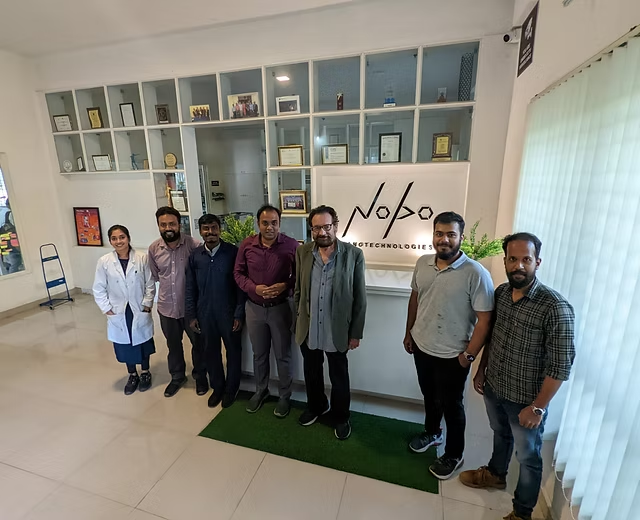
NoPo Nanotechnologies, Bengaluru. Genuinely hardly anybody has heard of it, and it started with a Mars dream.
Gadhadar Reddy, a quantum physicist, wanted to go to Mars, not metaphorically. He realized the real bottleneck for spaceflight was materials: you need something absurdly strong yet light for spacecraft structures to work at scale.
That search led him to carbon nanotubes, microscopic carbon tubes, 100,000x+ thinner than a human hair, with tensile strength over 100x that of steel.
When he came back to India in 2011 to build this, everyone told him it was "not possible, especially in India." So he named the company NoPo, short for "not possible" and got to work anyway.
His co-founder Robert Kelley Bradley wrote his PhD thesis directly under Nobel Laureate Dr. Richard Smalley, the scientist who pioneered this exact nanotube production process. After Smalley died in 2005, nobody had cracked how to scale it consistently.
Reddy and Bradley spent the next 6.5 years, run essentially as an unfunded science project solving exactly that.
What they actually built...
A proprietary HiPCO process producing single-walled carbon nanotubes with genuinely industrial consistency, 1,000x better conductors than copper, better heat conductors than diamond, 10x lighter than steel at 100x the strength.
Applications: EV batteries, semiconductors, water filtration, advanced polymers.
NoPo is now building what it claims will be the world's 2nd largest carbon nanotube production facility, the first of its kind in this part of Asia built to supply battery manufacturing lines directly.
They raised ~$3M pre-seed, two years ago from Mission10X, Inflexor, and family offices, remarkably small money for a company now scaling to world 2nd largest.
They reinvest 98% of income back into R&D, reportedly the highest ratio of any Indian startup.
Their nanotubes are already drawing interest from both the Indian Navy and Tesla.
Why it matters for Bharat...
- India's entire EV and battery push depends on advanced materials nobody here manufactures at scale
- Forcing imports even for the components that make a battery genuinely good
- A domestic, world-scale nanotube facility is exactly the upstream materials capability that could quietly make everything built on top of it
- Batteries, chips, EVs, less import-dependent, without a single flashy product launch.
15 years, mostly self-funded, in a small building in Electronic City, chasing a material almost nobody believed was possible to make in India.
Bharat is Rising. 🙏🙏
Two and half decade ago, a young & dynamic MAJOR was one of the hand picked officers from Indian Army chosen to raise the 25th Battalion of The Rashtriya Rifles at district Doda in the erstwhile J&K state.
Major Sanjay Baduni hailing from Dehradun married for 5 years, was father of two beautiful little daughters. Those days of pre-mobile era and a very rare telephone connectivity, whenever Major Sanjay Baduni used to get time from his hectic anti-insurgency operations he would pen down something and keep it in his briefcase.
On 24 August in 1995, Major Sanjay received information of the presence of few terrorists at Dhara village of district Doda in J&K. Accordingly Major Baduni launched a search & destroy operation. On reaching village, Major Sanjay found that terrorist were hiding in a house where two children were also trapped. Major Baduni decided against to blow up the house and challenged the terrorists in a direct close combat gun fight.
In the ongoing fire fight Major Baduni received two bullets and later succumbed to injures. On that day to save my fellow children, in my home district MAJOR SANJAY BADUNI immortalized himself and left behind his own two small daughters, elder one aged 3 and a half years and younger of just 18 months.
Months later when Ms Kamal , his wife opened his brief case, she found a poem written by Major Sanjay for this two daughters, which says
“ My dearest Daughters
When You were born
And opened your eyes
To look at me
My World turned to be
All smile and laughters .... “
It may have taken just 25 minutes for Major Sanjay Baduni to draft these lines but it took 25 year for his wife Kamal to share the poem with his daughters.
SNUGGY & KANNU are grown up daughters now. They missed their father being around them because their father choose to protect unkown children on this day, 25 year ago.
For you all sharing the poem written by a Fauji Papa from battle field for his daughters.
Join me in paying homage to
MAJOR SANJAY BADUNI
136 FIELD - 25 RR
on his 25th Balidan Diwas today.
Union Territory of Ladakh has started utilising 90 million litres of glacier water per day, for sustainable water and agricultural security in Ladakh.
Previously lost as untapped runoff into the River Indus, this volume of glacial-melt water from Stok village Nallah in Leh, is now being directly channelized into the Igoo-Phey Irrigation Canal, catering to nearly 12 villages and augmenting irrigation of over 1000 acres of barren land that earlier remained parched due to paucity of water into the canal.
(Source: UT of Ladakh)
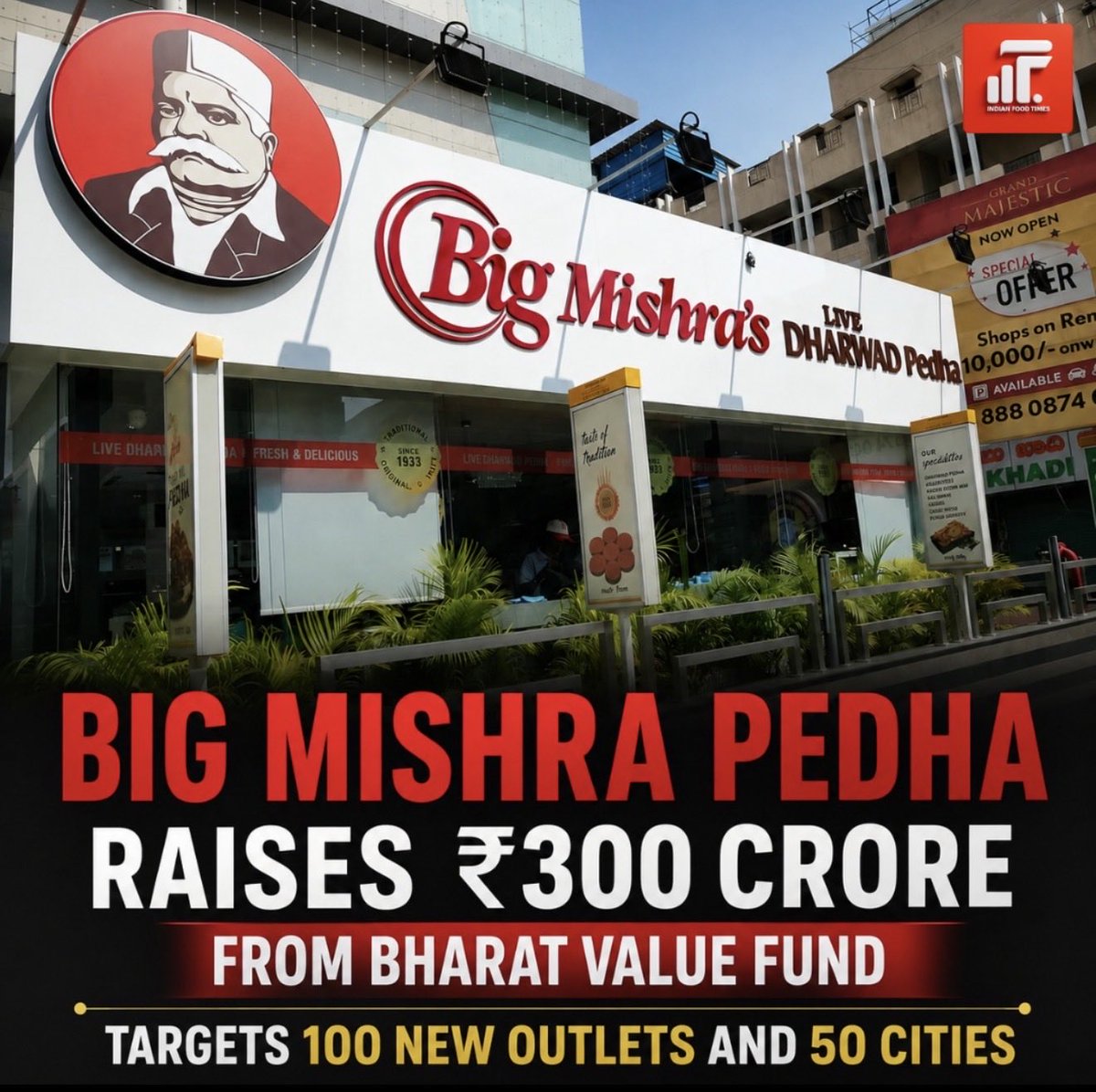
“A proud milestone for Big Mishra Pedha! From our roots in Dharwad to now expanding across 50 cities with 100 new outlets. ₹300 crore raised from Bharat Value Fund — this is just the beginning. 🚀🇮🇳”
An Indian engineer in Bengaluru got tired of potholes destroying his car.
So he built an app with Codex that detects them, finds who is responsible, and files a complaint.
Here is how it works. He installed a dashcam with GPS and an accelerometer. The app records everything while he drives.
A vision model classifies every pothole by size. Small, medium, large.
But here is the clever part. Most Indian roads are under warranty.
The contractor who built them is legally responsible for fixing potholes for free.
His app searches through 2,900 government contracts, finds the exact tender number, identifies the officer responsible, attaches the photo and geolocation, and generates a ready-to-file complaint.
One drive to work. 12 potholes detected. 12 complaints ready.
--
vc: @gkcs_