Fascinating listening to Paul Jarman @prjarman on #dementia prevention & being on the cusp of a new age thanks to the potential of disease modifying drugs https://t.co/B0wNjB9sOJ Also role of NICE & importance of early diagnosis
@ajlees I do the same with a new diagnosis of PD. Many people assume the worst or have had such fears instilled by other doctors. Providing hope and the prospect of a good quality of life is essential at the time of diagnosis
His 'second sight' and courage in confronting a malady that lasted more than half his lifetime has earned him a lasting place in the annals of neurology
Altamirage- a curiosity for cures.
When did Ray Kennedy's Parkinson's disease begin.
@TheCenci
https://t.co/fvELYf1yC3
@ajlees@UCLIoN@uclh I’m not an advocate of EPRs but I do think we have to adapt to them without compromising the clinician-patient interaction. Just as Gowers used shorthand, the new generation of neurologists touch type into EPRs while maintaining eye contact with patients in consultations
@ajlees@UCLIoN@uclh Once data is stored in the cloud its hard to imagine it wont be accessible in future in some form. Organisations have to future proof their records. Papyrus certainly has advantages, it wouldn’t still be with us after 1000s of years otherwise, but it has limitations also.
@ajlees More resources are needed so that the doctor can spend time with the patient and someone else interact with the EHR (perhaps a way for trainees to spend more time learning from their mentors as they work). EHRs are designed to facilitate billing, definitely not research…
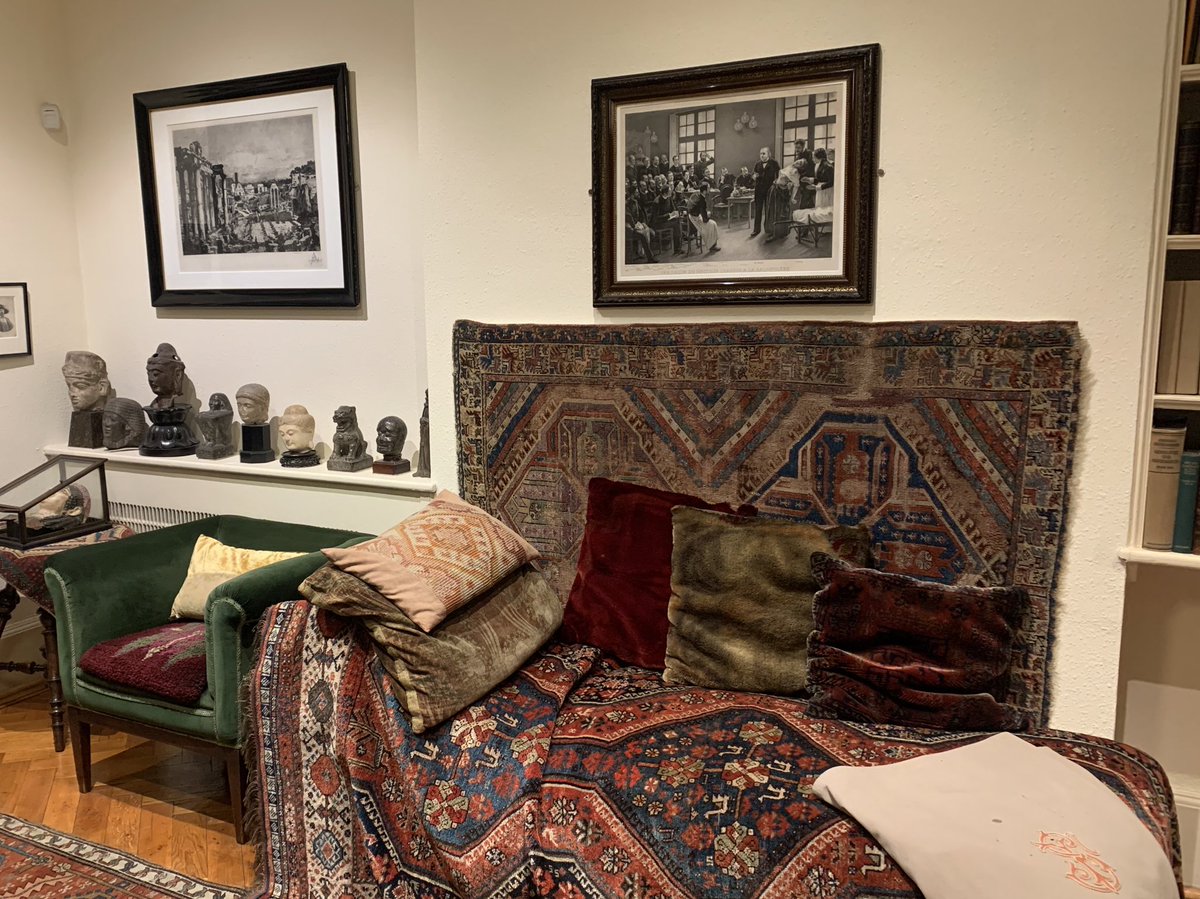
@ajlees He also had a remarkable collection of antiquities.
Modern neuroscience seems to have explanations for some of his theories- the Id being the Limbic system and the superego the pre-frontal cortex.
@ajlees It all depends on threshold for risk really. 95% of patients with episodic headaches don’t need imaging if you take a careful history and examine. Most patients with PD don’t need imaging. The threshold to image is reducing - driven by doctors, patient expectation and lawyers
@ajlees I warn people in advance that ‘there is no such thing as a normal MRI scan’, as radiologists so often report incidental findings that sound concerning. The concept of normal for age is helpful. Patients often ask for copies of the MRI report so some explanation is usually needed