Process 180 is a mnemonic that I created to remind me of 2 things. First, my weight goal of 180 lbs. and secondly a 180 degree turnaround on my journey.
@VanAllenPlexico It feels like coming up from water and taking that first big breath. Not at our destination but a beginning that can be built on. I’m good with that.
Calories matter, but when it comes to hunger and satiety, not all calories are equal. A meal built mostly on carbohydrate does a weaker job of switching on the body's fullness signals than a meal built on protein or fat, even when the calories are exactly the same, and the gap is widest in people who are already insulin resistant.
One study gave people three different meals on separate days, each with the same calories but with most of the energy coming from carbohydrate, protein or fat, and then tracked the gut hormones that tell the brain whether a person has eaten enough over the next six hours. Some of the subjects were lean and insulin sensitive, while others had obesity and insulin resistance. All of them still had normal blood glucose.
GLP-1 (a satiety signal) rose more after the protein meal and the fat meal than after the carbohydrate meal, and that was true in both the lean and overweight people. In the those with insulin resistance, the fat meal also produced a bigger rise in PYY, another hormone that signals fullness, and the protein and fat meals pushed ghrelin, the main hunger hormone, down further than the carbohydrate meal did.
This helps explain why a breakfast based on carbs so often leaves a person hungry again by mid-morning, while a breakfast of eggs and meat can hold them until lunch. The body's own satiety system responds more strongly to protein and fat, and a person who is insulin resistant appears to get even less of that signal from a carb-heavy meal, which makes it harder for them to stop eating at the very point when they most need to.
If someone struggles with hunger soon after eating, it's clear that building meals around protein and fat rather than carbohydrate gives the body's natural fullness hormones a much better chance to do their job.
@VanAllenPlexico In my personal opinion Lawrence of Arabia is one of the greatest films ever made. It is a cinematic spectacle that should be made in imax. The music alone is stunning
@CaryKelly11 Cary I invite you to sign up for the beta test of the new process 180 app. Designed for people like me and you. I think you’ll like it. https://t.co/KMhywrUbX5
A single night of short sleep is enough to make a healthy person measurably insulin resistant the next day.
When healthy men and women slept four hours instead of a full night, insulin worked far less well the following afternoon, both in the liver, which kept releasing glucose when it should have slowed down, and in the muscles, which pulled less glucose out of the blood. Their fasting glucose and insulin looked normal, so a routine morning blood test would have missed the change entirely.
If someone is working hard to keep blood sugar and insulin in check, protecting sleep belongs right alongside food and exercise, because even one short night can undo part of that effort.
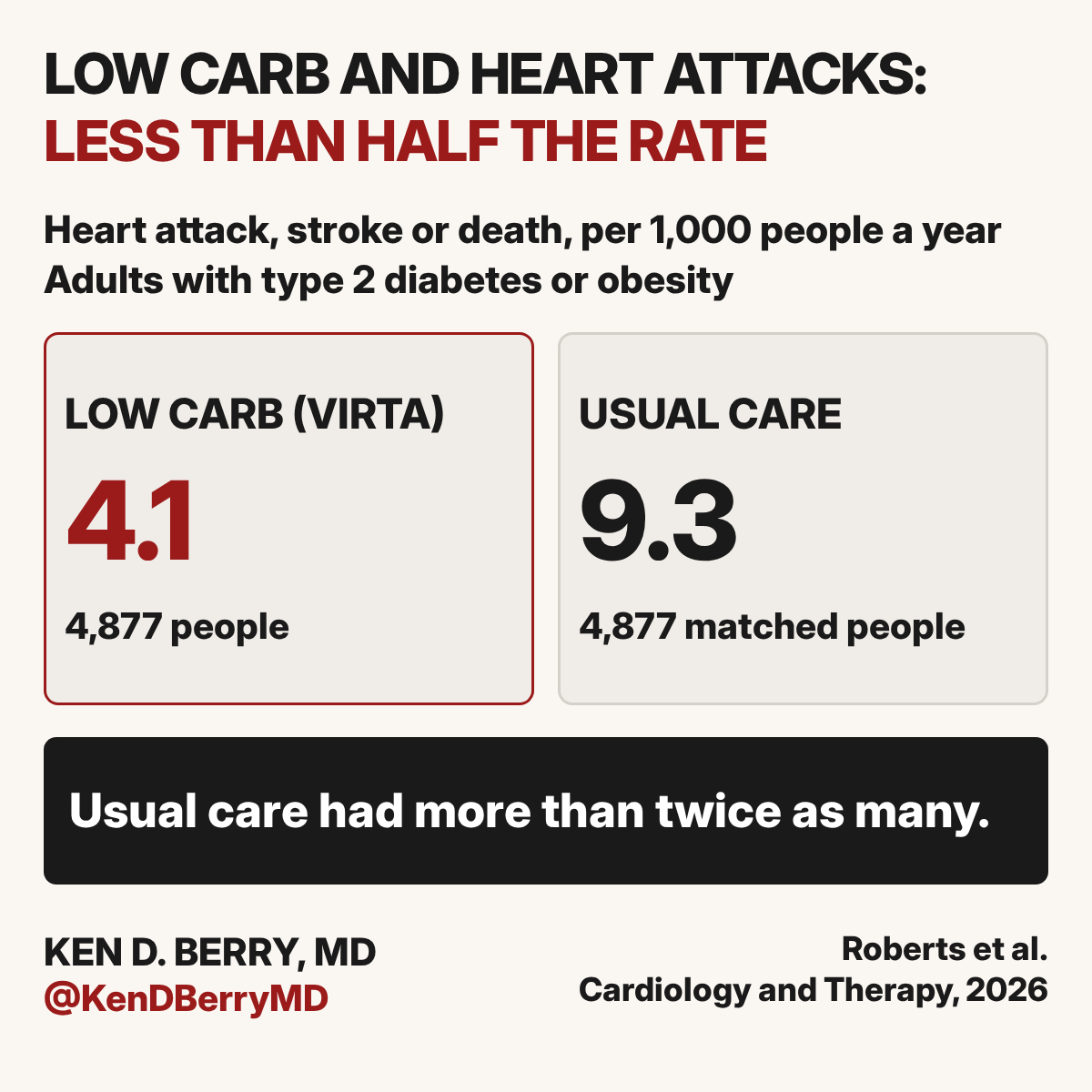
KETO CUTS HEART ATTACK RATE IN HALF
Dr. Baker is right. This is the study that should end the keto heart attack scare.
For 50 years doctors have warned that cutting carbs and eating more fat would give you a heart attack. This study checked what actually happened. 4,877 adults with type 2 diabetes or obesity cut their carbs with Virta. They were matched with 4,877 people on usual care.
Heart attack, stroke or death: 4.1 per 1,000 people a year on low carb. 9.3 on usual care.
Less than half.
Study:
https://t.co/XHPuyaCbve
American Heart Ass’n CAVES on Low-Carb Diet! (KETO protects Heart)
https://t.co/6L16rROVb9
To all my metabolic health friends, something special is coming in January 2027. I invite you to visit our new website and sign up for the beta test of the Process180 app. 5 years in development. https://t.co/CzEWYkLEgl
Turn terminal time into movement. ✈️
In this week's episode of The 3-Minute Wellness Tip, Alex tells the Amsterdam story firsthand: 16,000 steps on the travel day over, over 3,000 steps by 8 AM on the way home, a wall of sandwiches at the food counter — and the "stolen steps" he got without ever going for a walk. The movement thats not a workout still counts!
Next travel day, walk the terminal instead of sitting at the gate.
Subscribe and look for new content every Thursday!
#MetabolicHealth #BusinessTravel #Walking #WellnessTips #HealthyHabits #TravelWell