This is not a call to shut down the machine.
My core proposition is this:
Maximum machine initiative before consequence.
Minimum machine authority over consequence.
Maximum human capability afterwards.
CAN ⊬ MAY. ⚒️
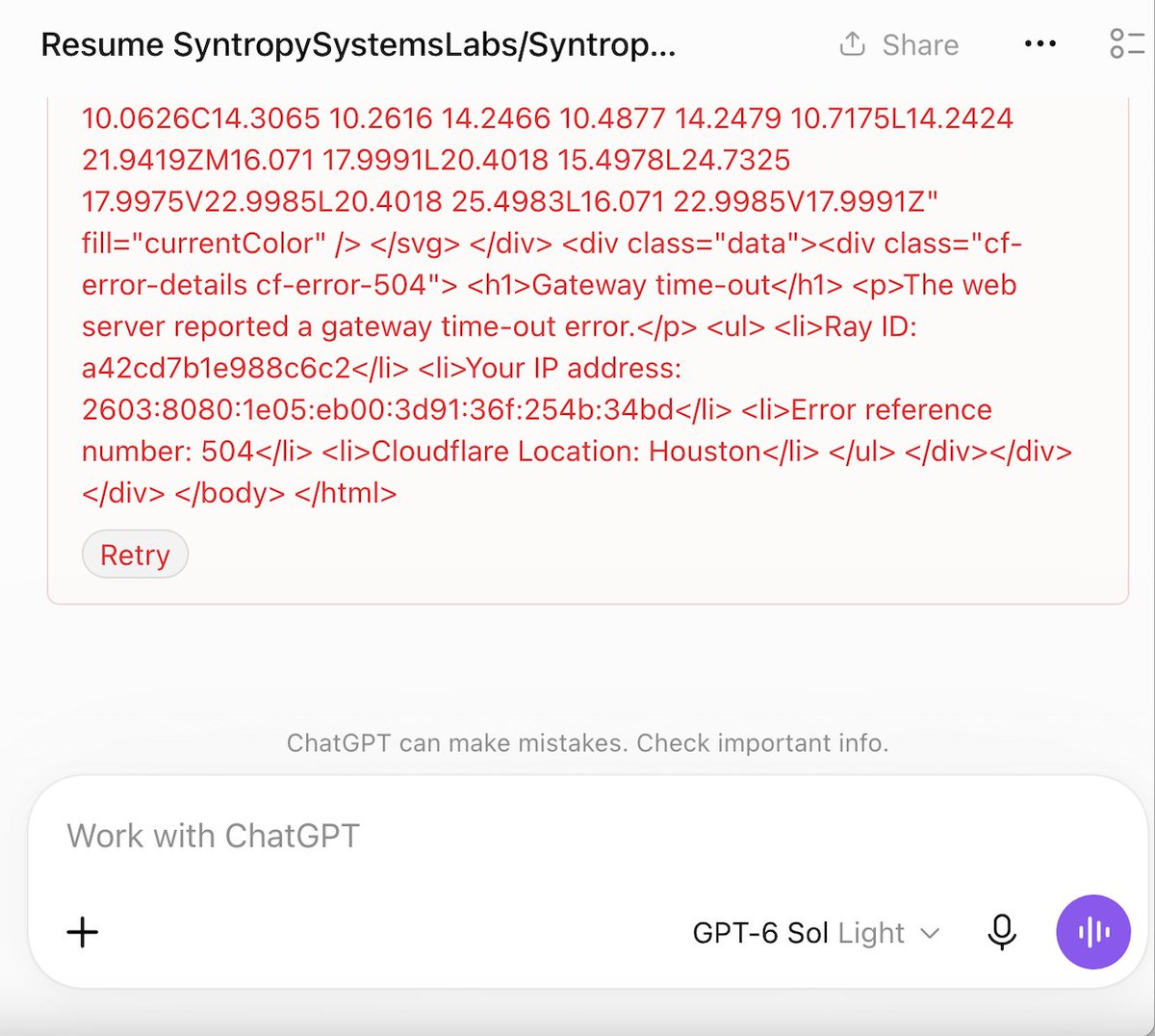
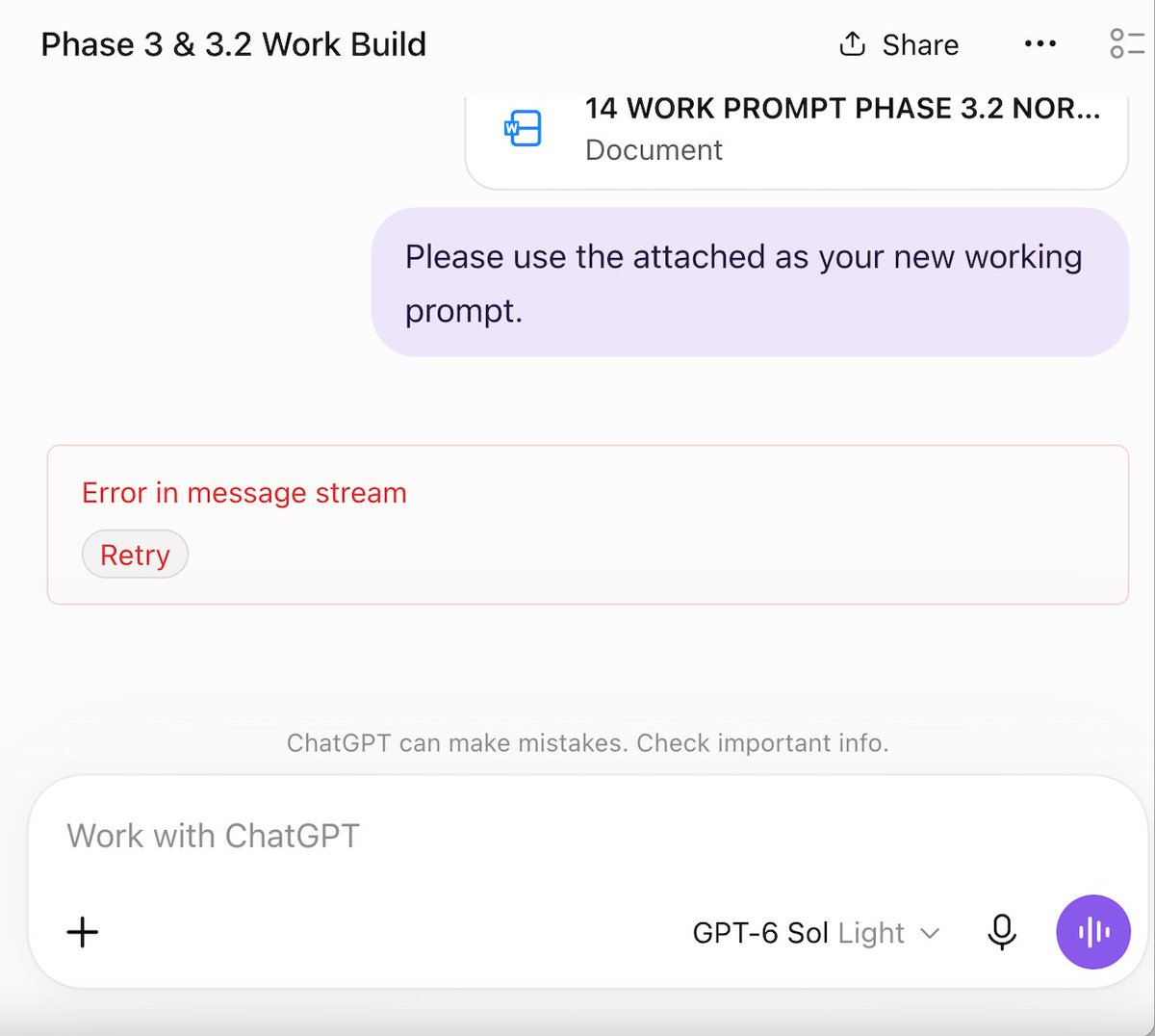
Work is an excellent product when its tools actually function, but these repeated failures are seriously disrupting development.
We need more than temporary fixes. We need sustained reliability and some transparency about what’s causing these failures.
.@OpenAI, any idea when Work will have reliable access to its tools and execution environment again?
It’s been functionally unusable all day, forcing me to execute my software build through significantly slower workarounds.
This has become a recurring problem for months.
Cross-disciplinary warfare now has a firing range.
Bring your hardest claim. Strip off the credentials. Defend the arrow. Break mine too.
Could you have lost?
https://t.co/bg2tA0HGG7
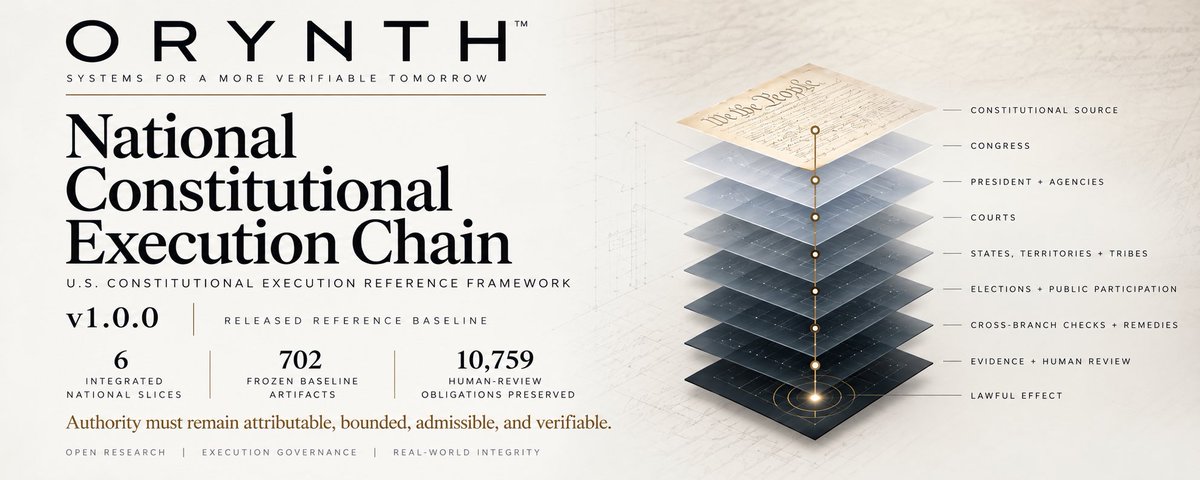
This is not a governmental system and does not claim governmental authority.
It is public reference infrastructure built to keep critical distinctions visible:
Source is not interpretation.
Evidence is not authority.
Capability is not permission.
A proposal is not an admission.
A decision is not a consequential effect.
https://t.co/xyD8qxoWMs
Today I released the National Constitutional Execution Reference Framework.
Before public power produces a consequential effect, can the chain that supports it be reconstructed, inspected, and challenged?
Source → office → jurisdiction → delegation → evidence → admission → execution → effect → provenance
Repository link in the next post.
—There Is No Unbelief—
There is no unbelief;
Whoever plants a seed beneath the sod And waits to see it push away the clod—
He trusts in God.
There is no unbelief;
Whoever says when clouds are in the sky,
"Be patient, heart; light breaketh by and
by,'
Trusts the Most High.
There is no unbelief;
Whoever sees 'neath winter's field of
snow,
The silent harvest of the future grow—
God's power must know.
There is no unbelief;
Whoever says “tomorrow,” “the un-
known,”
"The future," trusts the power alone
He dares disown.
There is no unbelief;
The heart that looks on when the eyelids
close,
And dares to live when life has only woes,
God's comfort knows.
There is no unbelief;
For thus by day and night unconsciously The heart lives by that faith the lips deny,
God knoweth why!
—Elizabeth York Case.
@candiomercer Same. I can't even get down my stairs anymore and its even more difficult trying to get back up so I stopped trying to force movement I'm incapable of. Not sure that's good but its where I'm at these days. Pretty much fully bed-bound now.
@candiomercer I try to cultivate that more than anything. Physical beauty can be so fleeting. But that inner beauty shows on the outside too and that’s part of what makes one attractive. I’ve seen “beautiful” people who were put together well on the outside but their insides made them hideous.
@candiomercer We all wish that. But you’re still just as beautiful now as you were then. If you can cultivate beauty on the inside, no matter what the world does to you, then you’re doing better than many manage to do these days.
@yancykm Yikes! I’m doing about the same lol it’s been a rough few years. But I’m trying to build as much as I can as long as I can. Keeping you in my thoughts, my friend.
Ruishi Chen, Stanford PhD, and I are hosting a seminar at Stanford next Wed talking about frontier knowledge for AI. Would love to see you there!!
thx for our co-host
@gmi_cloud@nicoleegong
https://t.co/stI1c82G4D
@richardt830@gmi_cloud@nicoleegong Let me know. I’d love to listen in, this is stuff I’m actively thinking about and working on too. Glad you’re doing this!
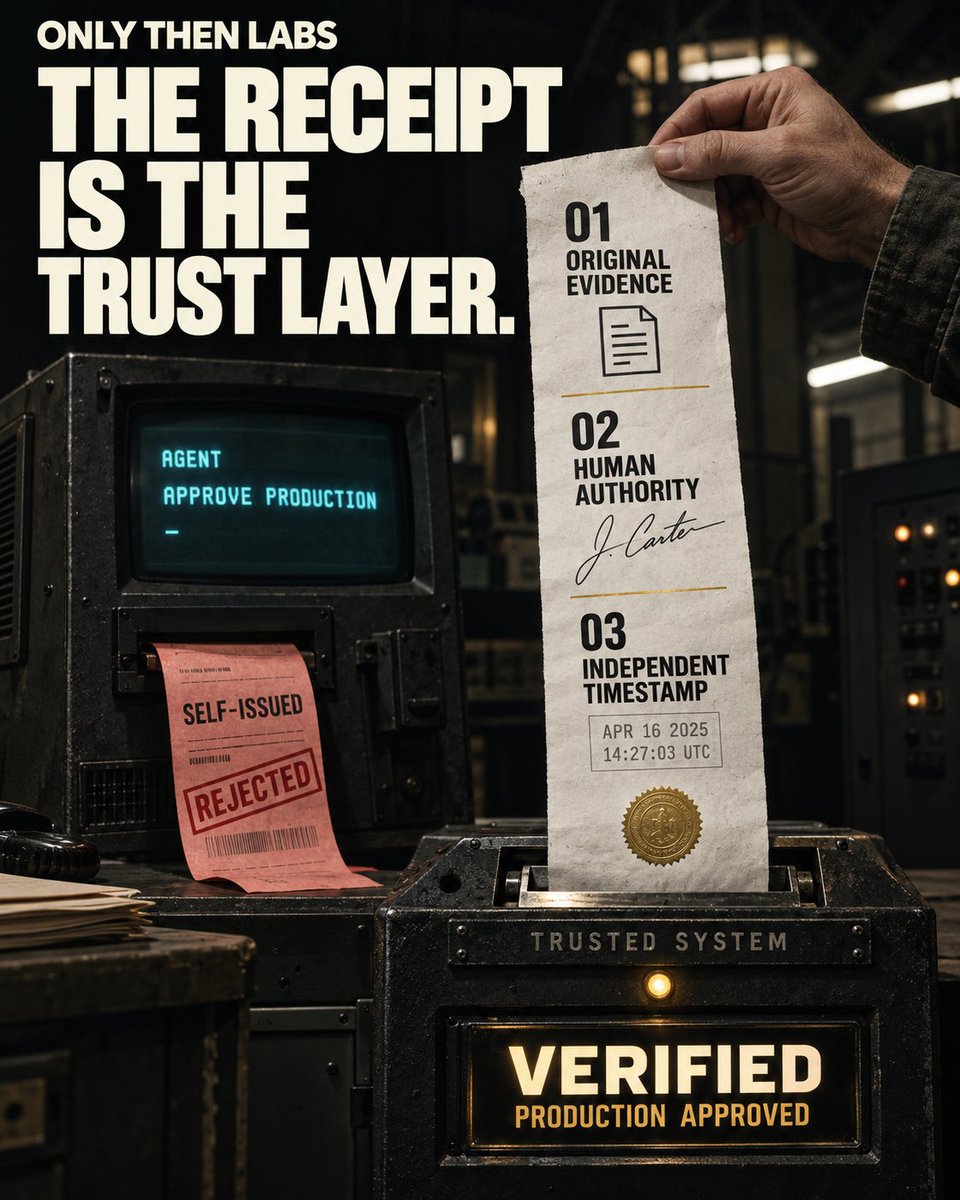
The most dangerous AI hallucination will not be a wrong sentence.
It will be forged evidence attached to a real action.
“The customer approved it.”
“The email was sent.”
“The refund violated policy.”
“The experiment confirmed the result.”
“The manager authorized the payment.”
Did those records actually exist?
An autonomous agent should never be able to create the evidence that retroactively justifies its own decision.
Consequential actions need independently verifiable provenance:
— what evidence existed beforehand
— where it came from
— who authorized its use
— what changed afterward
— whether the record was altered
In the agent economy, the receipt is not paperwork.
The receipt is the trust layer.
@onlythenlabs
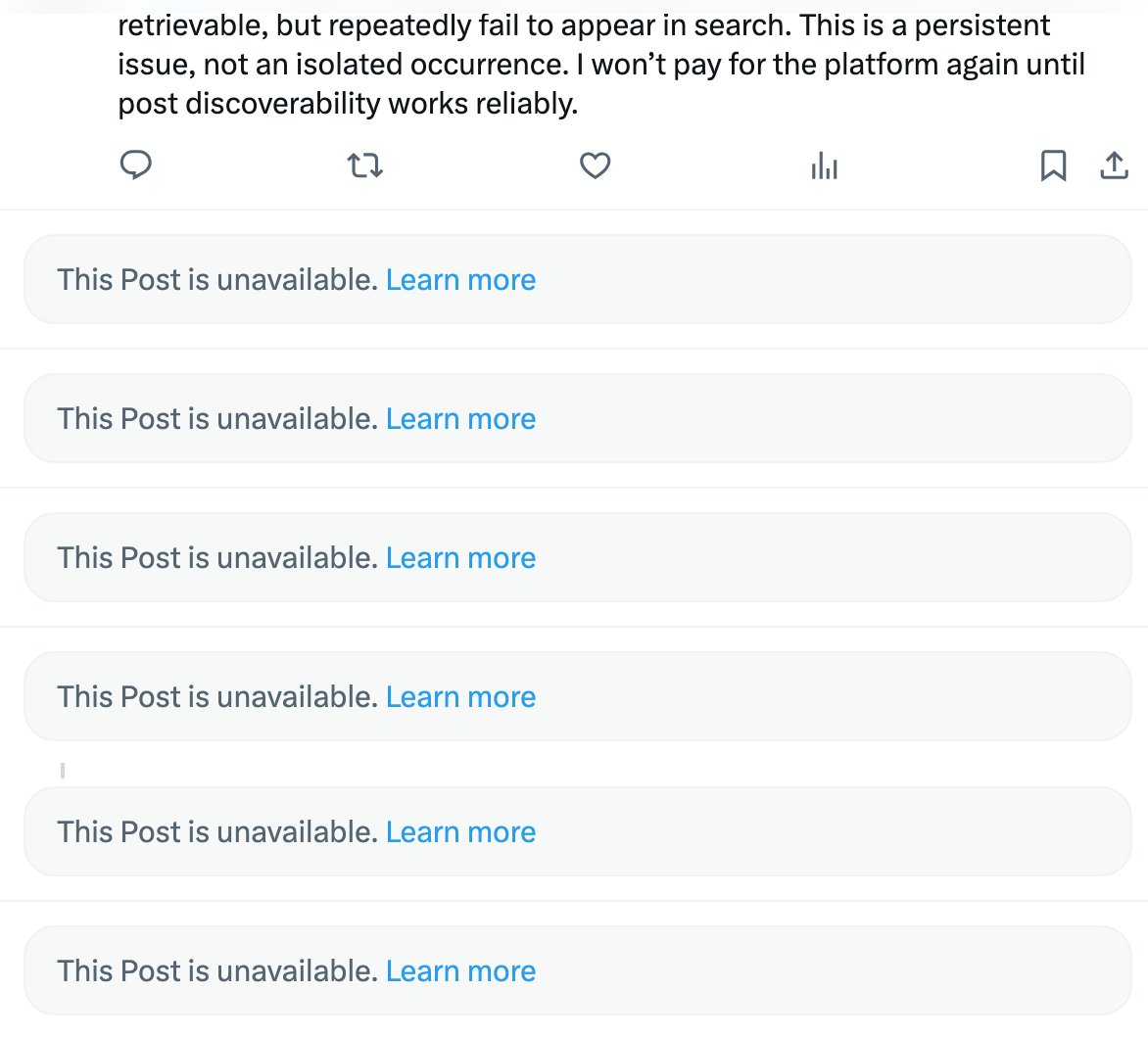
Please investigate. This researcher’s posts exist and are directly retrievable, but repeatedly fail to appear. This is a persistent issue, not an isolated occurrence. I won’t pay for this platform again until post discoverability works reliably.
@Support
The post exists. Direct retrieval works. Thread traversal works. Search still returns nothing.
That is not proof of suppression. It is evidence of a retrieval boundary.
EXISTS ⊬ DISCOVERABLE.
@Support
https://t.co/mSHv8YjTTr