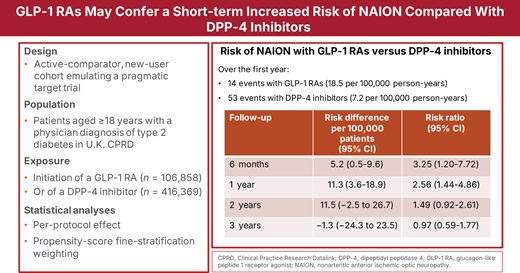
Initiation of #GLP-1 receptor agonists, most notably semaglutide, is associated with an increased one-year risk of NAION compared with DPP-4 inhibitors in adults with #T2D.
@PROFLAZOULAY
Read here ➡️ https://t.co/rheyO1TVfZ
@AmDiabetesAssn@ADA_DiabetesPro@ADA_Pubs
🩺 A recent study added to the growing body of evidence indicating #GLP1 receptor agonists do not affect suicidality. #HealthNews
Read more, with insight from @profLAzoulay, one of the researchers, and @dameofdementia, of @AOAforDOs ⬇️
https://t.co/68NCSwsm6J
Use of GLP-1 receptor agonists to treat type 2 diabetes is not associated with an increased risk of suicidality compared with two other groups of diabetes drugs known as DPP-4 inhibitors and SGLT-2 inhibitors, finds study of UK health data @profLAzoulay https://t.co/splZrR1Qpq
Concerns have been raised about a possible link between GLP-1 RAs and suicidality. Our latest study published in the @bmj_latest provides reassuring findings.
Great work by my doctoral student Samantha Shapiro and team!
https://t.co/tP4kFtqoja
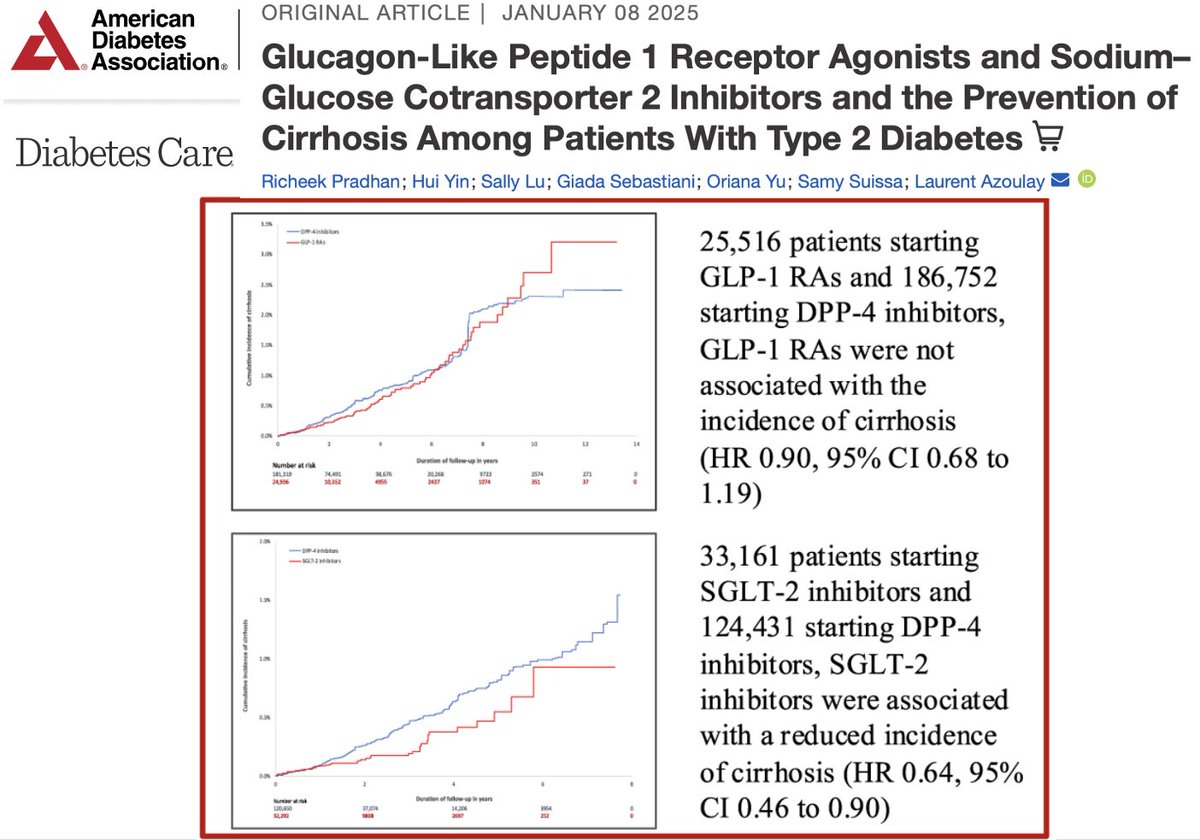
I am pleased to share our latest study published in Diabetes Care!
Glucagon-Like Peptide 1 Receptor Agonists and Sodium–Glucose Cotransporter 2 Inhibitors and the Prevention of Cirrhosis Among Patients With Type 2 Diabetes https://t.co/9QGLpDgg4C
🚨Pleased to coauthor this new publication🚨
➡️In patients with type 2 #diabetes in UK, SGLT-2 inhibitors were associated with a lower risk of #cirrhosis compared to DPP-4 inhibitors
➡️ #GLP1 RAs were not associated with a lower risk of cirrhosis
👉https://t.co/9wt8t8uhRK
🚨Fresh off the press in @DrugSafetyJ!
We observed a 46% increased risk of gallbladder and bile duct disease associated with use of DPP-4 inhibitors. Give it a read at https://t.co/KcyLolgS9g
@profLAzoulay#rxepi 💊
Additional studies, including randomized controlled trials, will be needed to fully explore the therapeutic potential of this combination.
Special thanks to our collaborators on this study!
@LDI_ILD@mcgillu@McGill_SPGH#McGillRxEpi
I am pleased to share our latest study in the @bmj_latest
Using GLP-1 RAs and SGLT-2 inhibitors in combination was associated with a 30% decreased risk of MACE, compared with either drug class alone. Similar benefits were observed for renal outcomes.
https://t.co/UkW0Pq6gtd
Excited to share my first paper with @profLAzoulay on the association between SGLT-2 inhibitor use and the risk of lung cancer. Check out my first official foray into cancer pharmacoepidemiology in @BritJClinPharm! 💊🧫 #rxepi
https://t.co/Be3NFLgcwK
Do PPIs increase the risk of IBD?
In this study published in @GUTJournal_BMJ, we show how short-term use is spuriously associated with IBD, likely due to protopathic bias. Lagging the exposures generated null results.
https://t.co/JtBmhHClhW
@RussellYanofsky@DrEmilyMcD
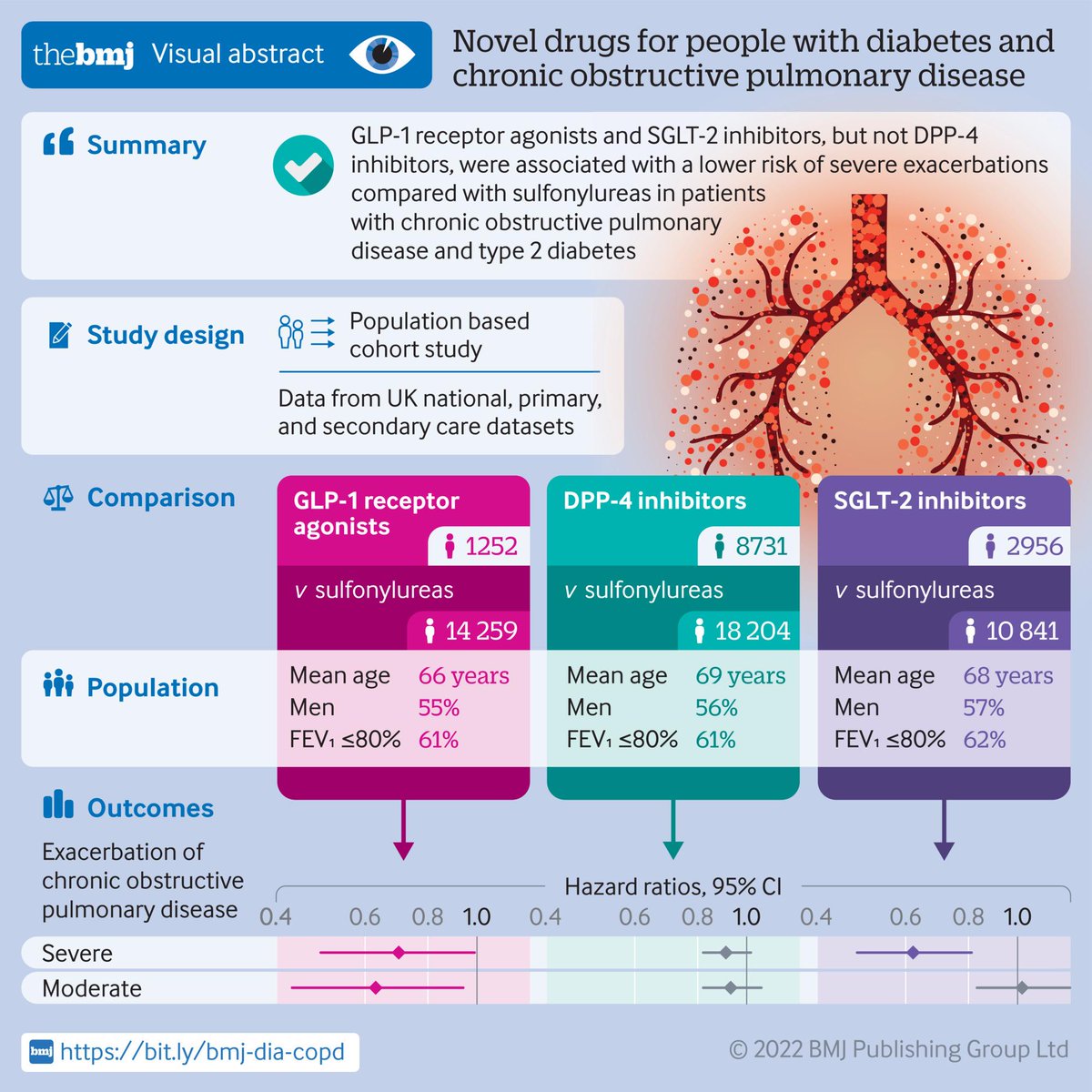
GLP-1 receptor agonists and SGLT-2 inhibitors were associated with a reduced risk of severe exacerbations compared with sulfonylureas in patients with COPD and type 2 diabetes, finds study @LaurentAzoulay0
Includes a #VisualAbstract#BMJInfographic
https://t.co/pQ3GCIWGgX
I am pleased to share our latest paper published in @bmj_latest. In this study, GLP-1 RAs and SGLT-2Is were associated with a reduced risk of COPD exacerbations. Is there a role for these drugs in COPD? Great effort led by Richeek Pradhan.
@McGill_SPGH@LDI_ILD#McGillRxEpi
International, multi-site, cohort study of adults w/ #T2DM suggests that use of SGLT2 inhibitors is not associated with increased risk of short-term bladder cancer. Findings should provide reassurance to patients and physicians #RWE@mcgillu@Harvard
👀➡️https://t.co/UL8haSOyDg
Patients with #type2diabetes using #SGLT2 inhibitors did not have a decreased risk of #lungcancer when compared to #DPP4 inhibitor users. For more details, check out poster 86 at #ICPE22 or read our preprint on #medRxiv: https://t.co/LDsbOz32CM