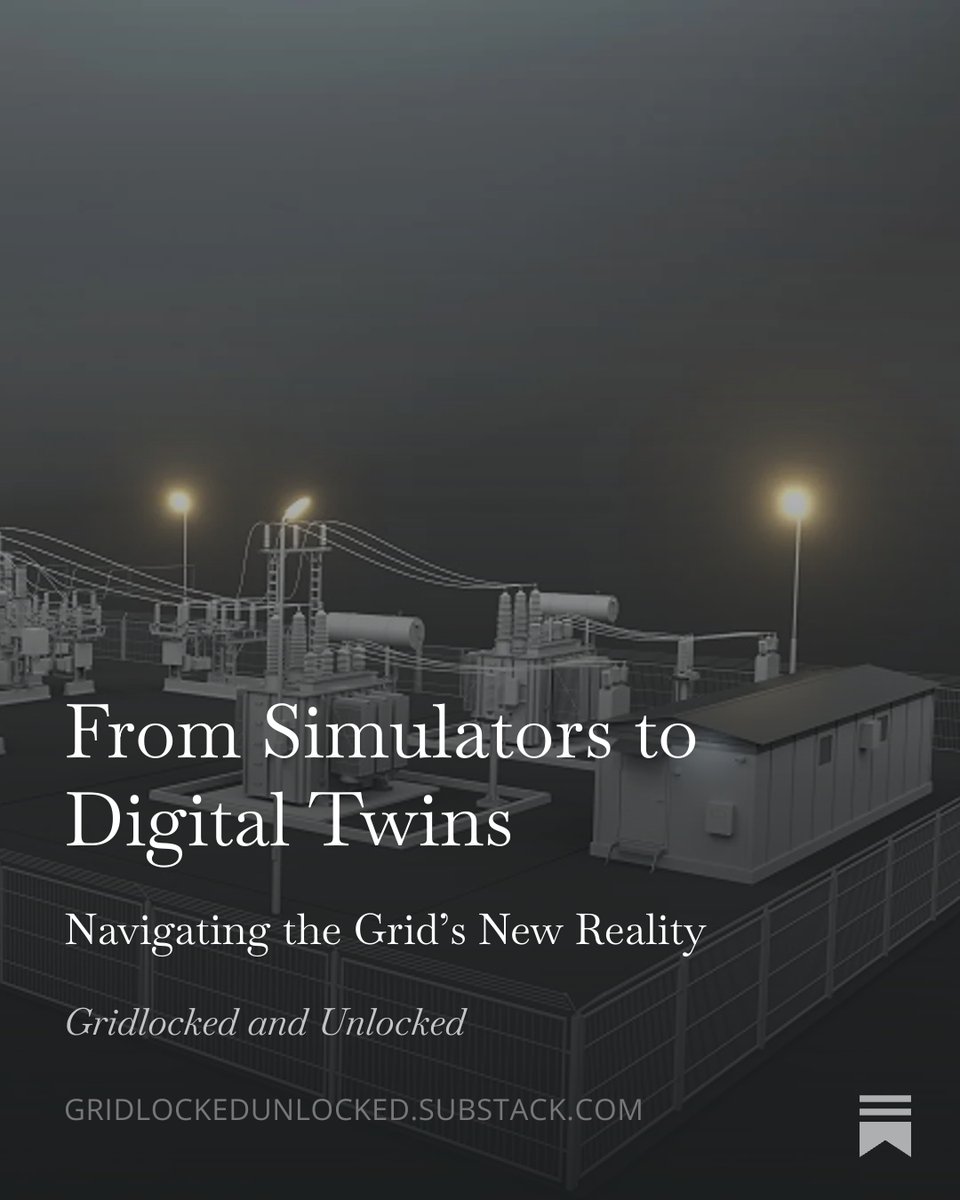
Simulators approximate. Digital twins mirror real systems in real time. Using an F1 analogy, we argue most “grid twins” are just static maps.
https://t.co/2CcIcU288b
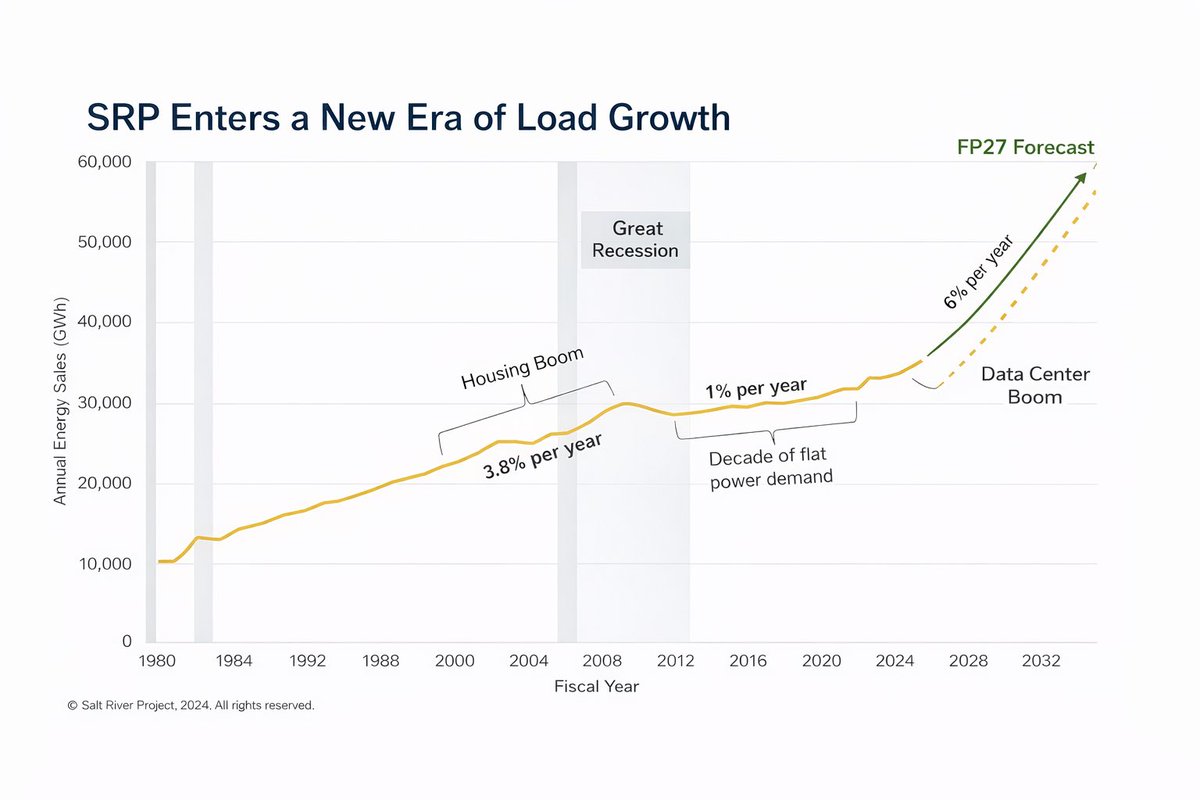
Arizona’s second-largest utility, SRP, is showing what grid growth actually looks like.
Arizona is a relatively young state. The median building age is just 28 years.
New wave: data center load growth is expected to accelerate at roughly 2x that pace.
🧵 More on Arizona below.
Wrote my most successful Substack thus far
https://t.co/pXtAtYc1Yi
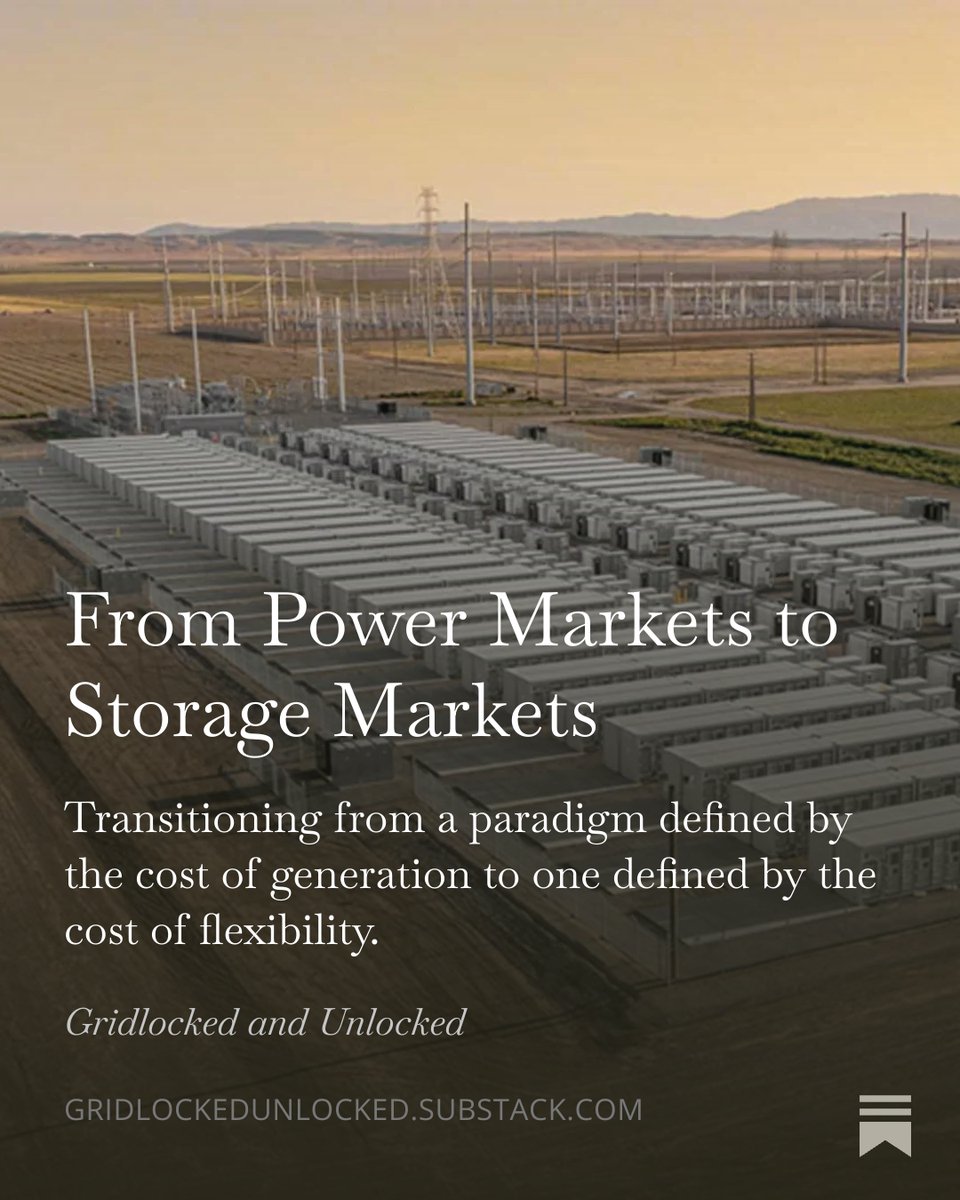
For over a century, the power system has operated under a simple constraint: electricity must be consumed the moment it is generated. The entire market and regulatory structure was built around that limitation.
Now consider a different reality.
A battery small enough to carry in your hand. You pay about $1 to charge it, bring it home, and it powers a four-bedroom house for an entire day. That implies roughly 2 to 3 cents per Kwh, compared to the 17 to 18 cents the average U.S. household pays today.
At that point, electricity stops behaving like a real-time service and starts behaving like a storable commodity.
We are not there yet, but the system is already moving in that direction. In California, about 72% of battery revenues now come from energy arbitrage. In Texas, ancillary service revenues collapsed from roughly $168,000 MW-year in 2023 to about $36,000 in 2024 as the market saturated. Across multiple regions and markets, negative pricing is no longer rare.
Value is shifting away from generating electricity and toward controlling when and where it is delivered. In other words, from power to flexibility. The implication is that the future grid will not be defined by how cheaply we generate energy, but by how effectively we store and deploy it. In this paradigm, the spatial and temporal delivery of electricity becomes the central driver of value.
Article written with @prof_teealex
This week’s accomplishment: a full magazine feature on my research.
I spoke with @SustMagazine about our work at ASU LEAPS on AI-enabled microgrid design, grid modernization, and power-system digital twins.
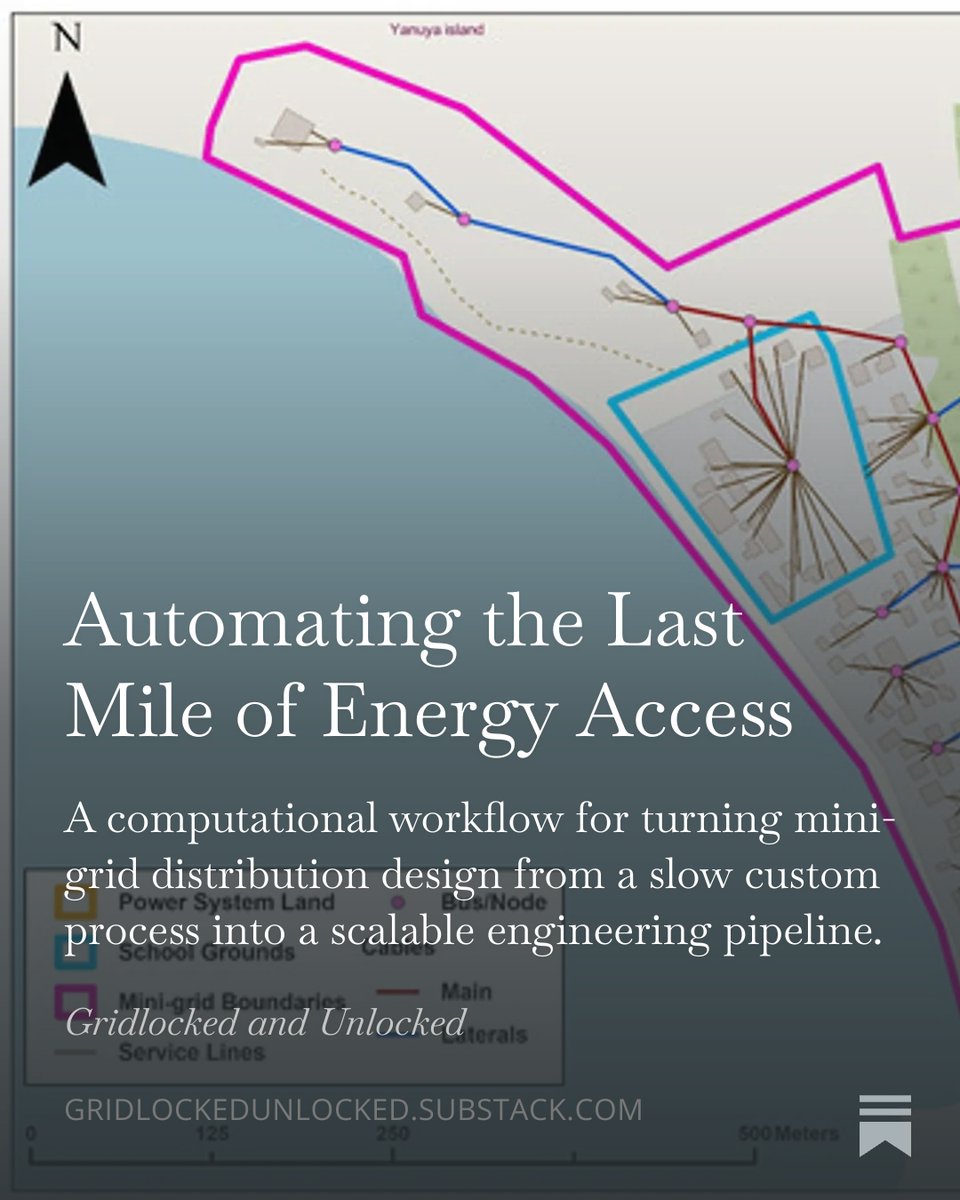
What used to take ~40 engineering hours can now take minutes with AI-assisted workflows.
Thanks to Jennifer Withers for this article
Full article 👇
https://t.co/uo1xjGYkih
https://t.co/UN1hWRBgiz
The real conversation is not about deploying more capital. It is about deploying capital that survives currency shocks, policy shifts, and macro cycles. That is where long-term value is created.
Scaling infrastructure in emerging markets is not just an execution challenge. It is a macroeconomic one.
In this Founder Spotlight discussion, Daniel Komolafe CEO of First Electric and I examined what it really means to grow from 3 communities to 93 in under two years.
Infrastructure must ultimately stand on its own cash flows. In frontier markets especially, scale is not optional. You must be large enough to absorb macro volatility, stabilize revenue, and access cheaper capital over time.