🎉 We are delighted to announce that the UKRI Economic and Social Research Council (@ESRC) has awarded Digit £8.3 million for a further five years to study the UK's evolving digital work ecosystem.
Delighted to see this recently published: ‘AgTech’ and the restructuring of agrifood labour regimes: Digital technologies, migrant labour and the intensification of production in the UK glasshouse sector. Thanks to @LeverhulmeTrust for funding https://t.co/DvK6SuT5a1
🎉📢 Exciting News from @eursjournal
With @TorreAndr, we are thrilled to announce a #CallForPapers + an exclusive 𝘄𝗼𝗿𝗸𝘀𝗵𝗼𝗽 on October 6-7 at the @EMNormandie
For more details, check out the full call on our website! https://t.co/ce4pma5NVG
🚨Call for Papers🚨
🌐⛓️Restructuring and Resilience of Global Production Networks in the Age of Polycrisis⛓️🌐
🔖Special Issue in
Journal of Economic Geography, @OUPEconomics
x
👩🏫Paper Dev Workshop (fully funded!)
@SussexUBusiness, June '24
Full CfP: https://t.co/xhpsAgF5MG
Call for Themed Workshops and Special Issues
The Editors of European Urban and Regional Studies invite proposals for research workshops based on academic research that falls under the scope of the journal: https://t.co/AtWT7NvyuQ
The book aims 'to set out a framework that accounts for both "labour control and labour agency" and is explicitly multi-scalar … a framework that is capable of attending to the myriad aspects of a critical political economy of labour.'
https://t.co/d96o63PokV
We are looking for a Director and Chaired Professor for the new Bennett Institute for Innovation and Policy Acceleration.
Director and Chaired Professor, Bennett Institute for Innovation and Policy Acceleration job with University of Sussex | 33086 (https://t.co/JDfGCn0ct1)
📢Now available in paperback 📢
LABOUR REGIMES AND GLOBAL PRODUCTION
Edited by Elena Baglioni, Liam Campling, Neil M. Coe &
@profadriansmith
Read the introduction👇🏾
https://t.co/COue608iXJ
#LabourRegimes
Today we publish the first findings from our @ESRC funded survey of Employers' Digital Practices at Work.
There's been a lot of speculation about AI but in the face of rapidly evolving technologies, policymakers and businesses need evidence.
https://t.co/KrRL7ybTiX
🧵👇
/1
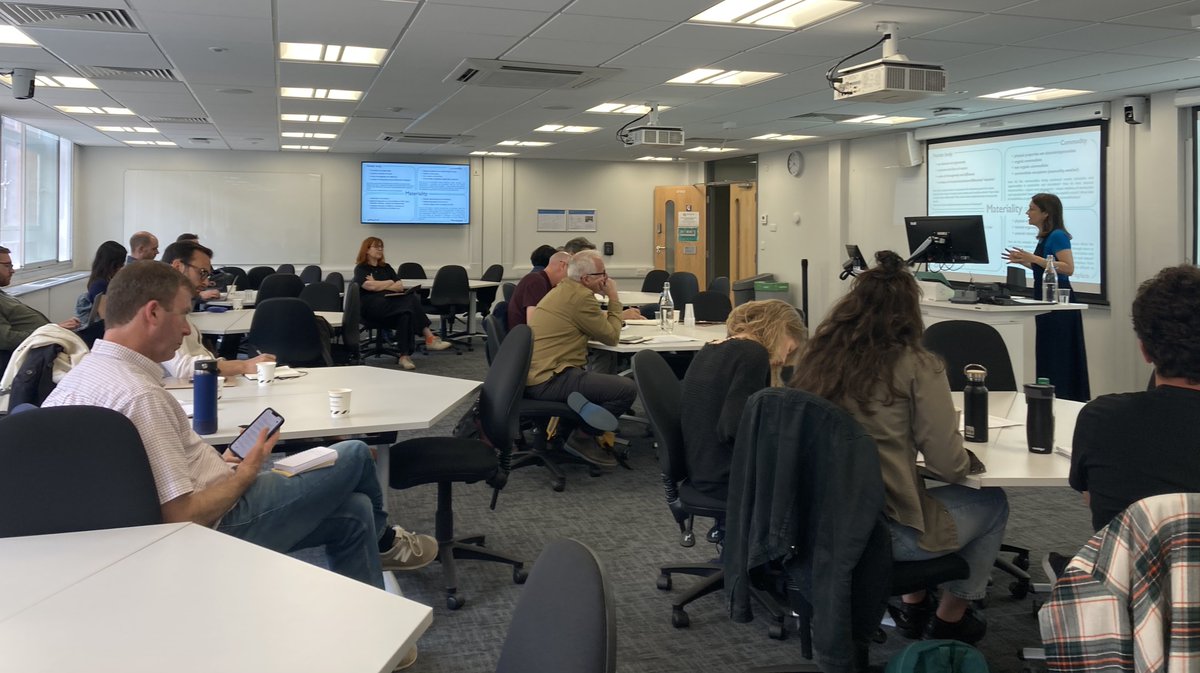
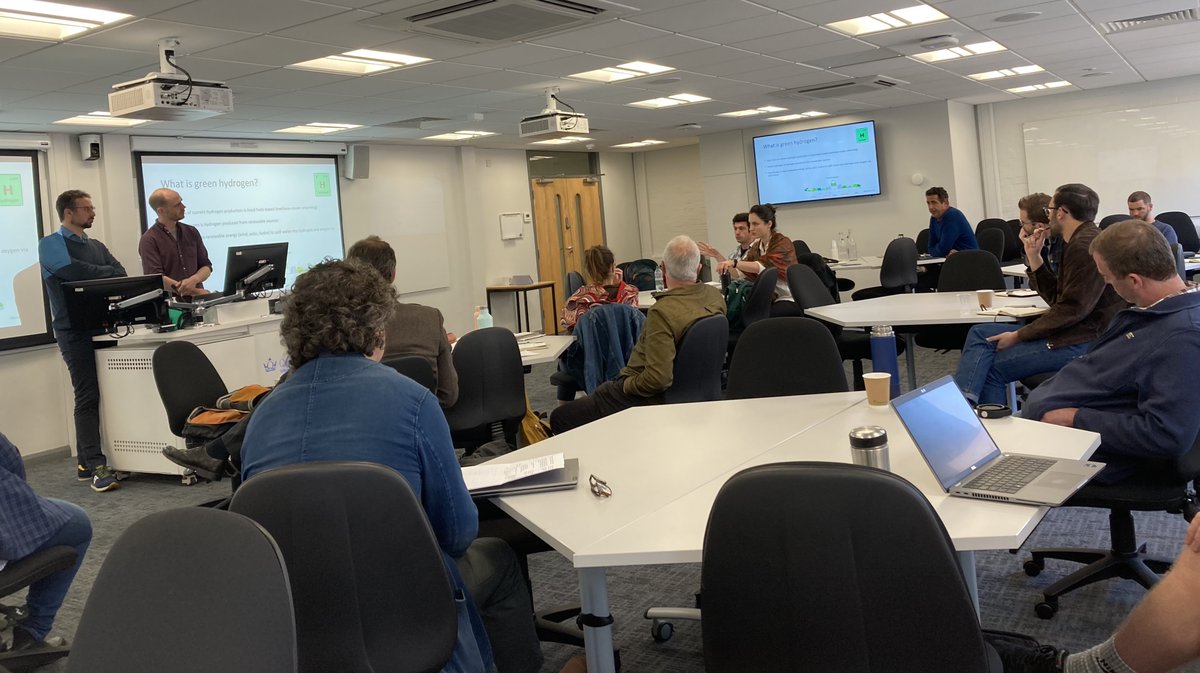
Wrapped up our 2-day workshop on 'Labour Regimes & Ecology'
Such inspired, rich presentations & exchanges on the intersections b/w labouring bodies, nature, state, capital, space, time... across agriculture, mining, fishing, renewables & automobiles. (bonus: happy faces)
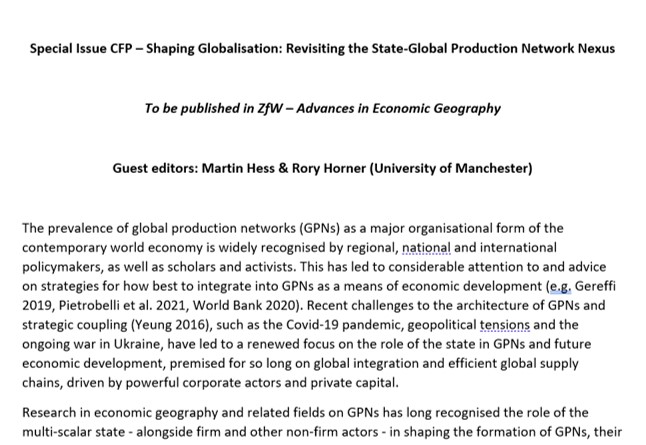
Call for papers for special issue of 'ZFW – Advances in Economic Geography':
“Shaping Globalisation: Revisiting the State-Global Production Network Nexus”
Edited by Martin Hess (@GeographyUOM) & I:
https://t.co/tD1Un963OR
Abstracts due 19th June; Full papers 15th December 2023
Excited to be co-organising and presenting at this research workshop this week: for discussions of research on labour regimes and ecology in the world economy @clasp_qmul
Excited to share our year-end event!
Labour in the Green Transition, with Ariel Salleh & Matt Huber, Jun 8 @QMUL
It asks: What is the role of #labour in the green transition? What can we learn from history? What about race, gender, age...?
Register: https://t.co/gA3P9Kwu2T
Recent blog charting the development of a research centre … from labour and global production to labour, sustainability and global production. The origins for our co-edited Labour Regimes & Global Production collection https://t.co/dFjkXLBgoQ
Hydroponics was therefore a way for growers to manage some of the key biophysical barriers to production and to enhance control over labour rationalisation. It has since become central to ‘controlled environment agriculture’. @econgeog
My new article examining the development of ‘hydroponic capital’, a key element in the intensification of large-scale, industrialised glasshouse agrifood production. https://t.co/MiaONxs9BR
The argument is that hydroponics resulted in an intensification of the circulation time for capital and a simultaneous rationalisation of the scale and costs of labour in the process of agrifood production.