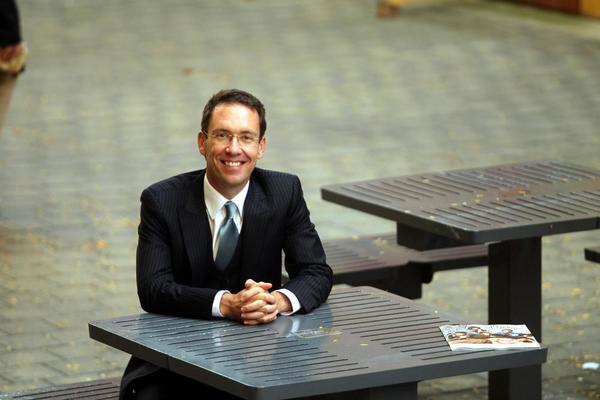
The Ehrenberg-Bass Institute is looking forward to Professor Byron Sharp presenting at the Cannes Lions International Festival of Creativity on 22nd of June, 2026 at Debussy Theatre in Cannes, France.
Learn more at: https://t.co/7Rdptvr4Jb
Baruch is an NHS doctor who, after feeling that his safety was threatened several times, decided to move to Israel.
The UK is repeating a historical pattern in which hostility toward Jews drives away talented professionals and intellectual capital that has helped sustain the country for generations.
Welcome home to Baruch and his family ❤️
The Islamic regime shut down the internet to hide what was happening.
Now the internet is back, and the videos are pouring out.
Millions of Iranians in the streets. Voices demanding freedom. A nation refusing to be silenced. Let the world know!
Not one girl on Earth would ever willingly choose this lifestyle without social pressure or straight up coercion. It's the most anti-human clothing I have ever seen.
She was rejected 15 times, dismissed as unruly, and largely written out of the conversation. Then the science proved she was right — and changed everything we thought we knew about life itself.
In 1966, a twenty-eight-year-old biologist named Lynn Margulis sat down and wrote a paper that contradicted one of the most fundamental assumptions in all of science.
She was not a tenured professor. She was not working at a prestigious research institution. She was a young mother of two, recently divorced, completing her PhD while raising her sons largely on her own. The scientific establishment had no particular category for her and no particular interest in what she was proposing.
She proposed it anyway.
Her idea was this: that the story of evolution told through competition and conquest was incomplete. That somewhere in the deep history of life on Earth — billions of years ago, long before anything with a spine had appeared — something had happened that was not a battle but a merger. Two separate organisms, each unable to survive alone, had come together and become something neither could have been independently.
The mitochondria in every one of your cells — the structures that convert food into energy, the engine that powers every thought you are having right now — were once free-living bacteria. They did not evolve gradually inside cells. They moved in. They formed a partnership so deep and so permanent that over billions of years they became indistinguishable from the cell itself.
She called the theory endosymbiosis. She called the process symbiogenesis. What she was really saying was that cooperation, not just competition, was one of the engines of evolution — that life's greatest leaps forward had sometimes come not from one organism defeating another, but from two organisms becoming one.
Fifteen scientific journals rejected the paper before it was published in 1967.
Fifteen.
To understand what she was working against, you need to understand the scientific culture of the 1960s. Neo-Darwinism — the synthesis of Darwin's evolution with Mendelian genetics — was the reigning framework, and it was defended with the particular intensity of a field that had recently achieved hard-won consensus. The idea that a bacterium had simply moved inside another cell and stayed there, permanently, was considered not just wrong but somewhat absurd. Evolution happened through random mutation and natural selection, slowly, over generations. Not through dramatic mergers. Not through cooperation.
The reviewers who rejected her paper used words like speculative and insufficiently rigorous. One described the idea as the sort of thing that was interesting to think about but impossible to prove.
She was also described, more than once, as unruly.
It was the specific word that followed women who challenged scientific consensus — not wrong, not misguided, but unruly, as though the problem were her manner rather than her method.
She had been exceptional from the beginning in ways that made people uncomfortable. Born Lynn Petra Alexander in Chicago on March 5, 1938, she entered the University of Chicago at sixteen — intellectually restless, reading at a level that outpaced her coursework, drawn to the questions at the edges of what science had settled. At nineteen she married a young astronomer named Carl Sagan, who would go on to become one of the most famous scientists of the twentieth century. She would later say, without particular bitterness, that during their marriage she was primarily considered someone's wife rather than someone in her own right.
They divorced in 1964. She raised their sons — including Dorion Sagan, who would become her longtime collaborator — while completing her doctorate in genetics from the University of California, Berkeley. She did the work that would change biology while managing the entire domestic architecture of a life that offered her very little structural support.
When molecular biology caught up with her theory in the 1970s — when DNA sequencing technology became sophisticated enough to actually test what she had proposed — the results were unambiguous. Mitochondria contained their own DNA. That DNA was bacterial. The evidence was not suggestive. It was definitive.
The fifteen journals that had rejected her paper were now looking at proof.
The scientific establishment did what establishments eventually do when reality forces their hand — it incorporated her theory, celebrated it as a cornerstone of modern evolutionary biology, and credited her in terms that ranged from gracious to slightly grudging depending on who was doing the crediting. E.O. Wilson, the legendary sociobiologist, called her the most successful synthetic thinker in modern biology. Richard Dawkins — who disagreed with her on multiple other scientific questions — praised her sheer courage in holding to the endosymbiotic theory through years of institutional resistance until the evidence made denial impossible.
Science magazine, the most prestigious journal in American science, called her science's unruly earth mother.
They still couldn't let go of the word.
She was elected to the National Academy of Sciences in 1983. She received the National Medal of Science in 1999 from President Clinton — the highest scientific honor the United States government bestows. She collaborated with British scientist James Lovelock on the Gaia hypothesis — the provocative and still-debated theory that Earth itself, its atmosphere and oceans and living systems, functions as a single self-regulating organism maintaining the conditions necessary for life. It was another idea that the mainstream received with raised eyebrows, and another idea that has proven more durable than its critics expected.
She wrote books with her son Dorion that translated complex scientific concepts for general readers — believing that science belonged to everyone and that the story of life was too extraordinary to be locked inside academic journals. She co-founded a publishing imprint. She taught at the University of Massachusetts Amherst for decades and trained a generation of scientists who carried her framework into fields she never lived to see it reach.
She died on November 22, 2011, from a hemorrhagic stroke. She was seventy-three years old.
What she left behind was a redrawn map of life itself.
Every complex cell on Earth — every cell in your body, every cell in every plant, every cell in every animal that has ever lived — is a collaboration. It contains within it the descendants of bacteria that chose, billions of years ago, to stop competing and start cooperating. The boundary between self and other is not where we thought it was. It never was.
Lynn Margulis saw that when almost no one else did.
Fifteen journals said no.
The universe had been saying yes for two billion years.
Listen to Sophia Salma Khalifa, a Muslim Arab-Israeli woman, tell the truth about Gaza.
In 2005, Israel completely left Gaza. No Jews alive or dead. They even took the graves. They handed over greenhouses, homes, and infrastructure, hoping Gaza would become the Singapore of the Middle East.
The people of Gaza had a real chance.
Then they elected Hamas.
Hamas burned it all down, murdered everyone who opposed them, stole the opportunity, and turned Gaza into a launchpad for terror instead of a thriving state.
This is what happens when radical Islamists win. They don’t build. They destroy.
Powerful testimony from someone who actually understands the reality on the ground.
Civilizational suicide has consequences.
H/T @prageru
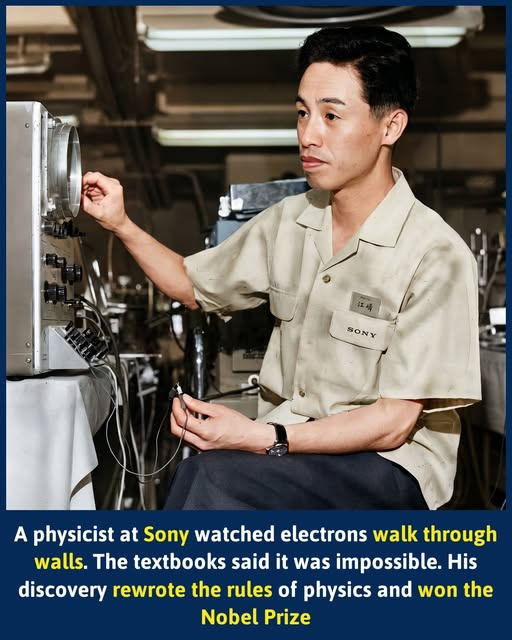
The year was 1957. Inside a modest Sony research laboratory in Tokyo, a 32-year-old physicist named Leo Esaki was doing something that looked almost embarrassingly simple. He was pressing a tiny sliver of germanium semiconductor between two electrodes and watching what happened. No massive particle accelerators. No sprawling university budgets. Just a quiet man, a small crystal, and an idea that the textbooks said shouldn't work.
What Esaki noticed was extraordinary. Electrons weren't behaving the way classical physics demanded. Instead of climbing over an energy barrier the way any sensible particle was supposed to, they were slipping straight through it. Vanishing on one side and reappearing on the other, as if the wall simply didn't exist. This was quantum tunneling, a phenomenon that had been theorized for decades but never cleanly demonstrated in a semiconductor until that moment.
The implications were staggering. Esaki hadn't just confirmed a ghostly quirk of quantum mechanics. He had shown that it could be harvested, controlled, and put to work. The device born from his discovery, the tunnel diode, could switch between states faster than any conventional transistor of its era. It was a signal that the future of electronics wouldn't just be about building smaller components, but about bending the rules of nature itself.
Physics laboratories across the world took notice almost immediately. The tunnel diode ignited a wave of research into quantum devices that rippled from Bell Labs in New Jersey to research centers in the Soviet Union. Scientists who had spent careers working within the comfortable boundaries of classical electronics suddenly found themselves peering into the strange, probabilistic world of quantum mechanics.
In 1973, the Nobel Committee in Stockholm made it official. Esaki was awarded the Nobel Prize in Physics alongside Ivar Giaever, the two of them recognized for independently illuminating the tunneling phenomenon from different angles, Esaki in semiconductors and Giaever in superconductors. It was a recognition not just of two brilliant careers, but of an entire new chapter in the story of physics.
Today, Leo Esaki turns 101 years old. Born in Osaka on March 12, 1925, he has lived long enough to watch the quantum principles he uncovered in that Tokyo lab become foundational to the technology billions of people carry in their pockets every single day. The man who once watched electrons walk through walls is still here. And the world he helped build is still catching up to him.
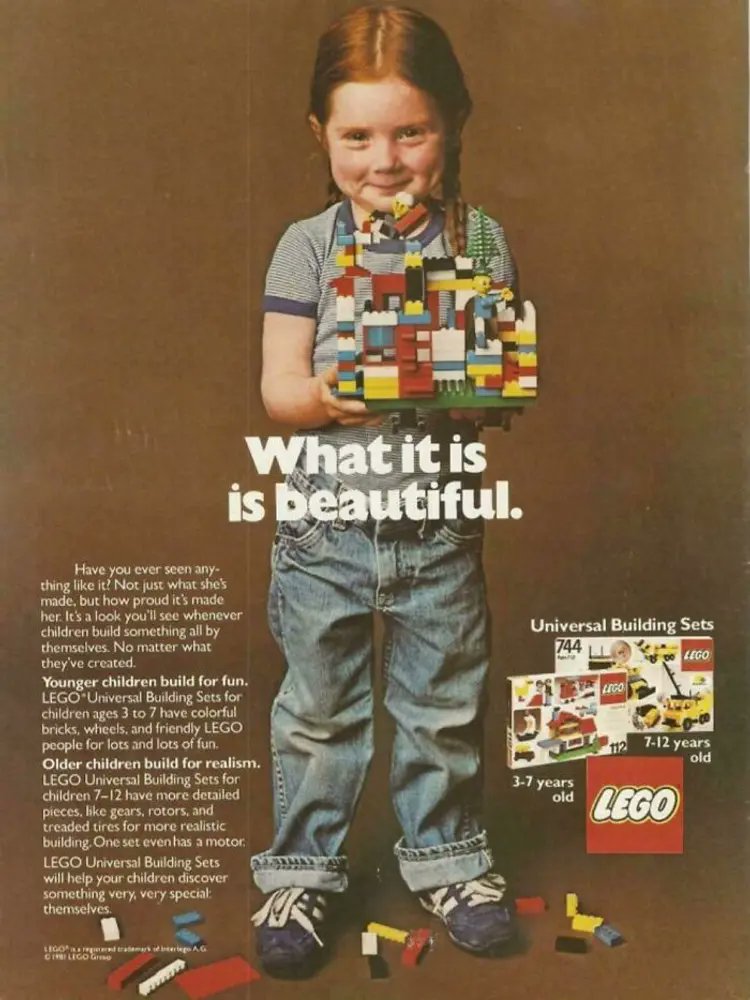
Una niña pelirroja con vaqueros, una construcción de LEGO en las manos y una sonrisa que no está posando para nadie. Esa imagen lleva más de cuarenta años siendo uno de los anuncios más citados de la historia de la publicidad.
Se llamaba Rachel Giordano. Tenía unos siete años cuando la fotografiaron para la campaña de 1981. El titular decía simplemente: What it is is beautiful. Lo que es, es hermoso. Sin mencionar si era niña o niño. Sin color rosa. Sin instrucciones sobre qué debía construir.
Lo que muchos recuerdan como un gesto revolucionario de LEGO en realidad era la continuación de algo que la empresa danesa llevaba haciendo desde los años 50: vender sus piezas como un juguete universal. Los sets se llamaban Universal Building Sets. La creatividad era el producto, no el género del comprador.
Lo interesante llegó después.
En los años siguientes, LEGO fue derivando hacia una segmentación por géneros cada vez más marcada. En 2012 lanzó LEGO Friends, una línea diseñada específicamente para niñas, con colores pastel, figuras femeninas estilizadas y sets de cafeterías, salones de belleza y boutiques. Las críticas fueron inmediatas.
Fue entonces cuando alguien rastreó a Rachel Giordano, la niña del anuncio de 1981. La encontraron: tenía 37 años y era médico. En una entrevista con Adweek en 2014 fue directa: en 1981 los LEGO eran universales y la creatividad del niño producía el mensaje. En 2014, era el juguete el que le decía al niño quién debía ser.
LEGO escuchó, al menos en parte. En 2021, en el 40 aniversario del anuncio original, la empresa lo recreó para el Día Internacional de la Mujer bajo el nombre Future Builders y se comprometió públicamente a eliminar los estereotipos de género de sus productos y campañas.
El anuncio de 1981 no era radical para su época. Se volvió radical cuando la industria fue en dirección contraria.
In 1937, a nineteen year old woman graduated summa cum laude in chemistry. She applied to fifteen graduate schools. Not one offered her funding.
She was told laboratories did not hire women. She never earned a PhD. She later received the Nobel Prize and helped save millions of lives.
Her name was Gertrude Belle Elion.
Born in New York City in 1918 to immigrant parents, Gertrude was brilliant from childhood. She skipped two grades, graduated high school at fifteen, and entered Hunter College during the Great Depression. Her family could only afford college because Hunter offered free tuition to women.
Then tragedy changed her life forever.
When Gertrude was fifteen, her beloved grandfather died painfully from stomach cancer. Watching doctors fail to save him gave her a purpose she never abandoned. She decided she wanted to fight disease through science.
She graduated from Hunter College in 1937 at just nineteen years old, but the scientific world had little interest in hiring women. Graduate schools rejected her requests for funding. Laboratories turned her away. Some employers openly admitted they did not want female chemists.
So she worked wherever she could while studying at night.
Everything changed in 1944 when she joined Burroughs Wellcome and began working with scientist George Hitchings. Together, they pioneered a revolutionary method called rational drug design — creating medicines by understanding disease at the molecular level instead of relying on trial and error.
Their discoveries transformed medicine.
Elion helped develop 6-mercaptopurine, one of the first successful treatments for childhood leukemia. Before it existed, most children diagnosed with leukemia died within months.
She later helped create azathioprine, the first major drug that made organ transplantation possible, along with groundbreaking antiviral medications that changed treatment for herpes and helped pave the way for AIDS therapies.
In 1988, Gertrude Elion received the Nobel Prize in Physiology or Medicine.
She was seventy years old.
And she still did not have a PhD.
The young woman fifteen schools rejected ended up reshaping modern medicine anyway.
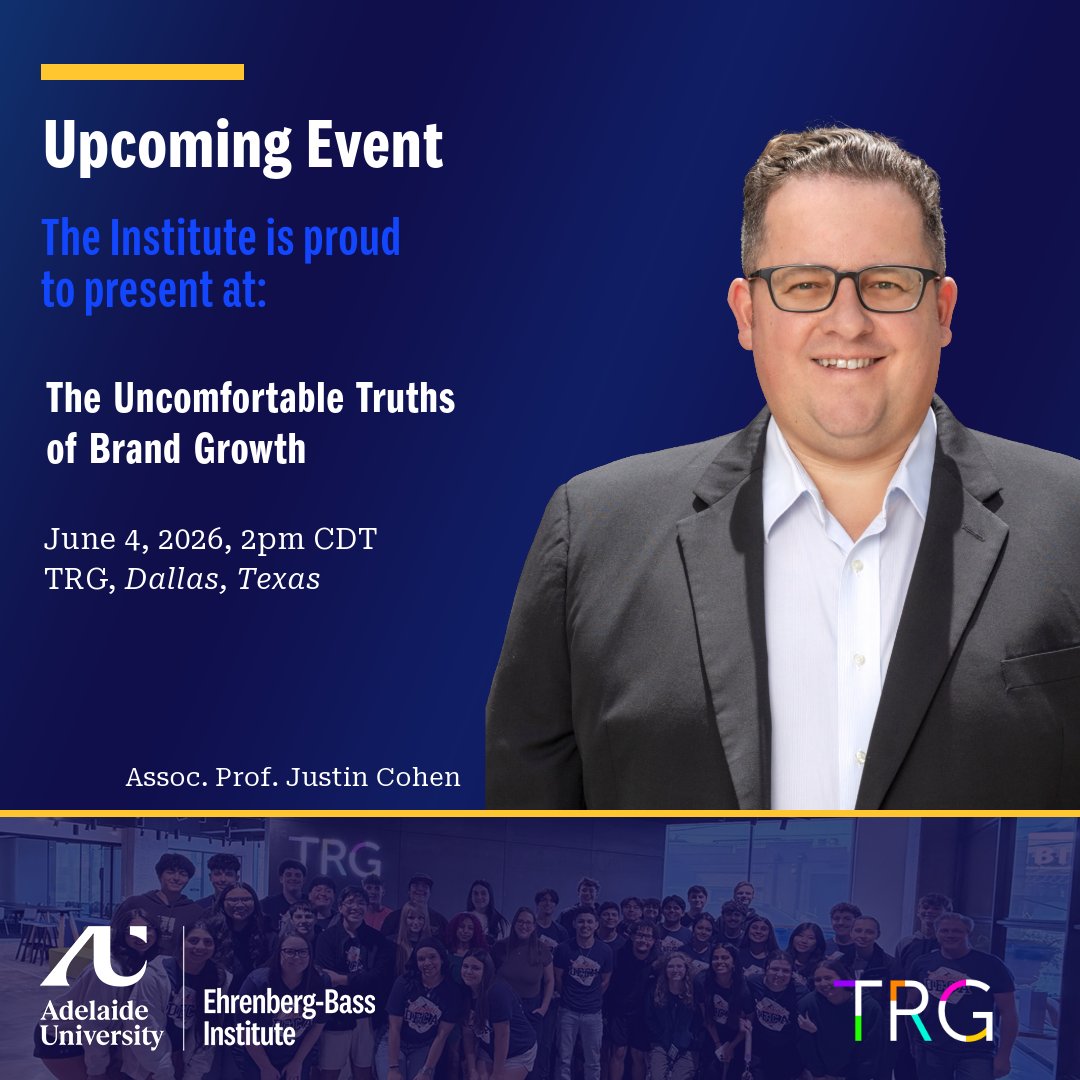
The Ehrenberg-Bass Institute is looking forward to Associate Professor Justin Cohen presenting at TRG’s "The Uncomfortable Truths of Brand Growth” event on the 4th of June 2026 in Dallas, Texas.
Learn more at: https://t.co/ZPjKelrkjd