This was just merged into Gutenberg trunk, and it’s a much bigger deal than it looks 👇
WordPress is getting a native UI to create custom post types.
No code. No plugins.
Just:
Settings → Post Types → Add
That might sound small… it’s not.
Custom post types go from “developer feature” → “everyday user feature”
Which means:
• Better structured content from day one
• Easier onboarding
• Less plugin dependency
• A cleaner foundation for AI to understand your site
And this is just the start.
Post types → taxonomies → …you can probably guess what comes next
You can see where this is heading…
WordPress is becoming a powerful content modelling system 👀
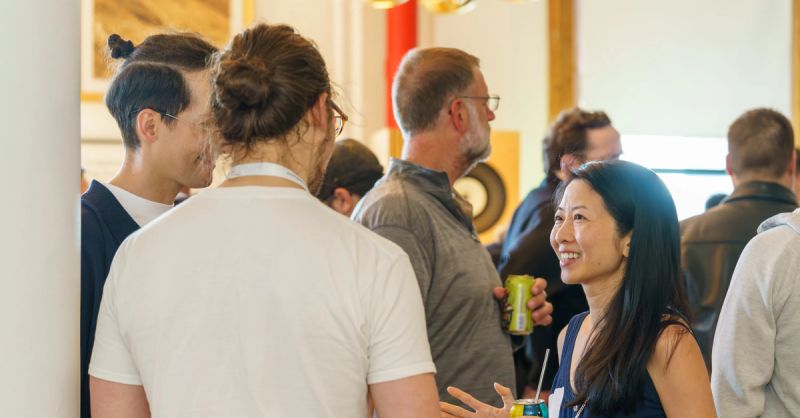
Hilary Mason is joining me on stage next Wednesday in NYC. Doors at 5:30, conversation at 6:00. Drinks, food, and a room full of fascinating people (including me!)
https://t.co/zZC4HXy6V6
New York City, we are so back! 🗽
Mark your calendars for the next dev/ai/nyc, our monthly gathering exploring the intersection of open source and applied AI.
This time around, we have a fireside chat from @hmason, CEO of @playhiddendoor, and @Professor, head of @wpcloudofficial. Don’t miss it!
People are loving the printed & mailed version of my blog (the photo below is from a friend and subscriber).
If you're interested in slowing down with some essays on leadership, systems, and the open web you can subscribe here:
https://t.co/dmjMYvSm8e
There's something that gets lost between a screen and your eye.
Not the idea — the ideas make it through fine — but something else. The weight of it. The sense that someone actually made something.
So I'm trying something different.
I write essays. Long ones, about cities and open source and the way technology changes how we move through the world. And if you go to https://t.co/WIO26VTgr1, you can subscribe and add your mailing address — and I'll send them to you. On paper. With a stamp.
You can read it on your porch. Fold it up. Spill coffee on it.
And if something moves you — a thought, a pushback, a story of your own — you can write me back. And I'll write back.
It's slower. That's sort of the point.
https://t.co/WIO26VTgr1
Remember when I took that three-month sabbatical and wrote more than 100,000 words? My essay On The Sacred Act of Writing: Distraction Free is still one of my favorite reflections.
If you haven’t read it yet (or want a refresher): https://t.co/rEg4wp61ON
One command. Zero Docker. Full WordPress.
npx @wordpress/env start --runtime=playground
⚡️wp-env now supports WordPress Playground as an experimental runtime. Spin up a local WordPress environment in seconds, no containers required.
In WP Legends Episode 80, @Professor of @automattic shares how @wpcloudofficial powers fast WordPress experiences and its global growth plans.
He also talks about real-time failover, remote culture, and work-life balance at Automattic.
https://t.co/1wpEIy1vkh
. @Apple this alert is now as frequent and annoying as swamp mosquitos on a hot summer night. And the worst part is that no one even knows what it means.
The words make sense, but the actual meaning, the outcome, the implications are completely foreign to most people.
High tech doesn’t mean high quality.
A frozen Uber, a looping Waymo, and one taxi ride made that painfully clear.
We’re losing something essential when our systems become high tech, low touch.
Full story: https://t.co/2C2Lbj2ZJX
.@dhh,
@photomatt and @Dries are right: Precision of language matters. Freedom of speech and the ability to resist injustice now depend on the open web—and the open web only works if “open source” actually means something. Being lax about that definition quietly erodes its role as a safeguard.
@OSXP_Paris Je suis très enthousiaste d’être ici. Est-il vrai qu’il n’y a pas de Wi-Fi pour les participants à cet événement ? J’ai parlé à deux employés de l’événement et ils m’ont tous les deux dit qu’il n’y avait pas de Wi-Fi.
It’s been three weeks since I shared On The Sacred Act of Writing: Distraction Free. For anyone who skipped it, here’s a reminder link: https://t.co/rEg4wp61ON
Revisit the piece about building the writing habit, overcoming distractions, and entering true flow.
Most teams don’t fail from big disruptions—they drift from subtle drag.
Half-knot inefficiencies that steal momentum without being seen.
Here’s how to lead a team that sails clean in 2026: https://t.co/mrIXPrxbv0
@Professor, Head of @wpcloudofficial at @automattic , talks Gutenberg, the evolution from WYSIWYG to pattern libraries, and the future of AI driven site building.
Full episode out Dec 16 at 9 AM ET.
Our very own @photomatt joined the @tbpn crew to close out #StateOfTheWord yesterday. They talked about WordPress 6.9, open source, @beeper, and how AI is changing the web. Did you miss it? Check it out now. https://t.co/hTLWOjAbba
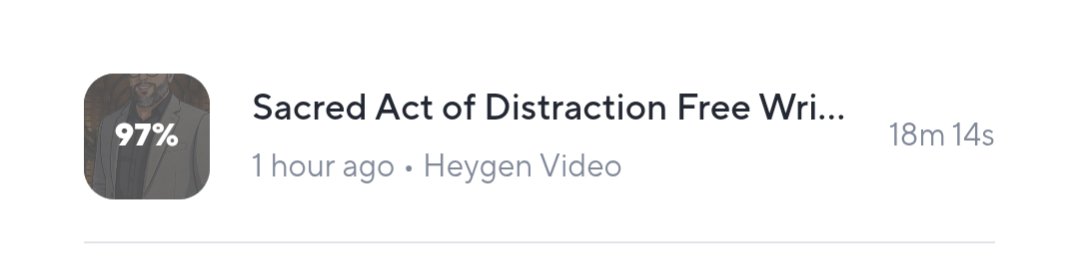
97% complete.
I've been staring at this screen for 27 minutes.
The first 97% took 3 minutes. The last 3%? Still waiting.
Here's the problem: percentages measure steps completed, not time remaining. If there are 100 backend steps and the first 97 take 3 minutes while the last 3 take an hour, that progress bar is technically accurate—and technically completely useless.
The result? I assume it's broken. I contact support. That's the most expensive action I can take as a user.
We can do better:
→ Show time, not just steps.
I don't care that you've completed 97 of 100 tasks. I care that I have 12 minutes left.
→ Prove it's still working.
A spinning indicator. A pulse. Something. Silence at 97% feels like failure.
→ Tell me if I can walk away.
Can I close my laptop? Will this finish in the background? Don't make me guess.
→ Consider transparency over elegance.
UX designers work hard to hide complexity—but sometimes showing the steps ("Rendering audio... Syncing frames... Final encoding...") builds more trust than a single mysterious bar.
Progress indicators aren't just UI. They're a promise. Make sure yours keeps it.
#UXDesign #ProductDesign #UserExperience