During COVID. many epidemiologists found themselves explaining complex, uncertain data in real time - often without any training in communication. I wrote about what it was actually like:
https://t.co/0oqCRy9Btm
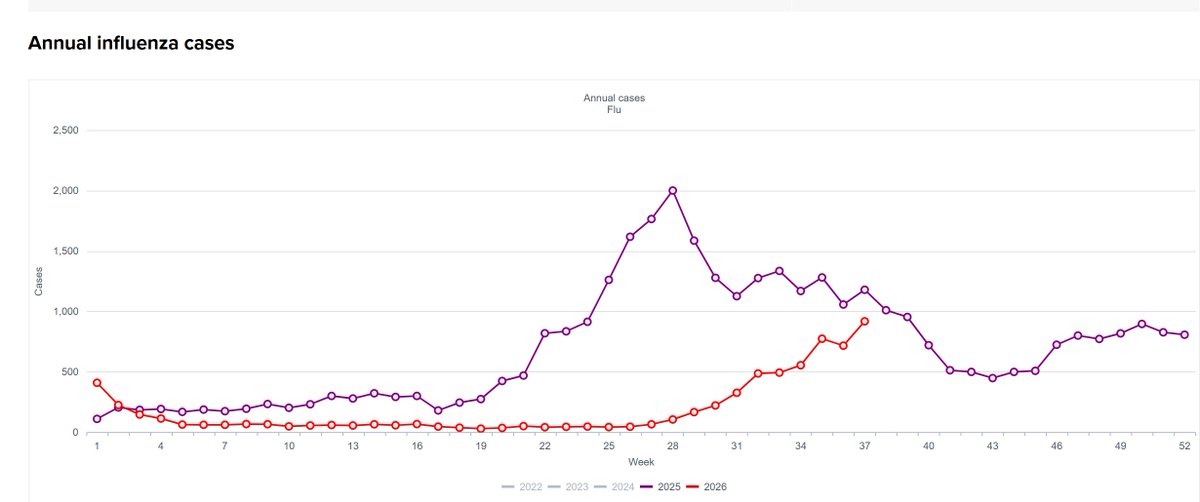
This is the chart of laboratory-confirmed influenza cases for South Australia in 2025 and 2026. A very different pattern this year - with cases still rising as we head towards summer.T he emergence and continuing circulation of H3N2 “Super-K” is likely contributing to this unusual pattern.
https://t.co/ZJ5vBcQz3c
We are likely seeing a similar issue in Australia. Not so much vaccine hesitancy - more like lack of knowledge, busy parents, access to clinical staff etc
WHO has announced its recommendations for the 2027 Southern Hemisphere flu vaccine.
The H3N2 component is A/Darwin/1454/2025-like (or A/Darwin/1415/2025-like for cell-based/recombinant vaccines). Both represent H3N2 subclade K (“Super-K”) - the strain that spread rapidly worldwide from 2025.
The timing is important for Australia. Flu cases have risen late in the season, with more than 31,000 notified in the fortnight to 6 September, up 27% on the previous fortnight. Around 176,000 laboratory-confirmed cases have been notified so far this year, although that is well below 2025.
A late flu season — and Super-K is still very much with us.
Bird flu update, SA: H5N1 now confirmed in 5 endangered Australian sea lions (Kangaroo Is. + the Pages), plus a fox in Adelaide. SA accounts for 318 of 583 national events. No poultry cases; human risk low. See sick/dead wildlife? Don't touch – call 1800 675 888.
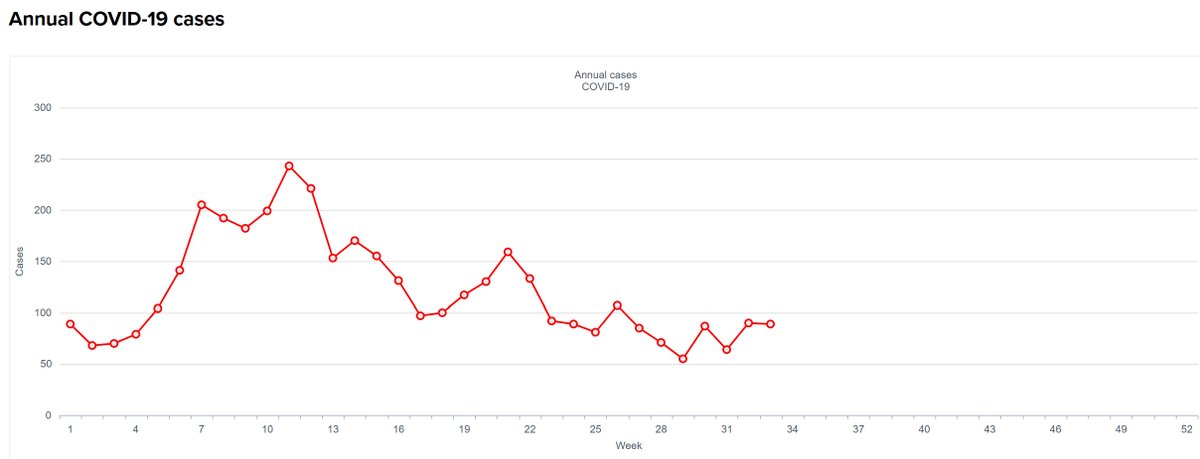
Here are the current COVID notifications for South Australia for 2026. Relatively quiet at the moment. Note that we did not get the Winter (June) peak this year compared to 2025.
@Juzzyzjt Not really - they haven't even got a vaccine for mammals, apart from an experimental one with cattle. Finally, the stomach would destroy any vaccine.
In just one week, the avian flu virus in Australia has gone from birds only to a seal, a fox and now a dolphin. That is the same path it took on every other continent. Thankfully, it has still has not reached our poultry farms and there have been no human cases
A dog would only get infected if it ate a dead or dying bird - so please keep your pet on a leash if you live on the coast. Even more important, cats get infected very easily and it can cause severe illness and death. So, if you live in an affected area, keep your cat in at night.
The 50% case fatality rate is greatly exaggerated. More likely to be 5%-10%.
https://t.co/dsIXQkzZvf
FDA recommends that updated vaccines target the XFG (Stratus) variant. According to @Mike_Honey_ , XFG is currently accounting for only 10% of sequences in Australia, so interesting to see what TGA do.
@AndrewG76201347 Hi Andrew
It can just as easily infect marsupials, if they come into contact with dead birds. Luckily, most of our marsupials are herbivores.
@RealAnitaWhite These new rules are changes to the National Immunisation Program. I have seen no further details of what they mean by severe immunocompromise.
COVID-19 vaccination is about to undergo a major change in Australia. From 1 October, COVID vaccines move to the National Immunisation Program - but funding will no longer be universal.
Free vaccination will be limited to:
• people aged 65+
• Aboriginal and Torres Strait Islander people aged 50+
• adults with severe immunocompromise
That’s a significant policy shift after more than 76 million doses were administered since 2021 under the universal program.
The question is whether this narrower approach strikes the right balance between cost, access and preventing severe COVID-19 disease.
Hi Slarti - lots of questions.
Any idea how much the vaccine will cost for everyone else? No details yet
How often should someone not in the above categories get vaccinated? Advice is people who are not eligible for a funded COVID-19 vaccine may choose to purchase the vaccine privately based on a risk-benefit discussion with their healthcare provider.
Is the Pfizer Covid vaccine going to be updated for efficacy, and to remove the heart associated safety risks (myocarditis etc)? Pfizer vaccines may be updated for better variant match, but that is separate from the rare myocarditis/pericarditis risk, which has remained recognized in safety warnings. The heart issues are uncommon, and most cases are mild.
@radofaletic Rado - I have absolute sympathy with anyone harmed by vaccines. Unfortunately, no vaccine is 100% safe. However, the vast majority of adverse events are minor. For those who are severely, harmed, there should be compensation and free treatment.
@jayzcoz@BecWrong Most vaccines don't have sterilising immunity. They are more designed to prevent severe disease. I agree about healthcare workers. We are already seeing staff shortages due to respiratory infections.
@lion_peacock I think this is a backward step. If there is evidence of chronic complications, that is an argument for broader access, not less. Free vaccinations should be available to everyone who wants one.
@peacenicsta@nusi77713710 Well they do reduce transmission a bit. Vaccinated people are (a) less likely to get infected; (b) have reduced infection and, consequently, fewer opportunities to transmit