if anything you want your agents to do is deterministic, such as managing a queue, or sorting a list, create a script for the agent to use. Agent's don't do deterministic things well. It's our job to force determinism upon them.
Just watched @shanselman and Mark Russinovich drop one of the most important truths about AI in engineering, and it needs to be said louder:
"AI isn’t killing engineering, but it is quietly killing something far more dangerous: the junior pipeline."
Here’s the reality most companies have already learned:
AI delivers its best results when senior engineers work with it.
Their judgment, intuition, and experience are what turn AI from “helpful” into “game‑changing.”
But AI has also replaced almost every junior‑level task, scaffolding, debugging, boilerplate, testing, and many teams have stopped hiring juniors altogether.
And that’s the real danger.
If juniors disappear today, there will be no seniors tomorrow.
No juniors → no mid‑levels → no seniors → no architects → no one left who can actually guide AI safely.
We’ve seen this firsthand too.
That’s why we are heavily investing in our #cs_internship open-source program, to keep a strong flow of junior talent and give them a real path to grow into the next generation of senior engineers.
Because the future of engineering depends on the people who aren’t seniors yet.
#MicrosoftBuild
https://t.co/4pMdm3vZwY
- Meet Anders Hejlsberg
- Creator of C# and TypeScript
- A self-taught programmer
- Joined Microsoft
- Saw that Java dominated everything
- Microsoft needed a modern language for its new platform .NET
- But there were legal conflicts around Java
- He said: “Fine… I’ll build something better.”
- Wanted a language that is:
> Easy like Java
> Powerful like C++
- Launched C# in 2000
- it became one of the most widely used languages for:
> Enterprise applications
> Game development (Unity)
> Windows software
But He Wasn’t Done…
- Later noticed problems with JavaScript:
> Hard to scale for large applications
> Bugs and maintainability issues
- Created TypeScript
- Designed it to:
> Work with existing JavaScript (no breaking changes)
> Compile into plain JavaScript
Today, TypeScript is widely used in Angular, React, Node.js and more
Adopted by major companies like Google, Microsoft, Airbnb
didn’t code it alone
but without him, it wouldn’t exist.
absolute legend 🔥
𝟭𝟬 𝗦𝘁𝗲𝗽𝘀 𝘁𝗼 𝗼𝗽𝘁𝗶𝗺𝗶𝘇𝗲 𝘆𝗼𝘂𝗿 𝗘𝗙 𝗖𝗼𝗿𝗲 𝗤𝘂𝗲𝗿𝘆
Even senior devs don't know all of them 👇
Let's say you face a very slow EF Core query in production.
How would investigate and fix the issue?
Here's my step-by-step approach:
1️⃣ Add OpenTelemetry
Quickly discover slow database queries by adding OpenTelemetry. It provides immediate visibility into performance bottlenecks.
2️⃣ Create a Benchmarks Project
Once you identify a slow query, create a benchmark project. Test each optimization to clearly see their impact.
3️⃣ Pre-Filter Entities
Load as few records as possible into memory. Filter early in your query to avoid unnecessary data loading from the database into memory.
4️⃣ Add Pagination or Limit Top-X Records
If you're generating reports or statistics, only load the records you actually need. Pagination or top-X limits greatly improve performance.
5️⃣ Limit the Number of JOINs
Big number of JOINs slow down queries significantly. Try simplifying relationships or breaking them into multiple simpler queries if needed.
6️⃣ Project Only Required Columns
Select only the necessary columns. Reducing the data you fetch from the database improves performance and reduces memory consumption.
7️⃣ Limit Database Calls in Loops
Avoid querying the database inside loops. Batch operations or pull needed data upfront to minimize round-trips to the database.
8️⃣ Try Making a Single Query
Optimize for fewer database calls by combining multiple queries into one where possible. Each database call adds latency.
9️⃣ Test AsSplitQuery
Experiment with EF Core's AsSplitQuery feature, which splits complex queries with a lot of JOINs into multiple simpler queries. It can improve performance in some scenarios.
🔟 Balance Memory and Performance
Sometimes two smaller queries use significantly less memory than one large query. Evaluate your queries not just by speed but by overall resource usage as well.
📌 Note: Always measure and test
Test your queries against realistic data volumes. Use your largest expected production datasets to ensure you pick the right optimization.
Which of these optimizations surprised you the most?
📌 Here is how to get started with OpenTelemetry:
↳ https://t.co/r4FsxxIPGc
📌 Here is how I optimized real-world EF Core Query from 30 seconds to 30 milliseconds:
↳ https://t.co/HxzpSqZUpA
—
♻️ Repost to help your network learn how to optimize EF Core queries
➕ Follow me ( @AntonMartyniuk ) for more
#dotnet #Sq
𝗪𝗵𝘆 𝗱𝗼𝗲𝘀 𝗚𝗼𝗼𝗴𝗹𝗲 𝗿𝗲𝗰𝗼𝗺𝗺𝗲𝗻𝗱 𝗠𝗼𝗱𝘂𝗹𝗮𝗿 𝗠𝗼𝗻𝗼𝗹𝗶𝘁𝗵𝘀 𝗶𝗻𝘀𝘁𝗲𝗮𝗱 𝗼𝗳 𝗠𝗶𝗰𝗿𝗼𝘀𝗲𝗿𝘃𝗶𝗰𝗲𝘀?
Over the last decade, we have witnessed a significant trend of utilizing microservices across various industries. We were building systems for a few hundred or thousand users and wanted to know how to make a system for millions of users. This was over-engineering and needed to be corrected.
Why was it wrong? Because the development lasted a long time, we created incredibly complex systems, which are hard to maintain. This is especially true for startups that must go fast and stay simple.
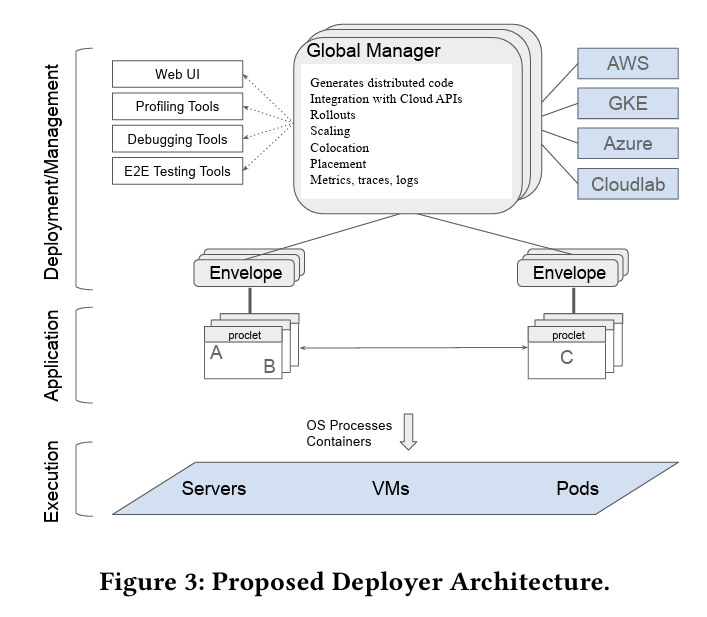
A recent paper by authors from Google found that most of their developers split binaries for one of the following reasons: to improve performance, enhance fault tolerance, and establish abstraction boundaries, allowing for flexible rollouts.
Yet, splitting applications into microservices has its challenges:
🔹 𝗜𝘁 𝗵𝘂𝗿𝘁𝘀 𝗽𝗲𝗿𝗳𝗼𝗿𝗺𝗮𝗻𝗰𝗲. The overhead of serializing data and sending it across the network is becoming an increasingly significant bottleneck.
🔹 𝗜𝘁 𝗵𝘂𝗿𝘁𝘀 𝗰𝗼𝗿𝗿𝗲𝗰𝘁𝗻𝗲𝘀𝘀. It is incredibly challenging to reason about the interactions between every deployed version of every microservice.
🔹 𝗜𝘁 𝘁𝗮𝗸𝗲𝘀 𝘄𝗼𝗿𝗸 𝘁𝗼 𝗺𝗮𝗻𝗮𝗴𝗲. Rather than having a single binary to build, test, and deploy, developers must manage n different binaries, each on its release schedule.
🔹 𝗜𝘁 𝗳𝗿𝗲𝗲𝘇𝗲𝘀 𝗔𝗣𝗜𝘀. Once a microservice establishes an API, it becomes easier to change by breaking the other services that consume the API.
So, they proposed the following approach:
𝟭. 𝗪𝗿𝗶𝘁𝗲 𝗺𝗼𝗻𝗼𝗹𝗶𝘁𝗵𝗶𝗰 𝗮𝗽𝗽𝗹𝗶𝗰𝗮𝘁𝗶𝗼𝗻𝘀 that are modularized into logically distinct components. A component is a long-lived agent, similar to an actor.
𝟮. 𝗟𝗲𝘃𝗲𝗿𝗮𝗴𝗲 𝗮 𝗿𝘂𝗻𝘁𝗶𝗺𝗲 𝘁𝗼 𝗱𝘆𝗻𝗮𝗺𝗶𝗰𝗮𝗹𝗹𝘆 and automatically assign logistical components to physical processes based on execution characteristics. Therefore, if both components are in the same OS process, they are referred to as regular method calls. However, if they are co-located, calls are executed as remote procedure calls (RPCs) over the network. Runtime decides whether these modules should be collocated or moved to different machines (and scaled, etc.).
𝟯. 𝗗𝗲𝗽𝗹𝗼𝘆 𝗮𝗽𝗽𝗹𝗶𝗰𝗮𝘁𝗶𝗼𝗻𝘀 𝗮𝘁𝗼𝗺𝗶𝗰𝗮𝗹𝗹𝘆, preventing different versions of an application from interacting.
This approach consists of two main parts: a programming model with abstraction that allows developers to write modularized applications and a runtime for building, deploying, and optimizing these applications. They claim that it reduces application latency by up to 15 times and costs by up to 9 times by simplifying application management and deployment.
If you want to check the framework that implements the approach from the paper, please visit https:// serviceweaver. dev/.
What do you think about this approach? Does it look like EJBs or CORBA?
I'm happy to release the first version of PackageGuard, a fully open-source command-line tool to verify that the NuGet dependencies of your .NET solutions are only using specific versions or certain open-source license forms.
Check it out at https://t.co/NSiOvBT3D5
It's just the first version, so review the backlog to see what is coming soon. NPM/Yarn support is one of the major features I'll start working on soon.
In case you haven’t noticed - every single notable framework out there except Next.js is either built on top of Vite or using Vite to some extent.
So yeah when you switch away from Next, you are switching to Vite one way or another.
@dvdstelt Het lijkt erop dat veel redenen voor toepassing van Eventsourcing ook opgelost kunnen worden via infrastructuur. Hoewel ik gecharmeerd ben van ES, vind ik het wel moeilijk om dé reden aan te geven waarom je het zou moeten toepassen.
"I'm not old enough to say get off my lawn, but…" @udidahan casts a critical eye over the cargo cult forming around event sourcing in his opening keynote at DDD Europe 2020 https://t.co/mEKDEsHgJk
Mark Zuckerberg stole Facebook from them.
So they sued him for $65 million.
Now they're crypto billionaires.
6 lessons from the wild story of the Winklevoss twins: