Pela primeira vez na história da Força Aérea foi concretizada uma missão que ligou Moçambique a Portugal em menos de 16 horas, mais concretamente entre Maputo e Beja, utilizando uma aeronave de grande porte de transporte aéreo militar.
Saiba tudo em: https://t.co/ePSsjBAxVb
💡+Ideias '26 | DESBLOQUEAR O POTENCIAL DE PORTUGAL
Em 2026, o Instituto +Liberdade assinala o seu 5.º aniversário com um grande encontro de discussão de ideias.
Sob o mote “Desbloquear o Potencial de Portugal”, reunimos algumas das vozes mais relevantes da sociedade civil, da política, da economia, das empresas e das universidades para discutir os grandes desafios do país — e, sobretudo, as oportunidades que não podemos continuar a adiar. Crescimento económico, inovação, competitividade, democracia, liberdade e ambição estarão no centro do debate.
Será uma tarde inteira de reflexão, confronto de ideias e visão de futuro, pensada para quem acredita que Portugal pode ser mais e melhor.
O dia termina com dois momentos especiais:
📌 Jantar +Liberdade, exclusivo para membros
📌 Espetáculo de comédia “O Estado a Que Chegámos”
👉 A participação na conferência requer bilhete pago.
⭐ Preços especiais para Membros +Liberdade.
‼️ Consulta o programa completo do evento e adquire já os teus bilhetes em https://t.co/WIR0Ni3lZG
#MaisLiberdade
Economia circular na medicina dentária: liderar pelo exemplo | in SAPO
Artigo de opinião de José João Baltazar Mendes, Presidente da Direção da Egas Moniz School of Health & Science
Leia o artigo aqui:
https://t.co/LoCp73oG33
Estamos a ensinar saúde… para o mundo que já existe ou para o que está a chegar?
A Inteligência Artificial está a transformar profundamente o ensino na área da saúde, desde a forma como se aprende até à forma como se decide e cuida.
Mas há uma pergunta que não pode ser ignorada: como garantir que a tecnologia reforça e não substitui o pensamento crítico, a ética e a responsabilidade clínica?
E, acima de tudo, a importância do humanismo na relação com os doentes.
Um olhar necessário sobre o futuro da formação em saúde:
🔗 https://t.co/jUV8g7ztXQ
#InteligênciaArtificial #EnsinoEmSaúde #EducaçãoEmSaúde #PensamentoCrítico #Ética #Humanismo #SaúdeDigital #FormaçãoEmSaúde #FuturoDaSaúde
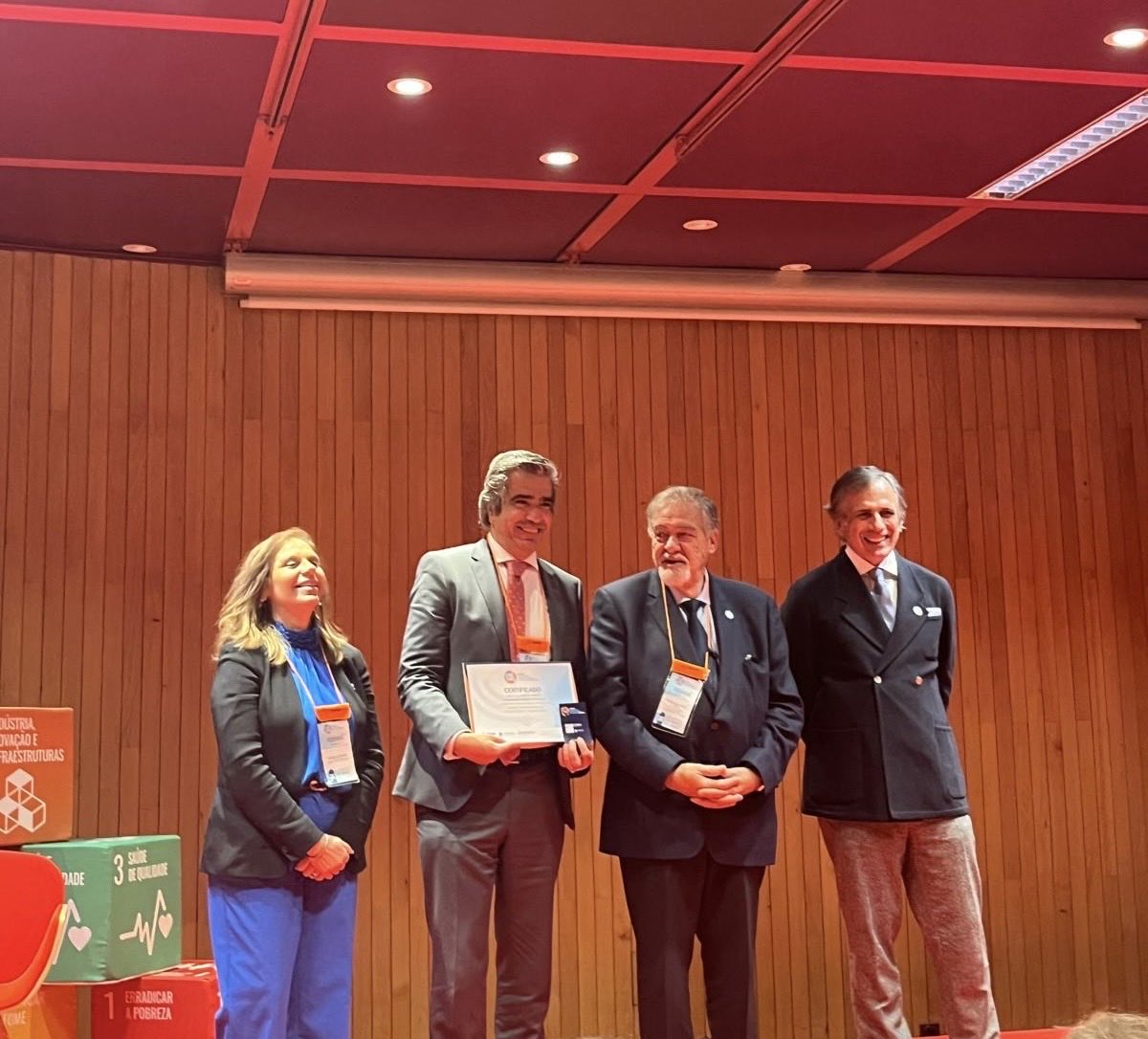
Hoje fui nomeado Embaixador ODS – Objetivos de Desenvolvimento Sustentável, com especial responsabilidade na concretização do ODS 3 “Saúde e Bem-Estar”.
Na Egas Moniz School of Health & Science, este compromisso não é simbólico, é estrutural. Temos trabalhado de forma consistente na promoção da saúde ao longo do ciclo de vida, integrando ensino, prática clínica, investigação e impacto comunitário, com forte foco na prevenção da doença, literacia em saúde, redução das desigualdades no acesso aos cuidados, envelhecimento ativo e na ligação entre saúde oral, saúde sistémica e saúde pública, numa clara abordagem One Health.
Este trabalho concretiza-se diariamente com os nossos docentes, alunos e colaboradores não docentes, através das nossas clínicas universitárias, hospital, empresas e laboratórios com missão social, da investigação científica com impacto internacional, da formação de profissionais de saúde qualificados e eticamente comprometidos e de projetos comunitários que colocam as pessoas no centro das políticas de saúde.
Os Embaixadores ODS são nomeados pelo conhecimento e compromisso com a implementação da Agenda 2030 das Nações Unidas, uma responsabilidade que assumo, em nome da Egas Moniz, com sentido de serviço público.
A cerimónia decorreu hoje, integrada na conferência do 10.º aniversário da Aliança ODS Portugal, realizada na Culturgest, em Lisboa.
#ODS3 #SaúdeEBemEstar #Agenda2030 #OneHealth #Sustentabilidade #EgasMoniz #AliançaODSPortugal
É urgente repensar o ensino das ciências agrárias | in GreenSavers
Artigo de opinião de Elisabete Matos e Manuel Pequito, docentes e investigadores da Egas Moniz School of Health and Science
Leia o artigo aqui: https://t.co/xFmuXStR4D
https://t.co/GdTPveIusP New Publication | 2026
We are pleased to share the publication of a new scientific article developed at the Egas Moniz Center for Interdisciplinary Research (CiiEM) of the Egas Moniz School of Health & Science, focusing on oral health behaviors and their associated factors in older adults, a critical and often neglected area of public health.
Title
Oral health behaviors and associated factors in older adults: a cross-sectional study
Authors
Inês Caetano-Santos
Giancarlo De la Torre Canales
Luís Proença
Mário Polido
José João Mendes
Helena Canhão
Ana Cristina Manso
Affiliations
Egas Moniz Center for Interdisciplinary Research (CiiEM), Egas Moniz School of Health & Science
NOVA Medical School – Universidade NOVA de Lisboa
Comprehensive Health Research Center (CHRC)
Karolinska Institutet, Sweden
Ingá University Center (UNINGÁ), Brazil
Journal & Publication Details
Scientific article | Cross-sectional study
Population: adults aged 65 years or older
Setting: University Dental Hospital, Portugal
Study overview
This cross-sectional study evaluated oral health behaviors in older adults, including toothbrushing frequency, use of interdental devices and dental attendance patterns, and explored their association with clinical, socioeconomic and health-related factors.
Key findings
21.9% of older adults brushed their teeth less than twice a day
52.1% did not use interdental hygiene devices
49.3% visited the dentist mainly for treatment rather than prevention
Male sex, higher DMFT, poorer oral hygiene, prosthetic needs and chronic diseases were significantly associated with poorer oral health behaviors
Why it matters
Oral health behaviors are a modifiable determinant of oral and systemic health, particularly in ageing populations.
Understanding the factors associated with inadequate behaviors is essential to:
Design targeted preventive strategies
Improve oral health literacy
Support healthy ageing and quality of life
Strengthen public health policies in oral health
This study reinforces the need for prevention-focused, person-centred approaches in geriatric oral health.
What’s next
The findings provide a strong evidence base for:
Developing community-based and clinical preventive programs
Integrating oral health into ageing and chronic disease strategies
Supporting future research aligned with One Health and healthy ageing frameworks
#CiiEM #EgasMoniz #WeResearchToMakeADifference #OralHealth #HealthyAgeing #PublicHealth #PreventiveDentistry #GeriatricDentistry #ResearchImpact #SCOPUS #NewPublication
CarieCheck: An mHealth App for Caries-Risk Self-Assessment—User-Perceived Usability and Quality in a Pilot Study https://t.co/2cJAvH0e40 #mdpidentistry via @DentistryJ New Publication | Digital Health & Preventive Dentistry (2026)
We are pleased to share the publication of a new scientific article developed at the Egas Moniz Center for Interdisciplinary Research (CiiEM) of the Egas Moniz School of Health & Science, focusing on digital innovation applied to oral health prevention.
Title
CarieCheck: An mHealth App for Caries-Risk Self-Assessment—User-Perceived Usability and Quality in a Pilot Study
Authors
Eduardo Guerreiro, Guilherme Souza, José João Mendes, Ana Cristina Manso, João Botelho
Journal & Publication Details
Dentistry Journal
Dent. J. 2026, 14(1), 31
Published: 5 January 2026
DOI: https://t.co/op0RABuJ7M
Study overview
Mobile health (mHealth) technologies are increasingly used to support preventive oral care and patient empowerment. CarieCheck is a Portuguese mobile application designed to improve oral health literacy and support self-assessment of caries risk.
In this prospective pilot study, 30 participants from the academic community of Egas Moniz used the application for 30 days. User-perceived quality and usability were assessed using the uMARS-PT questionnaire.
Key findings
Excellent overall perceived quality (uMARS-PT score: 4.22/5)
Highest scores in:
Functionality (4.51)
Aesthetics (4.45)
Information quality (4.22)
Moderate scores for engagement and subjective quality
Positive perceived impact on awareness and motivation regarding oral health behaviours
Why it matters
Demonstrates the real potential of digital tools in preventive oral health care
Reinforces the role of oral health literacy and user-supported risk assessment
Contributes to bridging technology, clinical practice and public health
Aligns with current priorities in Digital Health and Preventive Dentistry
What’s next
Larger, longer-term studies in diverse populations
Inclusion of objective behavioural and clinical outcomes
Exploration of artificial intelligence–driven personalization
Integration into institutional and community-based preventive strategies
This work reflects the ongoing commitment of Egas Moniz and CiiEM to applied research, digital innovation and real-world impact in population health.
#CiiEM #EgasMoniz #WeResearchToMakeADifference #DigitalHealth #PreventiveDentistry #mHealth #OralHealth #Impact #SCOPUS #NewArticle
New Publication | Lifestyle Dentistry & Non-Communicable Diseases (2026) SPRINGER NATURE
We are pleased to share our recently published book chapter included in the Springer volume Lifestyle in Oral Health and Disease:
Non-Communicable Diseases and Oral Health: A Two-Way Relationship
José João Mendes | Patrícia Lyra | Vanessa Machado | João T. S. Botelho
First online: 02 January 2026 | pp. 21–39
Summary
This chapter provides an in-depth analysis of the bidirectional relationship between non-communicable diseases (NCDs) and oral health. It explores shared risk factors, underlying biological mechanisms, and the central role of lifestyle behaviours, highlighting the need for integrated and interdisciplinary healthcare approaches.
Key findings
Periodontal disease and tooth loss are associated with cardiovascular diseases, diabetes, and adverse pregnancy outcomes.
Systemic NCDs can worsen oral health through altered immune responses and treatment-related side effects.
Lifestyle and environmental determinants play a critical role in this two-way relationship.
Integrated medical–dental care models are essential to reduce the global burden of NCDs.
Why it matters
Oral health is inseparable from general health. This work reinforces Lifestyle Medicine and Lifestyle Dentistry as forward-looking, evidence-based approaches that support prevention, sustainability, and improved health outcomes at both individual and population levels.
What’s next
The findings support the need for:
New Publication | Lifestyle Dentistry & Non-Communicable Diseases (2026)
Stronger links between research, clinical practice, and health policy
#CiiEM #EgasMoniz #WeResearchToMakeADifference #LifestyleDentistry #NonCommunicableDiseases #OralHealth #Impact #Springer #SCOPUS #NewPublication
Our latest article published in Systematic Reviews compares Cochrane’s Risk of Bias (RoB) and RoB2 tools in 150 dental trials. Findings reveal significant discrepancies in risk classification, impacting evidence synthesis. Read the full paper here.
Exploring AI-Driven Machine Learning Approaches for Optimal Classification of Peri-Implantitis Based on Oral Microbiome Data: A Feasibility Study https://t.co/EULPh3DFJU #mdpidiagnostics via @diagnostic_mdpi New Open-Access Publication | AI & Oral Health Diagnostics (2025)
We are pleased to share our latest article published in Diagnostics:
“Exploring AI-Driven Machine Learning Approaches for Optimal Classification of Peri-Implantitis Based on Oral Microbiome Data: A Feasibility Study.”
by Ricardo Jorge Pais, João Botelho, Vanessa Machado, Gil Alcoforado, José João Mendes, Ricardo Alves and Lucinda J. Bessa
Egas Moniz Center for Interdisciplinary Research (CiiEM), Egas Moniz School of Health & Science, 2829-511 Caparica, Almada, Portugal
Bioenhancer Systems Ltd., Stockport SK3 0GF, UK
Authors to whom correspondence should be addressed.
Diagnostics 2025, 15(4), 425; https://t.co/EY8iOG3uCX
Submission received: 6 January 2025 / Revised: 7 February 2025 / Accepted: 8 February 2025 / Published: 10 February 2025
The context
Peri-implantitis remains a major challenge in implant dentistry, with diagnosis often relying on clinical and radiographic parameters that may detect disease only at advanced stages. Advances in artificial intelligence (AI) and oral microbiome profiling offer new opportunities for earlier, more precise, and data-driven diagnostic strategies.
Key findings
• Analysis of 100 real-case metagenomic datasets (saliva and peri-implant biofilm)
• Use of AI-driven auto-ML approaches to benchmark 100 machine learning models
• ML models outperformed single-microorganism-based classifiers
• Top-performing models achieved AUC, sensitivity, and specificity between 80% and 100%
• Best results obtained with combinations of 2–4 microorganisms
• Saliva-based microbiome models showed higher predictive performance than biofilm-based models
Why it matters
This study demonstrates that AI-driven analysis of the oral microbiome can significantly improve the classification and early detection of peri-implantitis. Importantly, saliva-based models open the door to non-invasive, cost-effective, and clinically scalable diagnostic tools, bringing AI closer to everyday dental practice.
What’s next
Future research will focus on validating these models in larger clinical cohorts and translating them into user-friendly diagnostic platforms that integrate AI with routine implant maintenance and preventive care.
📎 Open access DOI: https://t.co/EY8iOG3uCX
#ArtificialIntelligence #MachineLearning #PeriImplantitis #OralMicrobiome #DigitalDentistry #PrecisionMedicine #DiagnosticsJourn
Oral Health and Dietary Habits Before and After COVID-19 Restrictions in a Portuguese Adult Population: An Observational Study https://t.co/facmWtxa1Z #mdpilife via @Life_MDPI The declaration of COVID-19 as a pandemic led to unprecedented restrictions, including the suspension of routine dental care. These measures profoundly altered daily routines, potentially affecting oral health behaviors and dietary habits at a population level.
Key findings
• Analysis of 3,380 adults before and after COVID-19 restrictions
• Increased smoking prevalence after lockdown
• Higher consumption of coffee with sugar
• Reduced use of dental floss and mouthwash
• Shift in tooth brushing frequency, with fewer individuals brushing 2–3 times per day
• Behavioral changes were heterogeneous, with both positive and negative trends observed
Why it matters
Oral health behaviors are highly sensitive to social disruption. This study shows that public health crises can exacerbate inequalities, disproportionately affecting vulnerable groups. Understanding these patterns is essential for designing resilient oral health systems and preventive strategies during future emergencies.
What’s next
The findings support the need for targeted public health interventions, improved health communication, and continuity-of-care strategies to mitigate the indirect effects of crises like COVID-19 on oral and dietary health.
📎 DOI: https://t.co/FbIlKnzE3P
hashtag#OralHealth hashtag#PublicHealth hashtag#COVID19 hashtag#HealthBehaviors hashtag#PreventiveDentistry hashtag#LifeJournal hashtag#EvidenceBasedPolicy
Dental Caries, Tooth Erosion and Nutritional Habits in a Cohort of Athletes: A Cross-Sectional Study https://t.co/OIvsDyo7QB #mdpinutrients via @Nutrients_MDPI Publication | Sports Dentistry & Nutrition (2025)
We are pleased to share our recent article published in Nutrients:
“Dental Caries, Tooth Erosion and Nutritional Habits in a Cohort of Athletes: A Cross-Sectional Study.”
The context
Athletes often follow nutritional strategies that involve frequent intake of carbohydrates, sports drinks, and acidic foods to optimize performance. While beneficial for energy balance, these habits may negatively affect oral health, increasing the risk of dental caries and tooth erosion.
Key findings
• Dental caries prevalence: 50%
• Tooth erosion prevalence: 40%
• Better self-perceived oral health (“Good” or “Very good”) was strongly associated with fewer caries lesions
• Lower erosion scores were also linked to positive self-perceived oral health
• Uncertainty about meal frequency and last dental visit was associated with higher erosion scores
• No significant associations were found with most demographic or behavioral variables
Why it matters
Oral health is closely linked to overall health and athletic performance. This study highlights that athletes constitute a high-risk group for dental caries and erosion, largely due to nutrition-related behaviors. Integrating sports dentistry, dietary counseling, and preventive oral health education is essential to protect athletes’ oral and general health.
What’s next
These findings support the development of targeted preventive strategies, including nutritional guidance and regular dental follow-up tailored to athletes’ specific needs.
📎 DOI: https://t.co/7IXGcjSicj
#SportsDentistry #OralHealth #SportsNutrition #DentalCaries #ToothErosion #EvidenceBasedCare #NutrientsJournal