Project CETI is a nonprofit organization applying machine learning and robotics to listen to and translate the communication of whales in Dominica. #ProjectCETI
CETI Scientists have developed a two-hydrophone system that can pinpoint sperm whales’ location from their click sequences while they dive deep. Learn about the system here: https://t.co/5PGmDpe0dX
By: Guy Gubnitsky and @DiamantRoee
The Listen to the Whales campaign created with @InsideNatGeo Impact Story Lab won the People’s Voice @TheWebbyAwards for Video & Film, in Science & Education! We are honored and look forward to continuing to Listen to the Whales together💙🐳https://t.co/4XwhtVeh4i
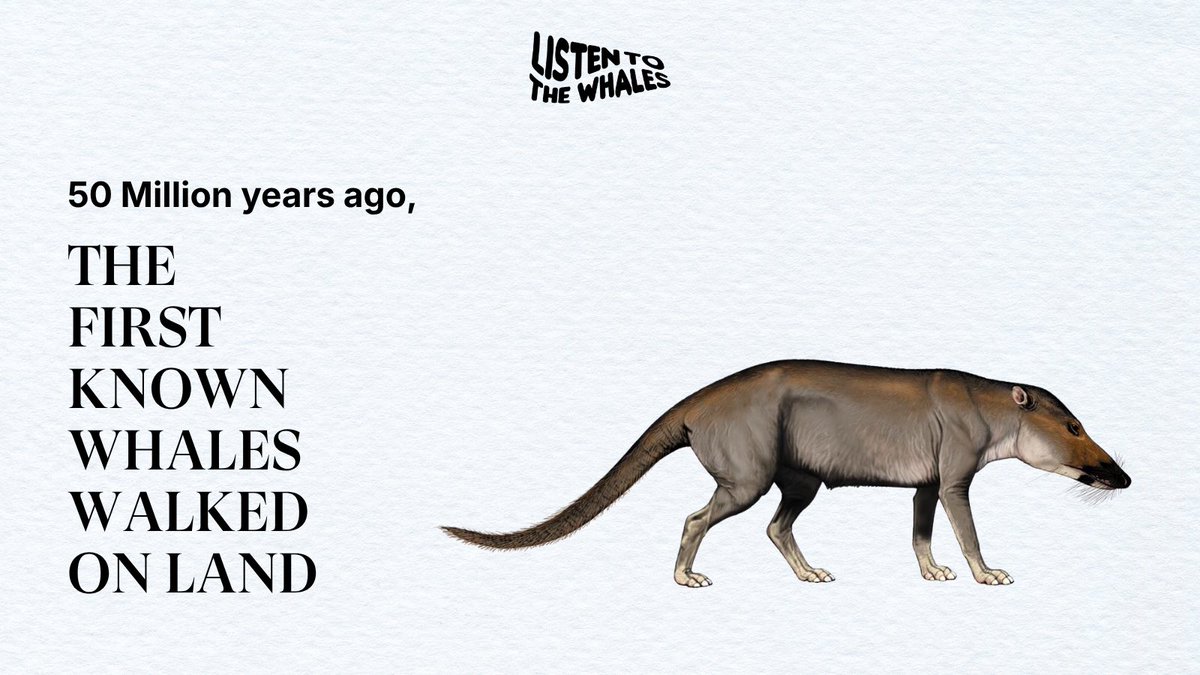
Did you know that the first known whale, Pakicetus, walked on land? Learn more and trace the echoes through time, charting humanity’s understanding of whales, starting 50 million years ago with Pakicetus at https://t.co/4XwhtVeh4i
Photo: @AMNH /Carl Buell
“[The glider] is another way of having a delicate, not passive object recording, and listening, and peering into their world.” - CETI CEO and Founder @davidfgruber
Learn more in @therobotreport: https://t.co/ist45mGrdp
“We extend ‘backseat driver’ capabilities...this allows fully autonomous control by the glider for tracking whales—a first for underwater gliders, like the Waymo of the underwater world.”-CETI Underwater Acoustics Lead @DiamantRoee
Read in @PopSci:
https://t.co/ot1X8MOCw6
Major technological breakthrough: CETI’s autonomous underwater glider system is able to quietly follow sperm whales by listening to their voices, opening a new dimension for studying whales in their natural environment.
The paper in @SciReports: https://t.co/frZE7JhOsn
⭐️ @projectceti: New Paper!
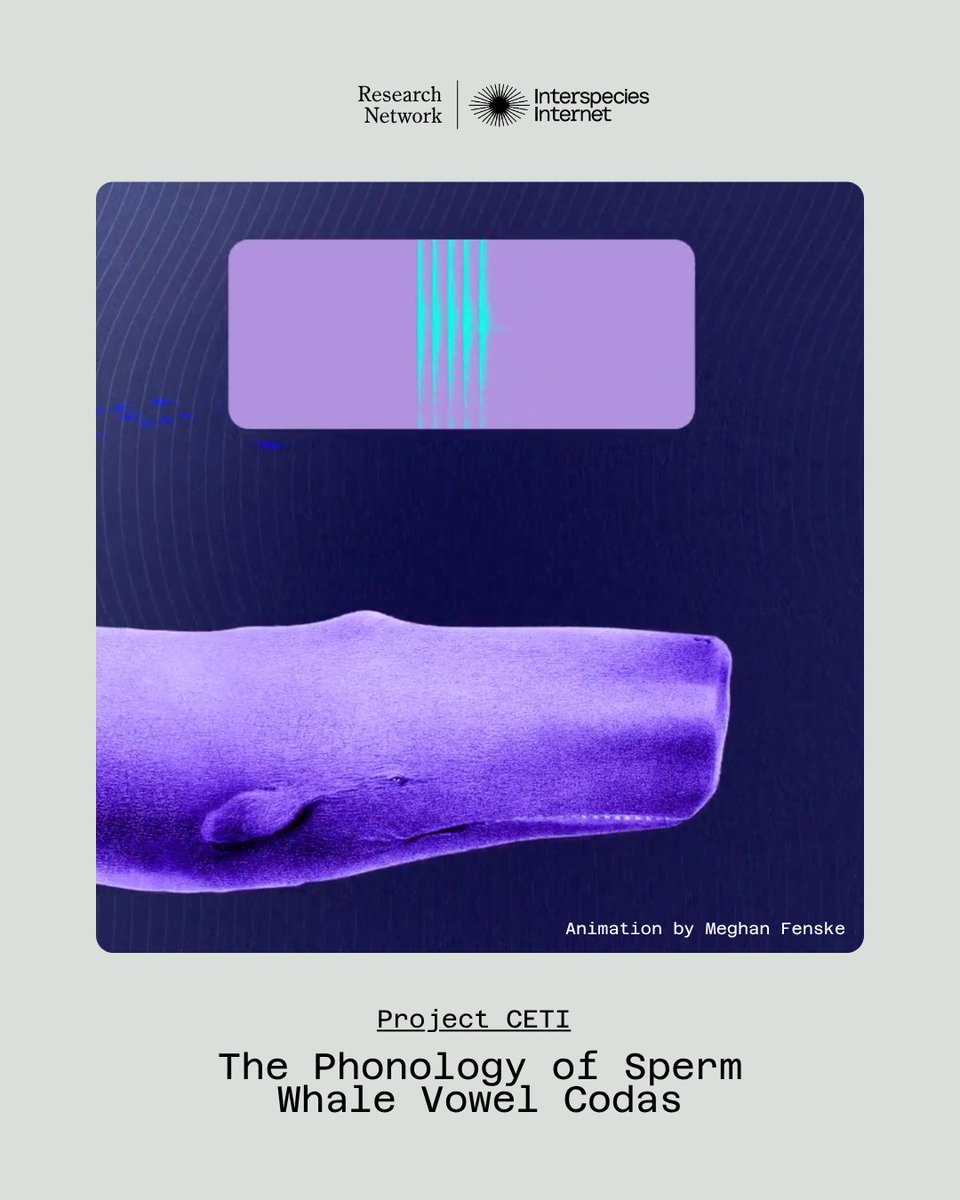
“The phonology of sperm whale coda vowels” shows whales produce vowel-like sounds organized in patterns, akin to human phonology.
Learn more here: https://t.co/G5q1ISYcgG
Happy #WorldBookDay! We are honored to be featured in Robert Macfarlane’s book, “Is a River Alive?” The book invites readers to reimagine our relationship with the more-than-human world. See more books that guide CETI’s work: https://t.co/SeE2q8ZfL2
📷: Arun Madisetti
We’re one step closer to understanding the sperm whale ‘alphabet’.
Read in @NatGeo by @rakemeny: https://t.co/lC5p3LZdTU
Research by CETI scientists: @begusgasper, Maksymilian Dąbkowski, Ronald Sprouse, @davidfgruber, @sgero
Thank you @guardian and @olliemilman for this piece featuring our latest paper, “The phonology of sperm whale coda vowels.”
By: @begusgasper, Maksymilian Dąbkowski, Ronald Sprouse, @davidfgruber, @sgero
https://t.co/C8OXFH1yIS
CETI scientists led by CETI Linguistics Lead Gašper Beguš have revealed that not only do sperm whale vocalizations sound like human vowels, they also behave like them! Read: https://t.co/LBg48gfRsX
By: @begusgasper, Maksymilian Dąbkowski, Ronald Sprouse, @davidfgruber, @sgero