I went through an PL-15E BVRAAM's seeker wreckage recovered in Hoshiarpur (PB), which was reportedly launched from a PAF 🇵🇰 J-10C during may-2025 air engagement.
PAF operates the export variant of the PL-15 ('E', not the exact one used in the PLAAF's inventory), with a range of 145km. Its guidance architecture combines INS, beidou upd, a 2-way datalink and AESA radar terminal homing.
I then broke down the recovered seeker imagery itself: perforated antenna/array face, repeated surface features, outer seeker housing, visible cable/harness and damaged edge.
Actually these perforated antenna/array face and repeated surface features are the most distinctive elements visible in the imagery bcz they house miniature TRMs that electronically steer the radar beam to lock onto targets without moving parts, while the outer housing and cable/harness provide additional clues about the physical seeker assembly.
Share your thoughts below🤔
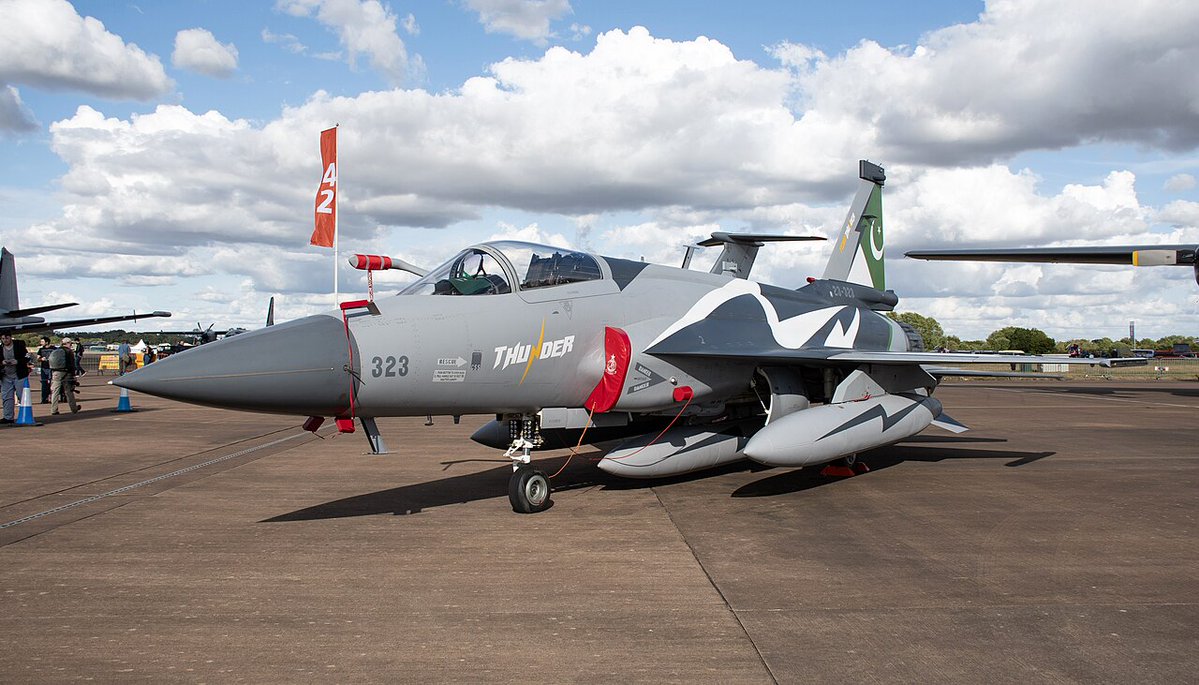
Turkmenistan may become the next JF-17 Thunder operator 🇹🇲🤔
Several indicators point toward a possible Turkmen acquisition of CAC JF-17 B-III.
>turkish company, ASELSAN, its 2025 material confirms that its ARTCom 9681 software-defined airborne radio was integrated and tested on JF-17 for a new central asian customer.
>turkmenistan remains reliant on ageing MiG-29s and Su-25s, with sustaining soviet-era fleets becoming increasingly difficult amid disrupted russian supply chains.
>latest sat imagery of Ak-Tepe AFB shows new/expanded a/c infra/hangar construction.
If the unnamed Central Asian customer referenced by ASELSAN is indeed turkmenistan, this could mark another step in aentral asian AF's diversifying away from russian-origin combat aircraft.
For now: plausible, but unconfirmed..
F-35's AN/AAQ-37 DAS is built around 6x high-resolution IR-sensors, which are distributed across the airframe and provide 4pi steradian spherical coverage without requiring pilot pointing.
-missile warning & tracking (incl. launch-point detection/cueing)
-aircraft detection & tracking (incl. IRST functions/AAM cueing)
-pilot imagery (means real-time IR-imagery for HMD/night vision)
These functions operate simultaneously, and turns DAS from a conventional forward-looking EO/IR sensor into a distributed sensor network around the a/c.
A look inside the BrahMos FCS Mk-II installed on IN's P-15A stealth destroyers (kolkata-class).
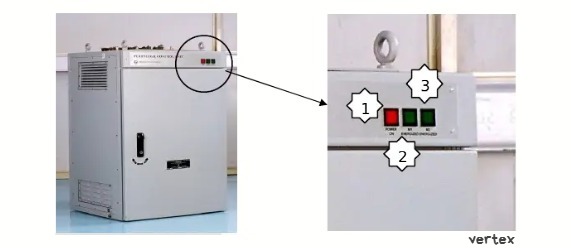
>each PCU (peripheral control unit) controls 2 missile channels, while CCU communicates with all 8x PCUs through a dual-redundant ethernet backbone.
>PCU also provides independent power/status indication for both missile channels.
>16-cell VLS for BrahMos (for primary role/ASMs) can be carried across the two 8-cell units on P-15A DDGs.
@HALHQBLR If you have some shame left then stop giving these fake timelines and focus on integration work...
These 2-3 years of delays are unacceptable! You are playing with AF needs, they sqns, not those stupid tentative timelines. You have not excuse left (engines).
Growing up, I watched IAF MiG-29s fly over my house daily. seeing the No. 28 an 47 Sqns overhead became such a familiar part of my life that it felt like they were saying hello every single day.
Please share your insights in the comments, and let's interact openly.
And that's basically the story of how the Fulcrum went from a mysterious soviet fighter seen through satellite imagery to an aircraft that Western pilots, analysts and intelligence agencies could study up close.
What makes its story interesting isn't just how capable the MiG-29 was, but how much could be learned once people finally got to fly it, fight against it and examine the actual aircraft.
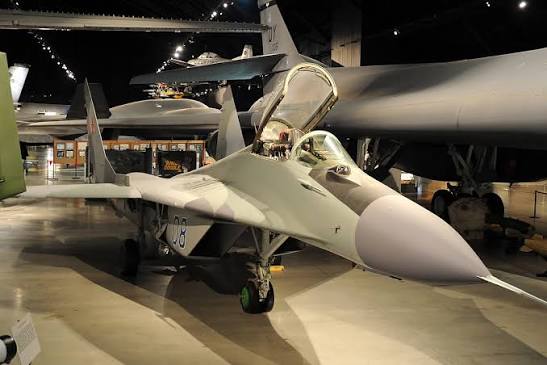
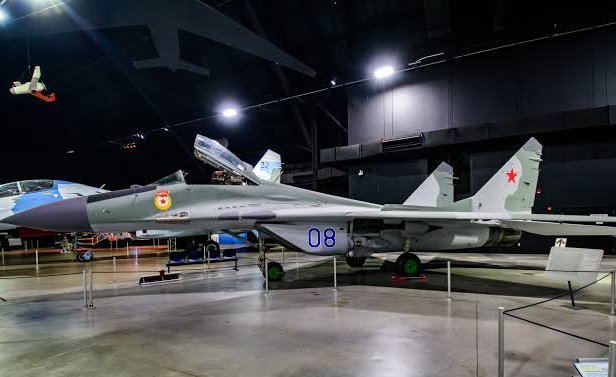
One of the most interesting stories came from an early MiG-29 preserved at the national museum of USAF.
during restoration, the outline of the number '08' appeared beneath the moldovan paints, its gun-blast plates & other details suggested that it was an early fulcrum, and researchers eventually compared its markings with photos from the 1986's kuoppio-rissala airshow (which i mentioned in the starting).
The comparison was surprisingly forensic...the spacing and positioning of the painted no. matched the photos closely enough for the museum team to establish that this was the same a/c that had appeared at Kuoppio-Rissala 🤯what a coincidence!
''a fighter first seen by Western observers in 1986 had eventually ended up preserved in an American museum.''
For more research, more than photographs and paper data of the mig-29, in 1997, US purchased MiG-29s from moldova. b/w oct 20-27, the a/c's were dismantled and their components transported by C-17s to the intelligence centre at Dayton.
This time, analysts were no longer studying photos or training encounters. They had actual a/c hardware in front of them.
The purchase involved 21 a/c's
-14x C-models
-6x older A-models and one-B model (two-seater).
some a/c were made flyable and went to EdwardsAFB for testing, while at least one reached the Nellis TRF known as the "Petting Zoo."