Self custody is valued. Usage still lags. Why? 👇
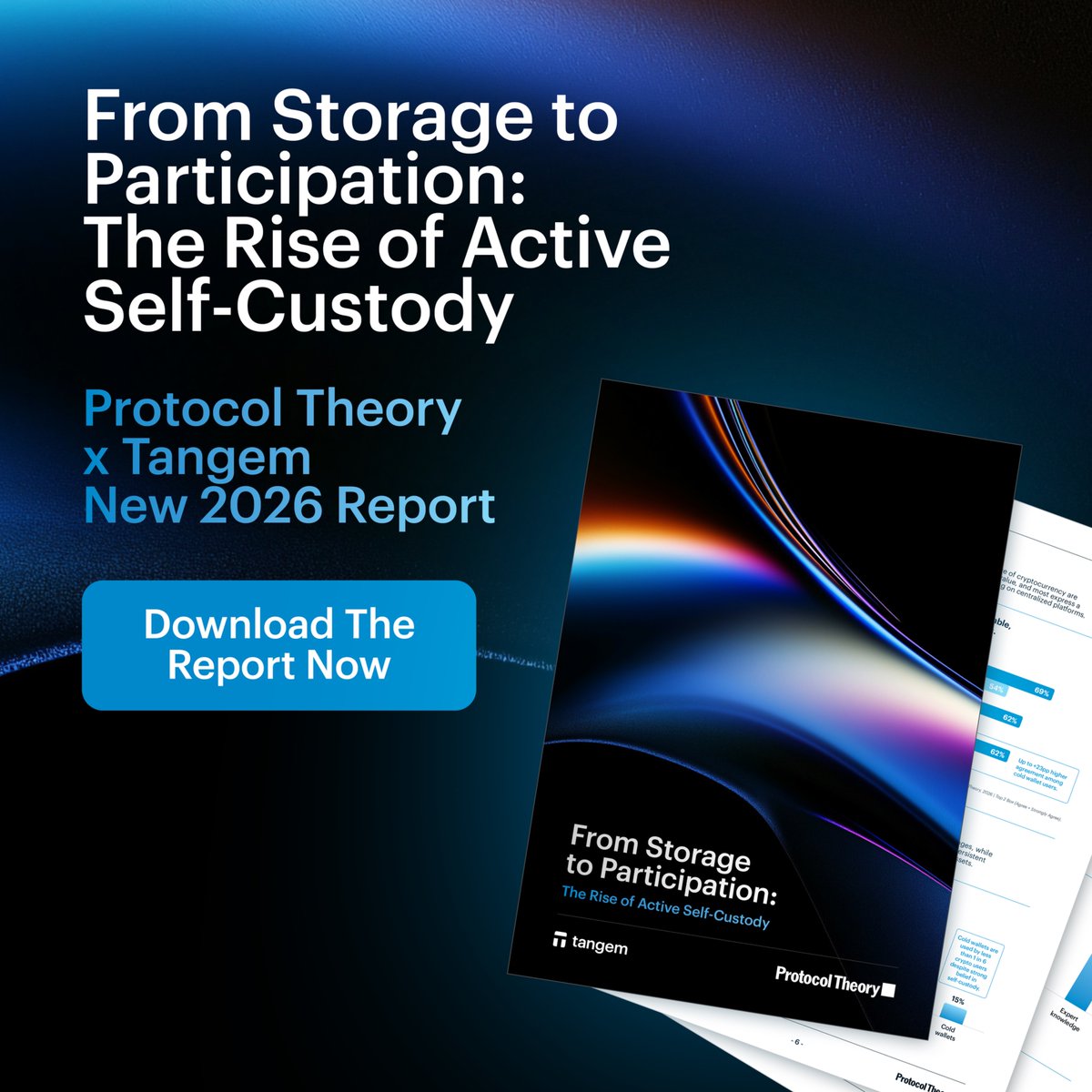
@protocoltheory is proud to launch a new report with @Tangem :
‘From Storage to Participation: The Rise of Active Self Custody’
📊 Based on data from 3,100+ U.S. crypto users, we found:
• 72% believe self custody is core to crypto’s purpose
• Yet only 29% actively use cold wallets
• And 61% still associate self custody with passive storage only
That gap isn’t awareness. It’s confidence, perception, and experience.
💡 Our key insight:
Self custody is shifting from storage → participation
Users are starting to expect more:
• Manage assets
• Grow holdings
• Spend seamlessly
• Stay in control
We call this shift: Active Self Custody
It’s how the category expands beyond early adopters—and where the next wave of growth will come from.
🤝 Big thanks to Tangem for partnering with us on this research.
👉 Read the full report: https://t.co/OqgedHEX5R
#Crypto #Web3 #DigitalAssets #ConsumerResearch #Wallets #Fintech
2021: Senate inquiry recommends safeguards against debanking.
Recommendations accepted. Not implemented.
2026: Debanking described as systemic.
30% of Aussie crypto investors affected.
$8M confirmed blocked to one broker in two months.
Five years.
No action.
A bigger problem.
The urgency needs to match the evidence.
Sign the petition:
https://t.co/qjmluKAqeE
#StandWithCryptoAU #Debanking #CryptoAustralia
Crypto-backed lending does not have a demand problem. It has a confidence problem.
Our latest research with @hodlwithLedn found that 88% of #crypto holders in the US and Australia would consider using a loan or credit product, yet only 14% currently use a crypto-backed loan.
The implication extends beyond lending. As #digitalassets become more integrated into financial behaviour, growth will depend on turning interest into confidence, and confidence into usage.
Report + analysis in the comments 👇
Two years ago today, @alistairrennieX believed in @protocoltheory before that belief was easy.
Since then, he’s shaped our thinking, raised our standards, mentored our team, and led with rare wisdom, humility, and integrity.
Thank you, Ali. You’ve been extraordinary 🙏🫡
Stablecoins are often framed as faster and cheaper #money.
But faster and cheaper may not be enough to drive mainstream consumer adoption.
At @consensus2026 , Protocol Theory’s Head of Global Thought Leadership, @alistairrennieX , argued that the next phase of #stablecoin adoption will depend on real-world utility: use cases that help people protect, optimise, and control their money.
His point was grounded in a simple example: cards and digital #wallets overtook cash even though cash offers instant settlement and no direct card fees.
As Alistair put it:
“Historically, at least, it is not fees and settlement time that has been driving behaviour. Cheaper and faster is now just table stakes. For stablecoins, we have to give people a reason to use them.”
Watch the keynote and read the full article (link in comments): 👇
#Stablecoins #DigitalAssets #Fintech #Payments #ConsumerResearch #ConsensusMiami #Consensus2026
Self-custody is shifting from passive storage to active participation. 🌍
Our latest research with @Tangem , featured in @theblockupdates , draws on data from 3,100+ U.S. crypto users:
▪️ 66% say self-custody is important
▪️ Only 15% use cold wallets
▪️ Just 9% of cold wallet users are passive holders vs. 25% of CEX users
Many self-custody users are already trading, using stablecoins, sending crypto, and connecting to apps directly from their wallets.
We call this Active Self-Custody.
Read more 👇
https://t.co/f3AyY6N6AI
Full report:
https://t.co/OqgedHFuVp
🤔Crypto users believe in self-custody. But many still struggle to see where it fits into how they use crypto today.
Drawing on our latest research with @Tangem , our new article explores why operators need to move beyond secure storage and position self-custody as a layer for everyday participation. 👈👈👈
Read more: https://t.co/PS9htNbK9x
We’re pleased to support the Spring ’26 Cohort of the @Cardano_CF Accelerator Program, as part of its curated group of service providers. 🙌
Early-stage teams are often navigating complex decisions across product, positioning, and growth with limited user or market insight. Our role is to bring structured, evidence-led clarity to those decisions.
Looking forward to working closely with this cohort and helping translate ambition into commercially grounded progress. 🫡
No founder builds alone.
The Spring '26 Cohort of the Cardano Accelerator Program is backed by a network of legal, technical, and strategic Service Providers helping founders move faster.
Meet the partners shaping this cohort.
@protocoltheory is back at @consensus2026 for the third year running.
But this time, we’re on stage.
🎤 @alistairrennieX
🗓 May 5 | 11:45am (Spotlight Stage)
Programmable Utility:
How stablecoins shift from back-office efficiency → real revenue growth.
This isn’t about infrastructure anymore.
It’s about product, monetisation, and GTM.
🔪Expect sharp takes on:
• Business models
• Product strategy
• Go-to-market
Also in Miami: Niko Klacar.
✈️If you’re at Consensus, let’s connect.
https://t.co/xuZ7LkhIll
Cold wallet users aren’t passive. They’re 1.83x more likely to actively trade than hold VS any other group.
Self-custody is about active participation, not just storage. Backed by data from 3,172 U.S. holders by @protocoltheory.
Full report: https://t.co/flpkhA3MzS
☝️The hardest problem in crypto isn’t building the technology.
It’s getting people to actually use it.
🚀We’re working with founders in the @Cardano Accelerator Program (CAP) to close that gap through strategy, positioning, and user insight.
👉Read more: https://t.co/5O6zBvzZRc
Stablecoins face a major remittance accessibility gap.
@Mastercard Global Crypto Partner Program (85+ partners) aims to close it through the Multi-Token Network. 🌏
📊 Protocol Theory research with @consensus2026 shows:
• 31% of adults use remittance services
• 61% say traditional tools are easy to use, yet only 15% say the same about stablecoins
A 46-point usability gap still exists.
Improving accessibility could have major impact.
@protocoltheory estimates reducing APAC remittance fees by 2 percentage points could generate ~$9B in annual household savings.
Read the full article 👇
https://t.co/vAcoXpgRI7
👉A structural shift in digital asset infrastructure.
Kraken Financial has secured a Federal Reserve Master Account, connecting crypto directly to the Fed’s payment rails.
Our research with @CoinDesk shows a major adoption gap:
• 95% awareness
• 63% intent to use
• Only ~1/3 active users
The barrier isn’t belief.
💡It’s integration.
🧠Users want coherence between digital assets and everyday finance.
Full analysis ↓
https://t.co/CgXxc1zR7D
#Crypto #Fintech #DigitalAssets
We’re absolutely thrilled to join @StandWCrypto_AU as an official partner to help advance a safer and more consumer-focused future for #crypto in Australia 🇦🇺
🚀 Partnership Announcement
We’re excited to welcome @protocoltheory as an official partner in our mission to secure a safer, smarter future for crypto in Australia.
Protocol Theory brings deep expertise in market research, data insights, and ecosystem intelligence — helping founders, policymakers, and industry leaders understand where Web3 is heading and why Australia must keep pace.
Together, we're working towards:
✅ Supporting safer innovation
✅ Protecting users and builders
✅ Elevating security standards across the ecosystem
✅ Advocating for clear, sensible crypto regulation
Join the movement and help shape the future of crypto in Australia:
👉 https://t.co/bSNuMl0MDJ
Our role is to bring evidence, user insight, and clarity to the conversations shaping the country’s digital asset economy. This partnership strengthens that mission and supports efforts to:
▪️ Elevate the voice of the consumer
▪️ Support safer innovation
▪️ Protect users, builders, and industry participants
▪️ Advocate for clear and sensible regulation