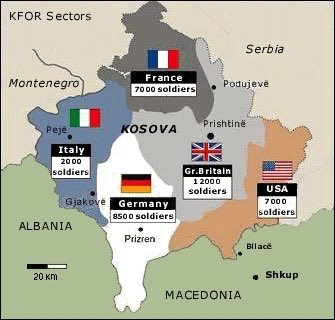
On this day in 1992, twelve babies at the Banja Luka maternity hospital died because oxygen in the NICU ran out. None could be brought from Serbia, because Croatian and Bosnian Muslim forces barred the way on the ground, and NATO had imposed a no-fly zone in the sky.
The Serbs asked the "international community" to condemn this and got told they were villains and no sympathy was due to them.
So they had their soldiers break through a land corridor to Serbia, to make sure this never happened again.
This post isn't about the Bosnian War.
Very few people know that Gaddafi gave up his nukes.
Paid Lockerbie compensation.
Opened the oil sector to BP, Exxon, ENI. Let the CIA run rendition flights through Libyan airports.
Funded Sarkozy's campaign.
Kissed Berlusconi's hand.
Hosted Tony Blair twice.
And they killed him anyway.
There is one rule the post-1945 world runs on.
You don't get to cross the TPS. Gaddafi is the cleanest test case we have, because he is the only leader in modern memory who complied with every Western demand for nearly a decade and then made one stupid move you do not get to make.
In 2009 he started building a gold-backed pan-African currency. He proposed three institutions to anchor it: an African Investment Bank in Tripoli, an African Monetary Fund in Yaounde, an African Central Bank in Abuja.
He pushed African states to denominate oil sales in the new currency rather than dollars. Libya was the largest committed contributor, capitalized from a sovereign wealth fund running into the hundreds of billions and about 143 tonnes of gold paid for in cash and held at home.
That was the trigger. Not Benghazi. Not the uprising. Not the tribal grievances, all of which were real but none of which were sufficient.
Yemen had a bigger uprising in 2011 and got no NATO bombing.
Bahrain had a real democratic movement crushed by GCC troops and the West said nothing.
The discretionary input in Libya was Western air power.
The Clinton emails released through State Department make it explicit. Sidney Blumenthal forwarded the Secretary a memo in April 2011 stating that Gaddafi's gold reserves were intended to back a pan-African currency that would "provide the Francophone African Countries with an alternative to the French franc."
The memo named this as one of five reasons Sarkozy drove the intervention. The other four were oil, French influence in Africa, Sarkozy's domestic politics, and the desire to demonstrate French military reach.
Six months later he was caught in a drainage pipe near Sirte after a French airstrike on his convoy, sodomized with a bayonet, and shot.
Hillary Clinton, on camera: "We came, we saw, he died."
With a laughter.
Compliance with TPS buys time. It does not buy permanence. Gaddafi survived four decades by reading the TPS factions brilliantly, selling the MIC a useful boogeyman until 2003, then selling the FIC and CIC compliance and oil access after.
But he thought four decades of survival gave him autonomy.
When it merely gave him a longer lease, that is all.
You do not get to cross the TPS by being independently rich and quietly compliant.
Independent capital accumulation under a compliance posture is the most dangerous position a state can hold,
because it telegraphs intent to graduate while the leverage of dependence still applies.
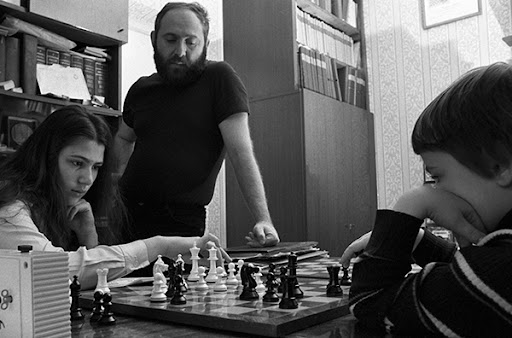
A Hungarian psychologist raised three daughters to prove that any child could become a chess grandmaster through early specialization. He succeeded. Two of them became grandmasters. One became the greatest female chess player who ever lived.
Then a sports scientist looked at the data and found something nobody wanted to hear.
His name is David Epstein. The book is called "Range."
The Polgar experiment is one of the most famous case studies in the history of deliberate practice. Laszlo Polgar wrote a book before his daughters were even born arguing that geniuses are made, not born. He homeschooled all three girls in chess from age four. By their teens, Susan, Sofia, and Judit were dominating tournaments against grown men. Judit became the youngest grandmaster in history at the time, breaking Bobby Fischer's record. The story became the gospel of early specialization. Pick a domain young, drill it hard, and you can manufacture excellence.
Epstein opens his book by telling that story honestly and then quietly demolishing the conclusion most people drew from it.
Chess works that way. Most things do not.
Here is the distinction that took him four years of research to articulate, and that almost nobody who quotes the 10,000 hour rule has ever read.
There are two kinds of environments in which humans develop expertise. Psychologists call them kind and wicked. A kind environment has clear rules, immediate feedback, and patterns that repeat reliably. Chess is the cleanest example. Every game ends with a winner and a loser. Every move is recorded. The board never changes shape. The pieces never invent new ways to move. A child who plays ten thousand games will see most of the patterns that exist in the game, and pattern recognition is exactly what chess mastery is built on.
A wicked environment is the opposite. Feedback is delayed or misleading. Rules shift. The patterns that worked yesterday may be exactly the wrong patterns to apply tomorrow. Most of the real world looks like this. Medicine is wicked. Investing is wicked. Building a company is wicked. Scientific research is wicked. Almost every job that involves a complex changing system with humans in it is wicked.
The Polgar sisters trained in the kindest environment any human can train in. Their success was real and the method was correct. The mistake was generalizing the method to fields where the underlying structure of the environment is completely different.
Epstein's research is what made the implication impossible to ignore.
He looked at the careers of elite athletes outside of chess and golf and found that the pattern was almost the inverse of what people assumed. The athletes who reached the very top of their sports were overwhelmingly people who had played multiple sports as children, specialized late, and often switched disciplines well into their teens. Roger Federer played squash, badminton, basketball, handball, tennis, table tennis, and soccer before tennis became his focus. The kids who specialized in tennis at age six and trained year-round for a decade mostly burned out, got injured, or topped out at lower levels of the sport.
The same pattern showed up everywhere he looked outside of kind environments. Inventors with the most patents had worked in multiple unrelated fields before their breakthrough work. Comic book creators with the longest careers had drawn for the most different genres before settling. Scientists who won Nobel Prizes were dramatically more likely than their peers to be serious amateur musicians, painters, sculptors, or writers.
The skill that mattered in wicked environments was not depth in one pattern. It was the ability to recognize when a pattern from one domain applied unexpectedly in another. That kind of thinking cannot be built by drilling a single subject. It can only be built by accumulating mental models from many subjects and learning to move between them.
The deeper finding is the one that should change how you think about your own career.
Specialists in wicked environments often get worse with experience, not better. Epstein cites studies of doctors, financial analysts, intelligence officers, and forecasters showing that years of experience in a narrow domain frequently produce more confident judgments without producing more accurate ones. The expert builds elaborate mental models that feel comprehensive and turn out to be increasingly disconnected from the actual structure of the problem. They stop noticing what does not fit their framework. They mistake fluency for understanding.
Generalists do better in wicked domains for a reason that sounds almost mystical until you understand the mechanism. They have less invested in any single mental model, so they abandon broken models faster. They are used to being a beginner, so they are not threatened by the discomfort of not knowing. They have seen enough different domains that they can usually find an analogy from one field that unlocks a problem in another. The technical name for this is analogical thinking, and the research on it is one of the most underrated bodies of work in cognitive science.
The single most useful sentence in the entire book is the one Epstein puts almost as a throwaway.
Match quality matters more than head start.
A person who tries six different fields in their twenties and finds the one that genuinely fits them will outperform a person who picked one field at fourteen and stuck to it on willpower alone. The lost years were not lost. They were the search process that produced the match. Every field they walked away from taught them something they later imported into the field they finally chose.
The reason this is so hard to accept is cultural, not empirical. We tell children to pick a path early. We reward the prodigy who knew at six. We treat the late bloomer as someone who failed to launch on time, when the data suggests they were running an entirely different and often more effective optimization process underneath.
The Polgar sisters were not wrong. The conclusion the world drew from them was.
If your environment is genuinely kind, specialize early and drill hard. If it is wicked, and almost every interesting human problem is, then the people who win are the ones who refused to specialize until they had seen enough to know what was actually worth specializing in.
You are not behind. You were running the right experiment all along.
BlackRock, Vanguard, sovereign wealth funds, Chinese state companies are all buying up strategic national assets across Europe.
Banks, industrial champions, ports, energy companies, tech infrastructure.
Once they own enough, the host country loses control over its own economy.
Decisions that used to be made in Paris, or Madrid get made in New York, or Beijing.
Most European governments are along with this. They call it “integration,” “consolidation,” or “efficiency.” The reality is that the country loses leverage over its own future every time it happens.
Surprisingly, Meloni’s government, has been quietly refusing.
The Italian government has a law that lets it block or impose conditions on foreign takeovers of strategic companies.
It has been using it seriously for three years. When a Chinese state company tried to control Pirelli, the Italian tire maker, Rome stepped in, capped the Chinese shareholder’s board seats, and effectively took back control of the company.
In late 2024, large Italian bank (UniCredit) tried to take over a smaller one (Banco BPM). This looked like a normal business deal, but it was really part of a broader push encouraged by Brussels, the European Central Bank, and large American asset managers.
The idea was to merge European banks into bigger units. Bigger banks mean ownership gets concentrated in fewer hands, and those hands are mostly the same global investors who already own everything else. National governments lose their ability to direct credit to their own economies.
Rome said no. The government attached so many conditions to the deal, including protection of other Italian financial assets, that the buyer walked away in July 2025.
The European Commission launched a formal legal procedure against Italy. Brussels argued Rome had broken EU law by blocking the deal. The Commission’s own paperwork even mentioned that BlackRock only owned 7.4 percent of the buyer, as if that made the Italian government’s concerns unreasonable.
Read this again. Brussels was openly defending the world’s largest asset manager against a national government trying to protect its own banking system.
Spain faced similar pressure a few months earlier over a different bank deal. Madrid caved. Rome has not. Italy’s economy minister said the government will update the law, but only to make it stronger, not to weaken it.
This is what actual sovereignty looks like.
A government using its legal power to block transnational capital from taking things it does not want it to take, and accepting the punishment; legal threats, bond market pressure, bad press,
that comes with doing so.
Italy is the only EU country currently paying a real price to stay in control of itself.
What people thought America could be - a beacon of democracy - was the last thing it became. In reality, it’s a corporate machine that has given rise to the Transnational Private Sector (TPS).
The TPS is a coalition of corporate giants, led by the Financial-Industrial Complex (FIC) with firms like JPMorgan, Goldman, and BlackRock, alongside the Military-Industrial Complex (MIC), Consumer-Industrial Complex (CIC), and Techno-Industrial Complex (TIC).
This collective force operates beyond borders, transcends nationality, and prioritizes profit over public welfare.
When Jamie Dimon, JPMorgan’s CEO, warned in October 2024 that wars in Ukraine and the Middle East could destabilize the global economy, he wasn’t just forecasting. He was asserting the TPS’s dominance over policy.
To understand this power, you have to examine the game theory driving the TPS’s clash with nations.
This concept that I have developed deliberately sets aside the idea of good, evil, right, or wrong. Geopolitical dynamics are examined through the lens of incentives, power, and measurable outcomes, not moral judgments. The focus is the strategic interplay of actors, stripped of ethical narratives.
___
Game theory provides a framework for understanding geopolitical strategies by analyzing the incentives that drive actors’ decisions.
There are two distinct game types: finite and infinite. Both these games shape global interactions. Finite games are zero-sum with defined endpoints, and clear winners and losers. It’s akin to a corporate quarter where profit maximization is the sole objective.
One player wins, the other loses.
Infinite games, conversely, lack a conclusion, have no end, prioritizing sustained participation through long-term stability, akin to a nation’s multi-generational survival strategy.
States operate within infinite games.
They do not expire. They do not tap out.
Their permanence compels them to prioritize enduring stability over immediate gains. For instance, China’s $1 trillion Belt and Road Initiative, spanning decades, secures global trade networks to ensure long-term economic influence. BRICS nations, through $10 billion in yuan-based trade, foster mutual economic resilience for mutual prosperity.
This cooperative approach engenders a form of morality rooted in reciprocity: mutual support today ensures mutual survival tomorrow. Such strategies reflect a commitment to societal development and stability, as states must maintain legitimacy and resources for their populations over time.
The TPS operates as a corporate entity, fundamentally detached from societal obligations. Unlike states, the TPS bears no responsibility to citizens, public welfare, or long-term development. Its imperative is profit maximization within finite time horizons, driven by shareholder demands and market cycles.
This corporate structure compels the TPS to engage in finite games, where immediate financial returns supersede all else. For example, the TPS’s imposition of significant tariffs on global nations in 2025 aimed to secure economic leverage, prioritizing short-term gains over regional stability. Such actions reflect a rational, amoral calculus: profit is the sole metric, unburdened by considerations of societal impact or ethical norms.
Finite games, by their nature, foster amorality. The TPS’s focus on short-term victories - such as market dominance through military coercion, currency wars, tariffs, and resource extraction - disregards long-term consequences, as corporate entities are not accountable for societal fallout.
In contrast, infinite games cultivate morality through sustained cooperation, as states must invest in trust to ensure their longevity.
The TPS has been playing finite-game rules in an infinite-game arena. When this happens, we have a mixed, unbalanced game.
A mixed game provokes backlash.
Picture a player disobeying the rules.
That's your TPS.
And it is banding states together against it to rebalance the game. The BRICS formation or the systematic de-dollarization initiatives are a strategic response, realigning global power to counter TPS dominance.
It's the game recorrecting itself.
This interplay of mixed-game dynamic is where the TPS’s amoral, zero-sum, profit-driven maneuvers clash with states’ cooperative, stability-oriented strategies.
A payoff matrix illustrates this easily.
1. The TPS secures immediate profits but risks isolation as states band together.
2. States achieve gradual stability but sacrifice short-term gains.
The TPS’s corporate nature - unencumbered by societal duties - locks it into finite games, while states’ obligations to their populations drive infinite-game cooperation.
This tension, rooted in divergent incentives, underscores the global struggle between short-term profiteering and long-term resilience, setting the stage for the TPS’s operational framework.
___
What is the TPS?
Picture the TPS as a colossal corporate skyscraper, its gleaming glass facade reflecting trillions in valuation that makes entire economies appear as a speck of dust.
At its pinnacle, the FIC - JPMorgan, Goldman, BlackRock, Vanguard, etc. - occupies the C-suite, a sleek executive suite where profit reigns supreme.
Below, the building hums with activity: the MIC (Lockheed , Raytheon, etc.) fortifies the security wing, the CIC (Exxon, Coca-Cola, Pfizer, Walmart, etc.) drives the bustling sales floor, and the TIC (Apple, Amazon, Microsoft, Nvidia, etc.) powers the innovation labs.
Each department operates with calculated precision, yet all answer to the FIC’s shareholder-driven directives, tethered to a singular goal: maximizing returns, unbound by borders or public welfare.
This skyscraper’s foundation is the United States, not as a sovereign nation but as a subjugated platform, meticulously engineered to amplify the TPS’s global reach. Decades of deregulation - culminating in the 1999 Glass-Steagall repeal - dismantled barriers, granting the FIC unchecked freedom to amass trillions.
Tax breaks and billions in defense budgets fuel the machine, while the US government, reduced to an extension of the TPS, prioritizes corporate efficiency over its citizens.
These American citizens are left to navigate the fallout. Mounting debt, eroding wages, while the TPS pursues wealth on a global stage. The Federal Reserve, calibrating monetary policy to stabilize markets, stands ready to pivot when BRICS’s multipolar trade order emerges, ensuring the TPS remains a formidable force in a restructured economy.
Unlike states, bound to their people and long-term development, the TPS owes nothing to society. Its corporate essence - divorced from public accountability - drives its finite-game strategy, where profit trumps all. This skyscraper doesn’t serve nations; it commands them, reshaping the global order to its design.
Let’s rewind back to the post-World War II era, when the MIC commanded the C-suite of the TPS. In those days, the MIC titans like Lockheed Martin and Raytheon held the ultimate power, with ample defense budgets out of taxpayer pockets fueling a war machine that defined America’s global reach. Fresh off its victory as a superpower, the US wielded unmatched military might, and the MIC capitalized on this dominance to shape foreign policy.
Every contract, every missile, reinforced its grip.
When nations resisted the TPS’s economic orbit, the MIC responded with unrelenting force. Iraq’s Saddam Hussein dared to sell oil in euros in 2000; by 2003, a NATO-led invasion, backed by $100 billion in MIC contracts, dismantled his regime, securing $500 billion in oil reserves. Libya’s Muammar Gaddafi pushed anti-dollar policies in 2011; NATO’s barrage, fueled by $160 billion in oil deals, reduced his government to rubble. The MIC’s dominance stemmed from a simple truth: war was profitable, and its C-suite reign ensured the TPS thrived on conflict, unburdened by societal costs.
The tide started to shift in the 1980s, as financial deregulation reshaped the skyscraper’s power structure. The 1999 Glass-Steagall repeal, among other reforms, unleashed the FIC to amass unprecedented wealth, with their trillions in collective asset pool out-sizing economies by the 2000s. The FIC mastered hedging, by betting on every market outcome - guaranteeing profits whether markets soared or crashed.
Unlike the MIC, reliant on wars, or the CIC, vulnerable to disruptions, the FIC thrived in any climate, pocketing billions in equities trading during stability or significant derivatives profits amid chaos. By 2015–2020, the FIC, sensing greater collective returns, orchestrated a quiet coup, redirecting the TPS toward diplomacy through billions in Gulf energy deals that bolstered TIC’s innovation and CIC’s margins.
The FIC is unique in the sense that its role transcends coordination. It hedges against its own departments, ensuring profits even if they falter. If the CIC’s retail collapses or the MIC’s wars misfire, the FIC shorts their stocks, securing significant derivatives profits. This ruthless pragmatism drives its push for Middle East stability, as war disrupts the lucrative Gulf partnerships. The FIC is also accelerating the BRICS’s $10 billion yuan-based trade order, positioning itself to profit in a multipolar future.
Consequently, within the TPS skyscraper, an inner game theory unfolds - cooperative yet fiercely competitive.
When cooperative, the TPS is absolutely devastating. In Iraq, Libya, and Ukraine, the MIC’s destruction paved the way for CIC’s cheap imports and FIC’s oil bets, reaping billions while nations crumbled. It threatens Iran with MIC-led war to sweeten billions in Gulf deals, boosting TIC’s tech contracts. It instigates currency wars on Turkey, devaluing the lira, so CIC’s Marriott locks in tourism profits.
Competitively, the FIC wields departments as leverage. It will coordinate with other departments for collective gain but it will also defect for better return on investment. It will conduct tariffs adversely affecting the CIC if it means vassalizing states in the future. It possesses calculated pragmatism capable of supplanting the MIC’s warlord era to steer the skyscraper toward stable profits in any climate.
Not just wars and destruction.
___
Today, the FIC commands the C-suite, and it is orchestrating a strategic trifecta that reshapes the global order with calculated precision.
From its executive suite, the FIC surveys a world in flux, deploying three interconnected maneuvers.
Consolidation. Vassalization. BRICS alignment.
The goal?
To secure unrivaled dominance in a multipolar world.
Each move, executed with the amoral pragmatism of a finite-game strategist, positions the TPS to thrive in the present while engineering a lucrative foothold in the emerging future.
First, the TPS consolidates power within the US, its subjugated platform, by acquiring struggling small and medium enterprises (SME's) battered by tariffs and policies championed by its FIC mouthpiece, President Trump. In 2025, these tariffs - essentially taxes on imports - have spiked costs, squeezing SMEs reliant on global supply chains. The FIC, sensing opportunity, sweeps in, buying up these firms at bargain prices, folding them into the TPS’s vast empire. This consolidation strengthens the CIC and TIC, ensuring the skyscraper’s domestic foundation remains robust while smaller players falter. It’s a ruthless finite-game play: the TPS absorbs weakened assets, bolstering its retail engine without regard for local communities or economic equity.
Second, the TPS vassalizes vulnerable nations, tightening its global grip. Tariffs targeting over 20 export-dependent countries - not accounting for the EU - have crippled their economies, crashing markets and eroding confidence. The FIC steps forward with predatory aid, offering loans and significant bond investments, like BlackRock’s new stake in German bonds last quarter, to stabilize budgets. These lifelines come with ironclad strings: debt binds nations to TPS agendas, transforming them into exploitation hubs stripped of autonomy. Governments, desperate to survive, cede control over resources and policies, their sovereignty reduced to a footnote in the FIC’s ledger. This vassalization mirrors the MIC’s historical conquests but swaps bombs for bonds, a subtler yet equally devastating finite-game victory.
Third, the TPS accelerates the rise of a BRICS-led trade order, not as a rival but as a future arena for profit. By fracturing the dollar’s dominance through tariffs, the FIC paves the way for BRICS’s $10 billion yuan-based trade system, a multipolar framework gaining traction. This is no accident. The TPS is positioning itself to dominate this new order. Investments like significant stakes in BRICS bonds and billions in Gulf partnerships ensure the FIC’s influence spans both systems. The Federal Reserve, attuned to this shift, stands poised to recalibrate monetary policy when the time comes, keeping the TPS’s financial arsenal sharp. In vassalized nations, the TPS entrenches itself, ready to dictate terms when BRICS consolidates.
The TPS’s trifecta is operating with surgical precision and chilling efficiency. Small and medium enterprises, crushed by tariffs, vanish into the TPS’s portfolio, bolstering its domestic empire. Export-dependent nations, along with Europe, kneel under the weight of FIC debt with their economies reeling, reduced to vassalized hubs serving corporate whims. The BRICS’s new trade order, quietly fueled by the TPS’s tariff-driven fracture of the dollar system, rises with the FIC’s fingerprints all over it.
This is game theory’s mixed-game dynamic unfolding: the TPS’s finite-game trifecta pursuing immediate profits, where its amoral payoff structure prioritizes short-term dominance over societal stability.
Yet, each of these zero-sum moves provokes states to embrace the infinite-game cooperation model.
The BRICS’s trade bloc iterates strategies to counter TPS hegemony, by seeking long-term equilibrium through reciprocal trust. The FIC, anticipating this, adopts a dominant strategy: hedging with Gulf partnerships and BRICS bonds by dangling MIC threats to profit in any outcome.
The FIC envisions a future of a restructured skyscraper, with its C-suite commanding a BRICS-aligned trade order, with vassalized states as mere cogs in the machine.
This isn’t adaptation.
It’s the TPS leveraging finite-game aggression and infinite-game foresight to rewrite the global rules once again, ensuring its dominance in a multipolar world.
Australia was not established as a nation-building project.
It was established as an extraction platform.
The British did not colonize Australia to build a civilization.
They colonized it to extract l; first convict labor, then wool, then gold, then minerals, then gas.
The political architecture was built around that extraction logic from day one, and it has never been restructured away from it.
You assume the state exists to serve the population, and therefore bad outcomes must mean the state is being run poorly.
Australia is not a sovereign state that happens to have a mining sector.
It is a private sector extraction platform that happens to have citizens.
Every Australian who “owns” a home is servicing a debt instrument that enriches the FIC.
The minerals get dug up by foreign-owned multinationals.
The profits get distributed to global shareholders.
The taxation office is structured; by design, through decades of lobbying, to ensure the extraction proceeds leave the country with minimal sovereign capture.
The politicians are doing exactly what the structure requires of them: absorbing public anger, rotating every few years to reset the pressure valve.
Australia is not mismanaged. Australia is managed perfectly,
just not for Australians.
ИСТОРИЈА ИМА ЈАСАН ОДГОВОР:
Ево зашто је баш на територији Србије рођено чак 17 римских царева!
Зашто баш овде?
Како је могуће да је на тако малом простору, далеко од Рима, рођено чак 17 римских императора?
Та чињеница се често понавља, стоји у уџбеницима, туристичким брошурама и музејима, али једно питање скоро увек остаје без одговора:
зашто баш Србија?
Да ли је у питању пука случајност, статистичка грешка историје или се иза тога крије дубља логика једног царства које је знало где настаје права моћ?
Јер Рим није цареве добијао у центру моћи, већ на њеним најтврђим границама. А одговор на ову римску загонетку води право на Балкан.
Мало је земаља у Европи које се могу похвалити тиме да су биле колевка императора. Још је мање оних које су дале чак седамнаест владара једне од највећих империја које је свет икада видео.
И док се при помену Римског царства најчешће помисли на Колосеум, Форум и вечни град, истина је да је срце тог царства, бар у каснијим вековима, куцало много источније, на простору данашње Србије.
На први поглед, тешко је поверовати да је из једног тако малог дела некадашњег царства потекла скоро трећина римских царева.
Али када закорачите на ове просторе, прошетате остацима античких градова, ослушнете тишину камених рушевина које шапућу приче о моћи и пропасти, све почиње да има савршеног смисла.
Трећи и четврти век нове ере донели су велике потресе у римски свет. Царство је било угрожено спољашњим нападима и унутрашњим борбама за власт. Границе су биле под сталним притиском варварских племена, а Рим, удаљен и превише аристократски, све мање је личио на место из којег се царство може ефикасно водити.
Решење је пронађено на Балкану, суровом, војничком, лојалном. Управо овде, у пограничним провинцијама Дарданије, Горње Мезије и Горње Паноније, царство је почело да обликује нову врсту царева: оне који нису носили тоге, већ оклоп; који нису држали говоре у сенату, већ сабљу у руци.
Балкански регрутни центри постали су извор људи спремних да преузму најтежи задатак, да спасу царство.
У Сирмијуму, данашњој Сремској Митровици, некада једном од четири главна града Римског царства, рођени су цареви попут Пробуса и Аурелијана. Његове улице су сведочиле царским походима, док су из терми и палата излазиле наредбе које су одјекивале широм царства.
Данас, док стојите на темељима тих грађевина, лако је замислити штитове, поворке и сенаторе како пролазе испод славолука.У Нишу, античком Наисусу, свет је добио једног од својих најзначајнијих владара, Константина Великог.
Онај који ће увести хришћанство као легитимну веру, подићи Цариград и променити ток европске историје, рођен је управо овде. Медијана, његова луксузна вила на ободу града, и данас носи трагове његове визије, мозаике који говоре више од речи, стубове који стоје као чувари прошлости.
На истоку, у подножју Тимочке Крајине, налази се Феликс Ромулијана, драгуљ касне антике, који је цар Галерије подигао у част своје мајке. Његова палата, украшена финим мозаицима и опасана зидинама, није била само лична резиденција, била је манифестација моћи и породичног култа.
Ходати Ромулијаном данас значи проћи кроз тишину времена које више не постоји, а ипак је ту, под прстима и погледом.Још јужније, код Лебана, издигла се Јустинијана Прима, родно место цара Јустинијана, последњег великог цара Истока.
Саградио је Аја Софију, обновио римско право и на кратко повратио славу старог Рима, Јустинијан је поникао из овог кутка Балкана, из града чије рушевине и данас стоје као подсвесни одјек једне грандиозне идеје, да и са периферије може да се води свет.
А ту су још и Виминацијум код Костолца, некада велики војни логор са легијама које су браниле Дунавску границу; Сингидунум, данашњи Београд, родно место цара Јовијана; као и десетине других локалитета који су некада били већи, важнији и моћнији него што данашња околина може да наслути.
Када путујете кроз Србију, нисте само туриста, ви сте хроничар времена које је мењало свет. Иза сваког брда крије се римски пут, испод сваког поља, темељ неке античке зграде, а иза сваког заборављеног имена, прича о човеку који је некада носио титулу Императора.
Данас, ти локалитети нису само археолошки споменици. Они су мост између прошлости и садашњости. Путник који одлучи да их обиђе, не посећује само историју, он је живи сведок места где се историја рађала.
Србија, можда тихо и скромно, али сасвим заслужено, носи епитет Земља римских царева.
Сада вам је ваљда јасно ком колосалном Роду припадате и откуд толика жеља за деструкцијом Србског корпуса...Али авај не брините ми смо као феникс тица из пепела се рађамо и идемо даље....
America's first intelligence network wasn't the CIA.
It was run by insurance companies.
Here's how insurers secretly ran American intelligence for 40 years: