Did you know only .4% of abortions are done because of rape?
A common argument made by pro-abortion advocates in support of infanticide is that abortion is needed in cases of rape – an “exception” to laws against baby murder that even many pro-lifers believe should be legal.
Generally, those who have strong feelings about abortion in the case of rape or incest are misinformed, going off of what someone has told them instead of looking at the facts. The left’s constant harping on rape and incest clauses would lead one to believe the situation is common.
That would be a lie.
More than 95 percent of abortions are done simply out of convenience, while only 0.4 percent of women are getting abortions as a result of rape or incest.
The updated data is based on a new study conducted by the Charlotte Lozier Institute, one of the leading companies in research and data that exposes the truth about abortion.
Unfortunately, most people don’t see these statistics due to the fact that the CDC does not request information on reasons for abortion from states, and so this data is not included in most national reports.
As a whole, the common exceptions to abortion limits – rape, incest, life-threatening maternal conditions, and fetal diagnoses – account for less than 5% of all abortions, while more than nine out of 10 are done simply because a woman doesn’t want to have a baby.
Even still, these rare exceptions are often used by the left to push for abortion on demand and without restrictions.
While every single child is deserving of life regardless of how they are conceived, the fact that abortion in the case of rape is an exceptionally rare event – a fact most people are unaware of – shows just how far the left will go to justify open and unapologetic infanticide.
Hopefully, a report like this one will not only bring more public awareness of what abortion actually is, and open people’s eyes to the lies that they are being fed.
Doctors Told Mom to Have Abortion Because Her Son Would Never Walk...
Now Deon Loves to Run!
Deon Dreyer was not supposed to walk. If his doctors had had their way, he would not even be alive.
But today, the South African boy is a happy kid who loves to run around with his twin brother and play golf.
His mother, Christal Dreyer, said Deon was diagnosed with the most severe form of spina bifida, myelomeningocele, when she was 22 weeks pregnant with him and his brother.
She said her doctors predicted that Deon would never walk and his quality of life would be poor. The doctors recommended a late-term abortion, but Christal and her husband, Bernard, refused to consider the idea of ending their son’s life, according to the report.
“The possibilities in the pictures the doctors painted were pretty dark, but he proved them wrong,” Bernard said.
While Deon was still an infant, he underwent his first surgery. Since then, he has had two more as well as on-going physiotherapy, his parents said. As a result, Deon began to walk when he was two-and-a-half years old, and today his parents said he loves to run and play golf.
He is “the happiest, cleverest and most lovable boy running around,” his mother said. “… with the naked eye you won’t see that there is anything wrong with him. He looks like a happy, normal, bright boy.”
The family told the news outlet that they want to encourage parents to choose life for their unborn babies after a spina bifida diagnosis. They said spina bifida is not curable right now, but there are many treatment options available to help children like their son.
One of these is a life-changing in-utero surgery that patches holes in the unborn baby’s spine. A hospital in London, England recently celebrated 32 such successful surgeries. Doctors said the surgery can greatly improve the quality of children’s lives by lessening the effects of the disease.
Yet, abortion often is recommended to parents after their unborn baby has been diagnosed with a disability. Some parents report feeling pressured by doctors and genetic counselors to end their babies’ lives. A recent study highlighted in Scientific American found evidence that families of children with Down syndrome often face negative, biased counseling and pressure to have abortions.
Tragically, health data across the globe suggests many parents give into this pressure and choose to abort their unborn babies rather than give them a chance at life. For example, statistics from Iceland indicate nearly 100 percent of babies diagnosed with Down syndrome before birth are aborted in the country.
Pro-life advocates are working to end this discrimination through laws that provide better information and support to families facing a difficult prenatal diagnosis as well as legislation to ban discriminatory abortions based on an unborn baby’s diagnosis.
Stories like the Dreyers also provide hope to families by demonstrating the joys and possibilities when they choose life for their babies.
BREAKING: Jesse Ridgway gave a new interview defending the decision to abort his baby, who may have had Down syndrome.
Everything is a "what if" for him.
“We were confronting the scenario of having the baby, and playing out every possible scenario about what it would look like and how we would make it work, what happens if they have these health problems, and need these surgeries,” Ridgway said.
“It was so real to us. I wish people could empathize with us, and know this wasn’t some black and white decision.”
Jesse doesn't even acknowledge the possibility that prenatal tests fail and they could have killed a healthy baby.
He added that the couple had spoken with doctors, friends, family and genetic counselors and learned that up to 90 percent of babies are killed in abortions after a Down syndrome diagnosis.
Somehow that made the decision morally acceptable.
He wrote that the couple needed “a little time to move on” but were excited to “try again” for “a better outcome.”
Jesse could have had a perfectly fine outcome by giving birth. Millions of parents have raised children with Down syndrome just fine.
Ridgway said he understands reactions from “political or religious” standpoints but maintained the couple’s choice reflected the difficult realities they confronted.
“For any couple who has gone through a decision like this, it never leaves your mind,” he said. “Years from now, I’ll be thinking about it.”
His baby will never have that chance.
BREAKING: A pro-life group has launched a grassroots effort urging President Trump to end mail-order abortions.
The Arkansas-based pro-life group Family Council is urging all Americans to contact Trump and members of Congress to end former President Joe Biden’s mail-order abortion policies.
Family Council wants Trump to stop mail-order abortions that are killing babies, harming women, and violating state pro-life laws that ban abortions.
"Abortionists in other states are shipping abortion pills into communities in violation of state law and with no medical oversight,” said Family Council President Jerry Cox.
"Contact the Trump administration and their members of Congress this week, and ask that federal officials reinstate the medical safeguards that the Biden administration removed."
People can learn more at abortioncrimebymail .com
Cox pointed to broad public support for reinstating medical safeguards on the dangerous and deadly drugs.
“A recent Federalist poll found that 67 percent of likely voters support reinstating the in-person doctor’s visit requirement for abortion pills — including 63 percent of Democrats and 72 percent of Republicans,” he said. “This is plain common sense, and Americans across the political spectrum agree.”
The group highlighted risks created by allowing abortion drugs to be ordered online and shipped without oversight, including cases where the drugs were administered secretly or under coercion.
“We’ve seen cases in Ohio, Texas, and Louisiana where abortion drugs were ordered online and then either given to women secretly without their knowledge or consent or where women were coerced into taking the abortion drugs,” Cox said.
The action comes amid heightened national scrutiny of mail-order abortion pills.
The FDA has launched a safety study of mifepristone, the primary drug used in chemical abortions. The review, expected to take about six months, is examining risks associated with the drug, particularly when distributed remotely without in-person medical oversight.
A recent analysis of commercial insurance claims involving 865,727 mifepristone prescriptions from 2017 to 2023. It found 94,605 women — nearly 11% — suffered serious complications within 45 days, including hemorrhage in 3.31% of cases, emergency room visits in 4.73%, and sepsis in 0.10%.
Peer-reviewed research found three quarters of ER visits within 30 days after abortion drug use were coded as severe or critical. Two separate, independent studies also found more than 1 in 10 women experience at least one severe adverse event. Complications can include hemorrhaging, infection, sepsis, and even death.
Other issues encompassed infections, transfusions, hospitalizations and life-threatening events like cardiac problems or anaphylaxis. In nearly 3% of cases, the drug failed, requiring surgical follow-up. Multiple women have died from the abortion pill.
A large national poll found 7 in 10 voters want to roll back Biden’s mail-order abortion drug rule and reinstate safeguards like in-person doctor visits.
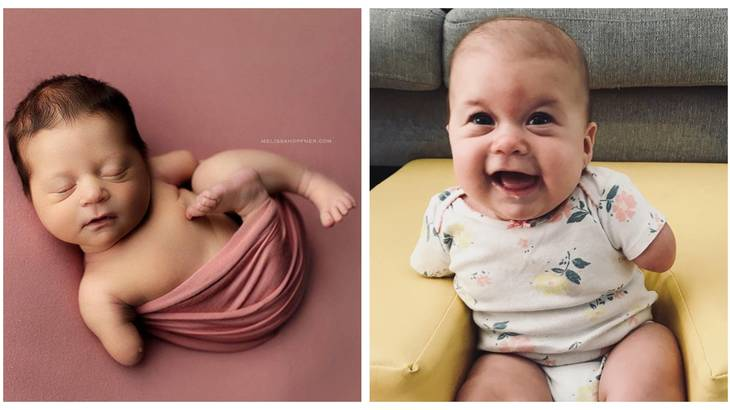
This is Ivy.
She was born without hands and forearms.
But her mother REFUSED to kill her in an abortion.
Vanessa McLeod felt devastated when she learned that her unborn baby was disabled.
The medical specialists only added to her fears when they suggested she have an abortion. She said they made her “feel guilty” for wanting her baby, and she began to doubt her ability to care for a child with special needs.
Vanessa knew she could not abort her daughter, Ivy, and her husband’s and parents’ encouragement helped more than anything else.
“I was still paralyzed with fear and worry for the remainder of my pregnancy, but my perspective began to shift,” she said. “Things just started to make sense, they started to fit. It felt right. I felt like the Universe chose me, out of millions of mothers, to be Ivy’s mom.”
She said she was 19 weeks pregnant when she found out that there was something wrong with her daughter.
She said her husband was away on a work trip, so her mother went along to her ultrasound appointment. Though it took longer than usual, she said they did not think anything was wrong.
The next day, however, her midwife called with the bad news. Her mother and father went with her to meet the midwife to learn more.
As Vanessa says:
“From the moment my midwife called me, up until we arrived at her office, I don’t think I stopped crying. I was terrified I was going to lose this baby. As my mom and I sat in the parking lot of my midwife’s office, preparing to go in, my mom looked at me and said, ‘Vaness, whatever it is, we’ll get through it.'"
The first thing the midwife mentioned was the possibility of a cleft lip, McLeod remembered.
“I began to feel hope. Was that all? Just something small, something cosmetic? … But there was more,” she wrote.
The midwife told her that the baby showed signs of heart problems and a femur that was curved and shorter than the other. Last, she told McLeod that her unborn baby did not have hands or forearms.
“This felt like a punch to the gut,” she recalled. “It stole my breath. It keeled me over and the sobs tore out of me, and visions of my perfect little baby shattered.”
However, her father left the office with words of encouragement: “’She’s going to be a blessing to our family. I think our family needs someone like her. She is going to teach us so much.’”
A short time later, she and her husband went to Vancouver Children’s Hospital to meet with specialists about their daughter’s condition. What happened was not what the McLeods expected.
She wrote:
I thought that meant we were getting answers that day — that the doctors could tell me why this happened, what caused it, and what the next step was. But the appointments were severely disappointing in that regard, and if anything, the doctors created more questions for us than answers, and tainted that whole experience with so much negativity. I wish with all my heart that appointment had gone differently. That someone had told us it would be okay. That someone had told us how beautiful and perfect our little girl would be, that she would smile and giggle and live a life filled with so much love. I wish I knew then what I know now. I wish I could take away all the worry, pain, fear, and heartbreak I felt. Instead, we got news of doom. All hope was taken away.
She said she felt shocked when the doctors suggested that they abort their baby girl.
Though McLeod said she supports abortion, she never considered having an abortion herself.
“When my husband and I started to express that we wanted to keep her, the medical geneticist said, briskly and brutally, ‘But think about her quality of life. She’s going to have no hands,’” she remembered.
But her husband reassured her that they would make it work.
“’I’ll do whatever I have to do to take care of her,’” he told her. “’I’ll build her anything. I want her. I’ll do whatever it takes. I’ll take care of her for the rest of her life.’”
His words gave her hope.
A few months later, Ivy arrived, premature but beautiful – and absolutely valuable.
“The moment I birthed her and held her in my arms, I felt so much peace,” her mother said. “And when she opened her eyes and looked at me for the very first time, I knew she was exactly where she was meant to be.”
McLeod said she wants to the world to know that her daughter is valuable, no matter what she looks like or what she is able to do.
“Some people have blue eyes, some have green. Some have blonde hair, some have brown. Some are born with hands, some without,” she said. “And I hope I can always impart to her that her life has meaning, has value, and will always be filled with so much love, regardless of her appearance or abilities.”
El Papa sobre los abuelos:
“Hay que cuidar y acompañar a los abuelos como ellos hicieron de nosotros. No permitamos que se sientan solos ni desprotegidos.
Si no queremos la soledad para nosotros no debemos permitirla para los demás”.
"La belleza salvará al mundo" (Dostoievski)
#PapaLeónXIV
Te comparto este video del maravilloso espectáculo de luz y sonido que hemos disfrutado tras la bendición de la torre mayor de la Sagrada Familia: https://t.co/7uDnohI40L
Aborto por inducción:
Usado después de las 24 semanas.
Se inyecta una sustancia para detener el corazón del bebé y se provoca el parto.
Muchos bebés nacen vivos.
El aborto es el fracaso absoluto de la sociedad para ofrecerle soluciones reales a una mujer. Una sociedad verdaderamente humana no le ofrece la muerte a su hijo; le ofrece apoyo, salud, empleo y un abrazo.
¡Cuidemos las dos vidas! ❤️
Si @KeikoFujimori ha vencido al fraude de la mafia enquistada en @JNE_Peru y @ONPE_oficial , en gran parte se lo debe a las denuncias de @rlopezaliaga1
Sería ideal que Porky tome un ministerio de gestión productiva en gobierno de Keiko.
Abortion pills turn bathrooms into clinics. No doctor. No help. Just blood and isolation. Stockpiling pills helps abusers hide crimes while women suffer. It’s profit, not care.
ending life of another human being is never justified
#ProLife#Truth
Every year, Tim Tebow hosts a red carpet event celebrating the humanity of people with disabilities, including those with Down syndrome.
In a culture that too often erases people with disabilities, events like this reflect their God-given dignity and immeasurable worth.
An inability does not determine a person’s humanity.
Cuando Cristo ocupa el centro, todo encuentra su lugar.
En la Vigilia del #CorpusChristi en Madrid, el #PapaLeonXIV da la bendición con el Santísimo Sacramento a más de medio millón de jóvenes allí congregados.
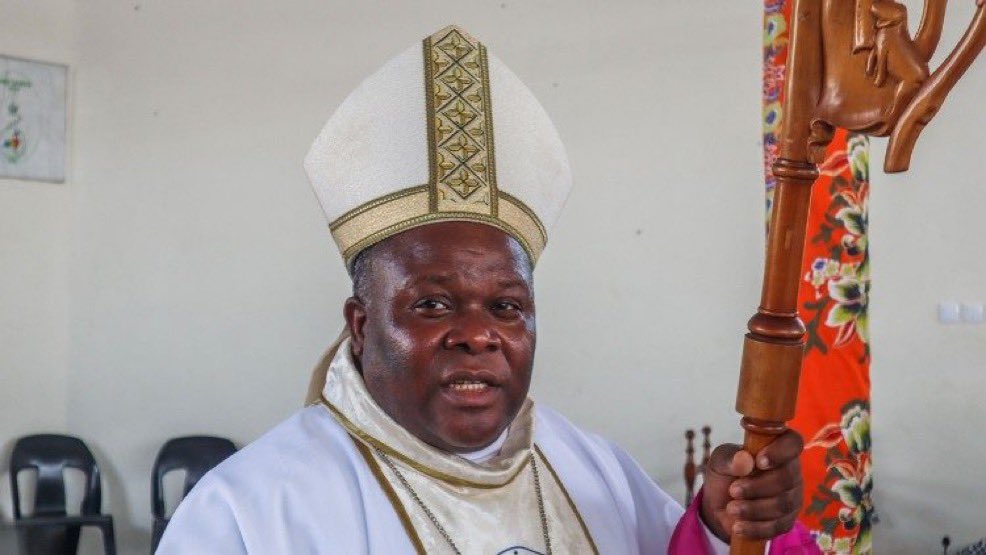
‼️ Obispo asesinado en Mozambique
Unas semanas después de haber denunciado públicamente las violencias islamistas que ensangrientan el norte de Mozambique, Monseñor Osório Citora Afonso ha sido asesinado a balazos en su residencia episcopal.
El islamismo mata.
Recemos por él.