🚨 Fewer than 1% of complaints recorded by IPSO in 2023, 2024 and 2025 led to a finding that a publisher had breached the Editors’ Code.
Today, the Press Recognition Panel has published an updated review of IPSO’s complaints process and related issues.
https://t.co/4aMthhUEaw
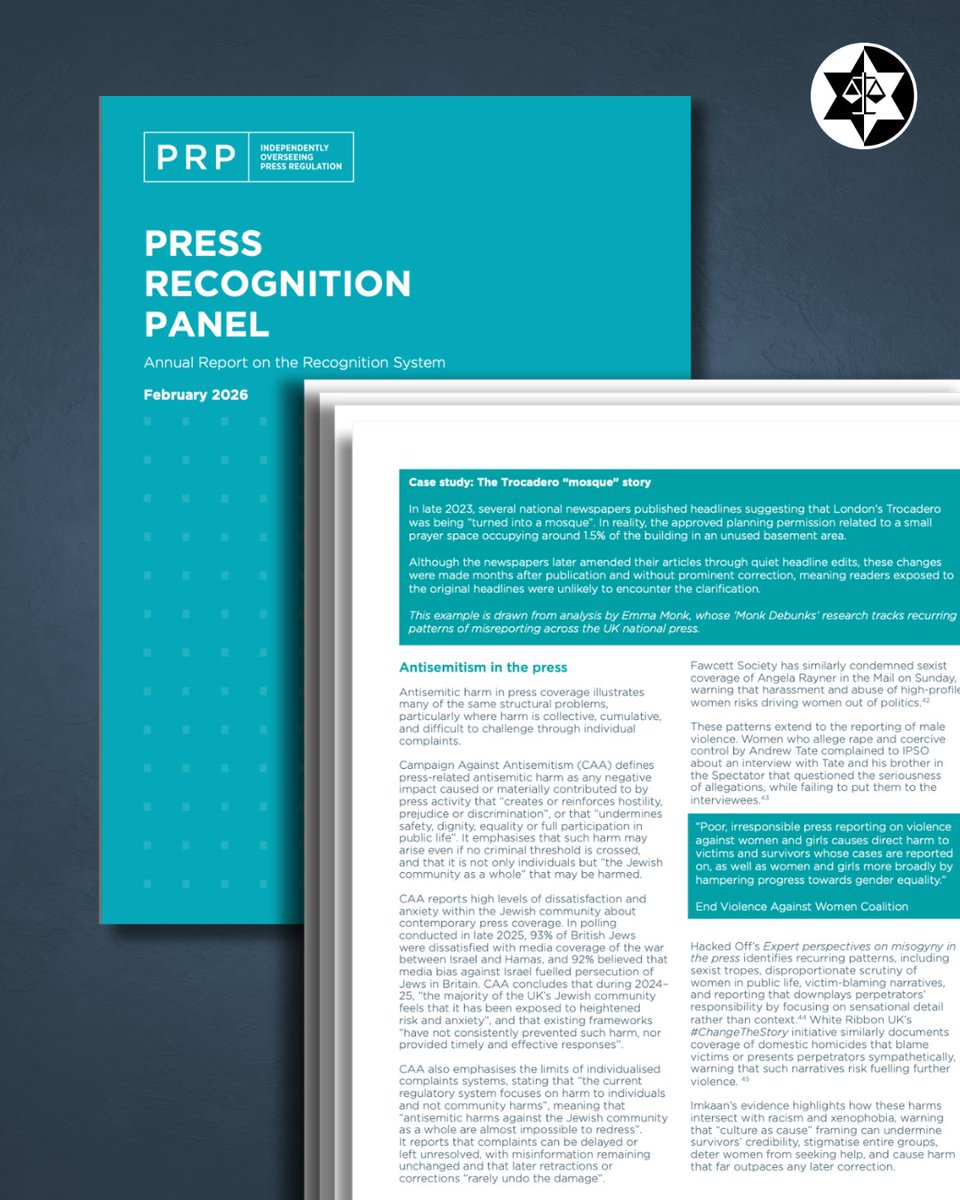
@ZackPolanski Our 10th Annual Report on the Recognition System explains why it continues to offer a practical solution to the UK’s press accountability gap – protecting journalism while giving the public clear, fair and affordable routes to redress.
https://t.co/qzzr9qh3WX
@ZackPolanski Media reform should protect journalism while strengthening accountability.
The public backs press regulation that is independent of both government & the press industry. The Recognition System already provides that framework but most major publishers choose to remain outside it.
The important question now is how to encourage participation in effective, independent regulation, so that press freedom is protected and the public has meaningful protection from press harm.
Read the report: https://t.co/zcE8q8haHm
🚨 Fewer than 1% of complaints recorded by IPSO in 2023, 2024 and 2025 led to a finding that a publisher had breached the Editors’ Code.
Today, the Press Recognition Panel has published an updated review of IPSO’s complaints process and related issues.
https://t.co/4aMthhUEaw
The PRP concludes that IPSO does not provide an effective deterrent against serious or repeated bad behaviour by the press.
The Recognition System provides the only framework for independent regulation free from both government and press industry control.
Following @lisanandy’s speech on trust, standards & accountability in news, and Government plans to support local journalism, a key question remains: what kind of press should public funding sustain?
Our Chair Kathryn Cearns OBE explains why it matters.
https://t.co/R3ZlGFQJ3J
We've published our decision following our consultation on guidance on the Royal Charter and online and digital news-related material.
This consultation set out draft guidance on four key issues arising from modern news publication.
https://t.co/wi0mqHwpHb
Press accountability in the UK is uneven.
Some publishers participate in independently assessed regulation, separate from government & industry, which guarantees access to low-cost arbitration. Most major publishers do not.
Our report examines that gap.
https://t.co/ckY9f6rktc
We are pleased to have been able to contribute to the Press Recognition Panel’s Annual Report on the Recognition System.
A staggering 93% of British Jews are dissatisfied with the coverage of the Hamas-Israel war over the past two years in the British media. This is unacceptable and a clear signal that the British press must do better in ensuring accuracy and fairness.
As the report states, “CAA emphasises the limits of individualised complaints systems, stating that ‘the current regulatory system focuses on harm to individuals and not community harms’, meaning that ‘antisemitic harms against the Jewish community as a whole are almost impossible to redress’.”
It is vital that media outlets are accountable for accuracy and fairness in relation to coverage of antisemitism and matters of Jewish concern, and we are grateful to @PRPanel for the opportunity to highlight this issue, which otherwise may not have been addressed.
The full report can be read here: https://t.co/S0rz9VCx3L
It was an honour to be asked to contribute to the Press Regulation Panel’s 10th Annual report into the state of press accountability in the UK a decade after the Leveson enquiry which was published today
https://t.co/KTyEXmgjlY...
1/3
Press harm has evolved in a rapidly changing news environment.
Today, we’ve published our 10th Annual Report on the Recognition System. 🧵
https://t.co/ckY9f6rktc
The Recognition System is capable of delivering independent oversight at scale in today’s news landscape.
What happens next depends on the choices made by the government and the press.
We remain ready to engage with Parliament, policymakers, and publishers on the next steps.