One February night in 1958, something caused a group of skiers to cut their way out of their tent and flee into a howling blizzard, in 20-below-zero temperatures, in bare feet or socks. What was it? https://t.co/ijE55KiJMa
🚨 At least 10 scientists, all cited in the Trump admin's new climate change report, told me that the report completely mischaracterizes their research.
I also found five citations with significant errors, and a paragraph missing an important citation
https://t.co/XwI4RoXQET
I don’t know what you people do to capture footage from the driver’s PoV when driving in a Formula One race, but a couple of months ahead of the race I just call Apple’s 1-800-275-2273 live support line to get the company to customize an iPhone for me.
https://t.co/8YT9OeniUq
If you think the President's #IndiaPakistanWar ceasefire just happened through phone calls, you’ve probably never negotiated with a South Asian. Some serious “Art of the Deal” was at play. Here’s what I believe are the clearest clues to what went down.
[For background, read my thread on NATO, CIA factions, and Pakistan-Ukraine linkages, linked below]
Yesterday, May 9, 2025, the IMF Executive Board approved a $2.3 billion loan package for Pakistan: $1 billion under the Extended Fund Facility (EFF) and $1.3 billion under the Resilience and Sustainability Facility (RSF).
But something about the vote didn’t add up.
There had been serious doubts it would pass. The previous IMF loan had been conditional on Pakistan aiding NATO’s rearmament of Ukraine (see thread). The U.S. has since shifted its stance and indicated an intent to pull out of both NATO and the Russia-Ukraine war. And India had strongly been making the case for the IMF and FATF not to enable terror financing through this loan.
The vote tally raised even more questions.
India abstained, rather than voting against. So did China and Russia. The main countries voting yes were the U.K. and the U.S.
The big question: why did the U.S. vote yes?
The President’s announcement now makes one thing clear—this deal delivered wins not just for Pakistan and India, but crucially, for the U.S.
🇮🇳India
India had opposed the loan on terrorism grounds. It argued that IMF funding would contradict the FATF mandate if it enabled Pakistan’s financing of terrorism.
But when the moment came, India abstained. That move puzzled and angered many in India. The official line was that India “did not have the right to vote no.” But in practice, India has the clout to mobilize countries that did have a vote.
So why didn’t it?
I believe this was the first successful plank of the President’s “Art of the Deal” agenda. Remember, India was one of the key countries being wooed in the tariff reset. And it wasn’t minor—Trump had called India the “tariff king” and was asking for politically difficult concessions, especially on agriculture. He didn’t send the Secretaries—he sent Vice President Vance.
There were strong signs the tariff deal was progressing, with meaningful wins on both sides. Then came the terror attack and everything derailed.
This IMF vote may have been used to reset the table and get the deal back on track.
🇵🇰Pakistan
Pakistan is reportedly running out of ammunition—reportedly down to just four days of supply. The country is on the verge of bankruptcy and has no way to sustain a prolonged war.
The last IMF bailout had conditions tied to Pakistan's support for NATO in Ukraine (check thread). The U.K. used Pakistan’s Nur Khan Airbase to transfer arms to Ukraine. British C-17 Globemaster flights in 2022 were documented flying 122mm artillery to Romania—via Pakistani territory. This “air bridge” bypassed Iranian and Afghan airspace, showing how vital Pakistan had become for NATO logistics.
Even though some NATO members have been supplying military support to Pakistan in the last few days, the U.S. itself has been trying to pull out of NATO and shut down the war in Ukraine.
Also, when it comes to Pakistan, there is a real divide within the U.S. security establishment. In the early days, U.S. intelligence deliberately armed terror groups (think Mujahideen). But more recently, the strategic calculus has tilted toward Indian support, especially in the context of China. So the fight over Pakistan is as internal as it is external.
So why did the U.S. vote “yes” to extending the IMF bailout to Pakistan?
I believe a ceasefire was one of the conditions the U.S. negotiated in exchange for the loan. But I also believe there may have been another - China.
🇨🇳China
The role of China has hovered like a question mark throughout the escalation of India-Pakistan tensions.
Many observers believed China abetted the terror attack to derail the unfolding India-U.S. trade deal. Though on the flip side, they seem to be really trying to win deals in India, so I am not totally convinced on this point. China is not an enthusiast of terrorism, given its delicate situation with the Uyghurs
The clincher was yesterday's vote. At the IMF meeting, China did not vote in favor of renewing the loan to Pakistan.
Why would they do that?
If you've been tracking Pakistan's arms purchases—or even just the chatter over Chinese versus Western weapons systems in the last 48 hours—you know China would actually benefit a lot from this loan, since Pakistan would likely spend a good share of it on Chinese military equipment.
This is where I believe President Trump’s negotiating came in.
Strong conditions may have been placed on Pakistan: that the IMF bailout money cannot be spent on Chinese or Russian weapons, only American.
If true, that would explain why both China and Russia abstained from voting on this deal.
Russia’s calculus is more complex, and likely tied to a parallel track in the Ukraine endgame. That’s a separate thread for another time.
But taken together, this outcome—at the 100-day mark—ranks among the clearest, most efficient examples of President Trump’s “Art of the Deal” diplomacy.
One vote. Three outcomes:
📌Forward movement on the India tariff deal
📌De-escalation in South Asia
📌Pakistan realigned away from China
This wasn’t just a phone call. It was a multi-vector bargain in live motion.
And for those watching closely, it’s a clear sign: U.S. leverage is back and President Trump just delivered a deal across three theaters.
📞 AI is making voice phishing more dangerous than ever.
Scammers now clone voices in seconds, tricking employees into handing over their credentials.
🔐 Learn how to defend your org with @specopssoftware Secure Service Desk.
#credentials#sponsored
https://t.co/eWDh6IabM1
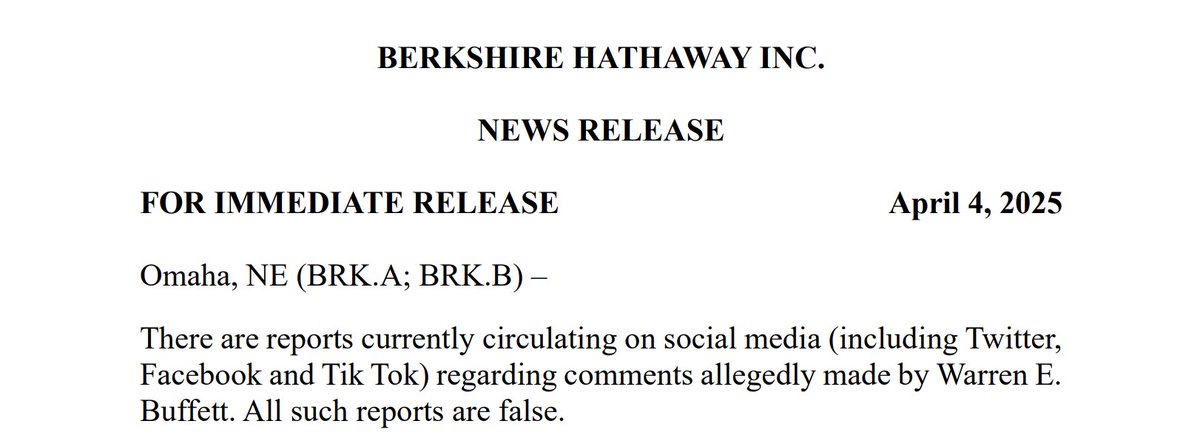
This video says Warren Buffett believes "Trump is making the best economic moves he's seen in over 50 years"
Buffett put out this statement this afternoon:
When Trump was sworn in, Elon Musk's corporations were under more than 32 investigations conducted by at least 11 federal agencies.
Most of the cases are now closed or likely to be closed soon, and the federal agencies are being defanged by DOGE.
Funny how that works, huh?


![tanvi_ratna's tweet photo. If you think the President's #IndiaPakistanWar ceasefire just happened through phone calls, you’ve probably never negotiated with a South Asian. Some serious “Art of the Deal” was at play. Here’s what I believe are the clearest clues to what went down.
[For background, read my thread on NATO, CIA factions, and Pakistan-Ukraine linkages, linked below]
Yesterday, May 9, 2025, the IMF Executive Board approved a $2.3 billion loan package for Pakistan: $1 billion under the Extended Fund Facility (EFF) and $1.3 billion under the Resilience and Sustainability Facility (RSF).
But something about the vote didn’t add up.
There had been serious doubts it would pass. The previous IMF loan had been conditional on Pakistan aiding NATO’s rearmament of Ukraine (see thread). The U.S. has since shifted its stance and indicated an intent to pull out of both NATO and the Russia-Ukraine war. And India had strongly been making the case for the IMF and FATF not to enable terror financing through this loan.
The vote tally raised even more questions.
India abstained, rather than voting against. So did China and Russia. The main countries voting yes were the U.K. and the U.S.
The big question: why did the U.S. vote yes?
The President’s announcement now makes one thing clear—this deal delivered wins not just for Pakistan and India, but crucially, for the U.S.
🇮🇳India
India had opposed the loan on terrorism grounds. It argued that IMF funding would contradict the FATF mandate if it enabled Pakistan’s financing of terrorism.
But when the moment came, India abstained. That move puzzled and angered many in India. The official line was that India “did not have the right to vote no.” But in practice, India has the clout to mobilize countries that did have a vote.
So why didn’t it?
I believe this was the first successful plank of the President’s “Art of the Deal” agenda. Remember, India was one of the key countries being wooed in the tariff reset. And it wasn’t minor—Trump had called India the “tariff king” and was asking for politically difficult concessions, especially on agriculture. He didn’t send the Secretaries—he sent Vice President Vance.
There were strong signs the tariff deal was progressing, with meaningful wins on both sides. Then came the terror attack and everything derailed.
This IMF vote may have been used to reset the table and get the deal back on track.
🇵🇰Pakistan
Pakistan is reportedly running out of ammunition—reportedly down to just four days of supply. The country is on the verge of bankruptcy and has no way to sustain a prolonged war.
The last IMF bailout had conditions tied to Pakistan's support for NATO in Ukraine (check thread). The U.K. used Pakistan’s Nur Khan Airbase to transfer arms to Ukraine. British C-17 Globemaster flights in 2022 were documented flying 122mm artillery to Romania—via Pakistani territory. This “air bridge” bypassed Iranian and Afghan airspace, showing how vital Pakistan had become for NATO logistics.
Even though some NATO members have been supplying military support to Pakistan in the last few days, the U.S. itself has been trying to pull out of NATO and shut down the war in Ukraine.
Also, when it comes to Pakistan, there is a real divide within the U.S. security establishment. In the early days, U.S. intelligence deliberately armed terror groups (think Mujahideen). But more recently, the strategic calculus has tilted toward Indian support, especially in the context of China. So the fight over Pakistan is as internal as it is external.
So why did the U.S. vote “yes” to extending the IMF bailout to Pakistan?
I believe a ceasefire was one of the conditions the U.S. negotiated in exchange for the loan. But I also believe there may have been another - China.
🇨🇳China
The role of China has hovered like a question mark throughout the escalation of India-Pakistan tensions.
Many observers believed China abetted the terror attack to derail the unfolding India-U.S. trade deal. Though on the flip side, they seem to be really trying to win deals in India, so I am not totally convinced on this point. China is not an enthusiast of terrorism, given its delicate situation with the Uyghurs
The clincher was yesterday's vote. At the IMF meeting, China did not vote in favor of renewing the loan to Pakistan.
Why would they do that?
If you've been tracking Pakistan's arms purchases—or even just the chatter over Chinese versus Western weapons systems in the last 48 hours—you know China would actually benefit a lot from this loan, since Pakistan would likely spend a good share of it on Chinese military equipment.
This is where I believe President Trump’s negotiating came in.
Strong conditions may have been placed on Pakistan: that the IMF bailout money cannot be spent on Chinese or Russian weapons, only American.
If true, that would explain why both China and Russia abstained from voting on this deal.
Russia’s calculus is more complex, and likely tied to a parallel track in the Ukraine endgame. That’s a separate thread for another time.
But taken together, this outcome—at the 100-day mark—ranks among the clearest, most efficient examples of President Trump’s “Art of the Deal” diplomacy.
One vote. Three outcomes:
📌Forward movement on the India tariff deal
📌De-escalation in South Asia
📌Pakistan realigned away from China
This wasn’t just a phone call. It was a multi-vector bargain in live motion.
And for those watching closely, it’s a clear sign: U.S. leverage is back and President Trump just delivered a deal across three theaters.](https://pbs.twimg.com/media/GqmAXaxWkAAfQ7q.png)
![tanvi_ratna's tweet photo. If you think the President's #IndiaPakistanWar ceasefire just happened through phone calls, you’ve probably never negotiated with a South Asian. Some serious “Art of the Deal” was at play. Here’s what I believe are the clearest clues to what went down.
[For background, read my thread on NATO, CIA factions, and Pakistan-Ukraine linkages, linked below]
Yesterday, May 9, 2025, the IMF Executive Board approved a $2.3 billion loan package for Pakistan: $1 billion under the Extended Fund Facility (EFF) and $1.3 billion under the Resilience and Sustainability Facility (RSF).
But something about the vote didn’t add up.
There had been serious doubts it would pass. The previous IMF loan had been conditional on Pakistan aiding NATO’s rearmament of Ukraine (see thread). The U.S. has since shifted its stance and indicated an intent to pull out of both NATO and the Russia-Ukraine war. And India had strongly been making the case for the IMF and FATF not to enable terror financing through this loan.
The vote tally raised even more questions.
India abstained, rather than voting against. So did China and Russia. The main countries voting yes were the U.K. and the U.S.
The big question: why did the U.S. vote yes?
The President’s announcement now makes one thing clear—this deal delivered wins not just for Pakistan and India, but crucially, for the U.S.
🇮🇳India
India had opposed the loan on terrorism grounds. It argued that IMF funding would contradict the FATF mandate if it enabled Pakistan’s financing of terrorism.
But when the moment came, India abstained. That move puzzled and angered many in India. The official line was that India “did not have the right to vote no.” But in practice, India has the clout to mobilize countries that did have a vote.
So why didn’t it?
I believe this was the first successful plank of the President’s “Art of the Deal” agenda. Remember, India was one of the key countries being wooed in the tariff reset. And it wasn’t minor—Trump had called India the “tariff king” and was asking for politically difficult concessions, especially on agriculture. He didn’t send the Secretaries—he sent Vice President Vance.
There were strong signs the tariff deal was progressing, with meaningful wins on both sides. Then came the terror attack and everything derailed.
This IMF vote may have been used to reset the table and get the deal back on track.
🇵🇰Pakistan
Pakistan is reportedly running out of ammunition—reportedly down to just four days of supply. The country is on the verge of bankruptcy and has no way to sustain a prolonged war.
The last IMF bailout had conditions tied to Pakistan's support for NATO in Ukraine (check thread). The U.K. used Pakistan’s Nur Khan Airbase to transfer arms to Ukraine. British C-17 Globemaster flights in 2022 were documented flying 122mm artillery to Romania—via Pakistani territory. This “air bridge” bypassed Iranian and Afghan airspace, showing how vital Pakistan had become for NATO logistics.
Even though some NATO members have been supplying military support to Pakistan in the last few days, the U.S. itself has been trying to pull out of NATO and shut down the war in Ukraine.
Also, when it comes to Pakistan, there is a real divide within the U.S. security establishment. In the early days, U.S. intelligence deliberately armed terror groups (think Mujahideen). But more recently, the strategic calculus has tilted toward Indian support, especially in the context of China. So the fight over Pakistan is as internal as it is external.
So why did the U.S. vote “yes” to extending the IMF bailout to Pakistan?
I believe a ceasefire was one of the conditions the U.S. negotiated in exchange for the loan. But I also believe there may have been another - China.
🇨🇳China
The role of China has hovered like a question mark throughout the escalation of India-Pakistan tensions.
Many observers believed China abetted the terror attack to derail the unfolding India-U.S. trade deal. Though on the flip side, they seem to be really trying to win deals in India, so I am not totally convinced on this point. China is not an enthusiast of terrorism, given its delicate situation with the Uyghurs
The clincher was yesterday's vote. At the IMF meeting, China did not vote in favor of renewing the loan to Pakistan.
Why would they do that?
If you've been tracking Pakistan's arms purchases—or even just the chatter over Chinese versus Western weapons systems in the last 48 hours—you know China would actually benefit a lot from this loan, since Pakistan would likely spend a good share of it on Chinese military equipment.
This is where I believe President Trump’s negotiating came in.
Strong conditions may have been placed on Pakistan: that the IMF bailout money cannot be spent on Chinese or Russian weapons, only American.
If true, that would explain why both China and Russia abstained from voting on this deal.
Russia’s calculus is more complex, and likely tied to a parallel track in the Ukraine endgame. That’s a separate thread for another time.
But taken together, this outcome—at the 100-day mark—ranks among the clearest, most efficient examples of President Trump’s “Art of the Deal” diplomacy.
One vote. Three outcomes:
📌Forward movement on the India tariff deal
📌De-escalation in South Asia
📌Pakistan realigned away from China
This wasn’t just a phone call. It was a multi-vector bargain in live motion.
And for those watching closely, it’s a clear sign: U.S. leverage is back and President Trump just delivered a deal across three theaters.](https://pbs.twimg.com/media/GqmASeuWcAEtAdA.jpg)






![tanvi_ratna's tweet photo. If you think the President's #IndiaPakistanWar ceasefire just happened through phone calls, you’ve probably never negotiated with a South Asian. Some serious “Art of the Deal” was at play. Here’s what I believe are the clearest clues to what went down.
[For background, read my thread on NATO, CIA factions, and Pakistan-Ukraine linkages, linked below]
Yesterday, May 9, 2025, the IMF Executive Board approved a $2.3 billion loan package for Pakistan: $1 billion under the Extended Fund Facility (EFF) and $1.3 billion under the Resilience and Sustainability Facility (RSF).
But something about the vote didn’t add up.
There had been serious doubts it would pass. The previous IMF loan had been conditional on Pakistan aiding NATO’s rearmament of Ukraine (see thread). The U.S. has since shifted its stance and indicated an intent to pull out of both NATO and the Russia-Ukraine war. And India had strongly been making the case for the IMF and FATF not to enable terror financing through this loan.
The vote tally raised even more questions.
India abstained, rather than voting against. So did China and Russia. The main countries voting yes were the U.K. and the U.S.
The big question: why did the U.S. vote yes?
The President’s announcement now makes one thing clear—this deal delivered wins not just for Pakistan and India, but crucially, for the U.S.
🇮🇳India
India had opposed the loan on terrorism grounds. It argued that IMF funding would contradict the FATF mandate if it enabled Pakistan’s financing of terrorism.
But when the moment came, India abstained. That move puzzled and angered many in India. The official line was that India “did not have the right to vote no.” But in practice, India has the clout to mobilize countries that did have a vote.
So why didn’t it?
I believe this was the first successful plank of the President’s “Art of the Deal” agenda. Remember, India was one of the key countries being wooed in the tariff reset. And it wasn’t minor—Trump had called India the “tariff king” and was asking for politically difficult concessions, especially on agriculture. He didn’t send the Secretaries—he sent Vice President Vance.
There were strong signs the tariff deal was progressing, with meaningful wins on both sides. Then came the terror attack and everything derailed.
This IMF vote may have been used to reset the table and get the deal back on track.
🇵🇰Pakistan
Pakistan is reportedly running out of ammunition—reportedly down to just four days of supply. The country is on the verge of bankruptcy and has no way to sustain a prolonged war.
The last IMF bailout had conditions tied to Pakistan's support for NATO in Ukraine (check thread). The U.K. used Pakistan’s Nur Khan Airbase to transfer arms to Ukraine. British C-17 Globemaster flights in 2022 were documented flying 122mm artillery to Romania—via Pakistani territory. This “air bridge” bypassed Iranian and Afghan airspace, showing how vital Pakistan had become for NATO logistics.
Even though some NATO members have been supplying military support to Pakistan in the last few days, the U.S. itself has been trying to pull out of NATO and shut down the war in Ukraine.
Also, when it comes to Pakistan, there is a real divide within the U.S. security establishment. In the early days, U.S. intelligence deliberately armed terror groups (think Mujahideen). But more recently, the strategic calculus has tilted toward Indian support, especially in the context of China. So the fight over Pakistan is as internal as it is external.
So why did the U.S. vote “yes” to extending the IMF bailout to Pakistan?
I believe a ceasefire was one of the conditions the U.S. negotiated in exchange for the loan. But I also believe there may have been another - China.
🇨🇳China
The role of China has hovered like a question mark throughout the escalation of India-Pakistan tensions.
Many observers believed China abetted the terror attack to derail the unfolding India-U.S. trade deal. Though on the flip side, they seem to be really trying to win deals in India, so I am not totally convinced on this point. China is not an enthusiast of terrorism, given its delicate situation with the Uyghurs
The clincher was yesterday's vote. At the IMF meeting, China did not vote in favor of renewing the loan to Pakistan.
Why would they do that?
If you've been tracking Pakistan's arms purchases—or even just the chatter over Chinese versus Western weapons systems in the last 48 hours—you know China would actually benefit a lot from this loan, since Pakistan would likely spend a good share of it on Chinese military equipment.
This is where I believe President Trump’s negotiating came in.
Strong conditions may have been placed on Pakistan: that the IMF bailout money cannot be spent on Chinese or Russian weapons, only American.
If true, that would explain why both China and Russia abstained from voting on this deal.
Russia’s calculus is more complex, and likely tied to a parallel track in the Ukraine endgame. That’s a separate thread for another time.
But taken together, this outcome—at the 100-day mark—ranks among the clearest, most efficient examples of President Trump’s “Art of the Deal” diplomacy.
One vote. Three outcomes:
📌Forward movement on the India tariff deal
📌De-escalation in South Asia
📌Pakistan realigned away from China
This wasn’t just a phone call. It was a multi-vector bargain in live motion.
And for those watching closely, it’s a clear sign: U.S. leverage is back and President Trump just delivered a deal across three theaters.](https://pbs.twimg.com/media/GqmGiEgWUAA46Qp.jpg)