For a normal Indian investor, the weak yen barely touches your portfolio. The catalyst is what happens when it turns.
A serious BOJ hike or a risk-off shock forces the carry trade to unwind. Money borrowed cheaply in yen gets pulled home fast, and that triggers a global sell-off. In August 2024, one such unwind knocked the Sensex down over 2,000 points in a single day.
The narrow silver lining: a weak yen cuts import costs for Indian firms buying Japanese machinery, while squeezing those that compete with Japanese autos, bearings and steel.
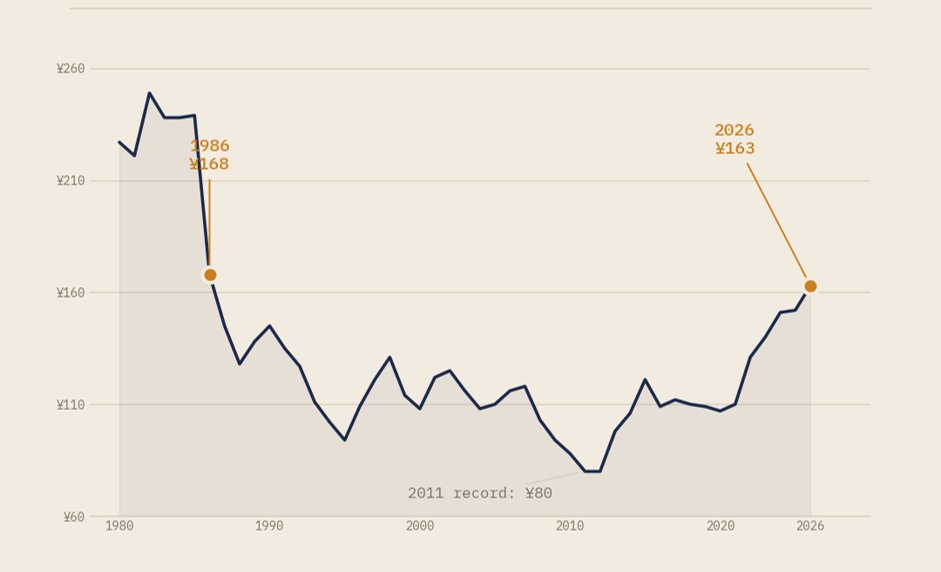
Last week, the US dollar bought 163 Japanese yen.
The last time it bought that many was 1986.
Japan has raised interest rates to a 31-year high and spent tens of billions of dollars buying its own currency to stop this. Neither worked.
Here's why it's happening, and why it's a bigger deal than it looks 🧵
Why would Washington spend its own money to prop up someone else’s currency?
Japan is the largest foreign holder of US government debt. A yen in freefall pushes Japanese institutions to dump Treasuries, lifting America’s own borrowing costs. The 10-year yield is already up ~57bps this year.
The US stepped in to protect its own bond market. Japan’s problem is now America’s too.
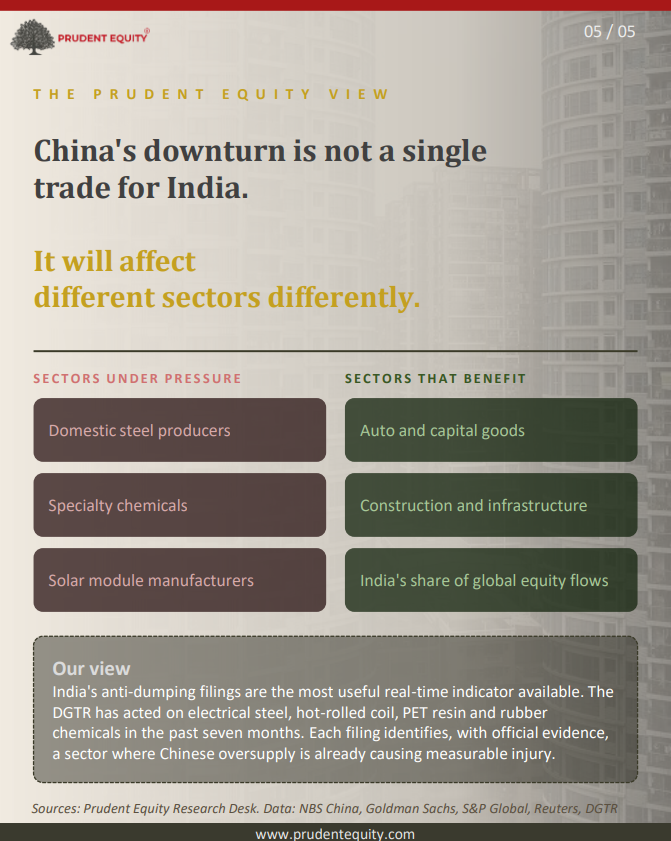
This isn't one trade for India - it's sector-specific.
Under pressure: domestic steel, specialty chemicals, solar modules
Tailwind: autos & capital goods, construction/infra, India's share of global flows
The transmission to India cuts both ways.
⚠️ Chinese steel & chemicals are flooding in as demand dries up - DGTR has active probes/duties on electrical steel, HRC, PET resin & rubber chemicals.
✅ Same oversupply = cheaper inputs for Indian manufacturers.
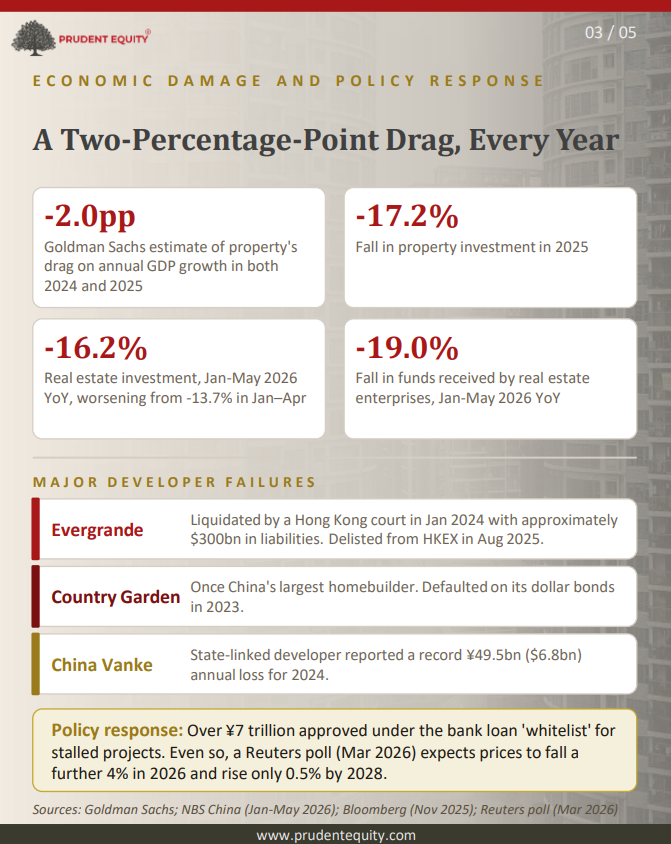
The economic damage:
→ ~2pp annual GDP drag, 2024 & 2025 (Goldman Sachs)
→ Real estate investment -16.2% YoY (Jan-May 2026)
→ Evergrande liquidated, Country Garden defaulted, Vanke's losses hit records
Beijing's ¥7tn bank whitelist hasn't fixed it yet.
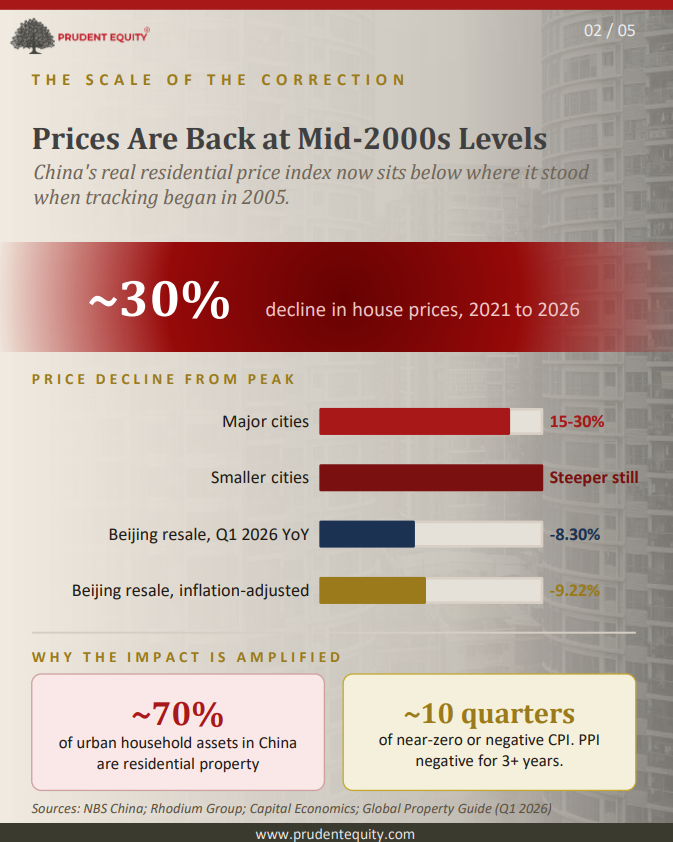
The scale, in one chart:
Chinese home prices are back below where they stood when tracking began in 2005.
Major cities: -15% to -30% from peak.
Smaller cities: even steeper.
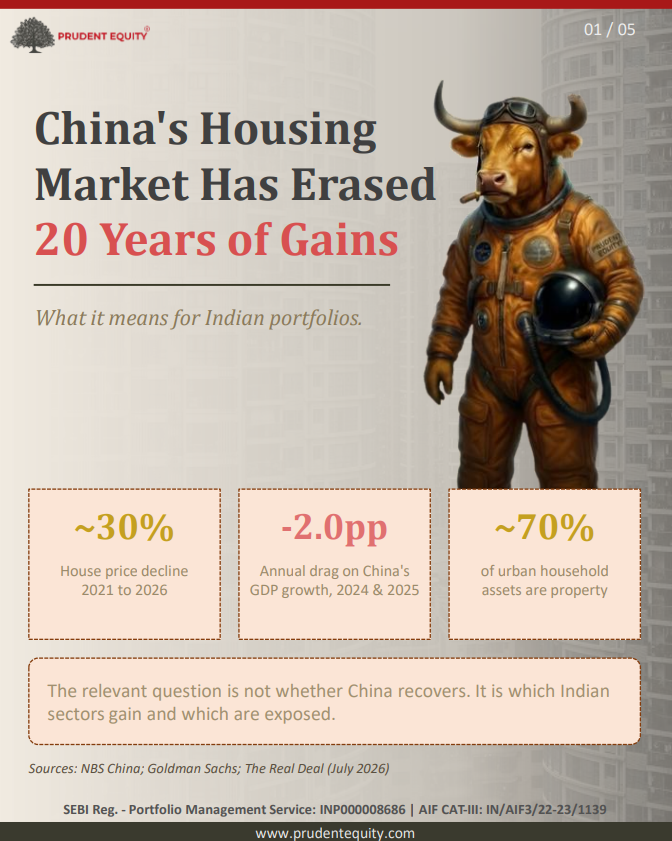
~70% of urban Chinese household wealth sits in property.
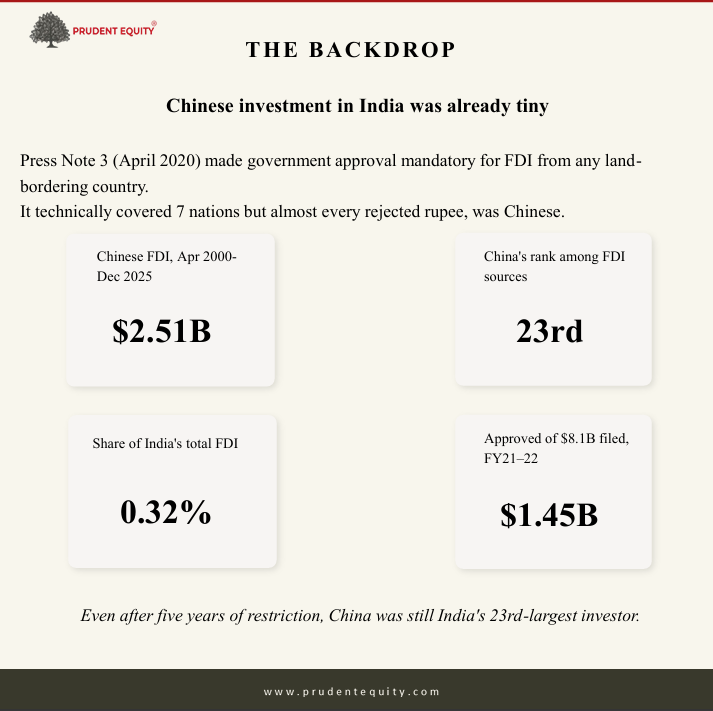
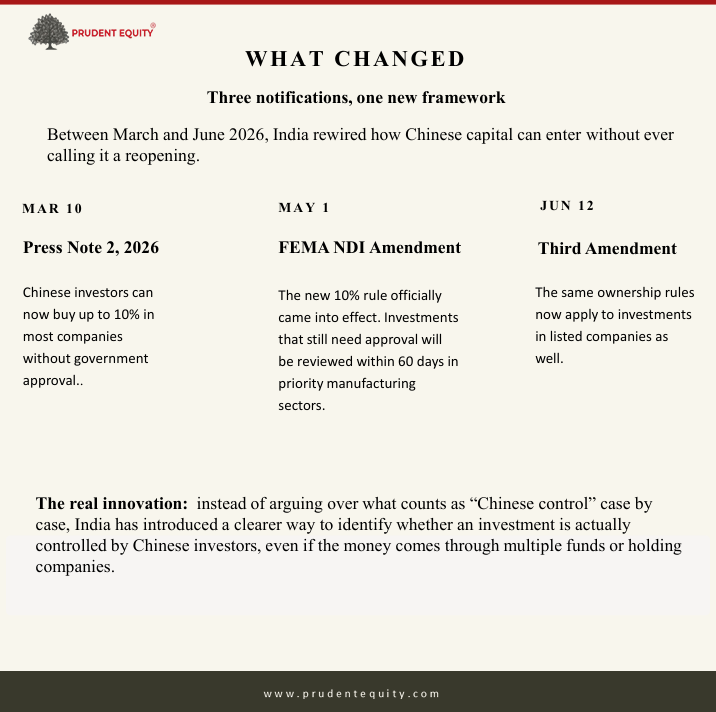
With recent headlines about Chinese FDI into India, one question keeps coming up:
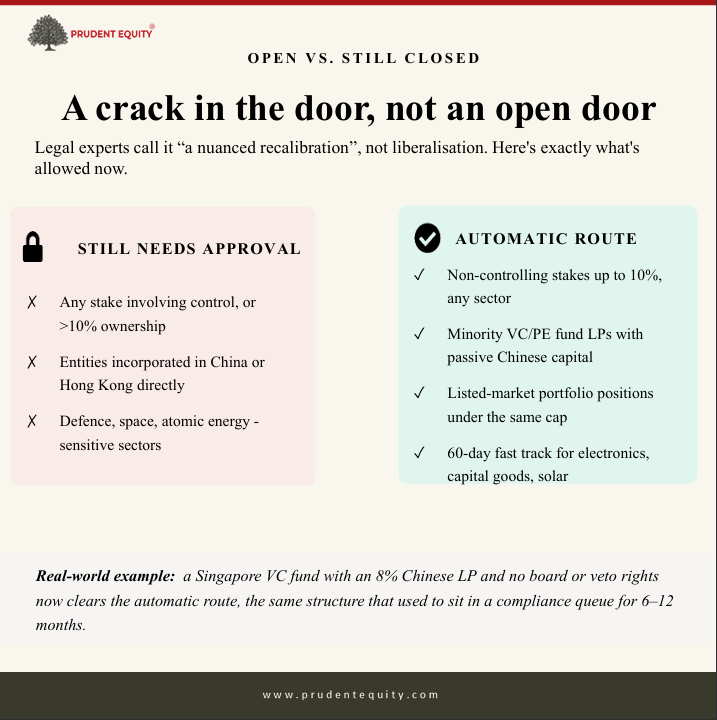
Has India reopened its doors to Chinese investment?
For six years, the common narrative was simple: Chinese capital was effectively shut out of India.
But the reality in 2026 is far more nuanced.
Conclusion:
• If rains revive: buffers + irrigation contain it; the hit stays mild.
• If the deficit holds: pricier pulses & sugar, winter-crop risk, deeper cut to rural spending.
The Middle East risk that rattled markets, the oil spike is finally cooling off.
But another headwind is building:
India's 2026 rains are forecast at just 90% of normal, with El Niño building through September. 🧵
Why hasn't rural demand cracked yet?
GST cuts, a high base, and record food stocks are propping it up. (Part of the ~34% drop in rural job-scheme demand is a scheme change, not pure distress.)
What breaks first: real rural wages, already slowing as prices tick up.