Six months of 2026 have made one thing obvious. Audited code is mostly holding. Keys are not. Stablecoin mints, exchange databases, deployer wallets, LayerZero peer configurations — the breaches are converging on one root cause. Wherever a key sits in plaintext, the attacker eventually finds it.
The same architecture that fails on operational security also fails on privacy. Every reused address, every plaintext compliance form, every transparent ledger turns the wallet into a public folder.
PRV is built on the assumption that the floor is the floor. Stealth addresses by default. ZK proof of ownership for compliance without exposure. Argon2id + AES-GCM-256 for keys that never sit in plaintext at rest. Multichain native, no bridges.
Privacy is not a feature. It is the minimum.
https://t.co/9YwNYvMw5Y
A successful transaction simulation is evidence, not a guarantee.
It estimates what would happen against a recent blockchain state. The contract state, price, or route may change before the transaction is included. Simulators also do not detect every threat.
Use the preview to inspect asset changes, approvals, and likely failure. Then verify the site and contract separately.
Green does not mean harmless.
Address poisoning exploits a shortcut: copying a recipient from transaction history.
An attacker creates a similar address, sends a zero value or tiny transaction, then waits for you to copy the wrong entry.
For an important transfer:
1. Use a saved address book
2. Verify the full address on a trusted screen
3. Send a small test first
Matching the first and last few characters is not enough.
A wallet can be noncustodial and still expose you to dangerous permissions.
Holding your keys prevents custody risk. It does not make every signature safe.
Before approving, check the contract, token, amount, and whether the permission is limited or unlimited.
Self custody gives you control, not immunity.
The final security layer is understanding what you authorize.
You disconnected the dapp.
But did you remove its permission?
These are not the same action.
Disconnecting ends the wallet session.
A token approval can remain active onchain and may still allow a smart contract to move your tokens.
Before approving, check:
The domain
The spender address
The token
The allowance amount
Then review and revoke permissions you no longer use.
Connected sites show where you logged in.
Token approvals show who can still act.
Most people think using a new address for every transaction keeps them private.
The reality is more complicated.
Chain analysis companies use heuristics - like how change is handled, input/output patterns, and timing - to cluster multiple addresses back to the same person.
Even if you’re careful, your activity can still be linked.
The privacy game is deeper than just "new address every time."
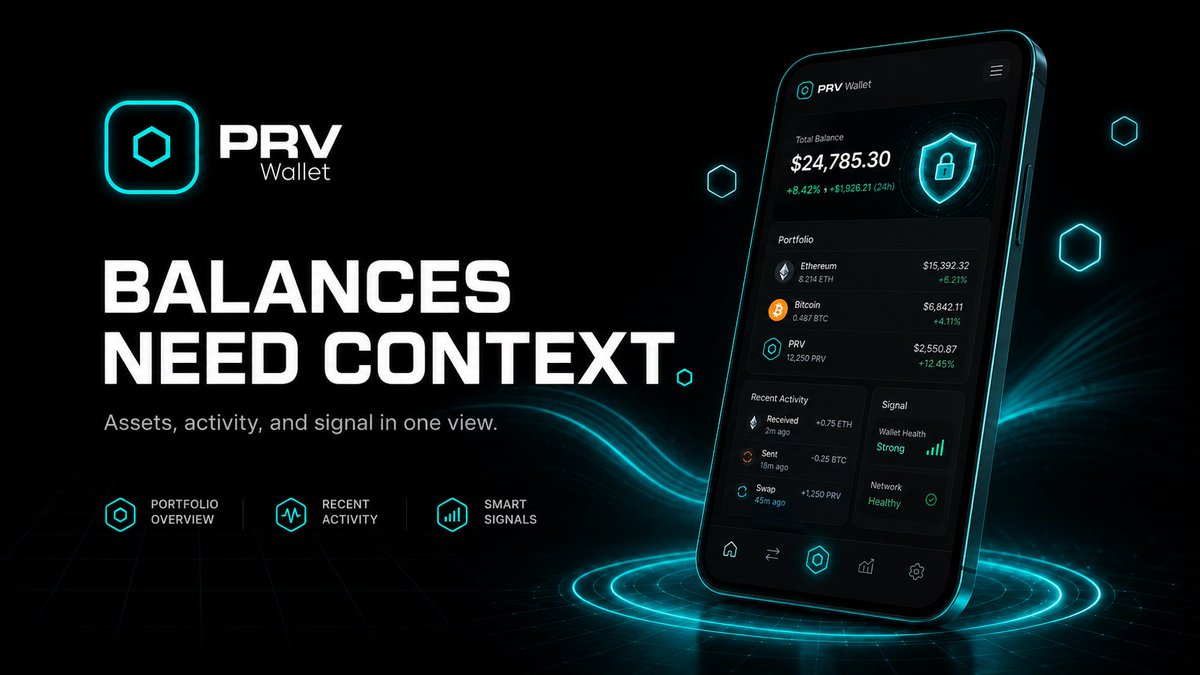
A wallet should not only show your balance.
It should show what changed, what is exposed, and what needs attention.
What is the one wallet feature you wish existed today?
Drop it in the comments.
A wallet is not a login button.
It is the place where your assets, approvals, history, and risk all meet.
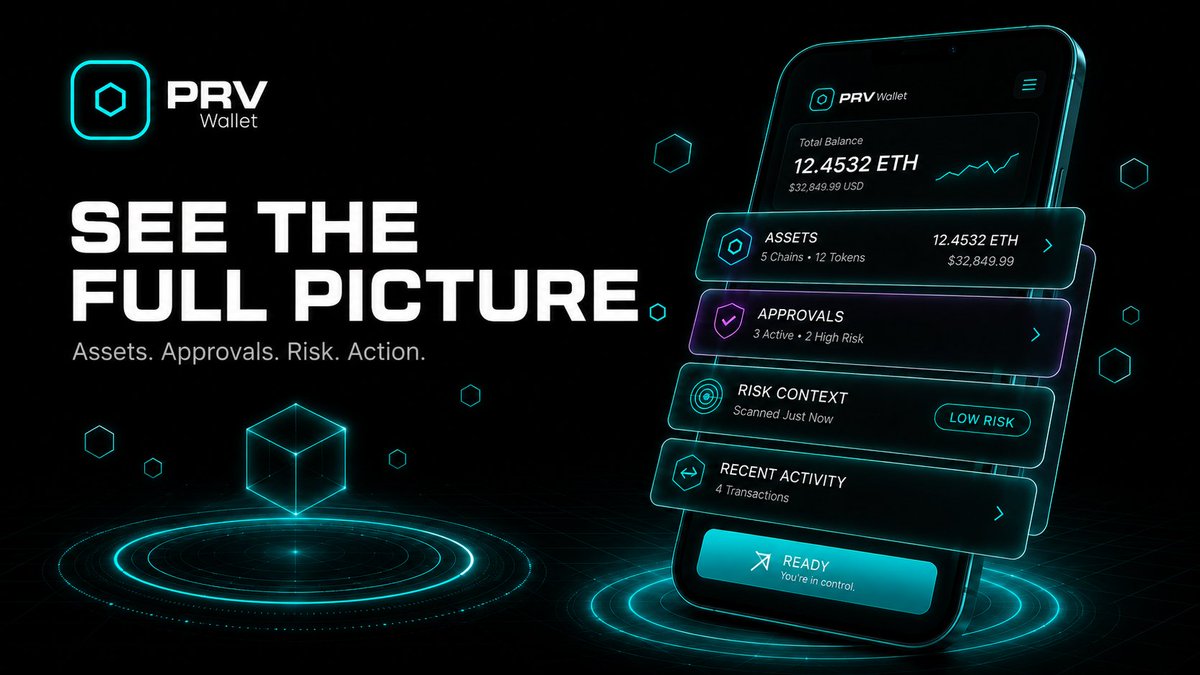
PRV Wallet is built for users who want to see the full picture before they act.
Most wallets show balances.
PRV Wallet is being built to show context.
What changed.
Where funds sit.
What is exposed.
What needs action.
Because numbers without context are just decoration.
Cross-chain should not feel like crossing a border with bad paperwork.
The user wants one question answered:
Can I move value safely from here to there?
PRV Wallet is built for that flow.
A wallet should know the difference between holding, moving, and risking.
Those are not the same action.
PRV Wallet is built for users who want control without guessing what the interface is hiding.
PRV Wallet combines strong privacy and security so your transactions stay private and unlinkable to your real-world identity.
We use two cryptographic layers:
- zk-snarks: each transaction creates a zero-knowledge proof to validate the transfer without exposing sensitive data
- multi-ring signatures: your key is mixed with a ring of others so the network can verify authenticity without revealing the sender
More details in upcoming posts. Stay secure with PRV Wallet.
CAUGHT IN THE SPOTLIGHT! 👁
Any time you deal with an exchange or a regulator, the rules are the same: hand over your privacy just to show you’re legitimate.
PRV Wallet deletes that compromise with Zero-Knowledge Proofs (ZKPs).
With our built-in ZK‑WASM engine, you can produce a cryptographic proof that you own the funds or that a transaction is valid—while revealing exactly nothing about the data underneath.
The claim is public. The details stay yours. No shared keys, no trace-spilled history—only privacy, by design. 🔐✨
Take back financial sovereignty with PRV Wallet. Mathematics, not exposure. ⬡
A DM claiming to be “Support”? It’s a scam—every time.
Scammers target people looking for help, then bait them into phishing links to steal your seed phrase.
Real support never DMs you first.
The PRV Wallet team will never ask for your keys or request off-app signatures.
Stay safe with PRV Wallet.
Tired of trading bots extracting your value?
PRVwallet routes Ethereum transactions directly through Flashbots.
Front-running and sandwich attacks are neutralized by default. 🛡️