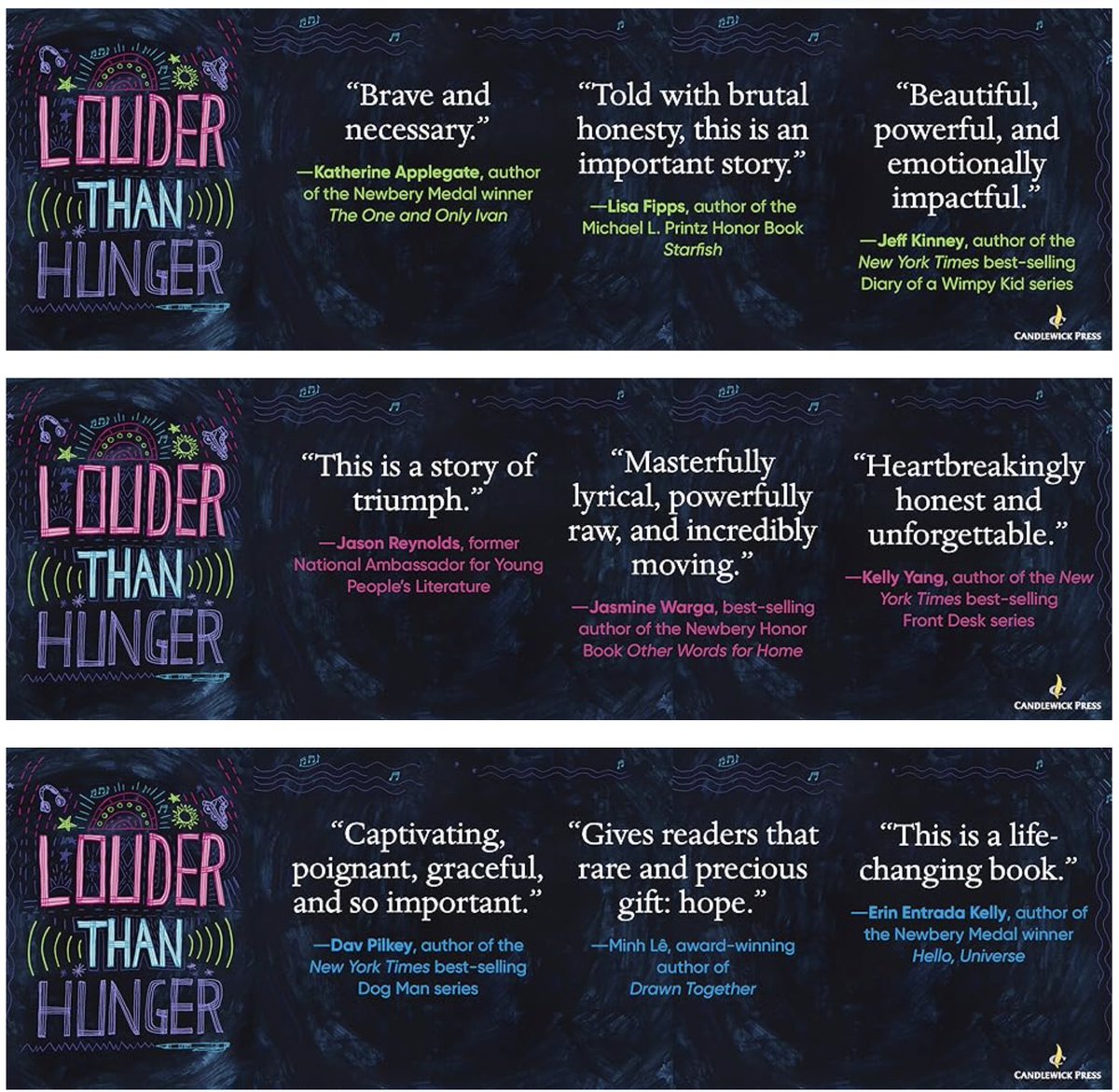
I'm giving away 5 signed copies of Louder Than Hunger to 1 teacher or teacher-librarian to give away to students and/or colleagues. RT before 10:00 p.m. CDT on 3/12 (today) to enter the drawing. I'll order the copies from @AndersonsBkshp. https://t.co/eQsBhdE1fA
@SamanthaBahna A great source of inspiration is Brooke Brown’s Instagram and Facebook page Teach Outside the Box. Amazing Storybook STEM lessons that foster the love of reading and the Engineering Design Process in young learners. #EDTC627F23
I find myself following Gerry Brooks for comic relief, but I also have a large number of TikTok educators who provide the laughter and comfort I need after a long day or week. #EDTC627F23
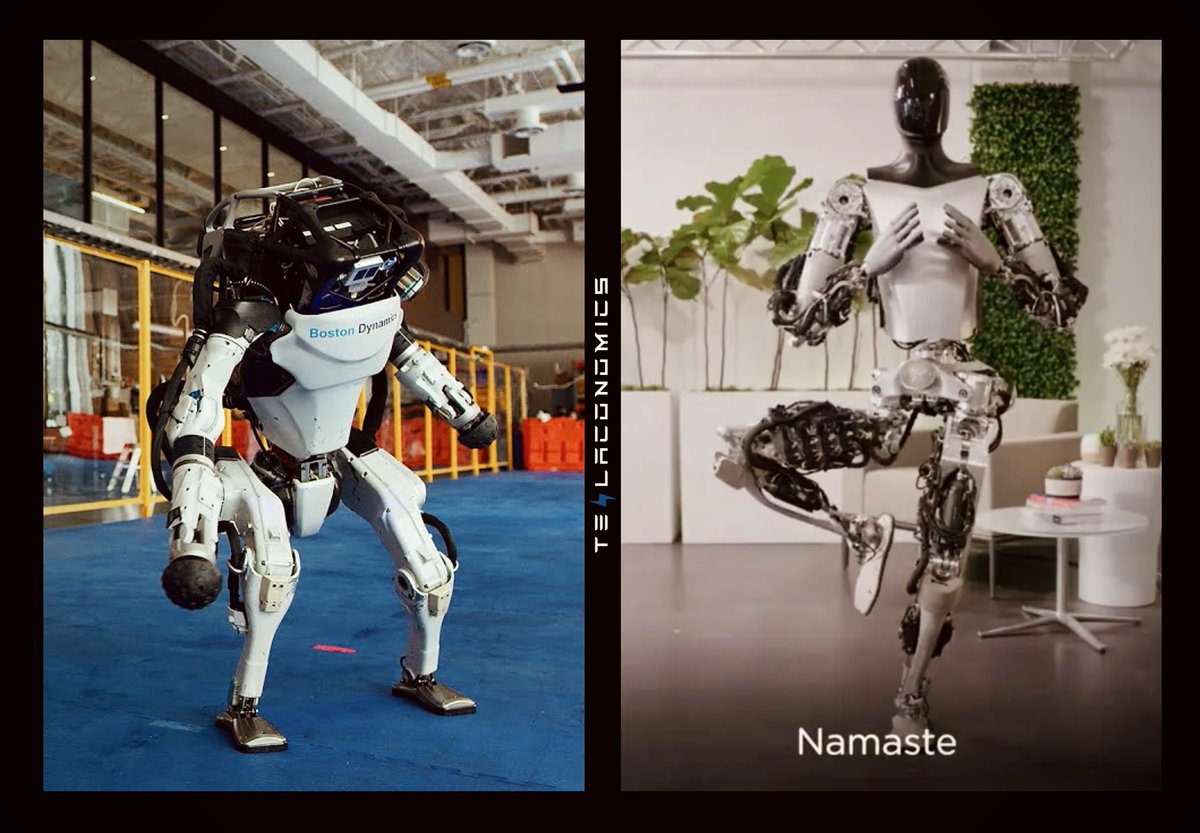
Anyone that thinks Boston Dynamics is way ahead of Tesla, need to dig underneath the skin of how these companies are approaching AI/robotics and what it means long-term.
Boston Dynamics is often seen as the company that is ahead of Tesla for its robots that can perform many different remarkable, complex tasks. But if you see what’s happening behind the scenes, it’s filled with an extensive amount of carefully written & fine-tuned code. This meticulous programming allows their robots to navigate environments, balance on challenging terrains, and even dance w/ precision. Their achievements in robotics are undeniably impressive, stemming from years of dedicated research & development. However, all of the bot's actions are handled & supported through hardcore lines of complex code for specific tasks.
On the other hand, Tesla's approach with Optimus, is distinctively different. Instead of relying on complex lines of predetermined code, Optimus leverages the power of neural networks. By feeding videos into its neural system, Optimus learns, adapts, & evolves, much like a human brain, starting from a baby. This approach emphasizes real-world learning & adaptability, allowing the robot to perform tasks without needing specific lines of code for each individual action.
It's like the difference between memorizing a set of directions to a destination (Boston Dynamics) and understanding how to read a map (Tesla). While both methods get you where you need to go, the latter equips you with the ability to navigate unfamiliar terrains and adapt to unexpected roadblocks.
Both Boston Dynamics & Tesla are shaping the future of robotics in their unique ways. But it's essential to recognize that their approaches are completely different in the realm of AI. One emphasizes precision + control through intricate coding, while the other leans into adaptability + organic learning via neural networks. Both are paths forward, yet they form different pictures of the future of artificial intelligence.
@SamanthaBahna Opens up a whole new world, especially to veteran teachers who may be stuck on the same hampster wheel they’ve been on since the beginning. It’s definitely a game changer when it comes to disrupting classrooms!
A5: If children do not see themselves they fall victim to the belief that they are less than. Diversity in literature cultivates a positive self-identity, boosts self-esteem and gives students a sense of belonging. #njlibchat
Q5: Reflect on this statement: "If children never see themselves reflected in literature, they receive the message that they are not important to society." #NJLibChat
Click the QUOTE RETWEET button & reply with your answer. Don't forget to use the hashtag!
A4: Some books I have read about diversity are ‘All are Welcome” by Alexandra Penfold, ‘The Proudest Blue’ by S.K. Ali, ‘Eyes that Kiss in the Corners’ by Joanna Ho. #njlibchat
Q4: Name a few books that you have read that deal with diversity. Diversity can include stories that focus on different countries, race, religion, LGQBT, etc. #NJLibChat
Click the QUOTE RETWEET button & reply with your answer. Don't forget to use the hashtag!
A3: I look for authenticity and accuracy by researching the culture and authors background. I look for signs of stereotyping or cultural appropriation and the visual representations. I look at reviews, recommendations, and compare multiple sources. #njlibchat
Q3: When choosing a culturally diverse children's book to read to your students, how do you assess it for authenticity and accuracy? #NJLibChat
Click the QUOTE RETWEET button & reply with your answer. Don't forget to use the hashtag!
A2: Culturally diverse children’s literature is important in libraries because it fosters understanding, respect, and inclusivity from a young age. It allows children to develop positive attitudes toward people of all races.#njlibchat
Q2: Why is culturally diverse children's literature so important in our schools, particularly school libraries? #NJLibChat
Click the QUOTE RETWEET button & reply with your answer. Don't forget to use the hashtag!
A1: Exposure to multicultural literature makes children feel seen, heard, important, and equal. It prepares students for a diverse world and fosters inclusive behaviors and attitudes. It encourages students to think critically about the world around them. #njlibchat
Q1: How does exposure to multicultural literature benefit children’s thought processes about race? #NJLibChat
Click the QUOTE RETWEET button & reply with your answer. Don't forget to use the hashtag!
Welcome to tonight's "Children’s Literature for a Diverse Society" Twitter chat (#NJLibchat)!
Please state your name, your occupation, and where you are from!
Click the QUOTE RETWEET button & reply with your answer. Don't forget to use the hashtag!