kefenimi camız kaymağından biçsinler
üstümü de pirinç pilavıynan örtsünler
ayetini de tereyağıynan yazsınlar
gelen geçen takır ölmüş desinler yekte
yekte yavrum yekte, pastırmalar tekte
ne olursa olur, delikanlılıkta
İstanbul'da dolaşan devasa martılar ayrıca istilacı bir tür. Çöplükler ve bilinçsiz besleme nedeniyle haddinden fazla büyük durumdalar. Güvercinleri, kumruları ve serçeleri avlıyorlar. Karabaş Martı gibi daha ufak yerel martı türlerinin yerini alıyorlar. Bu konuda da belirli tedbirler alınması lazım gerçekten.
dostlarınan da bozuk gitti aramız
düşmana yeke yek varma sıramız
biz düşmana da sardırmayız yaremiz
kendi yaremiz saranlardanız
https://t.co/6wpgtB7YRM
Kurukahveci son yıllarda alışık olduğumuz rio minas tipinden vazgeçerek yeni blendler denedi ve şuan piyasada bulunan blend gayet güzel. Espresso bazlıların / filtrenin yeri ayrı, türk kahvesinin yeri ayrıdır. Boklamanın alemi yok.
3. nesil kahveciler nitelikli çekirdeklerle türk kahvesi deniyorlar, fena da olmuyor. Fakat kurukahveci'nin blendi yine açık ara en iyisidir. Kurukahveci ve 3. nesillerin dışında türk kahvesi üretenler hala eskiden alışık olduğumuz rio minas tipi leş bok çekirdeği kullanıyor.
Kahvenin basınçla hazırlandığı yöntemleri tercih ediyorum şahsen. Ancak Türk kahvesine haksızlık etmemek lazım çünkü ülkemizdeki çekirdekler üçüncü sınıf maalesef. Malzeme kötüyse en iyi yöntemle bile tatmin olacak bir tad bulamazsınız. Suç ithalatçıda kısacası yöntemde değil.
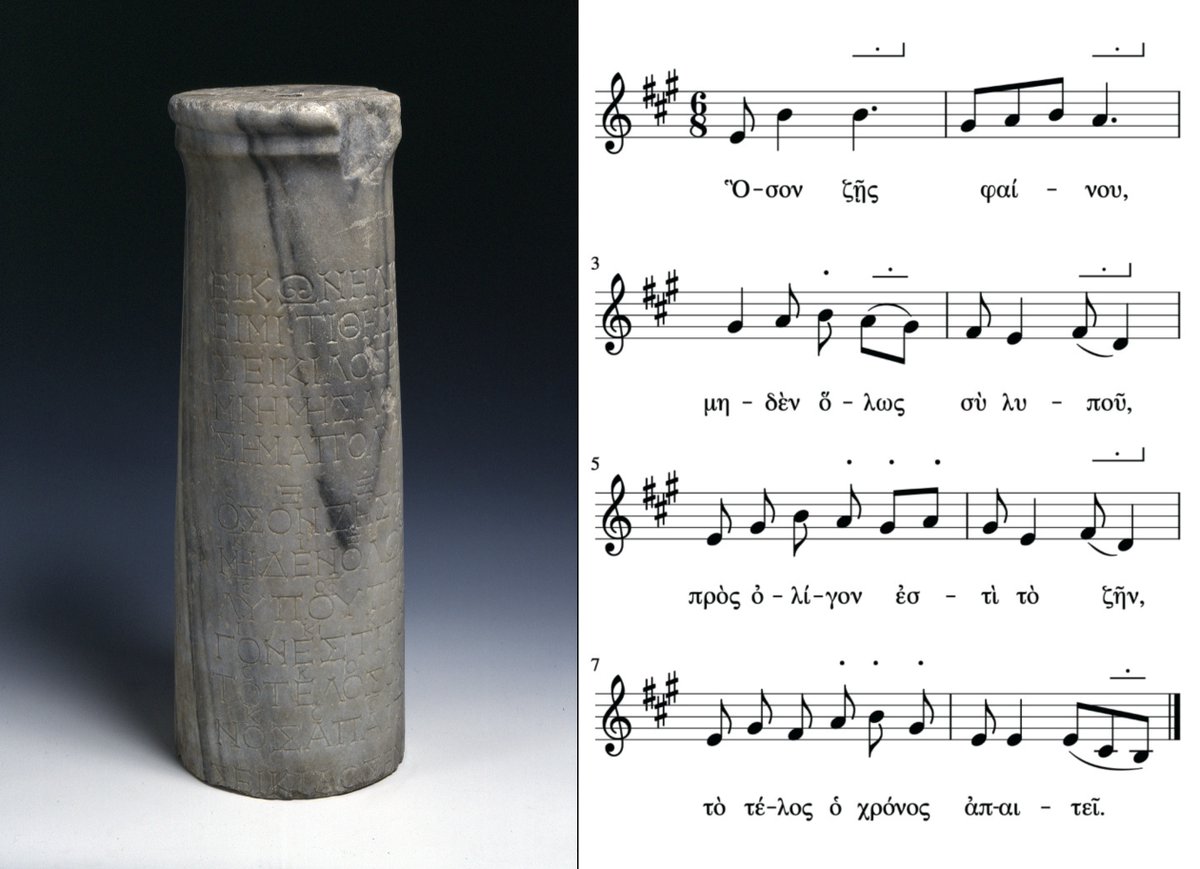
Seikilos epitaph stele. Culture: Ancient Greek. Place of origin: Tralles near modern Aydin (today western-Turkey). Date:1st to 2nd century AD. Now on display at the National Museum of Denmark, Copenhagen.
Around 1883 an Irish railway engineer named Edward Purser found the stele near Aydın while working on the Smyrna–Aydin railway (Asia Minor, modern-day Turkey). He took it home as a curiosity. Because the base was broken and unstable, the lower part of the column was sawn flat so his wife could use it as a stand for her flowerpots. One line of the inscription was ground away, taking with it the lower part of the dedication so that only the fragment “Seikilos Euter–” remained visible on the stone.
Scholars know the missing words of this line (including the conventional verb zei, “is alive”) only thanks to an earlier paper rubbing that'd been made before the stone was trimmed.
From that garden in Asia Minor, the stele set out on a long journey. After passing through the hands of private collectors, it entered the home of the Dutch consul in Izmir (Smyrna) in 1922. For decades specialists thought the stone had vanished, until the National Museum of Denmark quietly acquired it in the 1960s and revealed that the little column from Tralles was still very much alive in a Copenhagen display case.
What makes this small monument extraordinary isn't only the text, but the fact that we can still hear its tune. The notation above each syllable tells us the relative pitch and basic rhythm, so modern musicians can sing and play the song. The melody moves in gentle steps within a narrow range, in a scale that sounds surprisingly familiar to modern ears, close to what we'd call a major key. Musicologists have noticed that the tune often rises and falls with the natural pitch of the spoken Greek accents, so the shape of the language and the shape of the melody closely follow each other.
Selimiye Camii hatalı kalem işlerinden tutun, tarihi kıyafetlere varana kadar görsel kimliğimiz göz göre göre tahrip ediliyor. Öyle ki, benim yaptığım minyatürler bile geleneksel stile daha yakın.