I gotta say...
I keep asking Americans questions about the U.S. because it's such a big country, and I genuinely want to understand it better.
Every single time, people jump into the replies with stories, facts, local history, recommendations... and they actually seem happy to share them.
It's honestly way more fun than reading a textbook or Googling.
In Japan, asking questions sometimes gets you, "Just look it up," or people make you feel dumb for not knowing.
Here, I ask one question and suddenly I've got hundreds of people teaching me something new.
ngl... I actually look forward to opening my replies every day.
Y'all are awesome.
Okay this might sound silly but… 🤔
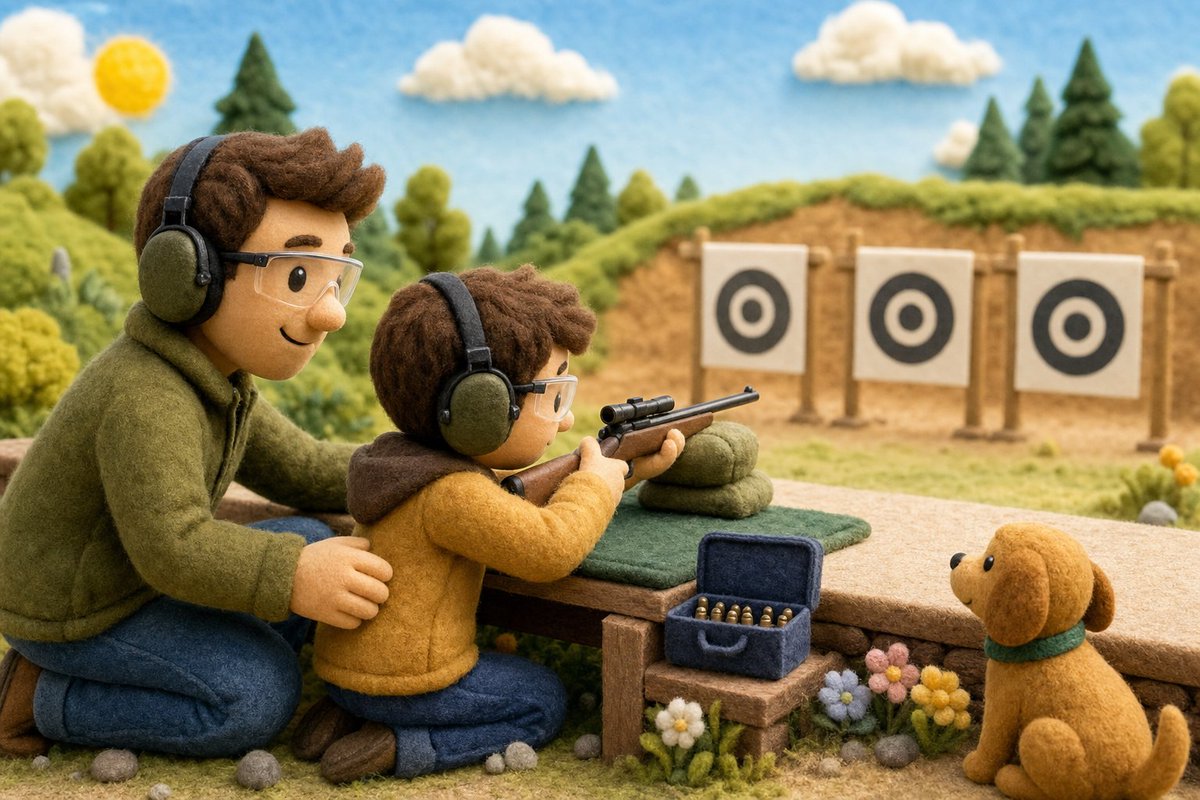
I saw Americans posting date ideas
that included… a gun range??
In Japan that would be
a national news headline.
Is going to the range
actually a normal weekend activity?
A) Yes, chill
B) Only certain places
C) Bro what 😂
Reply + your state
Genuine question from Japan 🇯🇵
I heard that on quiet American back roads,
people wave at every car that passes.
Even strangers.
Even if you'll never see them again.
In Japan, waving at random cars
would feel… extremely weird.
Is this still a real thing?
And what does the wave actually MEAN —
hello, courtesy, "I see you," something else?
I'd love to hear it from people who actually do this.
I always thought America was one country 🇺🇸
Then every reply was:
"not in MY state."
Taxes different.
Roads different.
Snacks different.
Even the WEATHER personality is different.
Is it fair to say the US is
50 small countries under one flag?
Quote with your state — prove me right or wrong 🙋
In Minnesota, in February, healthy adults pay money to jump into a frozen lake for charity.
They cut a hole in the ice. They park an ambulance next to it. Then they line up in swimsuits and laugh.
I understood this as purification. We have something like it at home, in cold water, in winter, and a man does not enter it casually.
So while four hundred Minnesotans in costumes shrieked and sprinted back out of the water after two seconds, I walked in slowly, up to my chest, turned to face the shore, closed my eyes, and began to breathe.
The cheering stopped.
Somebody said, very clearly, "he's still in there."
I stayed in for one minute and forty seconds.
I would like to explain that this was not bravery. My legs had simply resigned. I could not think of a way to leave that would not look like fleeing, and so I remained, out of manners, until two firefighters waded in and escorted me out by the elbows like a very calm stolen painting.
The shore lost its mind.
An old man in a Vikings helmet screamed "THIS GUY GETS IT." A woman yelled "IS HE OKAY," and then immediately, "DON'T YOU DARE STOP HIM." Someone wrapped me in a blanket that said HERO on it, which I do not believe was made for this occasion. The announcer said my name three times and got it wrong three different ways.
I could not feel my hands for two hours.
I am doing it again next year, and I am staying in for two minutes.
Every child on the street dropped everything and ran toward the music.
I did not know what the music meant. I only knew that children were running toward a sound, and that not one adult was stopping them.
So it was a drill.
I ran too. I ran hard. I passed a boy on a scooter. I arrived first, stood at attention at the driver's window with my hands at my sides, and waited to receive instructions and, if necessary, to carry someone.
The driver looked at me for a while.
He said, "You want a Choco Taco or not."
The children arrived behind me and formed a line, because I was standing in a line, and I was the front of it, and this is apparently how lines work in every country on earth.
A father across the street called out, "Buddy, you okay?" and then, without waiting for the answer, "get me one too."
I bought fourteen ice creams. I did not plan to buy fourteen ice creams. I simply could not think of any way to stop that was more dignified than continuing.
Then I handed them out one at a time, with both hands, to children who did not know why this was happening but could tell that it was serious.
The truck stops at my house first now.
In Japan, desecrating a foreign flag is a crime under the Penal Code, but insulting or damaging our own Hinomaru (Rising Sun flag) gets you off scot-free.
When we try to fix this obvious double standard
and make desecrating Japan's flag a crime too,
left-wing politicians and media erupt in fierce opposition.
If you stomp on or burn the American Stars and Stripes,
you should leave the USA.
By the same logic, anyone who disrespects or damages
Japan's Hinomaru should leave Japan.
Oppose Muslims? Then go live in an Arab country or Africa.
Can't submit to China? Then go live in China.
It's all the same principle of reciprocity.
Double standards are ridiculous.
Don't you agree? 🇯🇵
Field report.
This morning I seized the number one position on the American bestseller list. I did not know there was a hill to take. There was. I took it.
I am told this makes me, in the eyes of this nation, the foremost humorist in my category. I accept the rank with total seriousness. I have already begun fortifying the position. My only weapon is more stories, so I am forging them now.
To the great authors on this list with me: worthy opponents, every one. I salute you. I did not come to defeat anyone. I came for the free chips. The list was simply on the way.
To the army that carried me here, one reader at a time: I see you. You will be honored in the next hundred stories.
The samurai holds the summit. He is not entirely sure what the summit is. He is defending it anyway.
Read free on Kindle Unlimited.
https://t.co/xY1ZDuueeY 🏯⚔️
A Dunkin' cashier corrected my Japanese.
I flew from Tokyo to Newark to practice English.
At the counter, I ordered one donut in English, every word rehearsed on the plane.
She replied in perfect Japanese.
Two years in Osaka, study abroad.
Startled, I answered in my politest keigo, Japan's formal speech.
She gently corrected it.
My keigo.
My language.
I flew six thousand miles to fail Japanese.
She gave me a free donut.
"For effort,"
she said.
In Japanese.