Exciting opportunity in my lab with @Fowler_JH, @EdNiBL + @MontagneLab for an in vivo postdoctoral researcher interested in microglia - microvascular mechanisms in Vascular Cognitive Impairment. Applications close Mon 27th Nov. See link for more info > https://t.co/Ckr5R4KXS1
#CancerNeuroscience work by the brilliant postdoc @Kathryn_RTaylor published (open access) today demonstrates that malignant gliomas #DIPG#GBM recruit mechanisms of synaptic plasticity to drive cancer growth. A thread… (1/ )
https://t.co/LnEYAoFP7G
What's that? The GEU is recruiting AGAIN!!
Really excited to team up with our colleagues @wtccmr@ProfJudiAllen@grencisgroup to recruit a Postdoc to drive development of new and exciting genetic tools to study Matrix Biology. https://t.co/BA6lSBwDp9
Transferrin Receptor Targeting Chimeras (TransTACs) 🧬
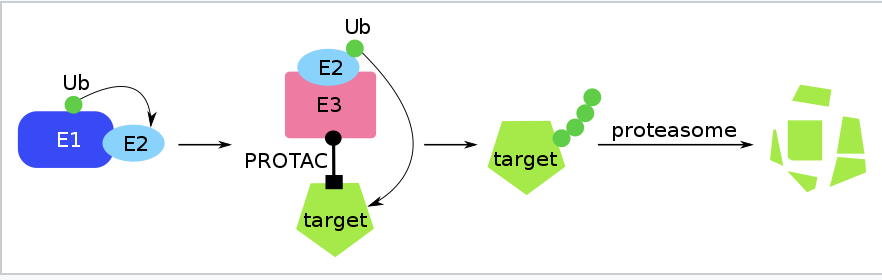
The field of targeted protein degradation is going through a renaissance. The core idea: use a bifunctional molecule to bring a protein in proximity to a degrader.
The first wave (PROTACs) primarily used E3 ligases as the degrader. They ubiquitinate the protein target, labeling it for degradation.
These have primarily been small molecules that target intracellular proteins.
What about membrane proteins?
There have been a few new protein degrader technologies designed with the goal of degrading targets that reside in the membrane—namely AbTacs and LYTACs—but the field is still evolving quickly.
A new preprint from the @xinzhoulab—the first preprint from their group—introduces a new idea:
Create a bi-specific antibody that targets a protein-of-interest (POI), and the Transferrin receptor 1 (TfR1).
Why TfR1?
1. It's up-regulated in cancer cells, which need lots of iron to proliferate. This can help with cancer targeting.
2. It has an insane recycling rate from the membrane.
By insane, I mean:
"TfR1 exhibits an average internalization rate of 500 molecules per cell per second (!!!), making it one of the fastest internalizing receptors known."
So the thinking is that this fast recycling will help to pull lots of the POI into the cell for targeted degradation.
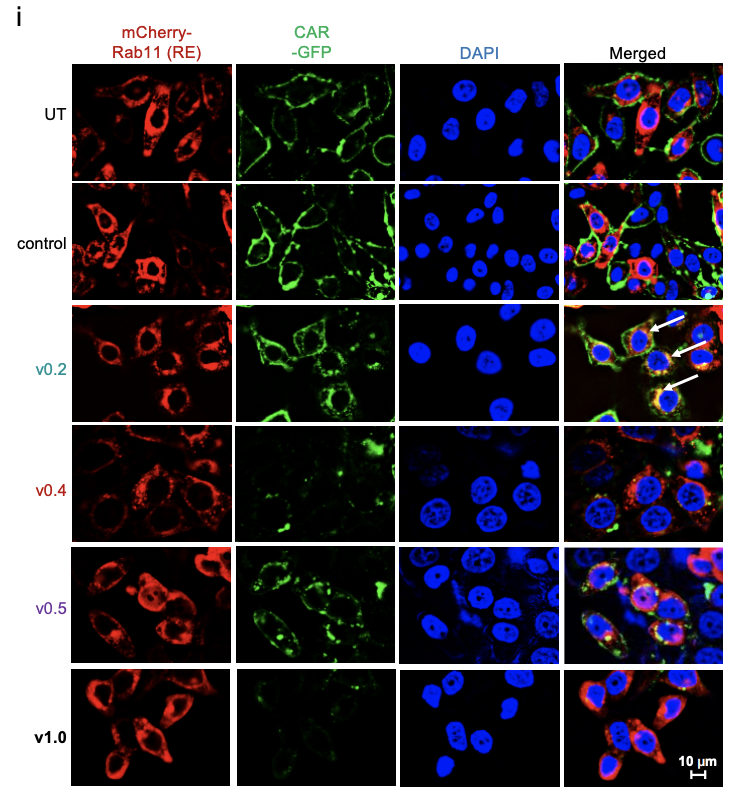
Some solid POC data for demonstrating the degradation of CAR receptors:
(Look at the lack of CAR present on the cell surface in v1.0 vs. the control.)
Very cool idea!
📣 We are hiring a research assistant to help us understand astrocyte interactions with the brain vasculature 💫.
Please apply if you have right to work in the UK. Researchers from underrepresented backgrounds in science are always encouraged!
https://t.co/ibixRRZrBC
Come work with us! We are recruiting for a research assistant (neuroimmunology) to help us optimise immune cell therapy for brain disease caused by faulty microglia https://t.co/DMFsaks4Br
Manchester Immunology is hiring! We are searching for a Professor of Immunology, who will help drive research and strategy in an amazing scientific, collegiate, and fun environment. Any informal enquiries, just DM or email me.
https://t.co/iyjENQXokD
📢Very important new work from Dr. Taylor Bertucci and @NeuralStemCells (and a little bit from us), improving #organoid differentiation consistency and QC 👇👇
https://t.co/aONy27plMO
🐁Preclinical stroke twitter people - are you aware of any repositories/databases for open sharing of (un)published data* from preclinical stroke studies? If not, would you use one if there was one? Please share as widely as possible 🙏
We have a couple of interesting Manager positions open in the Research Team at @ARUKscientist! If you or anyone you know are interested to have an informal chat about the roles, and working in the charity, please get in touch!
https://t.co/VLYYcvs8mB
🚨Exciting opportunity for a postdoc to join Prof Giles Hardingham's lab!
Drive a project aiming to determine how astrocytes change in response to Aß & tau pathology, the role microglia play in mediating these changes, & the consequences of the changes👉https://t.co/6oeOhXgJK8
🚨Opening today: £4,500,000 Blood Biomarker Challenge. Help us create the clinical and economic data that could help blood biomarkers be implemented in the UK. Deadline: Friday 29 Sept. Apply using this link 👇https://t.co/UT3PcXpceU
@ARUKscientist@AlzSocResearch @NIHRcommunity
Excited to share our new work on direct protein-based genome editing in primary cells. We termed it Peptide-Assisted Genome Editing (PAGE) CRISPR-Cas platform. This platform allows rapid and effective editing of primary cells with minimal toxicity. https://t.co/tRdFwotwcW
And we're recruiting again! We're looking for someone to start a new service arm in our core facility, for the generation and #CRISPR editing of #stemcells, including iPSCs! More details below, RTs appreciated @FBMH_UoM@UoMStaffNet .
https://t.co/57BqE2yQDE
Prof Paul Neeson's lab from @PeterMacRes have made advances in CAR T-cell therapy which is showing great promise in solid tumours. Published today in Sci Trans Med https://t.co/zcF8AUhNYc This new innovation uses younger, stem-like T-cells rather than conventional T-cells.