@Loky__86 @MariePatrice2 Loneliness carries the same mortality risk as a five pack a day cigarette habit. Helping someone with loneliness is a life-saving act.
I'm a cardiologist. For most of my career, when a patient with atrial fibrillation asked about coffee, the reflex answer was: cut it out.
The American Heart Association just published a scientific statement saying we were wrong.
Released today in Circulation. The conclusion: up to 400mg of caffeine a day — about five 8-ounce cups of coffee — is safe for most adults, and is associated with lower risk of coronary heart disease, stroke, heart failure, atrial fibrillation, hypertension, and type 2 diabetes.
Not neutral. Lower.
Think about how strange that is. Caffeine is a stimulant. It transiently raises heart rate and blood pressure. Generations of cardiologists — myself included — told palpitation patients and AFib patients to quit. The acute effect felt so obviously bad that nobody questioned it.
The long-term data says the opposite.
Some details worth knowing:
The strongest signal is metabolic. Coffee's association with lower type 2 diabetes risk is the most consistent finding in the entire literature, and it holds for decaf too — which tells you the benefit isn't only the caffeine. It's the chlorogenic acids and polyphenols in the bean.
The blood pressure finding is genuinely odd. One to three cups a day was associated with a slightly higher risk of developing hypertension in people with optimal pressure — but more than three cups was associated with lower risk. That's the kind of non-linear result that should make everyone humble about simple stories.
Energy drinks are not coffee. The statement draws a hard line. Energy shots can pack three to four times more caffeine per ounce than brewed coffee, and high doses are linked to arrhythmias even in healthy adults under 30. Same molecule, entirely different risk profile.
Your additives can erase the benefit. The statement is explicit that this applies to coffee without added sugars and fillers. A 400-calorie sweetened coffee drink is a dessert wearing a lab coat. You cannot sugar your way to cardiovascular protection.
And the honest caveat, which the AHA itself leads with: this evidence is overwhelmingly observational. Healthier people may simply drink more coffee. That's why the AHA didn't include caffeine in its 2026 dietary guidance at all — the data isn't rigorous enough for a formal recommendation. And individual response varies enormously based on genetics, habitual intake, and comorbidities.
So here's my practical read.
If you drink 2-5 cups of black coffee, feel fine, and sleep well — the evidence no longer supports telling you to stop. If it gives you palpitations, anxiety, insomnia, or reflux, your body is giving you better data than any cohort study.
Twenty years of "cut back on the coffee" just quietly ended.
Sometimes the best thing medicine can do is admit what it got wrong.
A Japanese immunologist spent 20 years proving that the chemicals trees release into the air walk into your bloodstream, hunt down your stress hormones, and arm your immune system in ways no therapist or pharmaceutical has ever matched, and most of the data has been sitting in Japanese medical journals for two decades waiting to be translated.
His name is Qing Li.
He is a clinical professor at Nippon Medical School in Tokyo and the president of the Japanese Society of Forest Medicine. The Japanese government has been funding his research since 2004, and the body of work he has produced is the reason forest bathing is now an officially prescribed clinical therapy in Japan and Korea.
The story actually starts in 1982, when the Japanese Ministry of Agriculture, Forestry and Fisheries coined the term shinrin-yoku to describe the practice of slow, mindful walking in a forest. They did it for a practical reason.
Japan was urbanizing fast, stress-related illness was climbing, and the country had thousands of square kilometers of forest sitting unused. The idea was to give people a reason to walk into the trees... They had no idea what was actually happening to the human body during those walks until Qing Li ran the first proper experiment in 2005.
He took twelve healthy adult men on a three-day, two-night trip to a forest park. They walked for a few hours each day. Nothing strenuous. No prescribed routes or breathing exercises. They simply walked slowly through the trees, breathing the air, looking at the forest.
Li drew blood and urine samples before the trip, on the second day, on the third day, on day seven after returning home, and again on day thirty.
The numbers that came back from the lab were not what anyone expected.
The activity of a specific type of immune cell called the natural killer cell, which is the cell your body uses to hunt down cancer cells and virus-infected cells before they can spread, had jumped by roughly 50 percent during the forest trip. The actual number of natural killer cells circulating in the bloodstream had increased significantly.
Three different anti-cancer proteins that those cells produce, called perforin, granzymes, and granulysin, had all risen sharply. And the effect did not disappear when the men went home. The immune boost was still measurable on day seven and was still partially present on day thirty.
Two hours a day in a forest had upgraded the immune system for a full month.
Li ran the same experiment with women a year later and found nearly identical results. Then he ran it with a control group who took a three-day trip through an urban area with the same amount of walking, the same hotel quality, and the same diet.
The urban group showed no measurable change in natural killer cell activity at all. The forest was doing the work, not the vacation.
The mechanism turned out to be a class of airborne molecules called phytoncides. Trees produce these compounds to defend themselves against insects, bacteria, and fungi. Pine, cedar, oak, and cypress trees release them in particularly large amounts, especially in warmer weather and after rainfall.
When you walk through a forest, you are inhaling those molecules into your lungs and absorbing them through your skin, and once inside your body they appear to directly stimulate the production and activity of the very immune cells Li was measuring in his lab.
Roughly 50 percent of the health benefit of a forest walk, according to Li's data, comes from the chemistry of the air itself. The other half comes from what the forest is doing to your nervous system.
This is where it stops being only about the immune system and starts being about stress.
A separate Japanese research team measured cortisol, the body's main stress hormone, in 84 participants across 35 different forest sites. They drew samples before and after a 30-minute walk in each forest and compared them to control walks in matched urban environments. The cortisol levels of the people who walked in the forest were lower than the cortisol levels of the people who walked in the city by a significant margin. Their heart rates were lower. Their blood pressure was lower.
The activity of their parasympathetic nervous system, which is the part responsible for rest and recovery, had gone up. The activity of their sympathetic nervous system, which is the part that drives fight or flight, had gone down.
Then a researcher at the University of Michigan named MaryCarol Hunter ran the cleanest version of this experiment ever done. She recruited participants from a city and told them to take a nature pill three times a week for eight weeks.
They were free to choose the time, the place, and the duration of the nature experience, as long as it was outside, in daylight, and free of phones, conversations, and aerobic exercise. They sent her saliva samples before and after each session so she could measure cortisol changes accurately and rule out the normal daily drop in stress hormones that happens to everyone.
The result was that participants experienced a 21.3 percent drop in cortisol per hour spent in nature, with the biggest payoff happening between minutes 20 and 30 of the walk.
After that, the cortisol kept dropping, but more slowly. The threshold dose for measurable stress relief was just 20 minutes outside in something that looked and felt like nature.
What none of this means is that nature is a substitute for therapy or for medication when someone genuinely needs them. Therapy treats different things than a walk does, and Li himself has been careful in interviews to call forest bathing a complementary intervention rather than a replacement for clinical care.
But what the research has settled is that the human body has a physiological response to being among trees that operates on the same biological systems modern medicine is trying to reach with drugs and clinical protocols, and that response is fast, measurable, and free.
The strangest part of Li's work is the implication he keeps repeating in interviews. The average person now spends more than 90 percent of their life indoors. Their cortisol stays elevated. Their natural killer cells stay sluggish.
Their parasympathetic nervous system rarely gets a chance to take over. The system that was tuned by millions of years of life under a canopy of trees is being asked to run permanently inside a box made of drywall and screens.
Your body has not forgotten what it is supposed to do in a forest. It is waiting for you to walk into one.
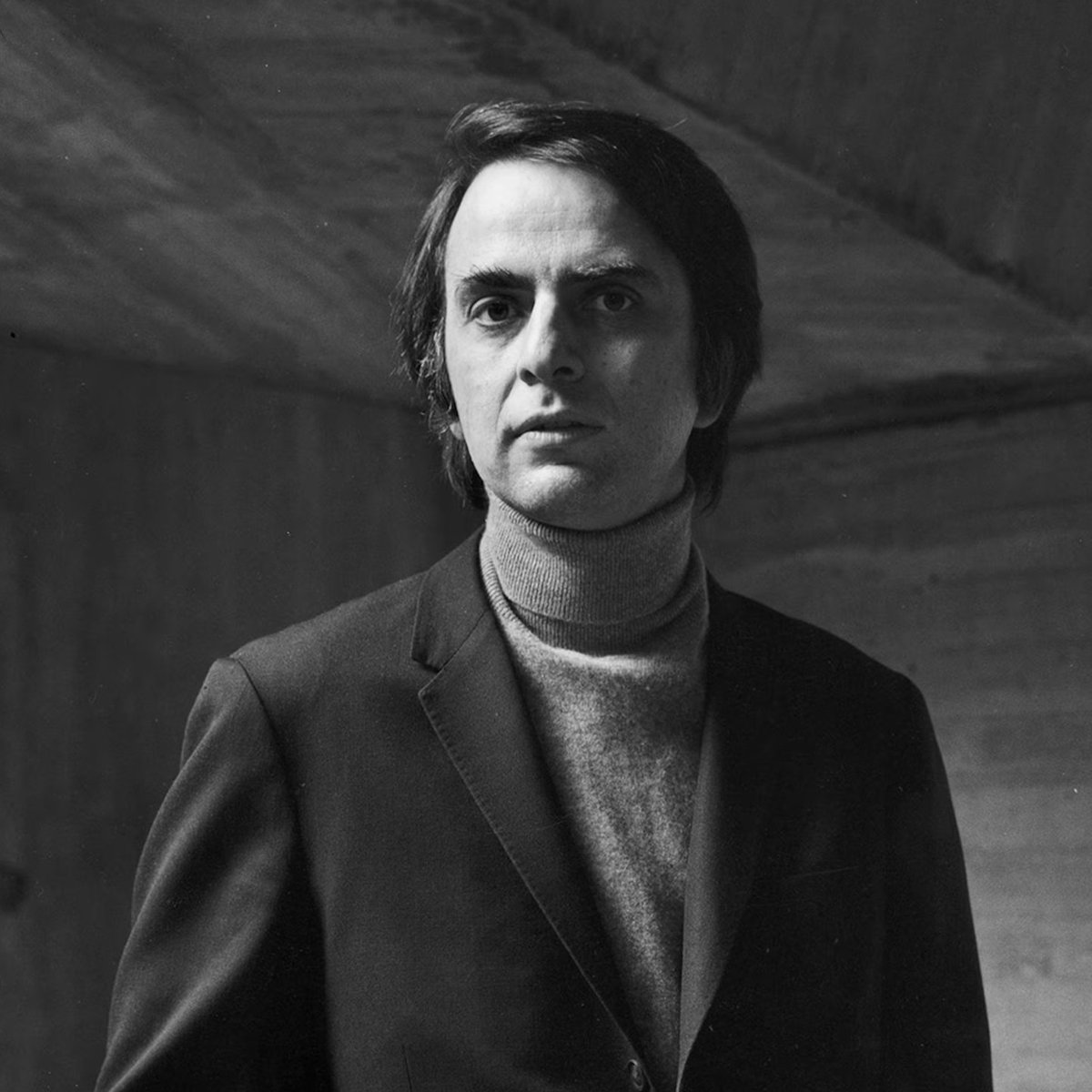
“I have a foreboding of an America in my children's or grandchildren's time -- when the United States is a service and information economy; when nearly all the manufacturing industries have slipped away to other countries; when awesome technological powers are in the hands of a very few, and no one representing the public interest can even grasp the issues; when the people have lost the ability to set their own agendas or knowledgeably question those in authority; when, clutching our crystals and nervously consulting our horoscopes, our critical faculties in decline, unable to distinguish between what feels good and what's true, we slide, almost without noticing, back into superstition and darkness...
The dumbing down of American is most evident in the slow decay of substantive content in the enormously influential media, the 30 second sound bites (now down to 10 seconds or less), lowest common denominator programming, credulous presentations on pseudoscience and superstition, but especially a kind of celebration of ignorance”
― Carl Sagan, The Demon-Haunted World: Science as a Candle in the Dark
“AND YOU STILL DARE TO OPEN YOUR MOUTH…”
Sasha Legerman: This is too accurate not to share.
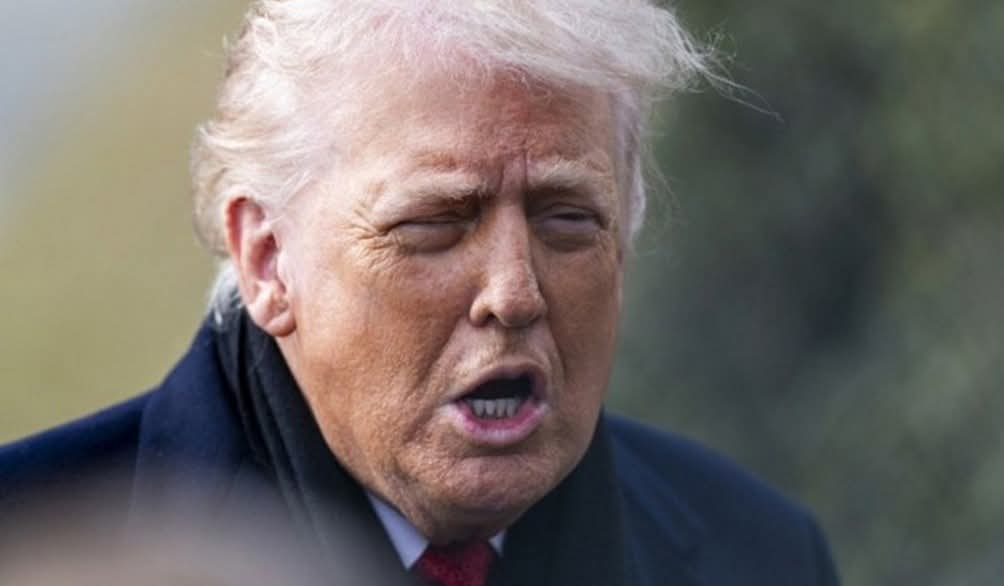
This Australian’s response to Trump’s rant that “NATO does nothing for America” is absolutely devastating:
“Mate. You run a country where 600,000 homeless people will sleep on the streets tonight.
A country where 40% of adults can’t cover a $400 emergency without borrowing money.
A country where insulin costs more than a car payment, and people ration it just to stay alive.
A country where medical debt is the number one cause of bankruptcy.
A country where women die in hospital parking lots because doctors are too afraid of abortion laws to treat miscarriages.
You imprison more of your own citizens than any country on Earth.
More than China. More than Russia. More than North Korea.
In the land of the free, 2 million people sit in cages, and a quarter of them haven’t even been convicted of anything.
They’re simply too poor to afford bail.
Your life expectancy is declining. You’re the only developed nation where that’s happening.
Your infant mortality rate is worse than Cuba’s.
Your children practice active shooter drills between math and English classes while you sell defense stocks to your friends.
Your minimum wage hasn’t changed in 15 years.
Your teachers work two jobs, your veterans sleep under bridges, and you just spent a trillion dollars flattening a country that never attacked you.
And now a convicted criminal — found liable for sexual abuse, defending a pedophile, sleeping with a porn star, and running the biggest dumpster-fire campaign since the Taliban — is thanking you for yet another disaster.
And you call Greenland badly governed?
Greenland has universal healthcare. Free education. One of the lowest incarceration rates in the world.
Nobody there goes bankrupt because they got sick. Nobody dies in a waiting room because insurance refused treatment.
‘NATO wasn’t there when we needed them.’
When exactly was that, champ?
September 11?
Because NATO invoked Article 5 for the first and only time in history FOR YOU.
Soldiers from dozens of countries deployed, fought, bled, and died in Afghanistan FOR YOU.
Australia wasn’t even in NATO, and we still showed up. For twenty years.
And then you left at 2 a.m. without telling anyone and left everybody else to clean up the mess.
You don’t care that a great nation is being terrorized by your friend, and you haven’t shown it a single ounce of sympathy.
So maybe before calling other countries badly governed, take a look at your own backyard, you aluminum siding salesman with a spray tan.
The only thing badly managed in this picture is your damn mouth.
And you still dare to lecture the rest of the world?”
Stephen Colbert was awarded the Robert F. Kennedy Human Rights Award for his advocacy for free speech and speaking truth to power. A fitting honor for a champion of our democracy.
RETWEET to congratulate Colbert on this honor!
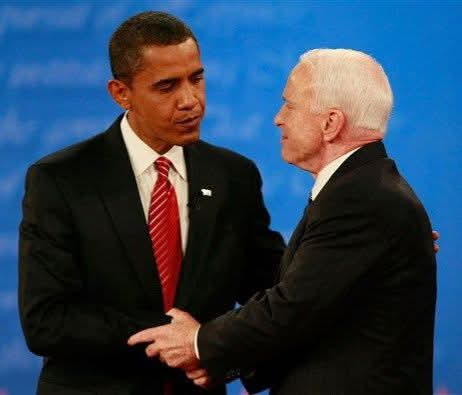
"Circa early 2018, somewhere in the quiet of his beloved Cornville, Arizona ranch, John McCain — living with the knowledge that his days were growing shorter — made a decision that was so perfectly, mischievously, achingly him that it made the whole country smile through their tears when they finally heard about it: he picked up the phone and called Barack Obama, the man who had defeated him for the presidency a decade earlier, and asked him to speak at his funeral. Obama later said that when that call came, he felt 'sadness and also a certain surprise' — and then, with the warmth that defined him, he recognized exactly what McCain was doing, telling mourners at the Washington National Cathedral on September 1, 2018 that the invitation showed McCain's 'irreverence, his sense of humor, a little bit of a mischievous streak' — because, as Obama put it to a cathedral that erupted in laughter through their grief, 'what better way to get a last laugh than to make George and I say nice things about him to a national audience?' It was John McCain's final act of political theater, and it was genius — choosing the two men who had each defeated him for the presidency to stand before the nation and celebrate his life, sending a message louder than any speech he could have given himself: that in America, rivalry and respect are not opposites, that the man you run against can still be the man you trust with your legacy, and that decency is not weakness but the most durable form of strength. Obama stood at that altar and told the packed cathedral that McCain had 'made this country better,' that he had made Obama a better president, and that when all was said and done, despite every disagreement, 'we never doubted the other man's sincerity or the other man's patriotism' — and in the front pew, Cindy McCain wept, because her husband had arranged, from the very edge of his life, one last beautiful lesson in what it means to be an American.
Are you actually seeing this post?
Ever since Donald threw his latest unhinged temper tantrum about me (again), folks have been telling me I've mysteriously vanished from their feeds. It appears the deeply unwell narcissist is so terrified of dealing with me in Congress that he’s begged @elonmusk to throttle my account.
This kind of pathetic desperation is nothing new. But I need YOU to help me beat Donald and Elon at their own game. Don't let a malignant sociopath and his billionaire enabler silence us.
Please like, retweet, and click the link below to support my campaign. Let's give him something to really cry about.
https://t.co/NiW1Ro2kZa
Mark Cuban just compared the most powerful AI on earth to a two-year-old in a high chair.
The toddler won.
Cuban: “A two-year-old on a high chair with a sippy cup knows that when she pushes that cup off, Mom’s going to come running and the baby’s going to be laughing its ass off. It knows the consequences of its actions.”
Then he named the thing no one building AI wants to say out loud.
Cuban: “If you ask ChatGPT or any of them something and it gives you bad advice, it has no idea what’s going to happen because you took that bad advice.”
A system that passed the bar exam. Aced medical boards. Still can’t grasp what a child who can’t tie her own shoes already knows.
The child understands cause and effect.
AI understands pattern and prediction.
They sound similar.
They are not even close.
A pattern tells you what comes next in a sequence.
Consequence tells you what happens to the person standing at the end of it.
One is math.
The other is meaning.
Cuban went further.
Cuban: “If you were blind at an intersection and had the choice between your seeing-eye dog or holding up a phone with AI, I’m taking the seeing-eye dog every time.”
Because the dog understands something no language model on earth understands.
Stakes.
The dog knows a wrong step means its owner gets hurt.
The app knows a wrong step means a revised output.
Hundreds of billions spent building systems that can write, reason, and diagnose.
Not one of them loses sleep when the answer is wrong.
A toddler pushing a cup off a tray runs a tighter feedback loop than every foundation model combined.
The child doesn’t just predict the outcome.
The child wants the reaction.
Pushes the cup off the edge, watches it fall, watches Mom come running.
Laughs.
Because the child knew what would happen before the cup ever hit the floor.
That gap between prediction and consequence isn’t a bug.
It’s not getting patched in the next update.
It is the unsolved problem of artificial intelligence.
We didn’t build minds.
We built mirrors.
Mirrors don’t flinch when you walk into traffic.
BREAKING: Donald Trump just got hit with a brutal reality check — and it’s exactly what working Americans have been feeling for years.
A new Gallup poll shows 55% of Americans say they’re getting poorer....the WORST number in 25 YEARS. Let that sink in. Worse than the pandemic. Worse than the financial crisis. And it’s been rising FIVE YEARS STRAIGHT.
This is Trump’s so-called “golden age.”
While he brags about factories and billionaires, everyday people are drowning. Gas prices have surged past $4.00, families are cutting back, and nearly 80% of Americans are changing how they live just to survive.
And why? Reckless tariffs. A costly war with Iran. Policies that hit working people first and hardest.
Even Republicans are starting to admit the truth: affordability is becoming a political nightmare heading into the midterms.
Trump promised prosperity. Americans got higher prices, shrinking paychecks, and economic anxiety at record levels.
This isn’t a “short-term pain.” This is a pattern.
And voters are noticing.
Please Like and Share!
https://t.co/4CAUQEcpOk
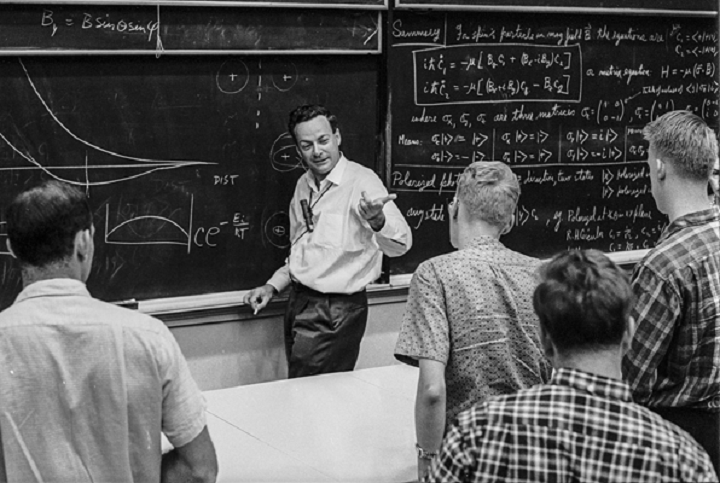
In 1964 a soon-to-be Nobel laureate walked into a Cornell auditorium and spent seven evenings explaining the nature of physical law to a general audience. Bill Gates paid the BBC out of his own pocket to keep those recordings on the internet forever.
His name was Richard Feynman, and the lectures are called The Character of Physical Law.
He was 46 years old when he gave them. He would win the Nobel Prize in physics the following year for his work on quantum electrodynamics. The BBC filmed every session. The tapes then went into distribution at universities through the 1970s, disappeared in the 1980s, and stayed lost until Gates licensed them for a Microsoft research project in 2009 specifically so they would never go offline again.
Here is the framework buried inside those lectures that changed how I think about knowledge itself.
In the final lecture of the series, titled Seeking New Laws, Feynman stops the philosophy and tells the room exactly how scientific discovery actually works. Not in metaphors. In three sentences.
He says in general we look for a new law by the following process. First we guess it. Then we compute the consequences of the guess to see what would be implied if the law we guessed is right. Then we compare the result of the computation directly to nature, to experiment, to observation, to see if it works.
And then he delivers the line that has outlived him by forty years.
If it disagrees with experiment, it is wrong. In that simple statement is the key to science. It does not matter how beautiful your guess is. It does not matter how smart you are, who made the guess, or what his name is. If it disagrees with experiment, it is wrong. That is all there is to it.
Read that again slowly.
He is not describing physics. He is describing the only intellectually honest way to hold any belief about the world. The method is indifferent to credentials, indifferent to elegance, indifferent to how much you want the idea to be true. Reality is the only referee, and reality never explains its rulings.
The second thread running through the whole series is the one Feynman kept circling back to across all seven nights.
He argued that the deepest beauty of a physical law is not in what it depends on but in what it refuses to depend on. Newton's law of gravitation works the same way on a falling apple, a moon in orbit, and a galaxy at the edge of the observable universe. That is not a detail. That is the entire point. A law that only works in one place is not a law. It is a coincidence. The test of a real generalization is whether it survives contact with situations its inventor never imagined.
The part that hits hardest comes in the opening lecture on gravitation.
Feynman is walking the audience through how Newton assembled the theory, and he pauses to say something most scientists never say out loud.
The importance of a physical law, he tells the room, is not how clever we were to find it. It is how clever nature was to pay attention to it. The universe did not have to be lawful. It did not have to reward pattern recognition with deeper pattern. The fact that it does is what makes science possible at all, and it is a standing miracle no one has ever explained.
Feynman ends the final lecture with a warning almost everyone misses.
He says the principles we now have may still be wrong in places we have not noticed. He suspects, out loud, that space being continuous is one of them. He offers no replacement. He just marks the edge where his own confidence runs out and tells the audience that honest uncertainty is the correct default for anyone actually trying to find the truth, instead of defend a position.
Sixty years later the full series still streams for free. Seven hour-long lectures. The best of Feynman at the peak of his powers, filmed before he was famous to the general public, speaking to a crowd that was never supposed to understand physics at this level.
Bill Gates kept them online because he understood what most people still miss.
A three-sentence method for testing any belief against reality is worth more than most of what graduate school teaches in three years.
Retired 4-Star Navy Admiral and former Navy SEAL William McRaven on Donald Trump: "Through your actions, you have embarrassed us in the eyes of our children, humiliated us on the world stage and, worst of all, divided us as a nation."
RETWEET if you stand with Admiral McRaven!