@Ankit_Quant Banks are entering into tie ups with Indian Banks … the leverage is secured through a SBLC issued by the Indian Bank or quasi lien on the deposit in India. It essentially becomes a risk on the Indian Bank.
@VijayUpadhyaya@deepakshenoy It works if the foreign bank has a tie up with the Indian bank wherein the Indian bank offers some sort of a lien on the deposit in favor or the foreign bank. With this comfort banks are willing to leverage 9x or more.
@CaJainankur Are you confusing the base price with the previous deal… I believe the offer from Pegasus was 295 and 608 price from sebi was for the previous open offer which is already closed.
The Hidden Benefit of Staying in Dubai, March 2026
When tension rises in a region, something predictable happens. The headlines get louder, social media amplifies the worst possibilities, and suddenly normal life feels like it’s sitting on top of a fault line.
Some people leave immediately. Others stay, watch carefully, and carry on with daily life. Neither reaction is unusual. Humans are wired to respond to uncertainty in different ways.
But psychology research suggests something interesting happens to people who experience a perceived threat that ultimately passes without harm. Studies in cognitive psychology and stress research show the brain recalibrates its sense of danger after lived experience contradicts expectation.
In simple terms, when the mind prepares for the worst and reality turns out to be manageable, the brain updates its internal “risk model.” Psychologists sometimes refer to this as a form of threat calibration or stress inoculation.
The key factor is proximity to the experience. Reading about risk from far away tends to amplify fear. Living through the same moment locally often produces the opposite effect, because the brain can compare headlines with daily reality.
During periods of regional tension, someone outside the area may imagine chaos. Someone inside the city might still see restaurants open, flights running, people at the gym, families going about normal routines.
That contrast creates a powerful psychological lesson. The mind learns that perceived danger and experienced reality are not always the same thing.
Research on resilience consistently finds that controlled exposure to stress can strengthen confidence in personal decision-making. When people navigate uncertainty and see it resolve, they often become calmer and more measured during future crises.
Over time this produces a subtle shift in mindset. Instead of reacting immediately to every alarming signal, the brain draws on lived experience and asks a different question: Is this fear real, or is it amplified noise?
So while the headlines will frame moments like this in terms of danger and disruption, psychology suggests another outcome may quietly emerge for those who stayed: perspective.
No actually I don’t have a valuation for them. Won’t be fair to assign a multiple of investments since they have pivoted from that business model and that is now being done in biome. The upside for them will likely come from their Agetech SAAS product they have just launched along with other products like Docuxray which has applications across industries. As of now it’s a pure call on promoters who have past experience in scaling up businesses. That it’s debt free is another key point I considered when investing.
I have a holding in Archit Organosys but there are underlying Corp Governance concerns which promoters need to address… they seem to be using the cash flows of the listed entity to fund another entity (Lifesciences) which is owned by the promoters in their personal names. If they addressed this the stock price would be much higher
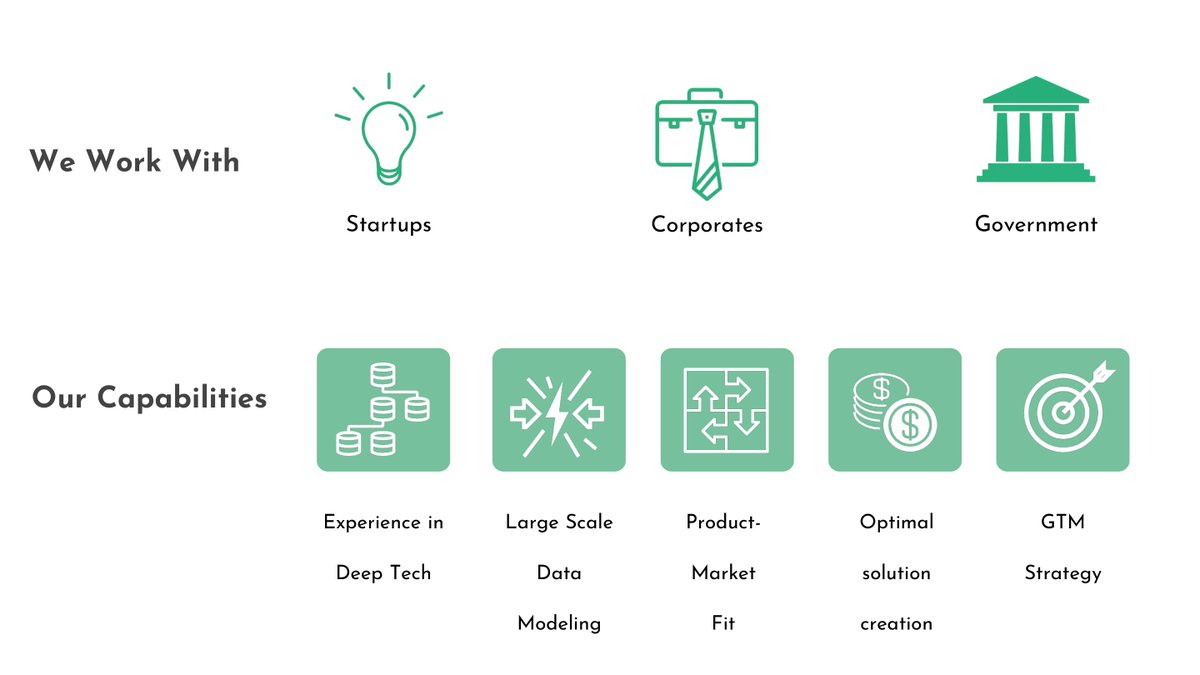
🚀 Xelpmoc’s Ventures Showcase Growth & Challenges: Key Updates on Revenue, Deals & Awards | MCap 195.05 Cr
- Mihup’s ARR exceeds ₹1000 Mn, backed by a multi-million dollar Tata Motors deal.
- Woovly’s ARR reaches $3.2M with 245+ brands on its platform.
- Pencil signs $950K service deal with Alphabet/Google (revenue over 36 months).
- Snaphunt launches https://t.co/UxJpThYiac & Snaphyre—8.5M job seekers, 10K employers onboard.
- The Star In Me (TSIM) wins Gold Award for 'Startup of the Year' at ET Human Capital Awards 2025.
- Kids Stop Press reports H1FY26 revenue of ₹60 lacs via brand partnerships.
- Biome’s investments in https://t.co/fF9Rg3YRaT & OsteoForge yield 4.4x valuation uplift.
- Q2’26 revenue at ₹7.6M (down 53.7% YoY); PAT at ₹(19.3)M.
- Fair value of investments (Sept 30, 2025): ~₹703.4M.
- Board approves partial sale of Mihup stake for ₹100M consideration.
Complete Source: https://t.co/7U29oLP04Y
Disc: Information provided in this tweet can be inaccurate, verify through the source before making any investment decision.
Preview 👇 (First 4 out of 34 pages)
@malpani I’m sorry but this is like trying to find a problem where none exists. This happens in a lot of corporates and the ones dancing seem to be enjoying themselves. With the kind of stressful environment in most workplaces… these events lighten the atmosphere if nothing else.