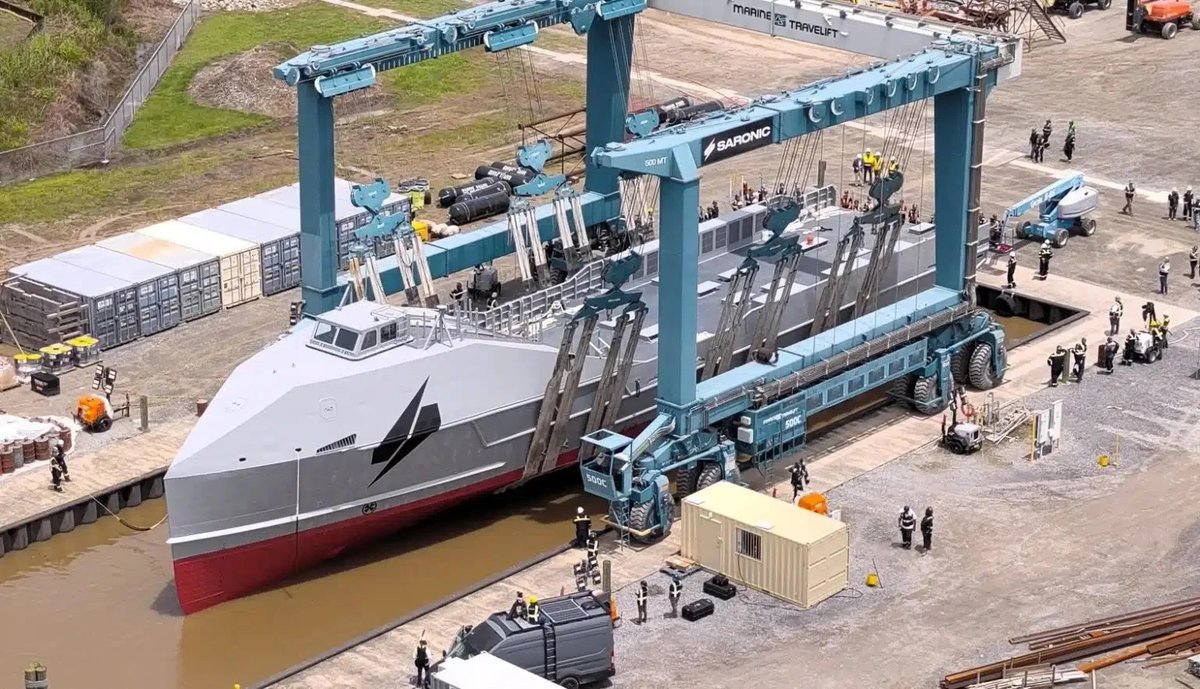
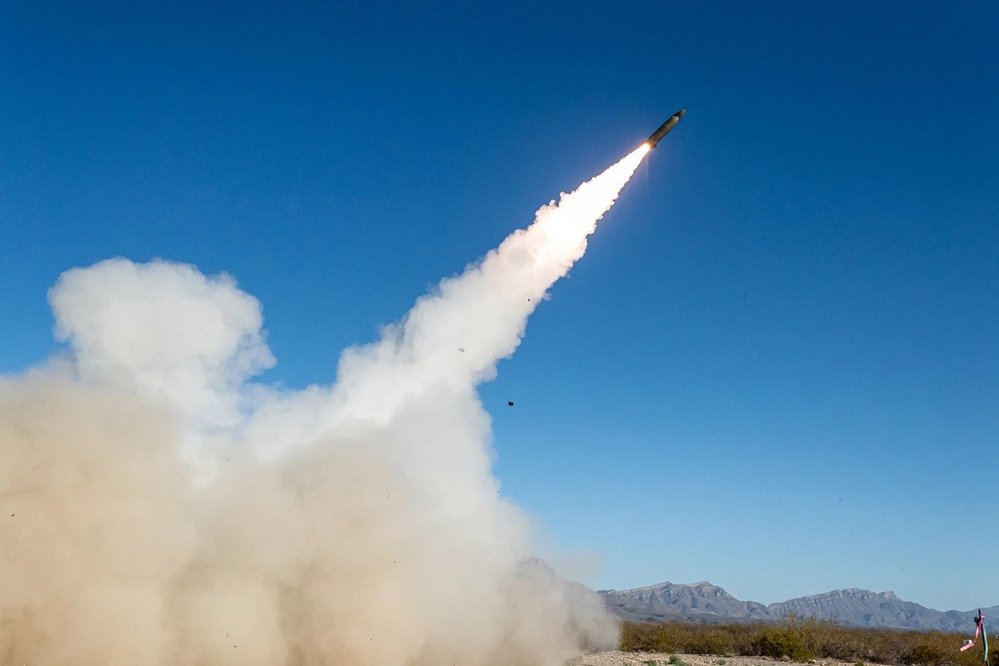
Anduril is now competing to build a 1,000+ km missile for HIMARS.
The Army selected:
- Anduril
- Castelion
- Lockheed Martin
- Mach Industries
- RTX
They will develop complete Precision Strike Missile Increment 4 prototypes. The requirement is to launch from HIMARS and strike moving ships and relocatable land targets at ranges of at least 1,000 km.
What I like about this competition is how the Army plans to narrow the field. The companies actually have to fly their designs. A competitive demonstration is planned for FY27, with sufficiently mature designs moving toward another round and a final fly-off in FY28.
Three relatively new defense companies aren't being asked to build components for the traditional missile primes. They're being given a chance to build the entire missile and compete against them.
Build it. Fly it. See who delivers.
https://t.co/pwm7O4rbbq
JUST IN: 🇮🇳🇺🇸 PM Modi and US President Trump hold a telephonic conversation.
It is their first call since passage of a Russia sanctions law empowering the US President to impose tariffs on countries importing Russian energy.
NATO JUST PUT QUANTUM ON A MILITARY SCHEDULE.
NATO has published its Quantum Technology Roadmap, approved by all Allies on July 30th, public as of yesterday.
Quantum navigation at sea first: NATO's maritime research center ran its first round of sea trials, Questor 26, in La Spezia, Italy earlier this month, testing quantum sensors for positioning and navigation where GPS is unavailable with more trials run through 2027.
First military pilot report, Q1 2027. Initial comparative assessments of quantum applications by the end of that year.
A quantum-resilient communications link between NATO headquarters in Brussels and its military command in Mons, Belgium, by the end of 2027.
And a design concept for an allied quantum computing access network, also in late 2027, so members can share machines instead of each building their own.
Underneath that, the roadmap orders a post-quantum cryptography migration across the alliance and an industry readiness study on quantum-safe suppliers next spring.
Put it next to this month's news with the Pentagon flying a jet for four hours over the Pacific on quantum navigation. A ship crossed the Coral Sea on a quantum gravimeter. The Pentagon is spending $200M to field quantum sensors. Now thirty-two countries have agreed on when to test the same thing.
No budget in the public summary, and no promise of deployment by a date. What NATO committed to is the trials, those are what decide which companies' sensors end up in allied militaries.
$INFQ $IONQ $LMT
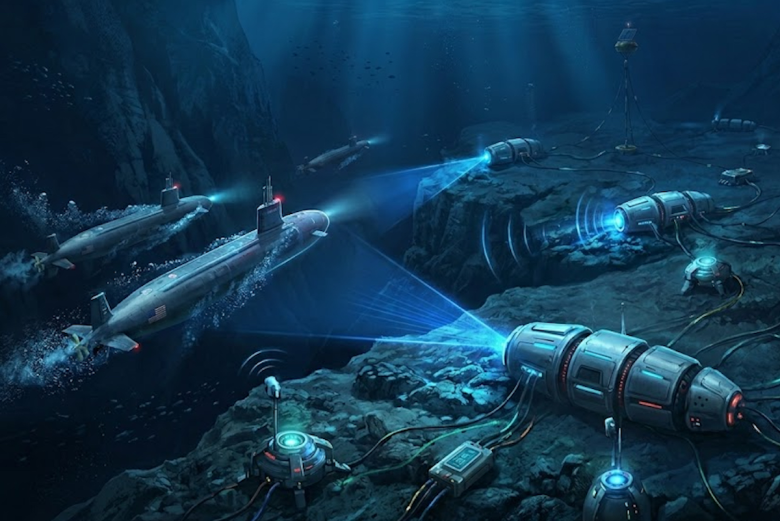
CHINA IS BUILDING AN UNDERWATER GREAT WALL USING QUANTUM SENSORS.
Since the 1950s the US has tracked submarines with hydrophones cabled to the seafloor. China is building the next version with quantum magnetometers, and its shipbuilders proposed a South China Sea seabed sensor network under that exact name a decade ago.
December 2022, a USTC team ran a diamond quantum magnetometer at 1,400 meters aboard the Shenhai Yongshi submersible, the first deep sea deployment of a solid state quantum magnetic sensor anywhere.
2025, China's state aerospace corporation tested a drone mounted atomic magnetometer at sea, built for the blind zone near the equator where Earth's field runs nearly flat. Then on September 25th, the same USTC group unveiled a magnetometer the size of a pencil, 5 watts, demonstrated by tracking a subway train from the street. Stated purpose, submarine detection.
That's the wall's brick, a sub's magnetic signature falls off with the cube of distance, so one seabed sensor only sees a few hundred meters. You can't watch an ocean with that. Line the chokepoints, the Bashi Channel, the Miyako Strait, the approaches to Hainan, with thousands of cheap battery powered magnetometers, and anything steel that transits gets logged.
$INFQ $IONQ $QNT