In 2020, interest rates reached the end of a 39-year decline.
The Fed expected near-zero short-term rates to persist for years.
We saw things differently:
Rates had bottomed. The long decline was over.
Six years later, that call has enormous implications. 🧵
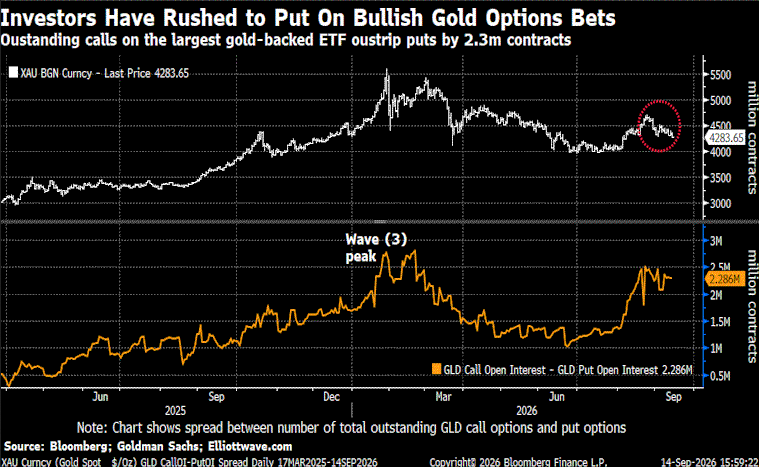
Gold is down more than 9% from its August high. So why are traders still piling into bullish bets?
Outstanding $GLD (the largest gold ETF) calls now outnumber puts by roughly 2.3 million contracts, showing that bullish sentiment has remained remarkably strong even as gold prices have fallen.
That sentiment could shift if gold continues lower.
Test drive the Elliott Wave Financial Forecast Service for just $11 and get our latest forecasts for gold and silver, stocks, interest rates, bonds and more. https://t.co/2gJkI2tvaf
WARNING 🚨
Banks 🏦
The widely followed KBW Bank Index (BKX) has formed a classic, inherently bearish head-and-shoulders pattern. If its critical neckline gives way, it will be "all over, red rover" for the banking sector.
Wont be long.
For one's private perusal.
Enjoy.
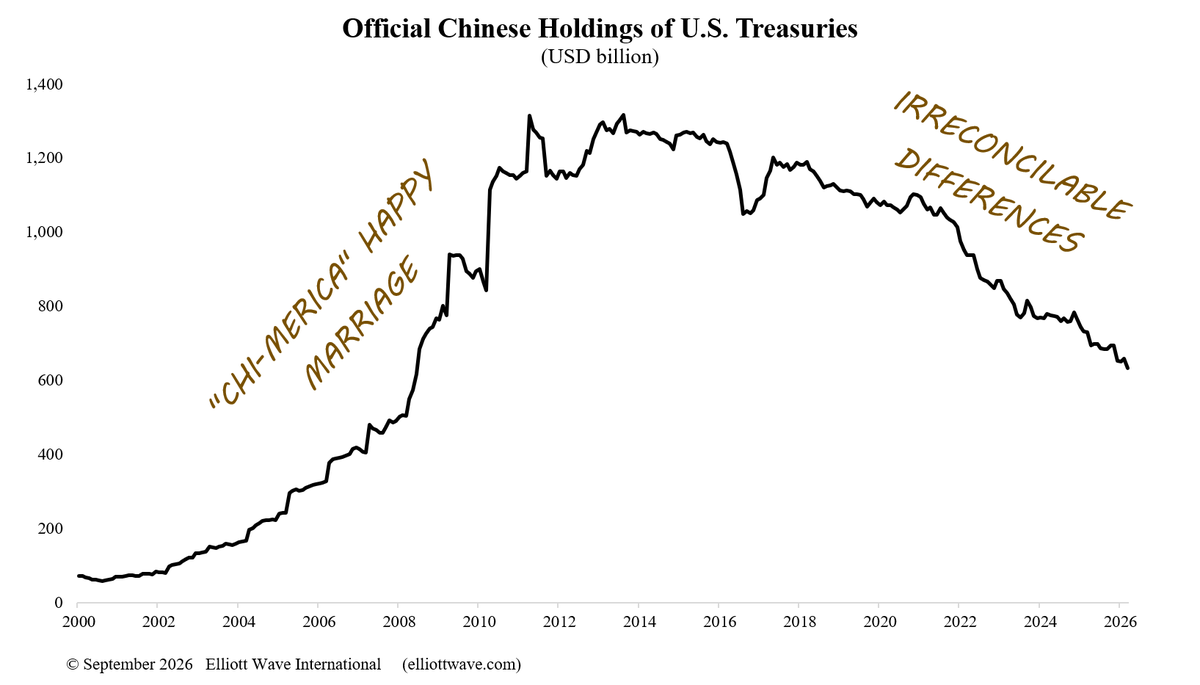
China once held more than $1.3 trillion in U.S. Treasuries.
Today, that figure is closer to half that amount.
For years, foreign governments have been reconsidering how much they want to lend to the U.S. Now, as Treasury yields rise, the market may be becoming increasingly dependent on buyers who are far more sensitive to price.
Japan remains America’s largest foreign creditor. But with Japanese government bond yields rising, even those buyers may have increasingly attractive alternatives at home.
The question is becoming harder to ignore: Who will buy America’s debt, and at what price?
Get a month of forecasts for stocks, gold & silver, bonds and more for just $11 - https://t.co/CJafpvxKWW
The entire world is screwed for multiple reasons.
Oil above $100 is economically destructive because it causes demand destruction. So nations want lower oil.
The problem is, as soon as oil collapses the Dollar begins skyrocketing like the 1980s.
So suddenly you go from high energy prices forcing you to take on more debt, to an environment where the rising Dollar makes it increasingly difficult to service that debt.
This very well could cause sovereign debt crises, which is why 30 year yields are rising all over the globe.
AI is carrying the market. But who's carrying the AI boom?
The AI story has been one of the biggest forces in markets.
But behind the enthusiasm is a less-discussed development:
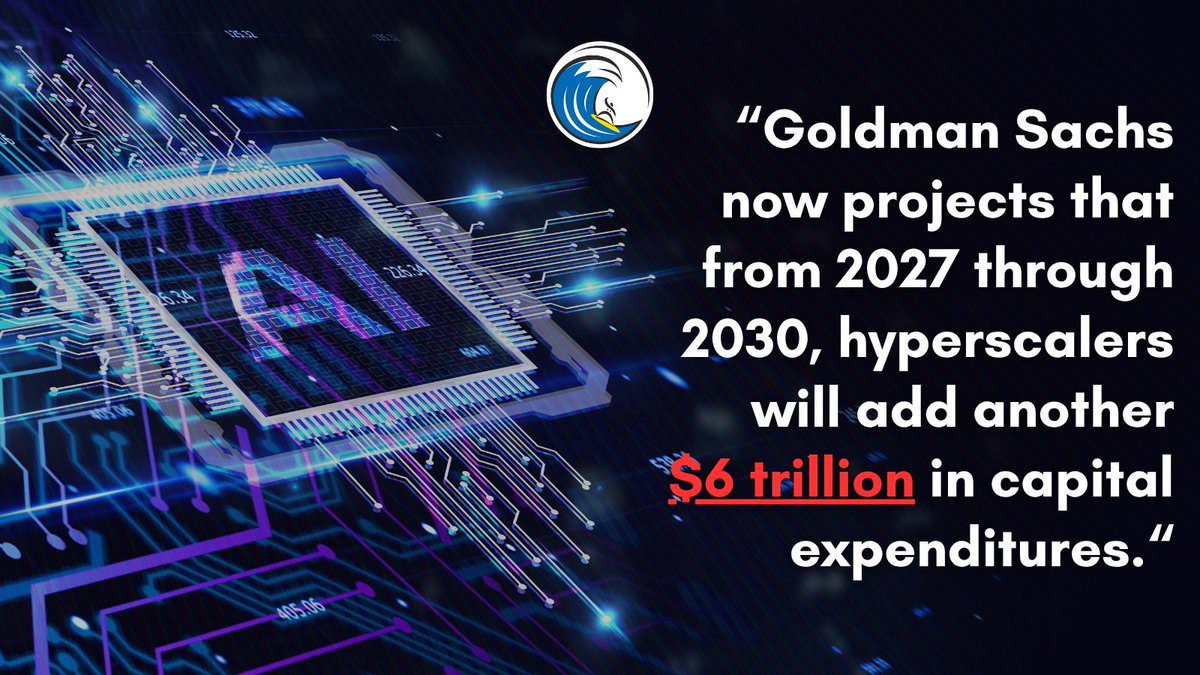
Major hyperscalers are projected to spend $6 trillion from 2027 through 2030.
And that's before another $3 trillion in off-balance-sheet commitments.
Meanwhile, bond investors are already demanding higher yields from some AI infrastructure projects.
Can the financial commitments being made today can justify the expectations built into asset prices.
Get answers when you test drive our Financial Forecast Service for just $11 - https://t.co/k9Xbs6yRaS
No livro "The Elliott Wave Principle" os autores A.J.Frost e @RobertPrechter descrevem a complacência no final de um longo ciclo de alta nos mercados da seguinte maneira:
"Parte da característica de uma quinta onda é a ocorrência de negação psicológica em larga escala. Em outras palavras, os problemas fundamentais são óbvios e ameaçadores para qualquer pessoa que analise friamente a situação, mas a pessoa comum opta por explicá-los de forma desconsiderada, ignorá-los ou até mesmo negar sua existência. E como essa quinta onda, a onda V, é uma quinta dentro de uma quinta maior, o fenômeno deve ser amplificado quando o pico for atingido. Nessa altura, deveríamos estar ouvindo que a pirâmide da dívida global “não é mais um problema”, que o mercado e a economia “aprenderam a conviver com altas taxas de juros” e que os computadores inauguraram uma “nova era de prosperidade sem precedentes” (ênfase adicionada).
Alguma semelhança com os dias atuais?
Entenderam? Não há como promover mudança de regime nem "morte" do dólar enquanto houverem trilhões e trilhões em dívidas e obrigações em dólar mundo afora. E shortear/vender o dólar como moeda não reduz essas obrigações; ao contrário, as aumenta.
Olhar o DXY e outras paridades cambiais contra o USD pode ser muito enganoso. Taxas de câmbio são concurso de beleza invertidos, (onde a menos feia de todos parece estar ganhando). O real valor do dólar deve ser observado como na figura abaixo. E ele só vem caindo, sem parar, pois o estoque de créditos em dólar no mundo só subiu desde 1933.
A contração do crédito com a alta das taxas provocará no dólar um movimento semelhante ao que vimos durante a última grande contração de crédito vivida pela humanidade. Só que hj a demanda potencial e múltiplas vezes maior, dado o tamanho da alavancagem atual.
Eh isso que eu não canso de explicar a vcs. E venho explicando tbem que a atual alta dos juros está muito mais ligada à credibilidade fiscal e solvência (exigindo mais prêmio de risco pelo tempo) do que a uma eventual desancoragem das expectativas inflacionárias.
Competição de preço...e redução da eficiência marginal de cada dólar investido (cada unidade de investimento futuro trará cada vez menos expectativa de retorno) é o que eu acho que está por trás desse anúncio conjunto dos 3 CEO's (Dario, Sam, e Elon). Ao mesmo tempo em que pedem "socorro" aos reguladores (proteção), já serve de aviso aos acionistas para que "não esperem mais os retornos fenomenais" que foram prometidos no passado.
Correram demais com os investimentos e prometeram retornos estratosféricos após investimentos cada vez maiores e agora querem tirar o pé? Acho que acionistas e credores não vão gostar nem um pouco...
In August, the Bank of Japan logged another record purchase of yen.
Similar interventions occurred in 2022, 2024 and earlier this year.
Each time, the intervention temporarily halted the yen's decline.
But the longer-term trend eventually resumed.
EWI views these interventions differently:
Not necessarily as evidence that policymakers have won...
But as a measure of just how extreme sentiment has become.
Get free market insights and trading education: https://t.co/MANQLmIzSn