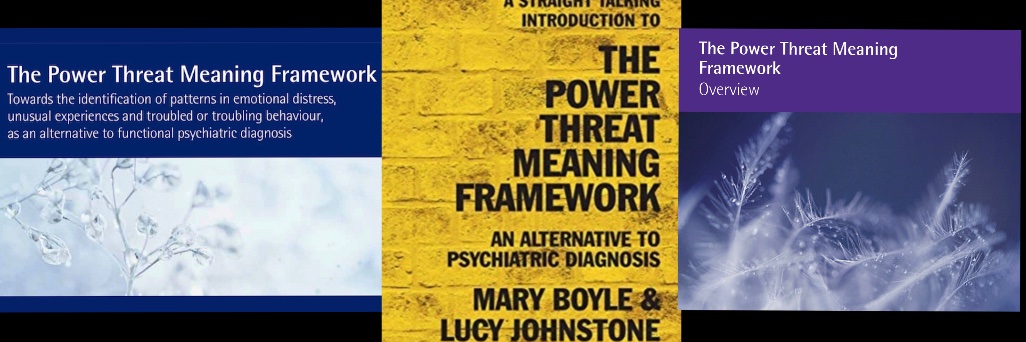
Dr Lucy Johnstone was pleased to be invited to deliver talks and training on the #PTMFramework in Denmark Oct 7th-9th. A conference on the trauma informed approach, a centre for work with refugees, and the PTMF group affiliated to the Danish Clinical Psychology Association.
Delighted to see @dropthedisorder returning for another festival!
I've had the pleasure of speaking at one of their previous events and have long admired the important work they do on challenging psychiatric dominance and promoting richer conversations about psychological distress and impairment.
Thoroughly recommend 👇
https://t.co/JVcbJKEhFZ
Katinka Blackford Newman to speak at the AD4E Online Festival 2026!
Katinka Blackford Newman will be joining an important panel discussion at this year’s AD4E Online Festival, hosted by our friends at A Disorder for Everyone.
Psychiatric Drugs – What Aren’t We Being Told?
📷 Friday 6 November 2026
📷 2:40–3:40pm UK time
Book here: https://t.co/EWIRMvOmGo
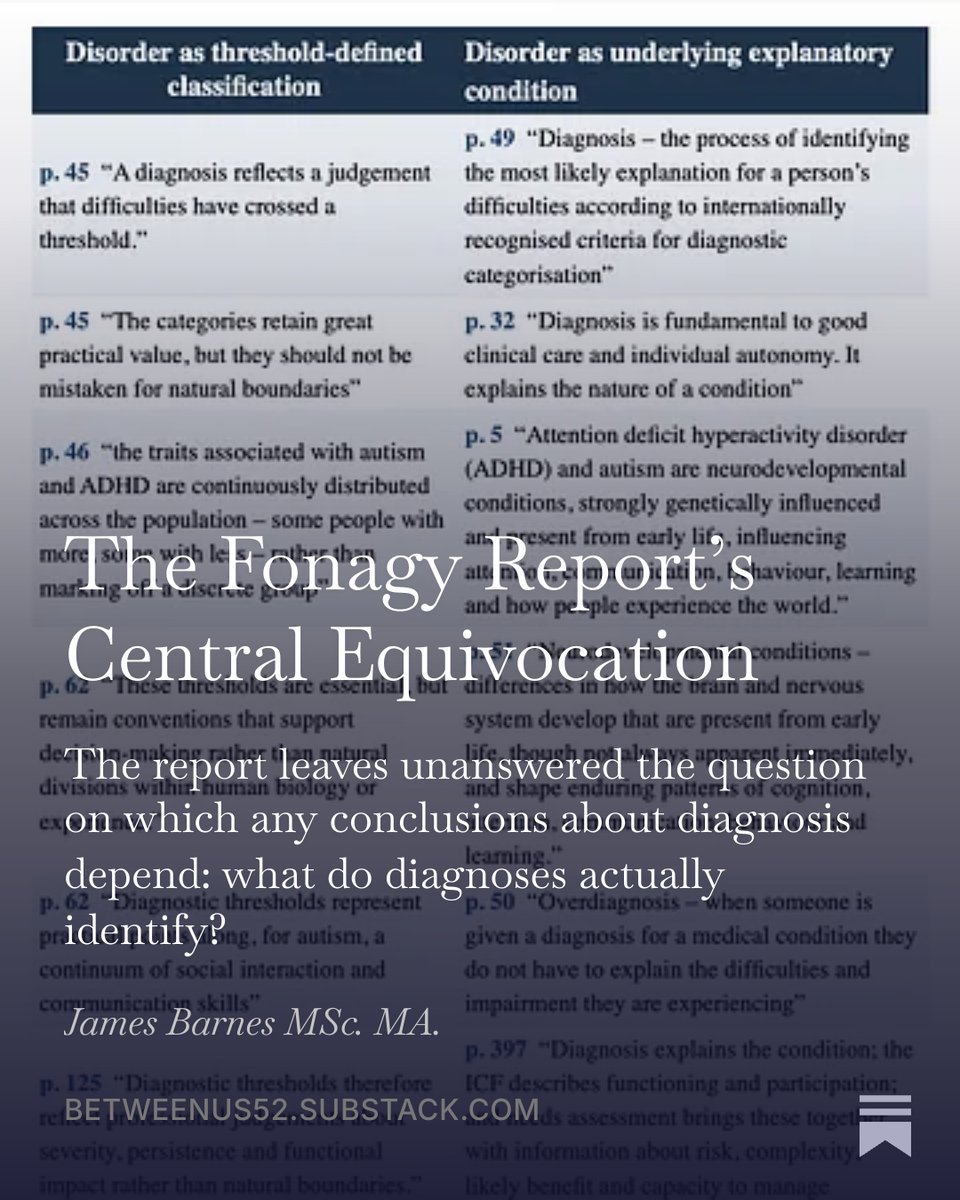
The Fonagy report defines psychiatric diagnoses as thresholds on continuous human variation; it also treats them as identifying underlying explanatory disorders.
Despite important concessions, this equivocation undermines its conclusions and may just recapitulate the problem.
(See below for link to article👇)
There seems to be much confusion about the @DHSCgovuk Fonagy report, which is not surprising given its attempt to talk in everyone's language.
However, it is clear that its distinctions between traits, distress and disorder—as well as the discussion around neurodiversity—are there to question the degree to which people meet criteria for ADHD & autism diagnoses and to underpin a shift towards support without diagnosis as well as to reduce reliance on specialist services.
Where such support is proposed as an alternative to diagnosis, the strong implication is that some people seeking assessment do not, or will not, meet diagnostic criteria. Otherwise, the proposal would amount to diverting people away from diagnoses they legitimately qualify for, which I think it plainly would not be doing.
The important question that follows this is whether needs-led support can resolve the problem when diagnosis remains the authoritative explanation of people’s difficulties. Arguably, it will only valorise and incentivise diagnosis further and create a real division between those recognised as having a disorder and those only offered support.
As the report rightly recognises, ADHD and autism traits exist on a continuum; diagnosis turns on judgements about the severity of distress and impairment not on the identified presense of an objective disorder that demarcates one group from another.
So, why not just make it all needs-led?
https://t.co/yF0J5f1XL4
Looks like there are sensible things in this report (e.g. call for needs-based help), but without challenging the unproven idea that ADHD and ASD are brain conditions or clarifying that diagnosis is not an explanation but a label, change is unlikely. https://t.co/os9vMtTau1
Didn’t Anyone Tell You It Is Okay to Be Different? Reflections from the Mad in Norway film festival by Peter C. Gøtzsche, MD
People agreed that mental health care needs to be systematically reformed, as recommended by the UN and WHO.
https://t.co/PkJzNJooh8
Just a few assumptions which I’d like to correct.
I don’t think that people with an autism diagnoses who do not have learning disabilities are fakers.
I don’t think that lived experience is unimportant and should be dismissed.
I don’t think that the early psychiatrists who defined autism were right, and more recent definitions are wrong.
I don’t have an agenda to cut benefits.
I don’t think that the medical model is the best approach for helping distressed people or understanding behaviour.
I do not reject the social model of disability.
I’m not out to destroy people whose opinions I disagree with.
I don’t think that autistic behaviour is caused by poor parenting nor should be blamed on the child.
What do I think?
Autism is a description, not an explanation. It was created, rather than discovered. It gives a name to a cluster of behaviours but no one has found an underlying genetic, neurological or cognitive difference shared by everyone with an autism diagnosis and no one without one.
A descriptive category like autism can and does change over time - and so it’s up to us as a society to decide where the lines should be drawn, and to work out the costs and benefits of that. In order to do that effectively, we have to be able to talk about the competing interests and conflicts involved.
This is actually an uncontroversial opinion among scientists who study autism and the wider psychiatric classification system. It doesn’t just apply to autism, it applies to most psychiatric diagnoses.
There’s (a lot) more, but that’s why I wrote a book.
I’ve had misgivings about what is going on in the autism world for a while. Misgivings about the way that many clinicians are going along with narratives which are not based in science, and which seem to be largely based on the say-so of a few, very influential, activists. I’m concerned about the way that we have accepted that expanding autism to include more people is the right thing to do, and how little time we have given to asking what ‘neurodivergence’ really is - and whether it might not be such a good idea to refer to ‘neuro’ all the time when we know that people tend to understanding neurological explanations as ‘set in stone’.
But the thing which makes me most concerned was how hard it is to talk about it. When pioneering researchers like @utafrith say that they think we need to rethink the autism spectrum, they are treated as if they are in the stocks. Rotten tomatoes, in the shape of internet insults, are hurled. It’s as if the crowd is shouting ‘shut up shut up shut up’. Except not as politely as that.
Whenever I see something like that happening, it makes me more, rather than less, interested. I wonder what they are trying to hide. What is being covered up here? Why is it so important to stop some questions from being asked? For if we can’t disagree, then we can’t conduct science. There is no way to improve our knowledge if we can’t have balanced discussions about why something is happening.
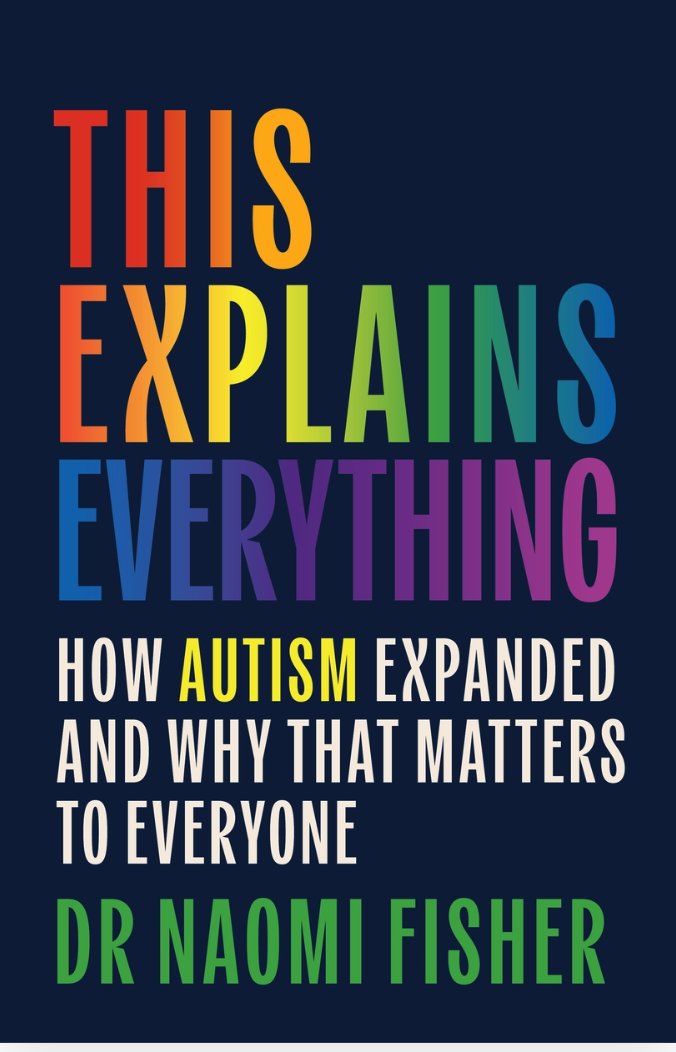
That’s why I wrote my latest book, which will be coming out in Feb 2027. It’s the inside story of how autism has expanded, and why that matters to us all. It's just too important to keep quiet about, even while the rotten tomatoes are hurled.
”Dr Read said: ‘NHS Tayside is using ECT more than anywhere else. But the board isn’t bothering to assess patients’ cognitive function before treatment. Which means that they have no baseline to refer to later, no way of monitoring whether patients have suffered any damage.” 🔗👇
GB News highlights my work on the misrepresentation of depression and antidepressants as described in the updated paperback version of Chemically Imbalanced out earlier this month. @flint_books https://t.co/r73LwtimpM
Tomorrow evening (Wed 16th 6pm) in the #adisorder4everyone zoom room
Have we mistaken disconnection for disorder?
With philosopher #jordanreyne@lonelinessPod
Recording included with every ticket, 1.5 hrs CPD
Book here!
https://t.co/bJ6ZreB5Fc