The video presents an impressive and high-energy performance by the orchestra, capturing a masterful rendition of the classic "Peter Gunn Theme" by the legendary composer Henry Mancini.
The most famous religious song in the world was not written as a prayer.
You have heard Ave Maria a thousand times. Everyone assumes Franz Schubert wrote it as a setting of the ancient Catholic prayer, the Hail Mary, but he did not...
This melody was never composed for the Latin prayer at all.
In 1825, at the age of 28, Schubert was working his way through a German translation of a poem by the Scottish writer Sir Walter Scott, The Lady of the Lake. It is an adventure story, set among the warring clans of the sixteenth-century Scottish Highlands. In one scene, the heroine, a young woman named Ellen Douglas, is in hiding with her father in a mountain cave. Alone and afraid, she sings a song asking the Virgin Mary for help.
Schubert set seven songs from that poem to music. Three of them were sung by Ellen, and this was the last of her three. He called it, plainly, Ellens dritter Gesang — 'Ellen's Third Song.' Its opening words were the two she would naturally cry out in her prayer: Ave Maria.
That was all it took...
The melody was so achingly beautiful that, in the years that followed, people began fitting the full Latin text of the actual Hail Mary prayer over his music. The fit was so natural, and the result so moving, that in the popular imagination the song became the prayer.
Schubert died in 1828, at thirty-one. He had written more than six hundred songs, and much of his work was still unpublished and little known beyond a small circle in Vienna.
He never knew that one melody, written for a fictional girl in a cave, would become one of the most beloved pieces of music in human history.
It is a strange and beautiful thing. The most famous prayer ever set to music began as a song about someone who was simply afraid, and reaching, in the dark, for something to hold onto. Perhaps that is exactly why it has never stopped moving people. It was a real prayer before it was ever a holy one...
If you enjoyed this, I write a weekly newsletter read by over 50,000 people who love rediscovering the beauty of the past. You can join us here:
https://t.co/hgJUdR0jlx
If you'd like to support my work, a paid subscription is what makes it possible.
This clip from the 1966 classic film "The Good, the Bad and the Ugly" portrays an ironic and humorous situation where the two main characters mistake the approaching army for their Confederate allies, only to realize that they are actually Union forces.
Emmy Rossum was just 16 during filming for THE PHANTOM OF THE OPERA (2004). She sang the entire role live on set, hit operatic notes most trained singers struggle with, and did it while acting opposite seasoned stage veterans.
En 1960, la célèbre salle parisienne de l'Olympia est au bord de la faillite. Son directeur, Bruno Coquatrix, cherche désespérément un moyen de sauver son théâtre. Il appelle Piaf à l'aide, alors qu'elle est elle-même au plus mal. En acceptant de monter sur scène pour une série de concerts, et en y interprétant ce nouveau titre, Piaf fait salle comble pendant des semaines, sauvant littéralement l'Olympia de la fermeture.
La chanson a été écrite par Michel Vaucaire (paroles) et Charles Dumont (musique). Au départ, Dumont avait une mauvaise réputation auprès de Piaf, qui refusait constamment de le recevoir. Quand il a enfin réussi à lui présenter le morceau chez elle, Piaf était d'humeur exécrable. Mais dès les premières notes, elle s'est arrêtée, subjuguée, et a déclaré : « C'est ma vie, c'est moi, c'est cette chanson que j'attendais ! »
Au moment de cette captation, Édith Piaf est extrêmement malade, affaiblie par des années d'excès, de polyarthrite et plusieurs accidents de voiture graves. Elle pèse à peine 40 kilos et ses proches pensent qu'elle ne tiendra pas dix minutes sur scène. Pourtant, dès que la musique commence, la « Môme » se transforme. Sa posture droite, ses mains si expressives et la puissance de sa voix défient totalement son état de santé physique.
Kevin Costner fue el genio detrás del éxito de "I Will Always Love You", pero fue la voz de Whitney Houston la que la hizo eterna.
La canción original para el final de "The Bodyguard" se canceló días antes del rodaje y él exigió usar esta obra maestra.
El estudio se opuso rotundamente, pero Costner se plantó y exigió que Whitney cantara a capela los primeros 45 segundos para demostrar su fuerza vocal.
Una decisión que aterrorizó a los ejecutivos, quienes juraban que las radios jamás programarían un tema que arrancaba en absoluto silencio instrumental.
El resultado: arrasó en los Grammys de 1994 y se convirtió en el sencillo físico femenino más vendido de la historia, y sigue con ese récord hasta hoy.
In 1965, a 17-year-old girl in Sicily was kidnapped, assaulted, and held captive for over a week.
Then her attacker offered her a deal:
Marry him, and everything would be “forgiven.”
At the time, Italian law allowed rapists to avoid punishment if they married their victims.
It was called “reparatory marriage.”
The logic was horrifying:
A woman’s “honor” mattered more than her consent.
If she married the man who violated her, her reputation could supposedly be restored — and the rapist could walk free.
Most women had no real choice.
Families pressured them.
Communities expected obedience.
The law itself encouraged silence.
But Franca Viola said no.
At 17 years old, traumatized and publicly shamed, she refused to marry the man who assaulted her.
That single word changed Italy forever.
Her decision sparked outrage in her town.
Neighbors turned against her family.
Their vineyards and olive groves were burned in retaliation.
But Franca’s father stood beside her and supported her decision to press charges.
In 1966, Franca testified publicly against her attacker in court.
At a time when most victims were expected to stay silent forever, she spoke openly in front of the entire country.
Italy watched in shock.
Her attacker, Filippo Melodia, was convicted and sentenced to prison.
For the first time in Italian history, a woman had publicly rejected “reparatory marriage” and won.
The case became international news.
But the law itself still remained.
For another 15 years, rapists in Italy could technically still escape punishment by marrying their victims.
Then finally, in 1981, Italy abolished the law completely.
And many activists pointed to Franca Viola as the moment the country first began confronting the cruelty of that system.
Years later, Franca married a childhood friend who had stood beside her through everything.
Not because she needed her “honor restored.”
But because she deserved love, dignity, and a life defined by her own choices.
That’s why her story still matters.
Franca Viola wasn’t just resisting one man.
She was resisting an entire culture that treated women’s suffering as something to hide rather than something to fight.
At 17 years old, she stood against her attacker, her community, and even the law itself.
And eventually, the law changed.
Sometimes history moves because powerful people decide to act.
And sometimes history moves because one terrified teenager quietly refuses to surrender.
Claudia Cardinale was a lady of many talents. Cardinale's appearance on the Italian musical variety show Canzonissima was initially meant to promote her current film, but transformed into a magnificent, precisely calibrated exchange between her and the RAI orchestra in December 1971.
Widely acclaimed as one of the greatest duets of all time, this 1987 archival footage from Ibiza captures the iconic song "Barcelona." It stands as a vivid testament to the perfect fusion of Montserrat Caballé’s sublime operatic vocals and Freddie Mercury’s captivating stage presence—a masterpiece that left an indelible mark on music history and went on to become the official and defining anthem of the 1992 Summer Olympics in Barcelona.
30 años.
Durante 30 años, el PC ha sido lo mismo: Intel o AMD dentro, la GPU aparte, y rezar para que no se cuelgue.
NVIDIA acabó con eso en una keynote.
RTX Spark. Su primer chip para ordenador personal. CPU, GPU y memoria en un único silicio. ARM, 3 nm, 1 petaflop de IA local.
En un portátil de 14 mm.
Ejecutó Forza Horizon 6 y 007 First Light en el escenario a 100 FPS en 1440p. Sin enchufe. Sin throttling. En Windows.
El dato que lo cambia todo: ejecuta modelos de IA de 120 mil millones de parámetros sin nube. Sin API. Sin suscripción. Tu agente de IA vive en tu máquina. Encendido 24 horas. Solo tuyo.
El PC ya no es una pantalla con teclado. Es una estación de IA personal.
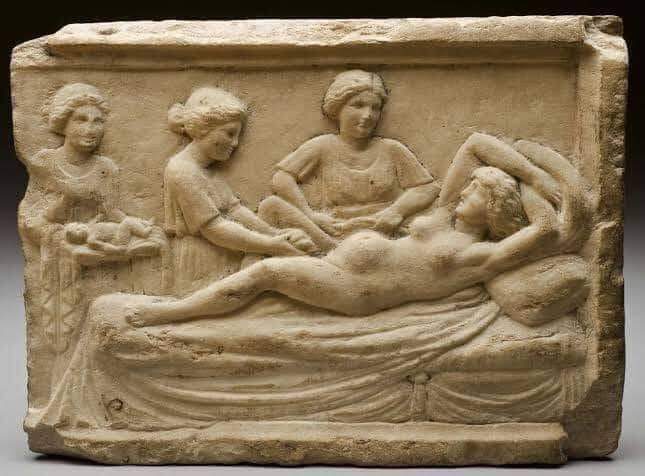
En la antigua Grecia, las mujeres tenían prohibido estudiar medicina, hasta que alguien rompió la ley.
Un día Hagnódica se cortó el pelo y entró en la facultad de medicina de Alejandría vestida de hombre. Mientras caminaba por las calles de Atenas tras completar sus estudios de medicina, oyó los gritos de una mujer de parto. Sin embargo, la mujer no quería que Hagnódica la tocara, a pesar del intenso dolor, porque creía que Hagnódica era un hombre.
Hagnódica demostró su identidad femenina desnudándose y ayudando a la mujer a dar a luz. La historia pronto se extendió entre las mujeres, y todas las enfermas comenzaron a acudir a Hagnódica.
Los médicos varones, envidiosos, acusaron a Hagnódica, a quien creían hombre, de seducir a sus pacientes
En su juicio, Hagnódica compareció ante el tribunal y demostró su identidad femenina, pero esta vez fue condenada a muerte por estudiar y ejercer la medicina siendo mujer. Las mujeres se rebelaron contra la sentencia, especialmente las esposas de los jueces que la habían condenado a muerte.
Algunos decían que si Hagnódica moría, morirían con ella. Incapaces de soportar la presión de sus esposas y otras mujeres, los jueces anularon la condena de Hagnódica , y a partir de entonces, las mujeres pudieron ejercer la medicina, siempre y cuando solo atendieran a mujeres.
Así, Hagnódica dejó su huella en la historia como la primera médica, ginecóloga y especialista en medicina griega.
Esta placa que representa a Hagnódica trabajando fue excavada en Ostia, Italia.
Saviez-vous qu'il existe un livre que personne ne pourra jamais finir de lire de toute sa vie, bien qu'il ne compte que 10 pages ?
En 1960, l'écrivain français Raymond Queneau a créé le livre probablement le plus long du monde, intitulé Cent mille milliards de poèmes. Ce livre se compose de dix pages, chacune contenant un sonnet. Les vers suivent le même schéma de rimes et sont imprimés sur des bandes, ce qui permet aux lecteurs de combiner des lignes de différents sonnets.
Cette structure génère un total de 10¹⁴ combinaisons possibles, soit cent mille milliards de poèmes uniques. Pratiquement personne ne pourra jamais lire le livre en entier, car il faudrait des millions d'années pour explorer toutes les combinaisons possibles, sans compter les pauses pour manger, dormir ou lire quoi que ce soit d'autre. Et tout cela ne tient qu'à dix pages !
Chaque combinaison créée aboutira à un sonnet cohérent avec des strophes, un rythme et des rimes parfaits. De plus, il est fort probable que chaque poème choisi au hasard n'ait jamais été lu auparavant. Queneau lui-même a déclaré que, si l'on considère qu'il faut environ 45 secondes pour lire un sonnet et 15 secondes pour préparer le suivant, il faudrait environ 200 millions d'années pour lire toutes les combinaisons possibles.
On apprend la disparition de la comédienne Thérèse Liotard, impeccable dans "Viens chez moi j'habite chez une copine "mais aussi dans "L'une chante, l'autre pas" d'Agnès Varda et "La gloire de mon père" d'Yves Robert.
Hommage.