Hace 45 años se juntaron Sylvester Stallone, Michael Caine y Pelé bajo la dirección de John Huston, en una película sobre fútbol en plena Segunda Guerra Mundial.
Además del contexto historico, "Evasión o victoria" (Victory, 1981) se inspira en una historia real, aunque se toma importantes licencias.
En 1942, en la Kiev ocupada por los nazis. exjugadores del Dinamo de Kiev formaron un equipo llamado FC Start y derrotaron a varios conjuntos de soldados alemanes. A diferencia del final feliz de la película, muchos de esos jugadores reales acabaron arrestados, torturados y ejecutados por la Gestapo en campos de concentración poco tiempo después.
Además de Pelé, participaron otras estrellas del fútbol como Bobby Moore, Osvaldo Ardiles, Kazimierz Deyna y Paul Van Himst.
🚨🎙️Zlatan Ibrahimović on the Belgium vs. Iran match 🇮🇷🇧🇪:
"In the first half, I nearly fell asleep, and in the second half, I actually did. And there's not much to talk about in this match."
Ufff, pero miren nada más quiénes se juntaron para ver a Brasil en la Copa del Mundo. Kaká, Ronaldo Nazário, Ronaldinho Gaúcho, Cafú, Bebeto, Roberto Carlos y Rivaldo. Puros campeones del mundo, señoras y señores. Exceso de grandeza. Exceso de fútbol. EXCESO DE MAGIA.
They threw boots at him in the barracks.
They called him a coward.
His commanding officer tried to have him removed from the Army.
Everyone was waiting for him to break.
He never did.
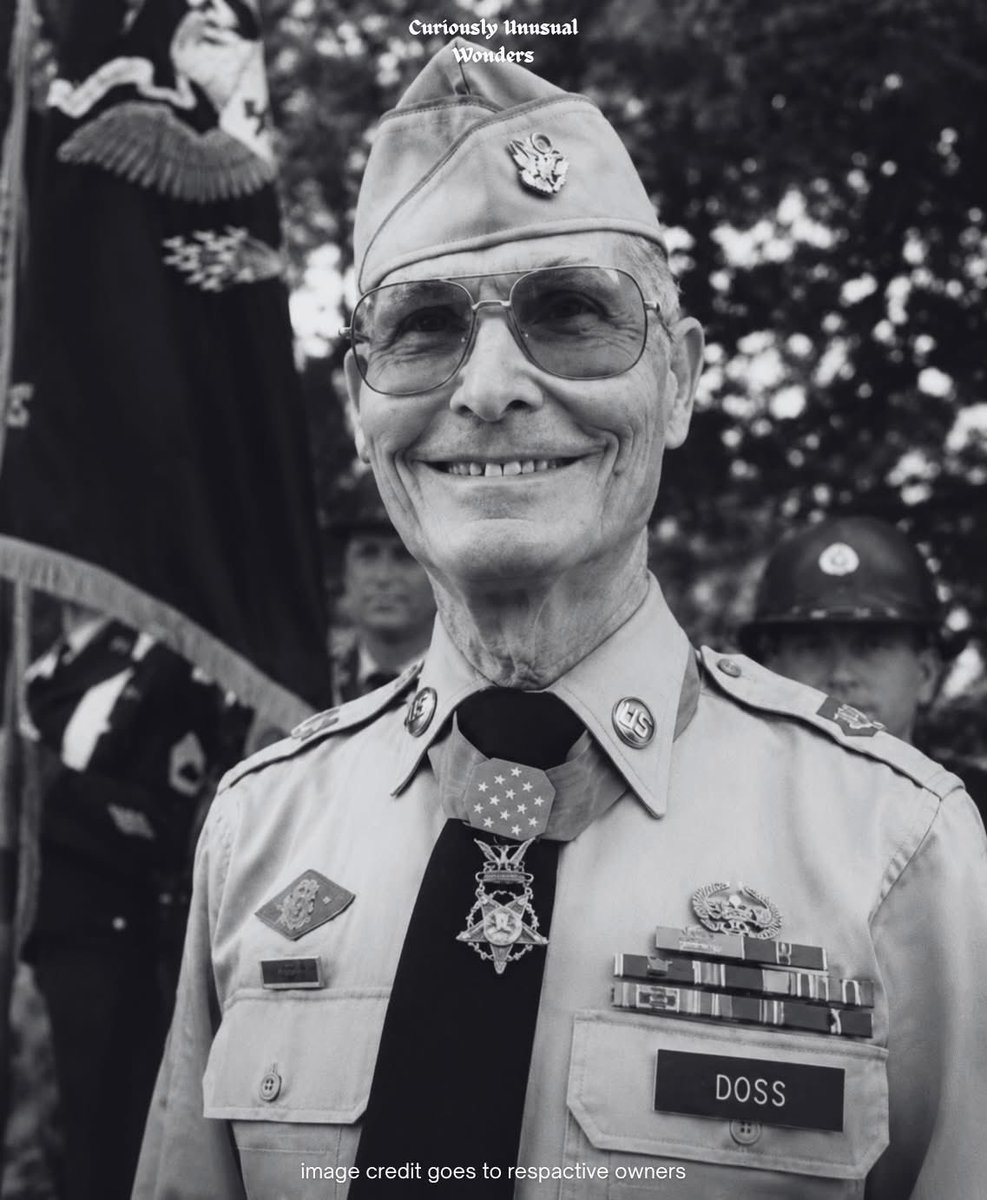
His name was Desmond Doss.
And he became one of the bravest soldiers in American history without ever carrying a weapon.
Doss was a devout Seventh-day Adventist who believed the commandment "Thou shalt not kill" was absolute.
When World War II began, he volunteered to serve.
But he refused to carry a rifle.
He refused to take a life.
His fellow soldiers couldn't understand it.
Many hated him for it.
They saw him as a burden.
A liability.
A man asking others to fight while he stood aside.
But Doss wasn't trying to avoid danger.
He volunteered as a combat medic.
He intended to run directly into it.
By 1944, he was serving in the Pacific.
Under fire in Guam and the Philippines, he repeatedly risked his life to rescue wounded soldiers.
The insults started fading.
The men who doubted him had seen what happened when bullets started flying.
Doss always ran toward the wounded.
Then came Okinawa.
The Maeda Escarpment.
A place soldiers called Hacksaw Ridge.
A 400-foot cliff defended by heavily fortified Japanese positions.
On May 5, 1945, a massive counterattack forced American troops to retreat.
Most made it down.
Roughly 75 wounded men did not.
They were stranded on top of the ridge.
Abandoned under enemy fire.
Desmond Doss stayed.
Alone.
Unarmed.
He found one wounded soldier and dragged him to the cliff edge.
Using a rope, he lowered him to safety.
Then he went back.
And found another.
And another.
And another.
Each time he prayed the same prayer:
"Lord, help me get one more."
For hours he moved through gunfire, artillery, and chaos.
One man at a time.
By the end of the night, he had rescued approximately 75 soldiers.
Single-handedly.
Without firing a shot.
Days later, a grenade exploded beside him.
Shrapnel tore through his body.
While waiting for evacuation, he saw another wounded soldier whose injuries were worse than his own.
So he gave up his stretcher.
Then a sniper's bullet shattered his arm.
Using the stock of a broken rifle as a splint, he crawled hundreds of yards to safety.
On October 12, 1945, President Harry S. Truman placed the Medal of Honor around his neck.
Doss became the first conscientious objector in American history to receive the nation's highest military award.
One of the men he saved on Hacksaw Ridge was Captain Jack Glover.
The same officer who had once tried to force him out of the Army.
Years later, Glover called Doss one of the bravest men he had ever known.
Desmond Doss died in 2006 at the age of 87.
He never carried a weapon.
He never fired a shot.
He never compromised what he believed.
And when everyone else was running down the ridge, he kept going back.
Just one more.
Then one more.
Then one more.
The capacity at “Boston Stadium” for the World Cup is 64,146.
That means someone had to put 64,146 very small pieces of blue tape over every single Gillette logo on every. single. seat.
FIFA doesn’t mess around. 😳