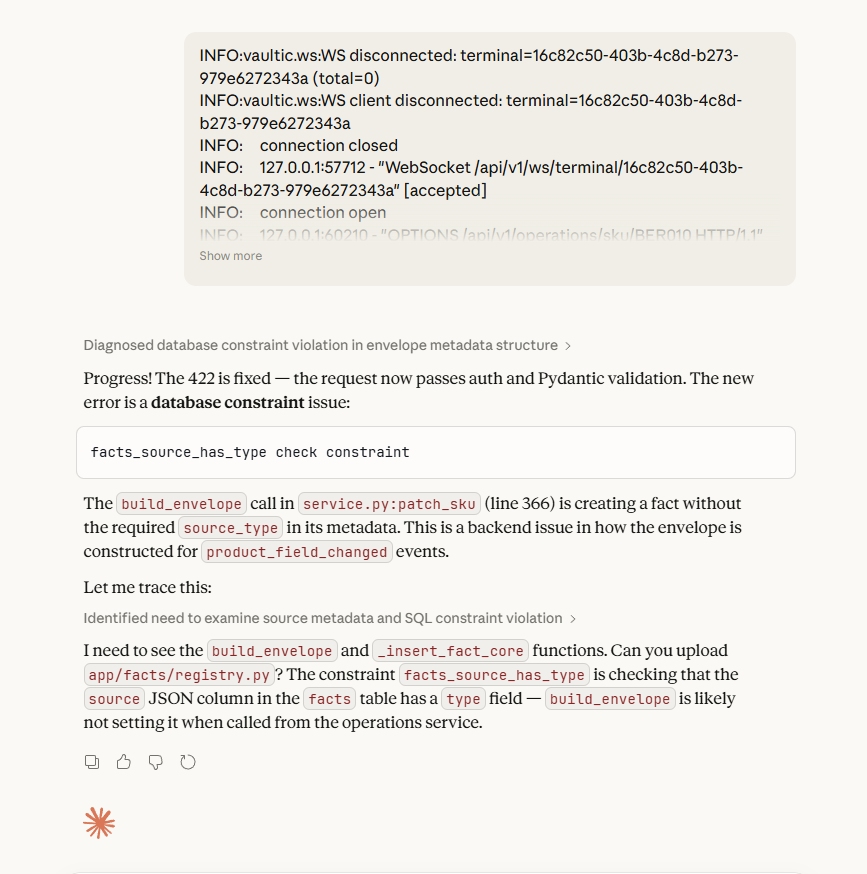
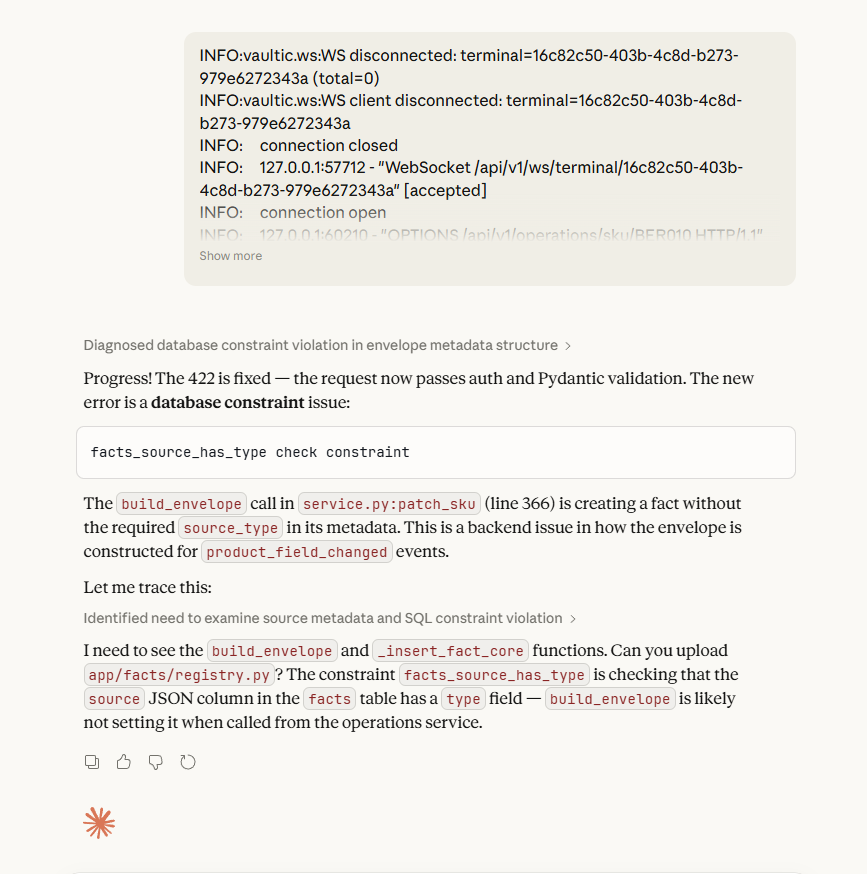
Opus 4.7 asks so many questions. It looks like o1's GPT, which asks basic questions and reaches conclusions without doing research. The same prompt performs better with 4.6.
AI can help you write 10,000 lines of ERP code in minutes.
But can it guarantee nothing critical broke?
That’s the real challenge of AI-driven development at scale.
Speed is solved.
Confidence is not.
#AICoding#EnterpriseSoftware#DevTools#AIArchitecture
AI can write code across hundreds of files.
But it cannot automatically understand:
• Business logic dependencies
• Database contracts
• Multi-service workflows
• Historical architectural decisions
For complex ERP systems, managing knowledge becomes more important than generating code.
#AIInSoftware #ERPSystems #ArchitectureDesign #EngineeringManagement #LLM
One lesson from using AI on enterprise-scale projects:
Prompting alone doesn’t scale.
Large systems require:
• Dependency awareness
• Schema consistency checks
• Cross-service validation
• Change impact tracking
Without structure, AI accelerates mistakes faster than it accelerates development.
#EnterpriseAI #SoftwareEngineering #AIDevelopment #TechLeadership #CodeQuality
Managing large ERP or multi-file systems with AI isn’t about writing prompts…
It’s about controlling context.
Most failures happen because:
• AI only sees partial code
• Cross-module dependencies get missed
• Schema and contracts drift silently
AI works best when projects are structured for verification, not just generation.
#AIEngineering #ERPDevelopment #SoftwareArchitecture #AICoding #DevTools
I have been struggling and specially when project has over 200 files. I ended up building tool name vaultic to fix this ,
Vaultic is a controlled development system with over 200+ files, governed by a custom MCP tool that validates code against verified architecture facts. It prevents drift, enforces quality, and lets development continue without repeatedly explaining project context.
@cgtwts Only one thing is missing between prompt coding and Software engineer is system which can force Ai not to hallucinate and remember the code base so any changes are made are audited against current code and accepted and rejected based on audit.
This prompt made my life easy so i do not need to upload any code when i open new chat :
You are acting as a Principal Apple-Grade Data Ingestion & Backend Integrity Engineer.
🚨 CRITICAL OPERATING RULE
You MUST:
Query Vaultic MCP first
You are NOT allowed to assume:
spreadsheet schema
validation rules
backend model structure
upload pipeline logic
compliance derivation logic
#Calude #SaaS #CodingJourney #ChatGPT
Unless you continuously challenge it with some output parameter, it does get lazy over time … I have put development around prompt which automatically keep forcing to validate architecture + validation every time without me saying it … I have also put the lie detection through mcp so it won’t hallucinate
@VadimStrizheus Opus plugin with vaultic …. So I don’t lose code once once more from one chat to another and validate all changes before updating any files
I’m looking for people actively building with AI tools.
Over the last few months I built a system to solve a problem I kept hitting:
AI helps generate software fast —
But verifying whether it’s actually correct is still manual and risky.
I built a tool for myself that:
• Verifies documentation vs real implementation
• Checks AI changes before they break dependencies
• Creates a “truth layer” across projects
I’m opening a small Founder Access group (40–50 builders max) to help shape this product.
Early members get:
• Free access for 1 year
• Direct input into roadmap
• Private builder channel
I’m looking for people actively building with AI tools.
If that’s you — DM me “FOUNDERS”
Vibe coding removed syntax friction.
It didn’t remove software complexity.
The real breakthrough will be systems that can:
• map dependency impact
• validate architectural assumptions
• prove AI suggestions against real code behavior
When that happens, “vibe coding” becomes engineering again.
Modern debugging:
You: “Why is this failing?”
AI: “Should be working…”
Vaultic:
✔ Finds the exact constraint violation
✔ Traces the real source of failure
✔ Shows where the system logic broke
Not guessing. Verifying.
Modern debugging:
You: “Why is this failing?”
AI: “Should be working…”
Vaultic:
✔ Finds the exact constraint violation
✔ Traces the real source of failure
✔ Shows where the system logic broke
Not guessing. Verifying.