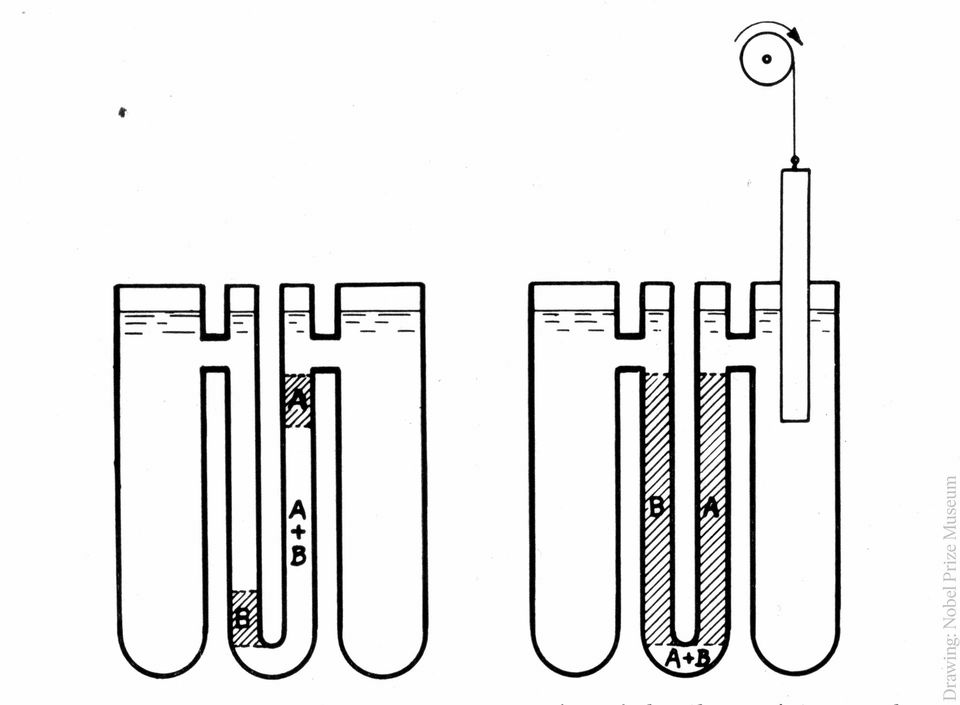
In the 1930s Arne Tiselius developed a method called electrophoresis, to separate different substances from one another. It has become an important tool in chemical analysis.
The picture shows a diagram from Tiselius' Nobel Prize lecture.
Read it here: https://t.co/GFgb2vzHzb
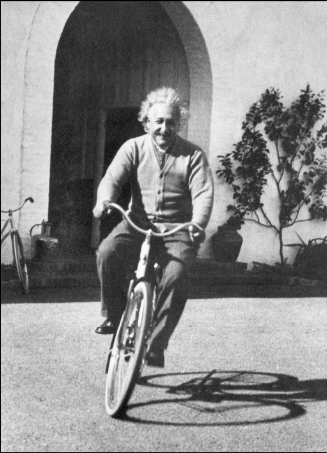
'Life is like riding a bicycle.
To keep your balance you must keep moving.'
-Albert Einstein, advice to his son Eduard, 5 Feb. 1930.
(Photo: Einstein rides a bicycle in Santa Barbara, California, 1933, Caltech Archives)
“A stupid man's report of what a clever man says is never accurate, because he unconsciously translates what he hears into something that he can understand.”
— Bertrand Russell
Ten years after Einstein’s death, physics laureate Roger Penrose demonstrated that black holes can form and described their properties. Penrose’s ground-breaking article is still regarded as the most important contribution to the general theory of relativity since Einstein.
A recent theory by physicists Ruth Kastner and Andreas Schlatter proposes that gravity might not be a fundamental force, as traditionally believed. Instead, they suggest that gravity emerges from quantum-level electromagnetic interactions between charged particles, such as atoms and molecules.
In this framework, when particles emit and absorb photons—the basic units of light and electromagnetic force—these interactions generate events that collectively form the fabric of spacetime. This perspective challenges Einstein's view of gravity as a curvature of spacetime caused by mass and energy.
Furthermore, the theory offers explanations for phenomena like the motion of stars in galaxies and the universe's accelerated expansion, which are typically attributed to dark matter and dark energy. By considering gravity as an emergent property arising from entropy and quantum interactions, this approach could potentially eliminate the need for these elusive concepts.
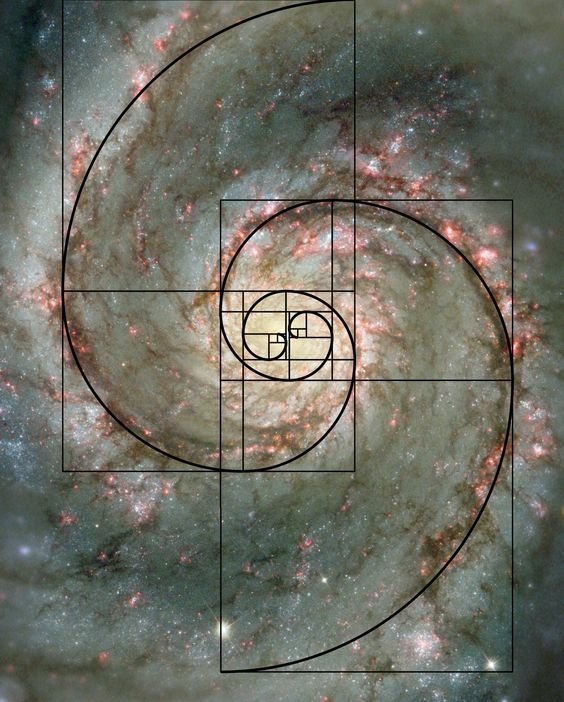
The Fibonacci sequence appears in nature more frequently than one might expect; the branching of trees, arrangement of leaves on a stem, the fruitlets of a pineapple, even the spiral galaxies all exhibit Fibonacci patterns.
Born Today in 1805, by age 12, William Rowan Hamilton spoke 14 different languages and by age 17, he had become the greatest living mathematician. His invention of quaternions provided a basis for the later development of quantum mechanics.
“I have come to think that physics is a never-ending quest.”
Isaac Isidor Rabi discovered a method to measure the magnetic properties of atomic nuclei - research that would lead onto the development of MRI and atomic clocks. He was awarded the 1944 Nobel Prize in Physics.
Albert Einstein met fellow Nobel Prize laureate Rabindranath Tagore at his home in the outskirts of Berlin on this day in 1930. The two distinguished minds explored the concepts of science, religion, consciousness, and philosophy.
Read an excerpt from their conversation: https://t.co/8OVX0X0fYi
A mother who helped her blind daughter graduate from law school by attending every class and reading textbooks aloud for four years was awarded an honorary law degree in recognition of her extraordinary dedication.
In July 2018, Sakarya University awarded an honorary law degree to Havva Kul alongside her visually impaired daughter, Berru Merve Kul, during the school’s graduation ceremony. With limited access to Braille textbooks and audio learning resources, Havva became her daughter’s primary source of academic support throughout law school.
For four years, she accompanied Berru to every class, took notes, and helped her keep up with coursework requirements. At home, she spent countless hours reading law textbooks, case studies, and legal codes aloud so her daughter could prepare for exams. In recognition of her extraordinary dedication, Faculty Dean Professor Mahmut Bilen invited Havva to the stage and presented her with a special degree certificate, earning a standing ovation from the audience.
"After all, science is essentially international, and it is only through lack of a historical sense that national qualities have been attributed to it."
- Marie Skłodowska Curie, the first person to be awarded two Nobel Prizes, the 1903 physics prize and 1911 chemistry prize.
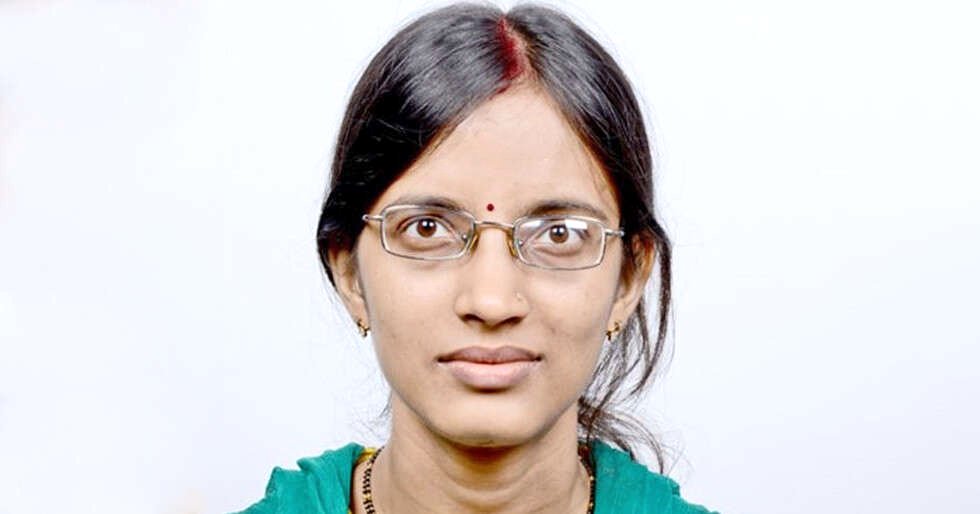
Neena Gupta is one of the most celebrated mathematicians of modern India, whose work reshaped algebraic geometry. Born in Kolkata in 1984, she showed extraordinary mathematical talent from an early age and pursued her studies at the Indian Statistical Institute, where she later became a leading researcher.
Her most famous achievement came in 2014, when she solved the long-standing Zariski Cancellation Problem in positive characteristic. The conjecture asked whether, if X × A¹ ≅ Aⁿ⁺¹, it must follow that X ≅ Aⁿ. For decades, mathematicians believed this “cancellation” property always held. Gupta constructed a striking counterexample in characteristic p > 0, proving that the conjecture fails in general. This was a landmark breakthrough in affine algebraic geometry and had deep implications for understanding polynomial rings, automorphisms, and geometric structures.
Her work established her as a global leader in algebra and earned her numerous top honors, including the Ramanujan Prize in 2021, making her the third woman ever to receive it. She has also received the Shanti Swarup Bhatnagar Prize and the Infosys Prize. Neena Gupta’s journey is a remarkable example of how deep abstract mathematics can overturn decades of accepted belief and redefine an entire field.
Pauli proposed a particle he was half-convinced could never be found, and apologised for it.
On 4 December 1930 he wrote to a radioactivity meeting in Tübingen, opening with "Dear radioactive ladies and gentlemen," postulating a neutral particle to rescue energy conservation in beta decay. He called it a "desperate remedy," named it the "neutron" (Fermi later renamed it the neutrino), and skipped the meeting because he was needed at a ball in Zurich. The particle wasn't detected until Cowan and Reines did it in 1956 — 26 years later.
Niels Bohr was awarded the 1922 physics prize for his model of the structure of the atom. 53 years later his son Aage Bohr (right) was awarded the 1975 physics prize for work on the structure of the atomic nucleus.
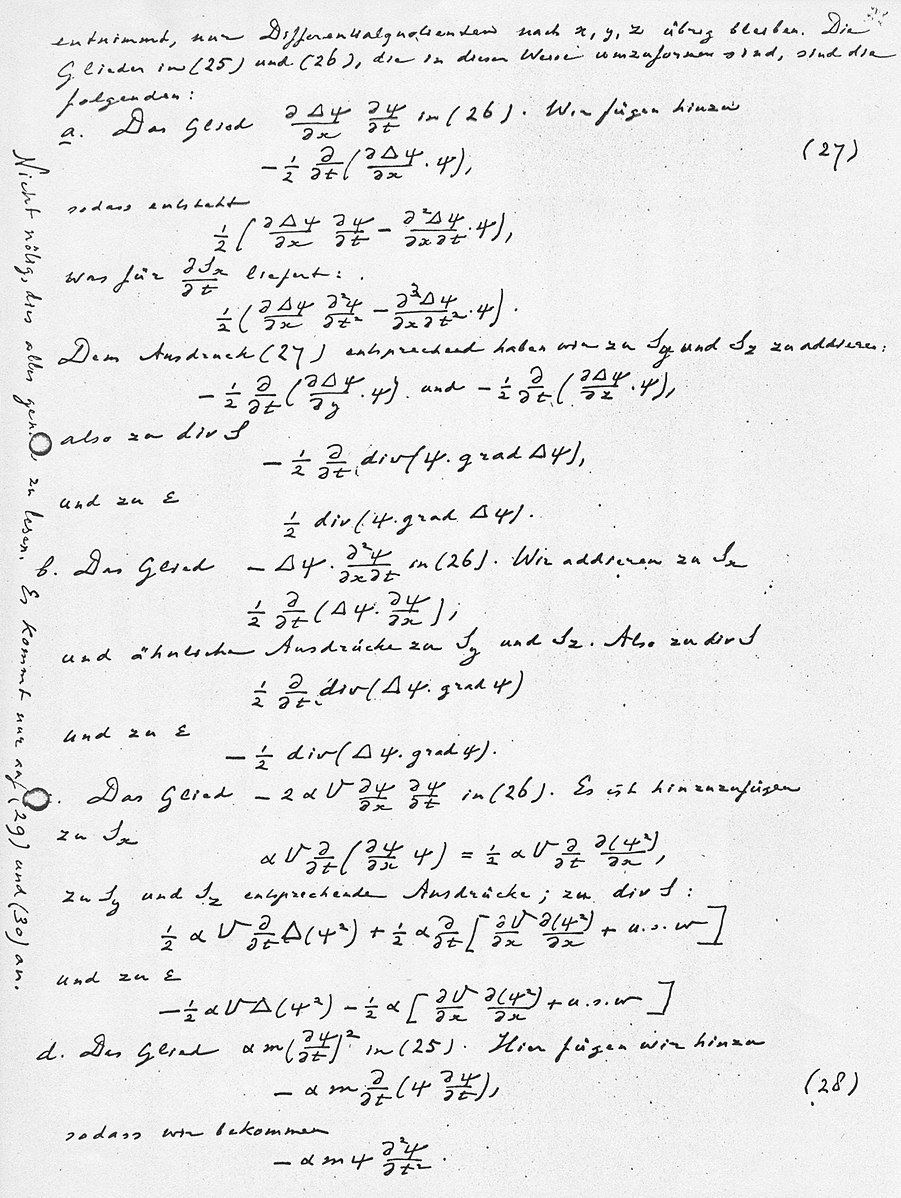
June 19, 1926, a letter written by Hendrik Antoon Lorentz to Erwin Schrödinger concerning wave quantum mechanics.
In this correspondence, Lorentz, at the age of 73, demonstrates his profound command over the newly established wave mechanics, leaving a significant impression on its originator, Schrödinger.
Alan Turing's famous 1936 paper "On Computable Numbers" was written to solve a problem in pure logic (Hilbert's Entscheidungsproblem) — the "universal machine" was a thought experiment, not a blueprint. The engineering came later.
He drove 150 miles to a math conference at Yale University. When the conference was over, he forgot he came by car, so he returned home by bus. The next morning, he went out to his garage to get his car, discovered it was missing, and complained to the police that while he was away, someone stole his car.
-- Anecdote as recounted by Howard Eves about the father of Cybernetics, Norbert Wiener