Capitec at R2 on the JSE. Looked like a dodgy
mashonisa with a fancy logo.
R1,000 then is R2.1 million now.
We saw it every day at the mall. We just didn't buy it.
A French company just listed on the JSE for the first time in history.
That company is CANAL+. 70+ countries. 42 million subscribers. 23 million of them in Africa.
They're not treating Africa as an afterthought. Africa IS the growth thesis.
Now here's what makes this personal for South Africans.
CANAL+ didn't just discover this market. They bought
MultiChoice. The company behind DStv. They know South
African media, South African households, and South African wallets. And after all of that, they decided the JSE is where they want to be listed.
That tells you everything about how they view this continent.
For retail investors, this is significant. A globally diversified media giant, with revenue from 70 countries, a dominant Africa footprint, and a growth story tied to rising connectivity and a young population... available to buy on the JSE.
Potentially in your Tax-Free Savings Account.
You no longer need a USD account to access international media exposure. It's right here. In rands.
The JSE is slowly becoming a bridge between African and European capital markets.
South African investors are sitting at the table.
Pay attention.
@CapeTown_Bru Ackermann literally wrote a book about putting the customer first... Stocking Springbok products to justify a sponsorship is the opposite of that. It's using your customer's shelf to serve your marketing budget.
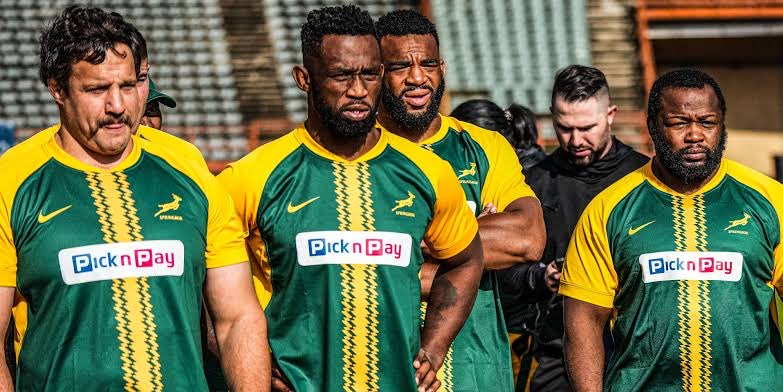
Pick n Pay paid R280m to put their logo on the Springbok jersey.
The Boks won back-to-back World Cups in MTN's kit. PnP joined in 2025, while the business was already on fire.
They sponsored a winning team. They could not run a winning business.
Think about what R280m could have done inside the company instead.
Price cuts to take the fight to Shoprite. Supply chain fixes so shelves were never empty.
Store upgrades that made customers want to come back. Operational discipline that Checkers has been quietly building for years while PnP was chasing visibility.
Here is the thing about retail: customers do not care about your jersey deal. They care whether your prices are lower than the guy next door. They care whether the queue moves. They care whether the brand still earns their loyalty every single week.
Pick n Pay spent heavily on being seen.
They forgot to spend on being good.
56 stores closed. R953 million trading loss. Retrenchments. Stock down 30%.
And their logo? It is on the back of the jersey. FNB has the front.
R280m for the back of a shirt while the business collapsed from the inside.
Was this the worst capital allocation decision in SA retail history? I genuinely want to hear a defence of it. 👇
an expensive missed tackle 🏉 🚑
in the last year Pick n Pay shut down 56 stores, posted a trading loss of R953 million & started a retrenchment process
PnP stock price is down 30% since the Springboks sponsorship deal
the shirt deal was estimated at R280m over 4 years 📊💰
@MMashilo28 That's the real diagnosis failure. You don't fix price perception with a logo. The store upgrades were the right instinct. Someone just had too much budget and too little focus at the top...
@pushinM15 My father worked at Pick n pay in the 80s....He managed to get married,buy a car n house while working as a Merchandiser....in the 80s Pick n pay used to be the highest paying retail in SA......Go an check how much the current workers are earning
@MuzieSndlovu This is the part nobody talks about. Raymond Ackerman built that company on the idea that staff come first. A merchandiser buying a house. Now floor staff earn around R4-5k a month. The decline is not just financial. It's cultural.
@the_bernster Nobody said R280m would fix it. The point is mindset. Leadership chose visibility over discipline at exactly the wrong moment. That decision tells you everything about how they got here in the first place.
Pick n Pay paid R280m to put their logo on the Springbok jersey.
The Boks won back-to-back World Cups in MTN's kit. PnP joined in 2025, while the business was already on fire.
They sponsored a winning team. They could not run a winning business.
Think about what R280m could have done inside the company instead.
Price cuts to take the fight to Shoprite. Supply chain fixes so shelves were never empty.
Store upgrades that made customers want to come back. Operational discipline that Checkers has been quietly building for years while PnP was chasing visibility.
Here is the thing about retail: customers do not care about your jersey deal. They care whether your prices are lower than the guy next door. They care whether the queue moves. They care whether the brand still earns their loyalty every single week.
Pick n Pay spent heavily on being seen.
They forgot to spend on being good.
56 stores closed. R953 million trading loss. Retrenchments. Stock down 30%.
And their logo? It is on the back of the jersey. FNB has the front.
R280m for the back of a shirt while the business collapsed from the inside.
Was this the worst capital allocation decision in SA retail history? I genuinely want to hear a defence of it. 👇
Two people walk into a room.
One earns R25k a month. One earns R120k a month.
The second guy gets told about a vehicle specifically designed for high earners. Great tax efficiency. Special structure. His advisor is excited.
The first guy just buys the S&P 500 on EasyEquities.
Ten years later, ask yourself: who actually had the better outcome?
Because here's the thing nobody says out loud. Any investment that only makes sense for a certain type of person comes with tradeoffs built in for everyone else. Illiquidity. Capped contributions. Exit penalties. Complexity that benefits the
middleman more than you.
The open market doesn't segment its clients.
It doesn't ask your tax bracket before it compounds your money. It doesn't charge you for leaving. It doesn't put a ceiling on how much you can grow.
The best investments have always been the ones sitting in plain sight. Global ETFs. JSE-listed equities. Index funds with low fees and no gatekeeping.
"Where do I invest if I'm in a high tax bracket?" is the wrong question.
The right question is: where do I invest so I never have to ask that again?
The open market already answered you.
The TFSA debate that keeps coming up.
"The only time you lose is when you sell below your entry price. People should withdraw as their needs change. It's a savings account with flexibility."
All technically true. None of it is the point.
Yes, paper losses become real only when you exit. Yes, people's financial needs shift over time. Nobody is fighting that.
The fight is about what this account was built to be.
SARS didn't create a R500,000 lifetime cap because this is a savings account. They created it so that ordinary South Africans, for the first time, had access to a vehicle where dividends, capital gains, and interest could compound for decades completely tax-free.
That's not a savings account. That's a tax shelter that most South Africans walk past every day without using.
The "savings account" framing does real damage. It makes withdrawals feel consequence-free. They aren't.
Every rand you pull out sits outside your lifetime limit until the new tax year. And that limit is fixed. R500,000. One lifetime. You don't get a reset.
Treat it like a savings account and you'll spend 25 years inside the most powerful tax-free
investment structure available to the average South African, and arrive at retirement with almost nothing to show for it.
Withdraw when life forces your hand. Absolutely.
But know what you're withdrawing from.
This was never a savings account. We just got comfortable calling it that.
Nobody told you this stuff so I will.
Your TFSA has an annual limit of R46,800 and a R500,000 lifetime limit. Every year you don't maximise it is a year you can't get back. Unused annual allowances don't roll over.
Withdrawals are permanent. Pull money out and that portion of your lifetime limit is gone forever. It's not a bank account so don't treat it like one.
Don't keep it in cash. The tax-free benefit compounds massively on high growth assets over 15 to 20 years. Equity ETFs inside a TFSA are where the real growth happens, not a savings account earning 7%.
Watch your fees. The difference between a 0.2% and a 2% annual fee over 20 years is not just 1.8%. It's a significant chunk of your total wealth. Low cost platforms exist for a reason. Use them.
Contribute early in the tax year. Investing at the beginning versus the end can result in as much as 16% more growth over time. Same money. Just better timing.
None of this requires a financial degree. Just knowing the rules of the account you're using.
Not financial advice.
Fact that my 2y old has her TFSA maxed 3x already is crazy to me! That is money that I saw probably only in my late 20s.
We are standing to change an entire generation's path guys, we just need to stay the course and be consistent.
Our kids wont have to "send money home".