This is a must watch!
Privitised Water Companies - underinvestment of water infrastructure.
Only viable solution: to re-nationalise them as Public companies.
It rained....
And as predicted on @LBC with @HenryRiley1 not 48 hours ago.
Anything in brown is sewage being dumping into the environment right now, in real time, anything in red is sewage dumped over the last 24 hours.
"Britain’s only desalination plant remains idle during drought."
Yep, built at a cost of £250 million to Thames Water customers and it doesn't work.
https://t.co/S7vMXT5R8E
@thameswater recently told me that due to “fiscal constraints”, they can’t afford to fix all of the illegal outfalls on the River Roding by 2030 (already a more than fair deadline in the circumstances I feel).
This single one million pound payment to their finance chief would, alone, be enough to stop a billion litres of raw sewage a year entering the river in Ilford. Which other companies do we allow to commit serious crimes because they’ve taken money that should have been used to ensure their company complies with the law & given it to their execs instead? How long until the government says “no more” to these chancers & puts Thames Water out of its misery?
https://t.co/VIeQ3XT8ht
Saw a lady sitting in her car throwing litter out of it from my first floor window. Having just spent 20 minutes litter picking, right around where she parked it, I’ve lost it and left her a ‘polite note’. We’ve got to start reclaiming our values and our streets. 🚮
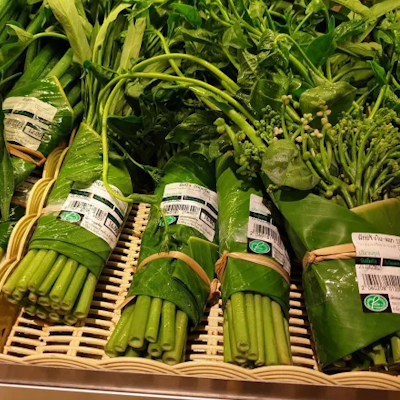
A supermarket in Thailand started wrapping vegetables in banana leaves instead of plastic
The simple idea uses a natural material that has wrapped food in Southeast Asia for generations
Every sheep in the UK has to be shorn for its welfare. There is no choice. Yet the heartbreaking reality is that it often costs more to shear a sheep than the fleece is worth.
So tonnes of beautiful British wool are treated as waste, burned, buried or composted, while we fill our wardrobes with synthetic fibres made from oil that shed microplastics into our rivers and seas.
It feels as though somewhere along the way we’ve forgotten the value of the things nature gives us so generously.
British wool is warm, breathable, biodegradable, renewable and grown every single year by animals already grazing our countryside. It deserves to be treasured, not thrown away.
Perhaps the answer isn’t to produce more. Perhaps it’s to remember what we’ve always had, and start valuing natural materials, skilled craftsmanship and the people who produce them once again.
🚨 Yet more feral kids killing wildlife - if they're your kids, take a good long look at yourself.
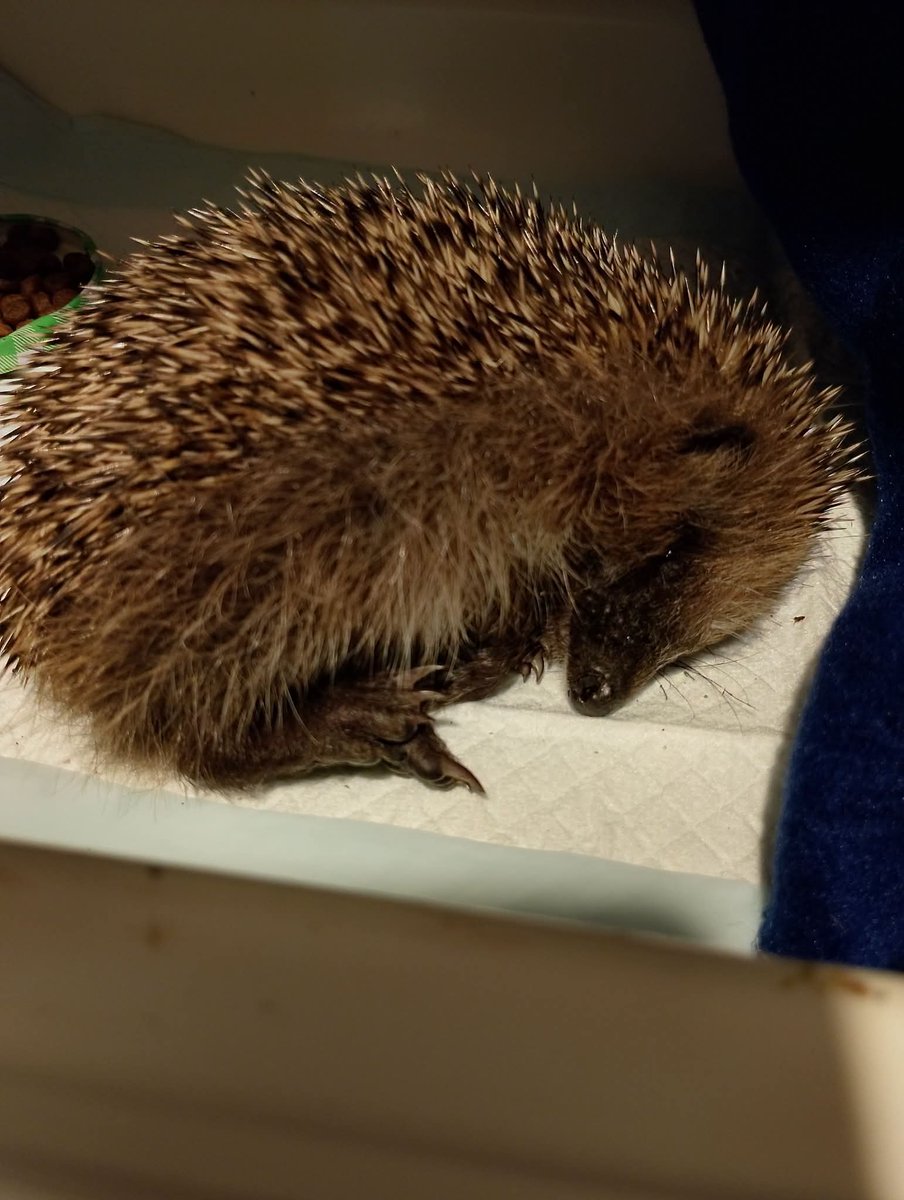
The little hedgehog that was being kicked around like a football by kids in Maidstone hasn't been doing well.
Even though he was taken to a vet by a DPD driver before he was transferred here, a further and thorough assessment by our vet under sedation today found that his upper palate had been broken and his liver lacerated from the impact of the blunt force trauma inflicted.
He was helped across the rainbow bridge.
It's not often I cry even though I see some awful injuries and unimaginable suffering on a regular basis but this little one was a baby and had his life intentionally kicked out of him before he had even had a chance to live one. By children. 💔
Thorne Hedgehog Rescue.
As the temperature rises this week and the weather gets hotter, please remember to care for wildlife by leaving out a shallow bowl of fresh water for them 💚
Dear @EnvAgency.
In February this year, after 4 years of asking you to look after the Aldersbrook, I led a team of volunteers to do your job for you & clean out tonnes of silt & leaves, as well as hundreds of bags of rubbish. Through the effort of community volunteers & donations, & at zero cost to the taxpayer, we turned a forgotten silted up ditch back into a river again.
Last nights intense rain storm showed why our actions are the very definition of “strengthening water resilience”. A huge amount of rain fell in a short time, but the restored section of the Aldersbrook has been able to hold 100’s of thousands of litres more water, stopping this water running into the Roding, & thereby *reducing* local flood risk. The first photograph below is of the Aldersbrook after the rains this morning- a big contrast to the area before we did the work.
Perhaps more importantly, this water, instead of running straight off into the Roding & hence the sea is now being held in the Aldersbrook & gradually released so it can be used by nature. It is feeding marshes, trees & wildlife, topping up groundwater & helping to reduce our flood/drought cycle. If you want to strengthen water resilience, we need thousands more projects like the Aldersbrook around the country.
So the question I ask you, Environment Agency, is why you are threatening me with two years imprisonment, rather than offering to meet & discuss how we can work together to restore the Roding & its tributaries, which could become a blueprint for you cooperating with local river guardians nationwide?
Turned an old glass jar, a terracotta tray, and a few pebbles into a tiny bee watering spot 🐝💧 Such a simple way to help thirsty pollinators stay safe while visiting the garden. 🌼
Researchers thought the most dangerous thing in the Arctic was the polar bear until they watched a mother drag her dead cub from the water and mourn beside her for hours. The bear, known to researchers as Nukka, had spent four years raising and protecting her daughter, Sila, before witnesses say the young bear was found lifeless in the freezing water and pulled back to shore by her mother.
For hours, Nukka stayed beside her, nudging her gently and refusing to leave the cub she had cared for since birth. Officials now believe Sila may have been illegally hunted, turning an already brutal year in the wild into something even harder to stomach. Because in that moment, researchers said the scariest thing in the Arctic wasn’t the polar bear fighting to survive. It was the humans who broke the love and peace that was already there.
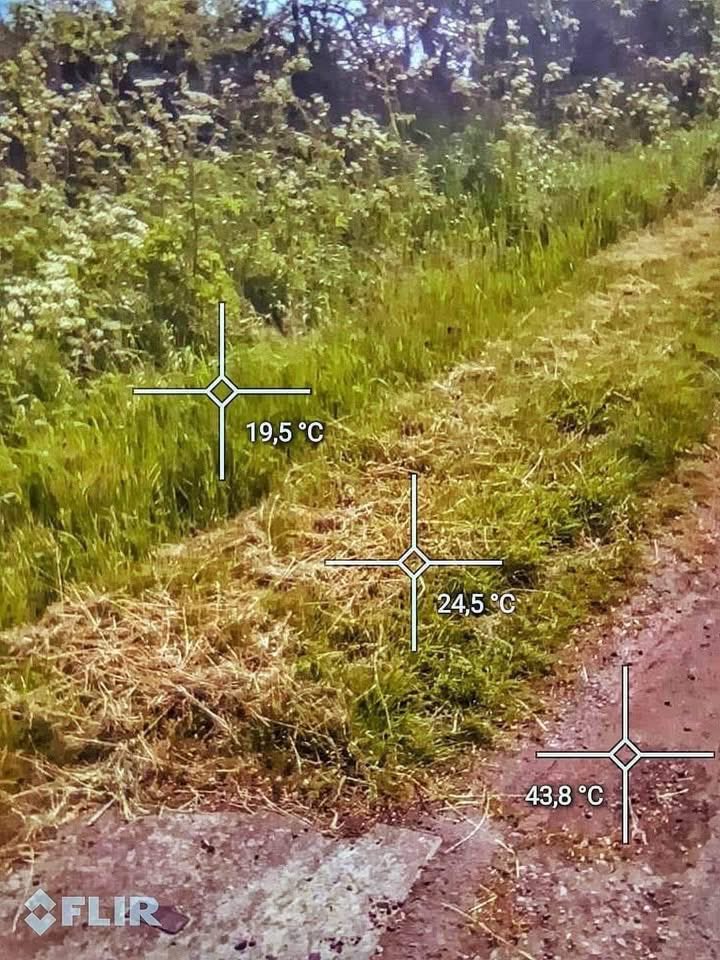
Uncut grass keeps the ground at around 19.5°C
Grass cut to 10 cm raises the ground temperature to about 24.5°C
Bare ground in the middle of summer rises to over 40°C
It's important to raise awareness #NoMowMay
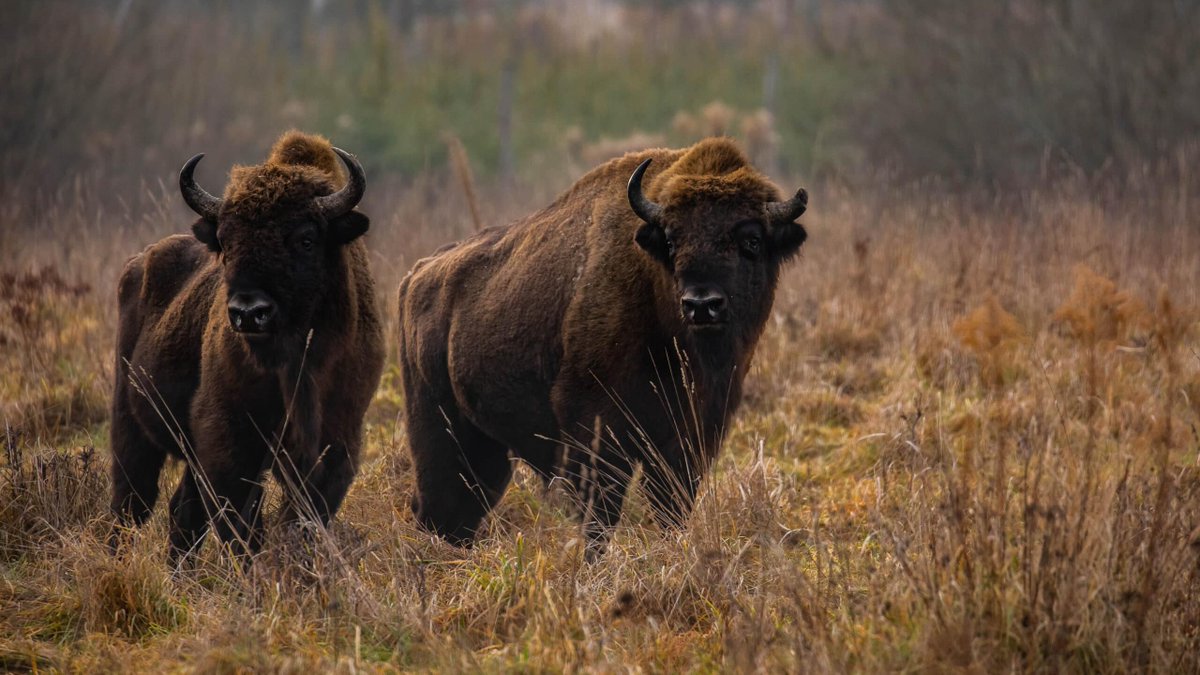
The European bison was extinct in the wild in 1927. Today, 7,000 roam free.
The last wild European bison was shot in the Białowieża Forest on the Poland-Belarus border in 1927. Twelve animals survived in zoos. That was the entire global population of the largest land mammal in Europe.
A handful of biologists, zoo directors, and Polish foresters spent the 1930s to 1950s organizing a captive breeding program built on those 12 individuals.
They rebuilt a studbook. They reintroduced animals to Białowieża in 1952. Then to other forests in Poland, Belarus, Lithuania, Russia, Romania, and the Netherlands.
The species is now the largest free-roaming herbivore in Europe. Wild herds graze in countries that didn't have bison within human memory.
The closest North American comparison would be if the American bison had returned to the Great Plains from a single zoo population, founded by twelve animals, in less than a century.
If they can come back from 12, so can many other critically endangered species.
In 1974, the Mauritius kestrel was the rarest bird on Earth.
Only four remained in the wild. One breeding pair and two singles. Extinction seemed certain.
Then a 25-year-old Welsh biologist named Carl Jones showed up in 1979 and refused to accept it.
He pioneered techniques no one had tried on this species: double-clutching (removing the first eggs so the pair would lay again), hand-rearing chicks, “hacking” them back into the wild, installing nest boxes, controlling rats and cats, and supplemental feeding.
The results were remarkable:
- By the mid-1990s: hundreds of birds
- By early 2000s: 500–800 kestrels
Jones basically saved the species, and went on to save several others on Mauritius too.
But here’s the part people don’t talk about: The population has declined again.
The species is back on the Endangered list with roughly 140–400 birds left (estimates vary, but the trend is downward).
Funding dried up once it looked “safe.” Invasive plants changed the habitat. The fight never really ends.
Saving a species from the brink can take decades of intense work. Losing the gains can take far less.