@robbwolf Good to hear. It's a tough conflict for me: ultimately, since I've been following/ enriched by you since '08, I care much more for your wellbeing, but I do miss the online stuff since it's my only access
Carl Menger destroyed the labor theory of value in 1871 with a single insight: humans value goods based on their marginal utility, not the labor embedded in them. The same year, William Stanley Jevons in England and Léon Walras in France independently arrived at similar conclusions about marginal utility. Three economists, three countries, one revolutionary idea that shattered Marx's entire framework.
Menger's "Principles of Economics" went further than his contemporaries by building economics from individual human action rather than mathematical abstractions. While Jevons and Walras constructed elegant equations, Menger asked the fundamental question: why does anyone value anything at all? His answer traced value back to human needs and the decreasing satisfaction each additional unit provides. The tenth glass of water matters less than the first when you're dying of thirst.
The timing wasn't coincidental. By 1871, classical economics had painted itself into a corner with the labor theory of value. If labor determines value, why do diamonds cost more than water? Why do identical goods sell for different prices? Value exists only in the mind of the acting individual. No intrinsic value, no objective measurement, just human preferences ranking scarce goods according to their ability to satisfy wants.
Menger's approach created the foundation for the entire Austrian school tradition that followed. Böhm-Bawerk used marginal utility to explain interest rates. Mises extended it to money and the business cycle. Rothbard applied it to ethics and political theory. Every free market economist since 1871 stands on Menger's shoulders.
The establishment still teaches economics as if Menger never existed, preferring mathematical models to human action, aggregate demand curves to individual choice, and central planning to market processes.
The Japanese railway privatization of 1987 stands as one of the most devastating defeats ever dealt to statist transportation mythology. The government split the bloated Japan National Railways into seven regional companies, sold them off, and watched private ownership transform a bankruptcy-bound disaster into the world's most efficient rail system.
JNR hemorrhaged money for decades before privatization. By 1987, the state railway carried debt equivalent to $200 billion in today's money while delivering mediocre service plagued by strikes and inefficiency. Politicians treated it as a jobs program rather than a transportation service. The predictable result: chronic losses, deteriorating infrastructure, and customer service that reflected government monopoly arrogance.
Private ownership changed everything overnight. The new JR companies slashed operating costs by 40% within five years while dramatically improving service quality. JR East alone now generates annual profits exceeding $3 billion. These companies invest billions in cutting-edge technology, maintain punctuality rates above 99%, and operate the world's most advanced high-speed rail networks. They achieved this without a single yen of operational subsidies.
The transformation reveals a core dynamic of transportation infrastructure: private companies must satisfy customers to survive, while government monopolies need only satisfy politicians. JR companies diversified into real estate, retail, and hospitality around their stations, creating integrated profit centers that cross-subsidize rail operations. Government railways never innovate this way because bureaucrats face no market pressure to generate returns.
Meanwhile, Amtrak burns through $2 billion in annual subsidies while delivering third-world service across most routes, and European state railways require massive taxpayer bailouts every few years to stay solvent.
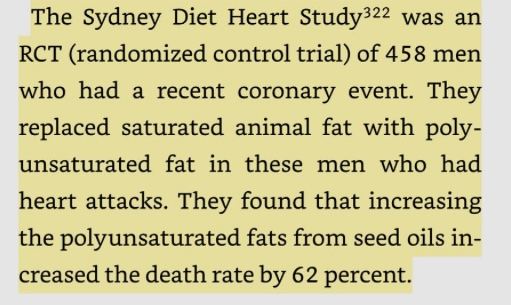
Never letting X forget the Sydney Diet Heart study.
The original study was published in 1973 and concluded that replacing saturated fat with seed oils did indeed lower cholesterol in people who had a recent coronary event... but it led to a shorter lifespan!
Critics said it was an anomaly and criticized the study because it lacked an explanation for why the seed oil group was living shorter lives.
Almost 40 years later, data dug out of a co-author's garage that was omitted in the 1973 study was analyzed. An updated 2013 reanalysis of the study concluded that the shortened lifespans were linked to heart disease.
Let me say that plainly:
Heart attack victims who replaced saturated fat with seed oils were 62% more likely to die of coronary heart disease than those who kept eating saturated fat.
This 💯
I've taken care of many people with heart disease and this seems to be exactly what I've experienced.
People have a heart attack, either get put on a statin or are already on a statin, and they stay away from saturated fats.
They cook with margarine or crisco. They eat lean meats like chicken breast or fish. They overconsume processed carbs and sugars because they're always hungry and more worried about saturated fats than anything.
Then they have another heart attack.
Both of my grandmas were on statins for many years. They cooked with seed oils and ate carbs and sweets. One of them smoked. They had fairly normal BMIs and were physically active.
They both died of heart attacks at 70. One of them had 3 heart attacks in her lifetime.
People will try to tell me that the statin probably prolonged their lives. I disagree.
I have family members who have now outlived my grandmas. One of them smokes. They all eat saturated fats and stay away from seed oils and sweets.
They have what doctors consider a "high" cholesterol and they don't take statins. They're all healthy and physically active. None of them has had any cardiovascular issues.
The smoking definitely didn't help my one grandma, but I think the inflammation caused by seed oils and excess carbs/sweets along with the statin is a huge reason why they both had heart attacks. But what do I know? That's just my family 🤷♀️
1890s: Rinderpest virus arrives in East Africa via imported cattle. It spreads through wild ruminant populations catastrophically.
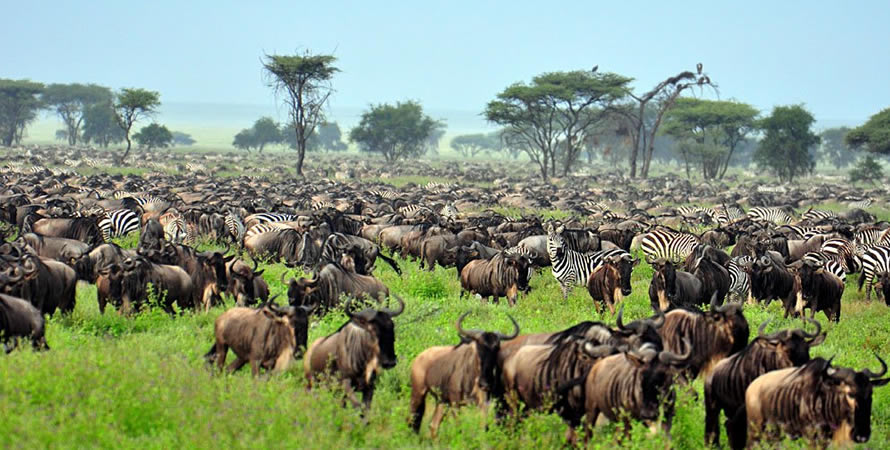
The Serengeti's wildebeest population collapses from over 1 million to around 200,000. Buffalo, other ungulates also devastated.
1960s: Veterinary vaccination program successfully eliminates rinderpest from cattle populations. The virus can no longer spread to wild herds.
What happens next surprises every ecologist studying the region.
The wildebeest population explodes. Within 30 years: 200,000 to 1.5 million. The largest population of large herbivores remaining on Earth.
Scientists expect this to devastate the grassland. More animals eating more grass should mean less vegetation, more bare ground, classic "overgrazing."
The opposite occurs.
Grass production increases. The Serengeti gets greener, not browner.
How?
The wildebeest graze intensely in massive herds, then move on. Their grazing stimulates grass regrowth. Their trampling incorporates dead plant matter into soil. Their dung provides nutrients.
The grass grows back faster and thicker than before because it's being grazed.
But there's more.
With wildebeest eating the grass down regularly, there's less fuel for fires. Historically, the Serengeti burned frequently. Lightning strikes, traditional burning, natural ignition from various sources.
These fires killed tree seedlings. Kept the landscape open grassland.
More wildebeest = less fuel = fewer fires = more tree seedlings survive = more woodland develops.
Carbon storage increases. Biodiversity increases. The landscape becomes more complex, supporting more species.
The system improved with MORE herbivores, not fewer.
Scientists document this carefully. The rinderpest elimination created a natural experiment showing that large herbivore populations don't destroy ecosystems - they build them.
This research is published in prestigious journals. Ecologists understand the implications.
Then environmental organizations continue campaigning to remove cattle from rangelands because they're "destroying" the environment.
The Serengeti proved that 1.5 million large grazers make the land healthier, not worse.
But admitting this would require acknowledging that maybe cattle aren't the problem.
The research exists. The evidence is clear. The narrative continues anyway.
1950: Ancel Keys looks at data from 22 countries
1953: Ancel Keys publishes "Seven Countries Study"
Wait, sorry, let me correct that:
1950: Ancel Keys looks at data from 22 countries showing no correlation between saturated fat and heart disease
1953: Ancel Keys cherry-picks 7 countries that support his hypothesis, ignores the 15 countries that contradict it, publishes anyway
1961: American Heart Association adopts Keys' recommendations
1977: US Dietary Guidelines recommend low-fat diet
1980s: Obesity epidemic begins
1990s: Diabetes epidemic begins
2000s: Heart disease remains #1 killer despite 40 years of low-fat advice
2010s: Original data released showing Keys committed fraud
2020s: Guidelines remain unchanged, everyone ignores the fraud
This is your "saturated fat causes heart disease" evidence.
One man's cherry-picked data from 1953, proven fraudulent, but we've built 70 years of policy on it and nobody wants to admit we were wrong.
Meanwhile, populations eating high saturated fat (Inuit, Masai) have zero heart disease.
But those populations don't count because they contradict the narrative.
Science.
@RockChartrand The problem is the word 'growth': it's used differently in this context. It isn't greater quantity, rather it's increased value, because of better efficiency. We're getting better at everything, allowing us to provide more. Capitalism allows that to happen most efficiently.
F.A. Hayek was a Fabian socialist until he read this book by Ludwig von Mises.
The book didn't just change Hayek's mind. It launched the greatest economic debate of the 20th century and predicted every socialist failure we've witnessed.
Here's the story behind "Socialism" 🧵
In 1991, Milton Friedman made predictions about the War on Drugs that sounded completely insane at the time.
33 years later, every single one came true with terrifying precision.
Here's how a Nobel laureate saw what nobody else could: 🧵
Universal Basic Income (UBI) has gained massive popularity in recent years.
The idea is simple: Give every adult $1,000 per month (no strings attached) and people will be free to pursue their passions, invest in themselves, and care for their families.
🧵 But UBI experiments have disappointing results.
1967-2017, gov't transfer payments to the bottom 1/5th ROSE more than fourfold in inflation-adjusted $'s. 1967-2017, share of bottom 1/5th employed FELL from 2/3rds to 1/3rd. -former Bureau Labor Statistics economist John Early. Demand for labor strong in both 1967 & 2017.
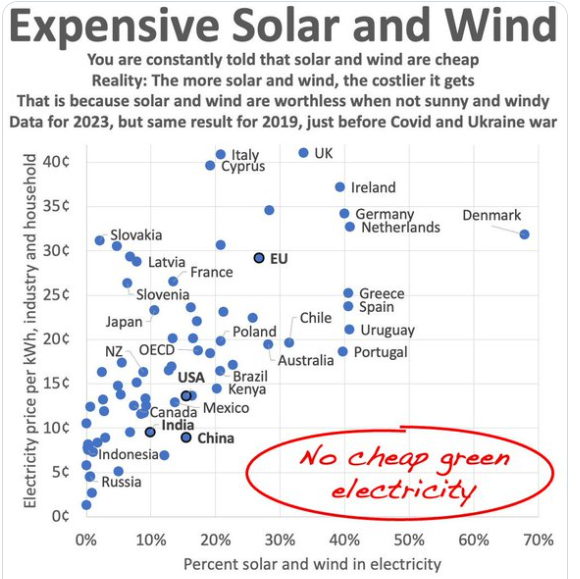
RBR's ignorance seems boundless. Because solar/wind are worthless when not sunny/windy, there are no countries with lots of solar & wind & low prices.-@BjornLomborg
"Sweden is proof socialism works!"
Your professor loves this story. Politicians too. But there's one problem: Sweden got rich BEFORE it tried socialism.
And when they actually tried it, everything fell apart. 🧵
@BobMurphyEcon Not without reduced spending. The cost of government should be borne by the generation that voted for it, even if we didn't all agree.
And no, before you ask, I wouldn't be in favor of raising taxes: they'll find a way to spend the money, eve when we're in debt